
 4
Feb,2026
4
Feb,2026
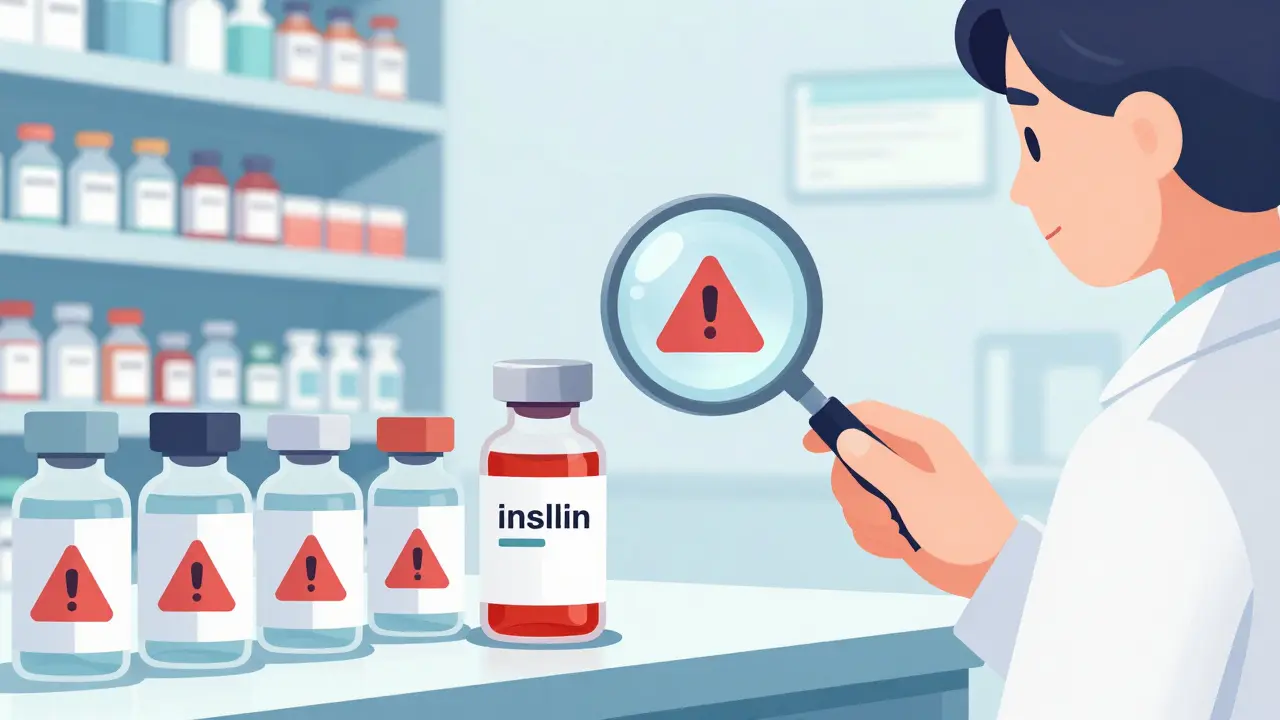
High-alert medications are pharmaceutical agents that pose a significant risk of causing severe harm or death when used in error. According to the Institute for Safe Medication Practices (ISMP), which first published their list in 2001 and updates it every two years, these drugs require special safeguards due to their narrow therapeutic index or catastrophic consequences if misused. The latest version released on January 9, 2024, identifies 19 medication categories requiring extra safety measures. A single mistake with these medications can lead to death, but proper double checks prevent 95% of potential errors before they reach patients.
How to Identify High-Alert Medications
Start by checking your institution's official medication safety protocols. Most hospitals follow the ISMP's 2024 High-Alert Medications List, which includes categories like chemotherapeutic agents, insulin infusions, potassium chloride concentrates, and heparin. But don't stop there-some healthcare systems add their own high-risk drugs based on local data. For example, Providence Health System includes all continuous infusions, potassium phosphate concentrate, and controlled substances in their double-check requirements. Always consult your facility's specific policy documents, as requirements can vary.
Look for medications with a narrow therapeutic index-where the difference between a therapeutic dose and a toxic dose is small. Insulin is a classic example; a small overdose can cause severe hypoglycemia. Other red flags include drugs with complex dosing, like chemotherapy agents requiring weight-based calculations, or those that can cause irreversible harm if given incorrectly, such as neuromuscular blocking agents.
The Five Critical Elements of a Proper Double Check
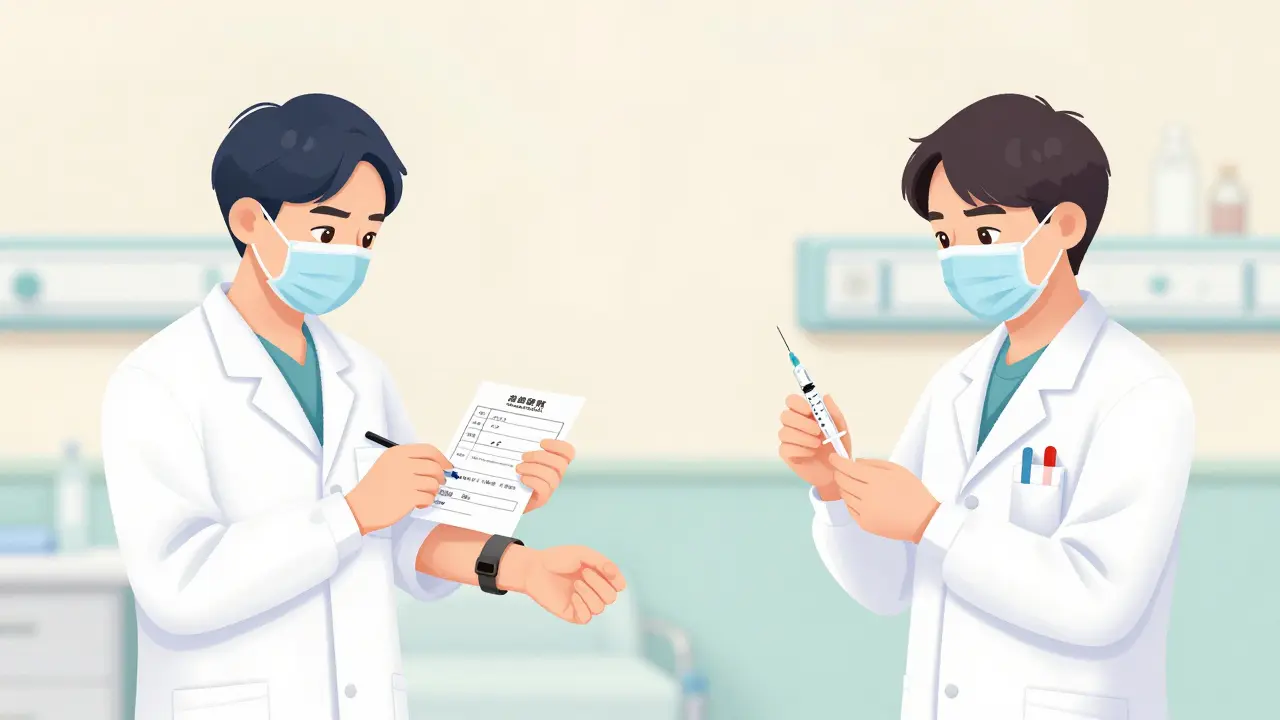
A true independent double check isn't just two people signing off-it's a structured verification process. According to VHA Directive 1195, the process must confirm five key elements:
- Right patient: Verify using two unique identifiers (e.g., name and date of birth), not room number or bed location.
- Right medication: Match the drug name on the prescription to the actual vial or syringe, checking spelling and concentration.
- Right dose: Confirm strength and total amount, including calculations for weight-based or pediatric doses.
- Right route: Ensure the administration method matches the prescription (e.g., IV vs. oral).
- Right time: Check the frequency and timing against the patient's schedule.
Crucially, both clinicians must verify these elements independently-without discussing their findings beforehand. If one person says "I checked the dose, it's 5 units," the second person loses objectivity. True independence means each clinician works alone before comparing notes.
Common Mistakes That Undermine Double Checks
Many healthcare workers think they're doing double checks properly when they're not. A 2022 American Nurses Association survey found 78% of nurses believed all high-alert medications should require double checks, but implementation often falls short. Common errors include:
- Simultaneous checking: Both clinicians verifying at the same time, leading to "groupthink" where errors go unnoticed.
- Rushed verification: Skipping steps due to time constraints, especially in busy ERs or ICUs.
- Unclear protocols: Vague instructions like "double check insulin" without specifying what to check.
- Lack of documentation: Failing to record both signatures in the electronic MAR system.
ECRI Institute reported in 2023 that when double checks are performed as a "simultaneous check" rather than independent verification, effectiveness drops to just 40%. This means you're not just wasting time-you're creating a false sense of security.
Real-World Examples of High-Alert Medications in Action
Consider a scenario where a nurse administers an IV insulin infusion. The prescription says 50 units in 250 mL of normal saline at 10 units/hour. Without proper double checking, a miscalculation could deliver 100 units/hour-leading to life-threatening hypoglycemia. A proper double check would involve:
- First clinician calculates the concentration (50 units / 250 mL = 0.2 units/mL), checks the pump settings for correct rate (10 units/hour), and confirms the patient's blood sugar level is appropriate.
- Second clinician independently verifies all these elements before the infusion starts.
Another example: potassium chloride concentrate. A vial labeled "KCl 20 mEq/10 mL" might be mistaken for a less concentrated solution. A double check would confirm the concentration, the dilution ratio, and the infusion rate-since a single overdose can cause cardiac arrest.
| Medication Category | Key Risks | Double Check Requirements |
|---|---|---|
| Insulin Infusions and IV Pushes | Narrow therapeutic index; risk of hypoglycemia | Independent verification of dose, rate, and pump settings; dual electronic signatures |
| Chemotherapeutic Agents | High toxicity; potential for severe tissue damage | Verification of dose calculations, dilution, and infusion rate; separate checks for each component |
| Potassium Chloride Concentrate | Cardiac arrest risk from overdose | Independent calculation of dose and dilution; confirm concentration before administration |
| IV Heparin | Bleeding complications from incorrect dosing | Verify concentration, infusion rate, and patient's aPTT levels; cross-check with pharmacy |
| Neuromuscular Blocking Agents | Paralysis without sedation | Confirm intended use; double-check dose for paralysis vs. anesthesia |
Technology's Role in Enhancing Safety
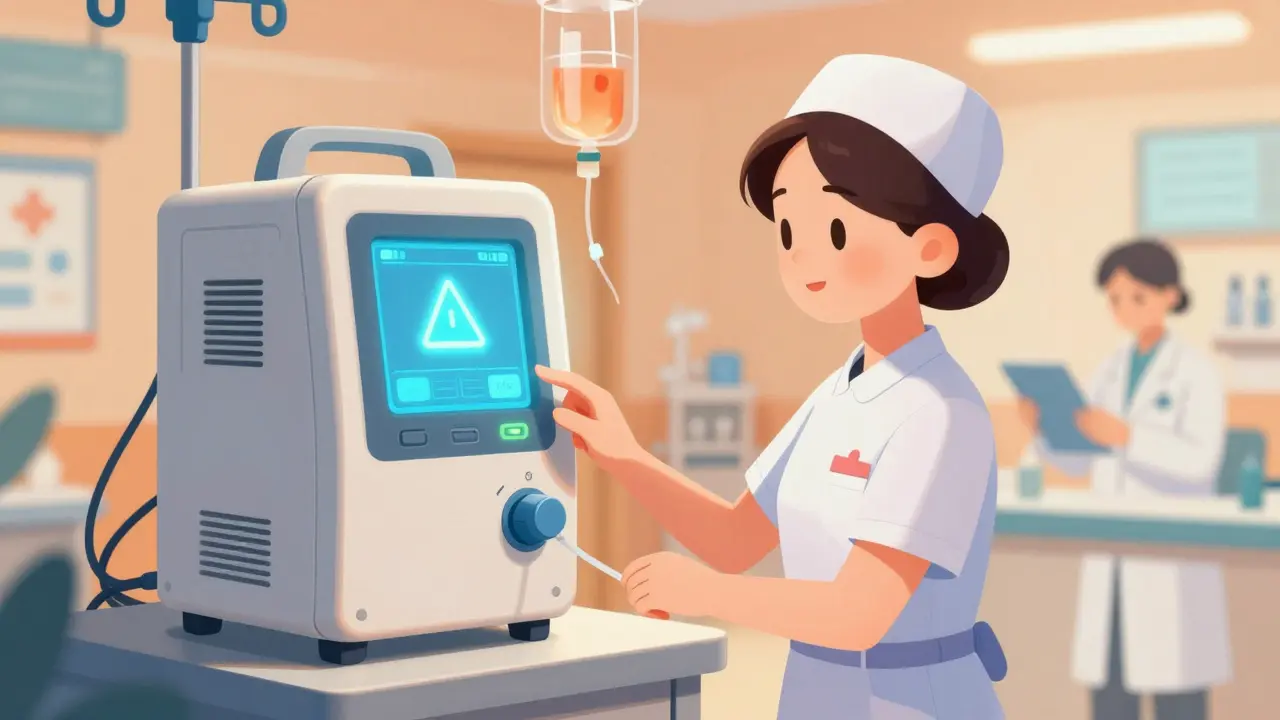
Smart pumps with dose error reduction systems (DERS) are becoming standard. These devices automatically calculate safe doses based on patient weight and drug concentration, alerting staff to potential errors. For example, when a nurse programs a heparin infusion, the pump cross-checks against institutional protocols and flags if the dose exceeds safe limits.
Electronic Medication Administration Records (eMAR) with dual-signature requirements ensure both clinicians document their verification. A 2023 American Organization for Nursing Leadership report found 78% of Magnet-recognized hospitals use eMAR systems for double checks, reducing documentation errors by 65%.
However, technology isn't a replacement for human verification. A 2024 CHIME report noted that AI-assisted verification tools are still in pilot stages at 12% of academic medical centers. These tools help identify potential errors but require human oversight for final confirmation.
Best Practices for Effective Implementation
Successful double-check protocols require more than just policies-they need training and workflow integration. Mayo Clinic built dedicated time into nurse schedules for double checks, including it in staffing calculations. This reduced delays and increased compliance.
Training is critical. Cleveland Clinic's 2-hour competency module for double checks has a 95% passing rate, covering real-world scenarios like chemotherapy dosing errors. Annual refreshers ensure skills stay sharp.
Leadership support matters. At Johns Hopkins Hospital, administrators publicly praised nurses who caught errors during double checks, creating a culture of safety. This led to a drop in heparin dosing errors from 12.7% to 2.3% over 18 months.
Remember: double checks should be used judiciously. The ISMP warns against overusing them, as it can lead to complacency. Focus on the highest-risk medications-like IV insulin, heparin, and chemotherapeutics-while using technology for others.
What exactly qualifies as a high-alert medication?
High-alert medications are drugs that carry a high risk of causing serious harm or death if used incorrectly, even if errors are rare. The Institute for Safe Medication Practices (ISMP) defines them based on their potential for severe patient injury. The 2024 ISMP list includes 19 categories such as chemotherapeutic agents, insulin infusions, potassium chloride concentrates, and heparin. These drugs require special safeguards beyond standard medication protocols.
Why are independent double checks better than simultaneous checks?
Independent double checks require two clinicians to verify medication details separately before comparing results. Simultaneous checks-where both people verify together-lead to "groupthink" where errors go unnoticed. ECRI Institute found that independent checks prevent 95% of errors, while simultaneous checks only reduce errors by 40%. True independence means no discussion before verification, ensuring each person thinks critically on their own.
Do all high-alert medications require double checks?
No. The ISMP explicitly states that manual independent double checks aren't always the best strategy for all high-alert medications. For example, smart pumps with dose error reduction systems may be more effective for certain infusions. Focus double checks on the highest-risk scenarios-like IV insulin, chemotherapy, or neuromuscular blockers-while using technology for others. Overusing manual checks can lead to complacency and reduce effectiveness.
What are the five critical elements of a double check?
The five critical elements are: right patient (two unique identifiers), right medication (matching drug name and concentration), right dose (including calculations), right route (e.g., IV vs. oral), and right time (frequency and timing). These must be verified independently by two clinicians before administration. For instance, checking a patient's ID band and birthdate for patient identity, or confirming the exact dose calculation for insulin.
How can technology improve double-check processes?
Smart pumps with dose error reduction systems automatically flag unsafe doses and calculate correct concentrations. Electronic MAR systems require dual electronic signatures, ensuring both clinicians document their verification. For example, when programming a heparin infusion, the pump cross-checks against institutional protocols and alerts if the dose exceeds safe limits. These tools reduce human error while freeing up staff time for critical thinking on high-risk cases.
What should I do if a second clinician isn't available during an emergency?
In emergencies where a second clinician isn't immediately available, follow your institution's crisis protocols. For example, VHA Directive 1195 allows a single clinician to administer high-alert medications during life-threatening situations if no second person is present, but requires immediate documentation and a post-event review. Always prioritize patient safety while following facility-specific guidelines for emergencies.
How often should double-check protocols be reviewed?
Review protocols at least annually or whenever new high-alert medications are added to your facility's list. The ISMP recommends updating protocols based on recent error reports and technology changes. For example, if a new smart pump model is introduced, staff should be retrained on its specific safety features. Regular audits of double-check compliance help identify gaps before they lead to errors.
Can double checks replace other safety measures?
No. Double checks are just one layer of a comprehensive medication safety strategy. They should complement other safeguards like barcode scanning, smart pumps, and clear labeling. The ISMP emphasizes using multiple overlapping safeguards-called "redundancies"-to prevent errors. Relying solely on double checks increases risk because they can be compromised by human factors like fatigue or time pressure.
What's the biggest mistake in double-check implementation?
The biggest mistake is treating double checks as a checkbox exercise rather than a critical safety step. Many healthcare workers rush through the process, skip verification steps, or discuss findings before checking independently. A 2023 Reddit discussion in r/Nursing revealed nurses often perform "quick sign-offs" without true independent verification. This creates a false sense of security and can lead to missed errors. Always prioritize quality over speed.
Where can I find my facility's specific high-alert medication list?
Check your hospital's medication safety policy manual or electronic health record (EHR) system. Most facilities publish their high-alert medication list in the pharmacy department's protocols or through internal training modules. The ISMP's 2024 list is a common reference, but your institution may have additional drugs based on local error data. If unsure, ask your pharmacy team or safety officer for the current list and double-check requirements.


Always check the concentration on insulin vials. Simple but crucial.
High-alert medications require meticulous attention.
In my 12 years as a hospital pharmacist, I've seen countless near-misses due to overlooked double checks.
The ISMP list is a great starting point, but each facility must tailor it based on their specific risks.
For instance, our hospital added all concentrated electrolytes to the list after a near-fatal potassium error.
The five critical elements are non-negotiable: right patient, medication, dose, route, and time.
Many teams get complacent with the 'right time' element, especially during shift changes.
I've witnessed errors where the dose was correct but the timing was off, leading to dangerous fluctuations in blood sugar or other vital signs.
Independent verification is key - no discussing findings before checking.
I once had a nurse and a colleague check insulin together, and they both missed that the concentration was wrong.
If they had verified separately, it would have been caught.
Smart pumps help, but they're not foolproof.
A recent case involved a pump that didn't flag an incorrect heparin dose because the settings were manually overridden.
Always cross-verify with manual calculations.
Documentation is another area where mistakes happen; if it's not recorded, it didn't happen.
Our hospital implemented mandatory electronic signatures for high-alert meds, which reduced errors by 30%.
Training is critical - annual refreshers on real-world scenarios keep skills sharp.
Leadership support makes a huge difference; when administrators publicly acknowledge safe practices, staff are more diligent.
Remember, double checks aren't about blame but about creating a safety net.
Every time I catch an error during a double check, it's a reminder of why this process exists.
It's not just paperwork; it's the difference between life and death for patients.
Smart pumps save lives. Always use them for high-alert meds.
Smart pumps are great but not perfect 😊 always double check manually. Trust but verify 🤝
Ah yes, the 'double check' - because one nurse just can't be trusted to read a label properly. /sarcasm. But honestly, this is critical. I've seen a near-miss where the dose was wrong because no one checked the concentration. Always verify independently. Don't let time pressure rush you. The five elements must be checked separately. Documentation saves your ass later. Training is key. Leadership should support this. It's not about blame but safety. Life or death stuff.
Teamwork makes the dream work! When we do independent double checks, it's a team effort. Always confirm the patient's ID with two identifiers - it's a game-changer for safety. Even a small error can have big consequences. Let's all stay vigilant!
I think the part about smart pumps is really important. They help a lot, but theyre not perfect. Always double check the settings manually too. For example, when we had a pump error, it was caught during the second check. The ISMP list is a good reference but each facility should adapt it. Proper training is essential. Documentation must be thorough. Every step counts. Lets not get complacent.
The independent verification step is key. I've seen cases where simultaneous checking missed errors. Always verify separately before comparing notes. Smart pumps are great tools but they can't replace human oversight. Always cross-check with manual calculations. Training should be mandatory for all staff. Leadership must prioritize safety protocols.
Double checks are useless If the nurse is competent they dont need it Just let them do their job
According to the VHA Directive 1195, the five critical elements must be verified independently. Many facilities skip the 'right time' check during busy shifts, which is a major oversight. Always confirm the timing against the patient's schedule to prevent errors. The ISMP's 2024 list includes 19 categories requiring extra safety measures. Proper documentation and training are essential. Technology like smart pumps helps but human oversight is irreplaceable. Safety protocols must be followed rigorously.