
 19
Dec,2025
19
Dec,2025
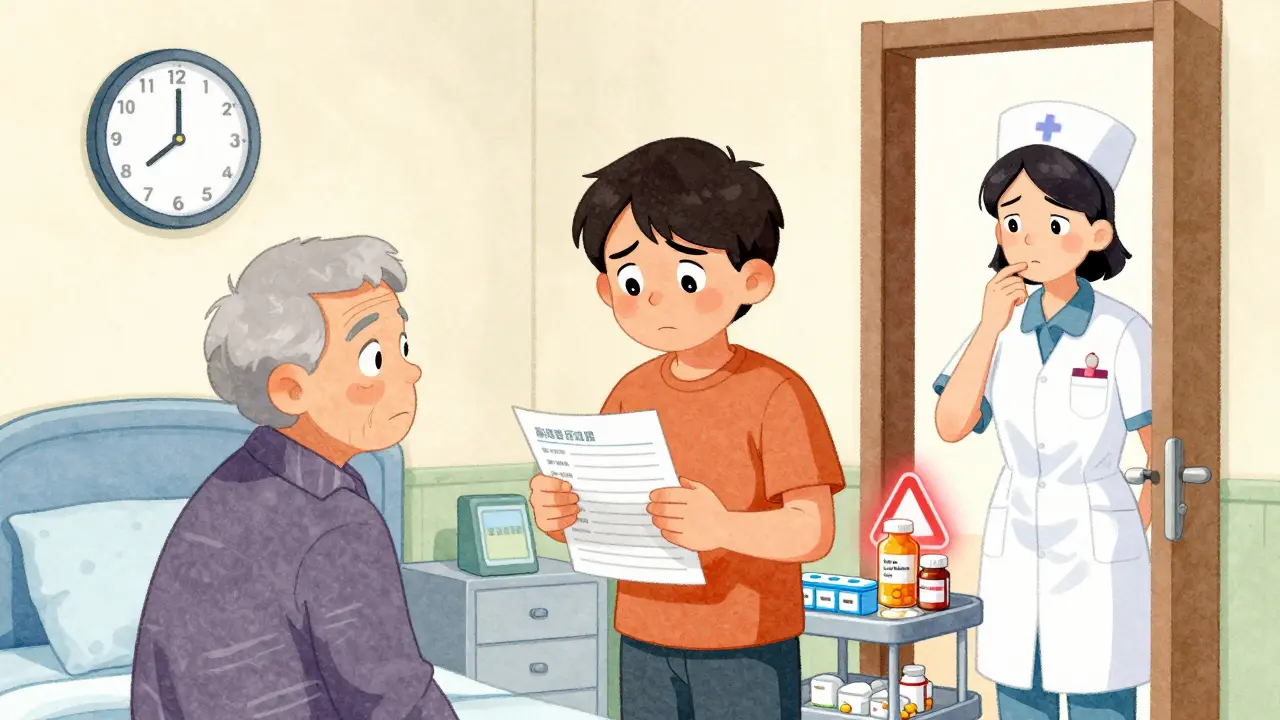
Every year, over 250,000 medication errors happen in U.S. nursing homes-most of them preventable. For older adults taking five, ten, or even fifteen different pills, a single mistake can mean a trip to the ER, a fall, organ damage, or worse. These aren’t just rare accidents. They’re systemic failures that happen because of rushed staff, confusing labels, poor communication, and outdated systems. But here’s the good news: you can spot them. And you can report them. Families, caregivers, and even seniors themselves have more power than they realize.
What Counts as a Medication Mistake in Seniors?
A medication error isn’t just giving the wrong pill. It’s any time the medicine doesn’t match what was meant to be given. In older adults, these mistakes fall into clear patterns:- Wrong dose-giving too much or too little. This happens most often with blood thinners, diabetes meds, or painkillers like acetaminophen. A single extra pill of warfarin can cause internal bleeding.
- Wrong medication-someone gets aspirin instead of lisinopril, or two different brands of acetaminophen are given without realizing they’re the same drug.
- Wrong time-meds given hours late, skipped entirely, or given too close together. Blood pressure pills meant for morning can be given at night, causing dangerous drops in pressure.
- Wrong route-a pill meant to be swallowed is crushed and given as a paste, or an injection is given orally.
- Expired or damaged meds-pills that are discolored, cracked, or past their expiration date still being handed out.
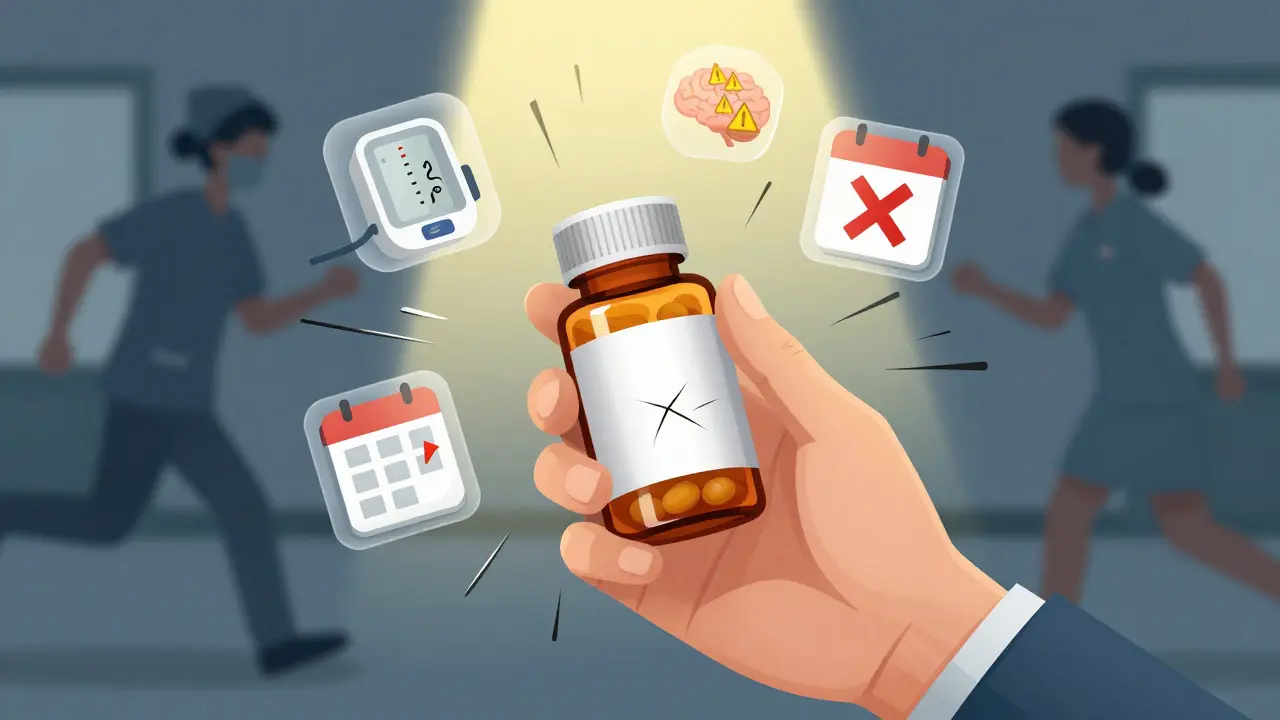
- Missing monitoring-a senior is given a new blood thinner but no one checks their INR levels. Or a diuretic is given without checking kidney function or potassium levels.
According to the 2019 Medication Error Quality Initiative, nearly 43% of errors in nursing homes involve incorrect dosing. Another 23% involve timing. And here’s the kicker: 38% of these errors start with a doctor’s prescription-often because multiple specialists are prescribing without talking to each other.
How to Spot a Medication Mistake
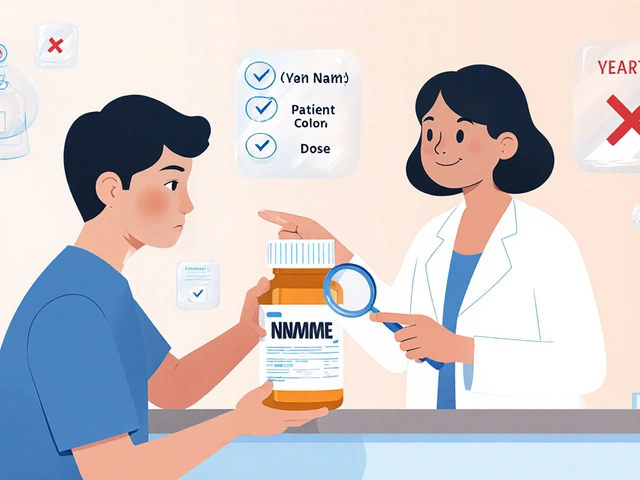
You don’t need medical training to catch errors. You just need to know what to look for. Start with the Five Rights:- Right patient-Is the name on the label the same as your loved one’s? Are they being given someone else’s meds?
- Right drug-Does the pill look like the one they’ve been taking? Check the color, shape, imprint. Use a pill identifier app if you’re unsure.
- Right dose-Does the strength match the prescription? A 5mg pill shouldn’t be labeled as 10mg. Watch for pills that are cut in half without a clear reason.
- Right route-Is it supposed to be swallowed, applied to the skin, or inhaled? Don’t assume.
- Right time-Is it being given at the same time every day? Are doses being doubled up to "make up" for a missed one?
Also, keep a running list of every medication your loved one takes-including over-the-counter drugs, vitamins, and supplements. Many seniors take Tylenol daily for arthritis, not realizing it’s acetaminophen, and then get another prescription that also contains acetaminophen. That’s a silent overdose waiting to happen.
Look for sudden changes: confusion, dizziness, falls, nausea, extreme fatigue, or unusual bruising. These aren’t just "getting older." They could be signs of a bad reaction. If your mom, who used to walk daily, suddenly can’t stand without help after a new med was added, ask why.
What to Do When You Find a Mistake
Don’t wait. Don’t assume someone else will fix it. Act immediately.Step 1: Stop the error. If you see a nurse about to give the wrong pill, say it. "I’m sorry, but that’s not the medication my mother is supposed to get right now." Be calm but firm. You have the right to question.
Step 2: Document everything. Write down: date, time, medication name, dose, who gave it, who witnessed it, and what happened afterward. Take a photo of the pill bottle if you can. Save any labels or paperwork.
Step 3: Notify the prescribing doctor. Call the doctor who wrote the prescription. Say: "I believe there was a medication error involving [medication name] given to [patient name] on [date]. I’ve documented it and would like to confirm the correct plan." This triggers a medical review.
Step 4: Report it formally. If the facility refuses to acknowledge the mistake or if it’s serious (like an overdose, allergic reaction, or fall), file a report. You have three main options:
- State Long-Term Care Ombudsman Program-Call 1-800-677-1116. They’re independent advocates for nursing home residents. They can investigate, mediate, and push for changes. Families who report to ombudsmen see 68% of issues resolved within 72 hours.
- FDA MedWatch-For serious adverse events, like hospitalization or death linked to a medication. File online at www.fda.gov/medwatch. This helps track dangerous drugs nationwide.
- Medication Errors Reporting Program (MERP)-Run by the Institute for Safe Medication Practices (ISMP). It’s confidential, voluntary, and focuses on fixing systems, not blaming staff. Submit reports at www.ismp.org.
Don’t be afraid to threaten escalation. One Reddit user, u/ElderCareAdvocate, shared how their facility refused to file an incident report until they threatened to contact the state ombudsman. That’s not aggression-that’s protection.
Why Reporting Matters More Than You Think
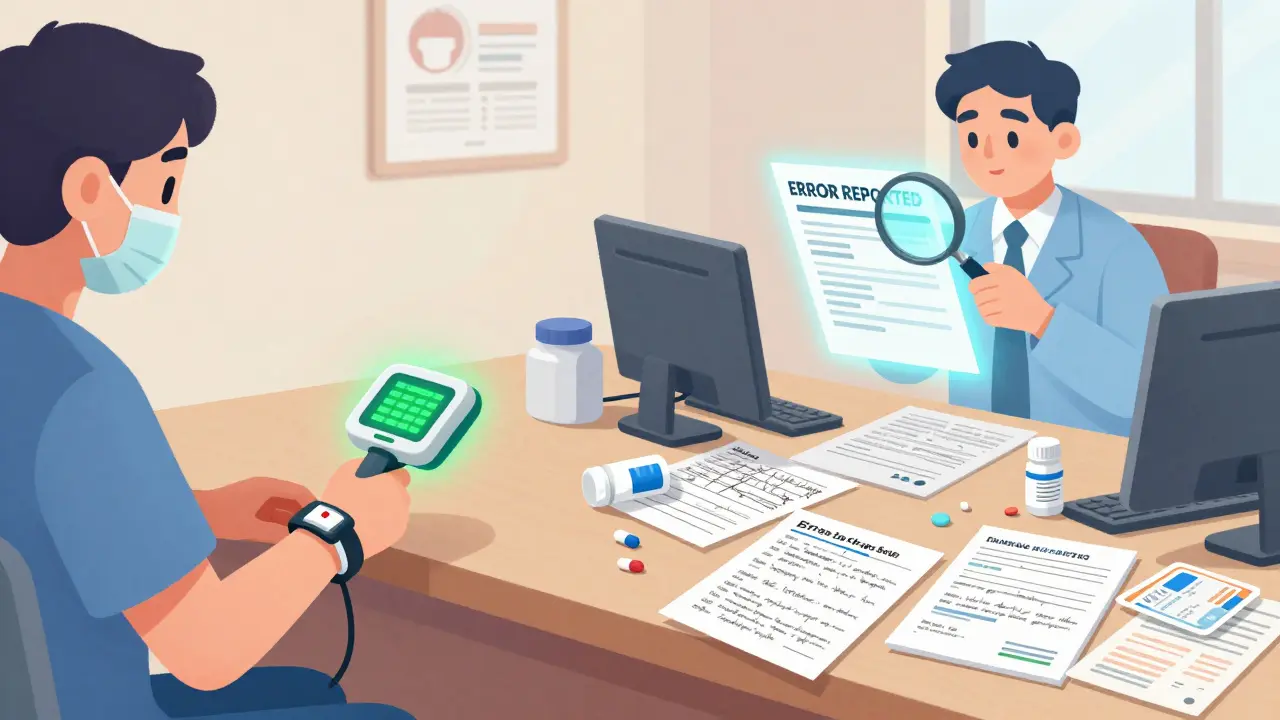
Most people think reporting an error won’t change anything. But data says otherwise.When facilities use the AHRQ’s Common Formats reporting system, 92% of them see better error detection. Hospitals that report errors voluntarily reduce preventable harm by up to 50%. The MEDMARX system-used by over 1,800 facilities-has collected over 2 million reports since 1999. And here’s the key: 78% of those organizations made real changes to their processes within 90 days.
But here’s the dark side: nursing homes report only half as many errors as hospitals. Why? Fear. Shame. Staff shortages. A 2022 GAO report found rural nursing homes report 63% fewer errors than urban ones-even when resident populations are the same. That’s not because they’re safer. It’s because no one’s watching.
When you report, you’re not just helping your loved one. You’re helping every senior who walks through that door next.
What Facilities Should Be Doing (But Often Aren’t)
Good facilities don’t wait for families to catch mistakes. They prevent them:- Electronic Medication Administration Records (eMAR)-Mandated by CMS for all nursing homes by December 2025. These systems flag duplicate drugs, wrong doses, and allergies.
- Barcode scanning-Nurses scan the patient’s wristband and the pill barcode before giving any med. This cuts administration errors by 86%.
- Medication reconciliation-A full review of every drug a patient takes every time they move between settings (hospital to rehab to home). This alone can prevent 67% of adverse events in seniors on five or more medications, according to Dr. Lucian Leape of Harvard.
- Beers Criteria screening-Doctors should check all prescriptions against the American Geriatrics Society’s Beers Criteria® (2023 update), which lists 34 drugs that are too risky for seniors-like diphenhydramine (Benadryl) for sleep or certain anticholinergics that cause confusion.
Yet only 55% of nursing homes use barcode systems, and only 48% fully implement medication reconciliation. That’s a gap. And it’s dangerous.
How to Protect Your Loved One Now
You don’t have to wait for a crisis. Start today:- Get a printed copy of every medication your loved one takes. Include dosages, times, and reasons. Update it every time a new drug is added.
- Ask for a monthly med review with the pharmacist or doctor. Bring your list. Ask: "Is every pill here still necessary?"
- Visit at different times-morning, afternoon, evening. Watch how meds are given.
- Ask staff: "Can I see the medication administration record?" You have the right to see it.
- Know the ombudsman number: 1-800-677-1116. Save it in your phone.
- Use a pill organizer with alarms. Even simple ones reduce errors.
- Teach-back method: Ask your loved one to explain their meds in their own words. If they can’t, that’s a red flag.
And if you feel ignored? Keep pushing. In 84% of negative cases reported by families, staff initially denied the error or blamed the senior for being "confused." That’s not care. That’s cover-up.
What Happens After You Report?
After you file a report, the facility should investigate. They should tell you what happened, what they’re changing, and how they’ll prevent it again. If they don’t, escalate.If the error caused harm, you may have legal options. But even if it didn’t, your report becomes part of a national database that helps regulators spot trends. One report might not change a facility overnight. But 100 reports? That changes policy. That changes funding. That changes lives.
Medication safety isn’t just about pills. It’s about dignity. It’s about trust. It’s about making sure someone’s last years aren’t ruined by a simple mistake that could’ve been caught.
How common are medication errors in elderly nursing home residents?
Medication errors affect about 250,000 nursing home residents annually in the U.S., according to the National Center for Health Statistics. Seniors are three times more likely than younger adults to experience these errors due to polypharmacy, cognitive decline, and complex care needs. Studies show over 40% of errors involve incorrect dosing, and nearly 25% involve timing mistakes.
What are the most dangerous medications for seniors?
The American Geriatrics Society’s Beers Criteria® (2023) lists 34 high-risk drugs for older adults. These include benzodiazepines like diazepam (Valium), anticholinergics like diphenhydramine (Benadryl), and certain NSAIDs like ibuprofen in high doses. Even common drugs like acetaminophen can be dangerous if taken in excess-especially when combined with other medications that contain the same active ingredient.
Can I report a medication error anonymously?
Yes. The Medication Errors Reporting Program (MERP) run by ISMP allows anonymous reporting and focuses on system fixes, not blame. The FDA MedWatch program also accepts anonymous reports for serious adverse events. However, for facility-level investigations, providing your contact info helps the ombudsman follow up effectively.
What should I do if the nursing home refuses to acknowledge a mistake?
Document everything and contact your state’s Long-Term Care Ombudsman Program at 1-800-677-1116. They have legal authority to investigate and can demand facility records. Families who escalate to the ombudsman see resolution in 68% of cases within 72 hours. Do not accept excuses like "the resident was confused"-this is a common tactic to deflect responsibility.
Are electronic systems really helping reduce errors?
Yes. Computerized Physician Order Entry (CPOE) reduces errors by 48%, Clinical Decision Support Systems cut them by 55%, and barcode scanning reduces administration errors by 86%. CMS now requires all nursing homes to use electronic medication administration records (eMAR) by the end of 2025. Facilities without these systems are at much higher risk.
How can I help prevent errors before they happen?
Keep an up-to-date list of all medications-including vitamins and OTC drugs. Ask for a monthly med review with the doctor. Use a pill organizer with alarms. Visit at random times to observe medication administration. Ask staff to show you the eMAR or medication record before each dose. And always ask: "Why is this medication being given?"


OMG this is so real i cried reading this my grandma almost died from a mixup with her blood pressure meds and the staff just laughed said she was "confused" like its her fault lmao we need to burn these places down
Of course they're hiding this. The nursing home industry is a privatized death machine. Big Pharma and private equity firms are cashing in while seniors get dosed with expired pills like lab rats. They don't care if you live or die as long as the Medicare checks keep clearing. Wake up people this is systemic genocide dressed up as care.
Always check for duplicate active ingredients. Acetaminophen is the most common silent killer in polypharmacy cases. Many OTC cold meds contain it too.
My uncle’s facility just got a new eMAR system last month. The difference is night and day. Nurses actually look at the screen now instead of guessing. Small wins matter.
This is why we need to defund these corrupt facilities and rebuild them with real public oversight. No more private profit from elderly suffering. We owe our elders better.
It is imperative to recognize that the structural deficiencies inherent in the contemporary long-term care paradigm are not merely operational in nature but are fundamentally rooted in the commodification of human dignity. The confluence of regulatory capture, bureaucratic inertia, and the erosion of interprofessional communication has engendered a pernicious environment wherein preventable pharmacological harm is not an aberration but an institutionalized outcome. One must therefore conclude that the onus of remediation rests not solely upon the familial unit, but upon the collective moral imperative of the polity to reconstitute elder care as a public good, not a market commodity.
As someone who works in geriatric pharmacy, I can confirm: medication reconciliation at transitions of care reduces adverse events by nearly 70%. But only if it's done thoroughly. Many facilities check the box but don't actually compare all meds side by side.
theyre putting tracking chips in the pills and using the errors as an excuse to justify mind control. you think its a mistake? its a program. they want us docile. the ombudsman? government plant. dont trust any of it
My aunt got the wrong med and the nurse said "oops" and kept going 😤 I called the state ombudsman and now the whole wing got shut down for inspection. They don’t want you to know you can fight back. 🚨
My father’s facility in Kerala uses handwritten logs. No barcode, no eMAR. Just prayers and hope. We brought our own pill organizer. It’s the only way.
why bother? they'll just lie and say it never happened. i tried reporting once and they told me i was "overreacting". now i just bring my own meds and hide them in my purse. less drama.
Let’s be honest: 90% of these "errors" are caused by patients who forget what they’re on, then blame the staff. The real issue is cognitive decline, not negligence. Stop romanticizing the elderly as flawless victims.
This entire system is engineered to break the elderly down. The pharmaceutical-industrial complex needs constant consumption. The nursing homes are not caretakers-they are distribution hubs for chemical compliance. The Beers Criteria? A token gesture. The real danger is that we accept this as normal. We’ve normalized the slow poisoning of our elders under the banner of "medical progress." The truth is not in the pills-it’s in the silence. And silence is complicity.
I appreciate the effort put into this guide. My mom’s care team actually thanked me for keeping the med list updated. Turns out, they’re stretched so thin they barely have time to check. Small things help. Thanks for the reminder to stay involved.