
 25
Feb,2026
25
Feb,2026
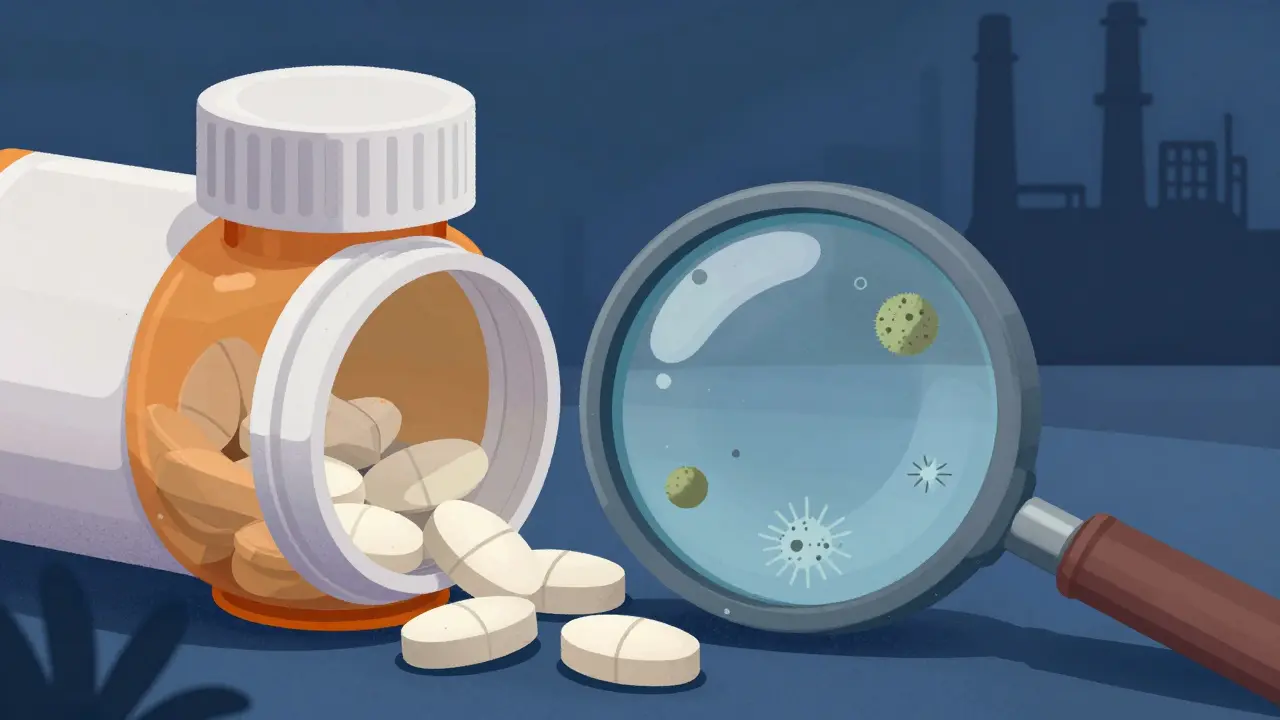
When you pick up a generic pill from the pharmacy, you expect it to work just like the brand-name version. You don’t expect it to contain invisible particles, foreign chemicals, or even mold. But generic drug contamination is a real and growing problem - one that affects safety, effectiveness, and trust in the medicines millions rely on every day.
What Exactly Is Generic Drug Contamination?
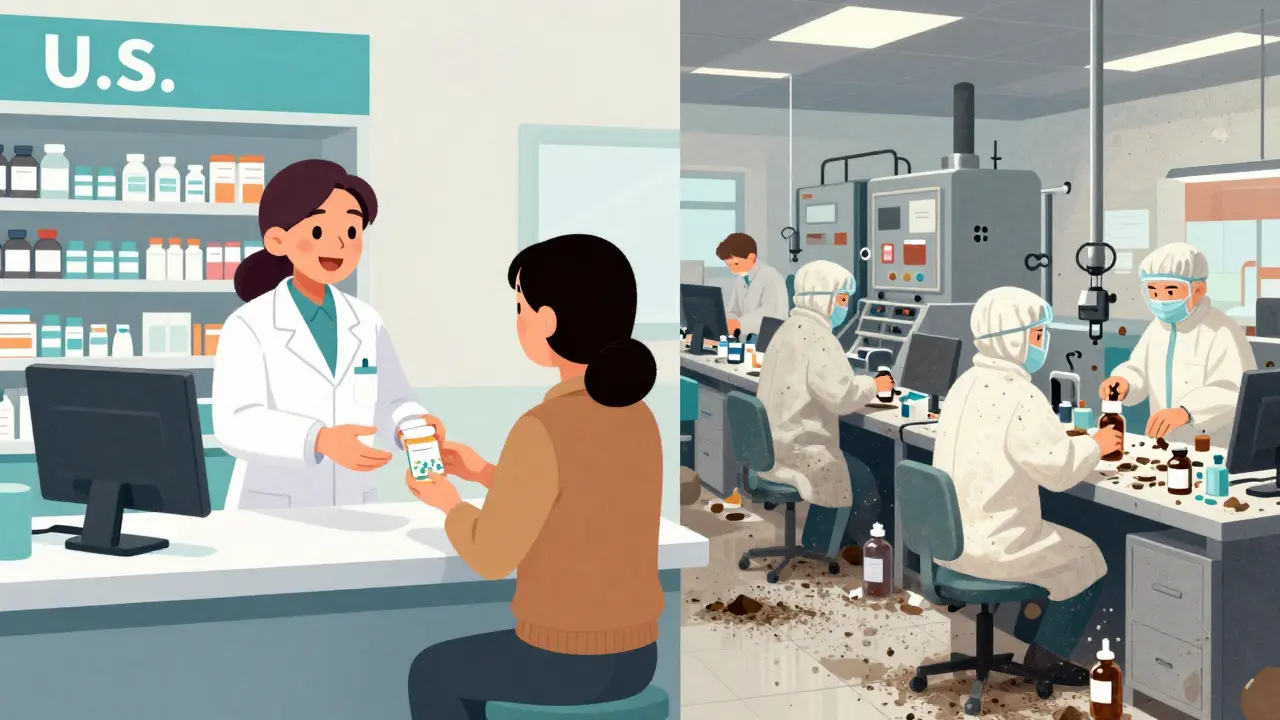
Contamination in generic drugs means unwanted substances end up in the final product. These can be chemical residues from previous batches, microscopic particles from workers, microbial growth like bacteria or mold, or even toxic impurities like nitrosamines. The FDA defines it as the unintended introduction of impurities from the environment, other products, or the manufacturing process itself. It doesn’t matter if the drug is cheap or popular - if it’s contaminated, it can make you sick instead of helping you.Here’s the thing: generic drugs make up 90% of all prescriptions filled in the U.S. That’s over 4 billion pills a year. But the system that produces them is stretched thin. About 80% of the active ingredients in these drugs come from just two countries - India and China. These facilities often produce dozens of different drugs on the same lines, with minimal cleaning between batches. One wrong step, one faulty filter, one poorly trained worker - and contamination happens.
Where Does Contamination Come From?
It’s not just one source. It’s a chain of risks:- Personnel: Workers shed up to 40,000 skin cells per minute. Each movement releases 100,000 tiny particles into the air. In cleanrooms meant to be sterile, human error is responsible for 75-80% of contamination.
- Shared Equipment: Machines that make blood pressure pills one day might make antibiotics the next. If cleaning isn’t perfect, leftover drug residue stays behind. The FDA requires cleaning to remove at least 10 parts per million (ppm) of previous product. But for highly potent drugs - like cancer meds or hormone treatments - even 1 ppm can be dangerous.
- Raw Materials: Active pharmaceutical ingredients (APIs) shipped from overseas can arrive contaminated. In 2018, a batch of valsartan (a heart medication) was tainted with a cancer-causing chemical called NDMA. It affected 22 manufacturers across 8 countries and led to over 2,300 recalls.
- Compounding Errors: Pharmacists sometimes mix or alter drugs on-site. Piercing vials, breaking ampules, or withdrawing needles - common tasks - have been linked to 62% of hazardous drug contamination incidents.
Microbial limits are strict: non-sterile oral drugs can’t have more than 1,000 colony-forming units (CFU) of bacteria per gram. Yet inspections show many facilities regularly exceed these limits.
Why Are Generics More at Risk Than Brand-Name Drugs?
Both types must meet the same FDA standards. But here’s the difference: brand-name companies usually own their own facilities, control their supply chain, and invest heavily in quality. Generic manufacturers operate on razor-thin margins - often 20-25% profit compared to 60-70% for brands. That means fewer resources for training, equipment upgrades, and testing.FDA inspection data shows:
- 8.3% of generic manufacturing sites received warnings for contamination issues - compared to 5.1% for brand-name sites.
- Indian facilities had 12.7% contamination-related findings, while U.S.-based ones had only 6.4%.
- Factories built before 2000 are 34% more likely to have contamination problems.
It’s not that all generics are unsafe. Some, like Teva’s facility in Italy, use closed manufacturing systems that isolate production and cut contamination by 78%. But the industry as a whole is playing catch-up.
How Is Contamination Detected and Reported?
Most contamination goes unnoticed until someone gets sick. The FDA’s MedWatch system received 1,247 reports of suspected contamination between 2020 and 2022. Over 387 of those involved actual health problems.Real cases:
- A patient developed severe skin rashes from a generic hydrocortisone cream contaminated with an unknown chemical (FDA report #123456, 2021).
- A pharmacist on Reddit found blue specks in metronidazole tablets - later confirmed as copper contamination.
- OSHA found cyclophosphamide (a chemotherapy drug) on 85% of pharmacists’ work surfaces despite safety rules.
Pharmacists are on the front lines. A 2022 survey found 28% of hospital pharmacists had encountered potentially contaminated generics. Of those, 14% led to patient harm. And 63% of independent pharmacies said they lack the tools to test for contamination themselves.
How Is Contamination Prevented?
Good Manufacturing Practices (GMP) are the baseline. But compliance isn’t enough - excellence is needed.Effective prevention includes:
- Facility Design: Non-sterile drugs need ISO Class 8 environments (like a clean office). Sterile drugs require ISO Class 5 - equivalent to a hospital operating room. Airflow, pressure gradients, and filtration matter.
- Cleaning Validation: Manufacturers must prove they can remove 10 ppm of previous product. This isn’t guesswork - it’s swab tests, rinse samples, and scientific proof over three consecutive runs.
- Personnel Training: Every worker needs 8-12 hours of initial contamination training, plus annual refreshers. Gowning procedures, hand hygiene, and movement protocols are non-negotiable.
- Advanced Testing: Traditional microbial tests take 7 days. New rapid methods cut that to 4 hours. By 2022, 63% of top generic manufacturers had adopted them.
- Real-Time Monitoring: Mylan’s Morgantown facility installed sensors that track airborne particles 24/7. Contamination incidents dropped 82% in three years.
Companies that control their own API production see 22% fewer contamination incidents. Vertical integration matters.
What Happens When Contamination Is Found?
Once contamination is confirmed, the response is strict:- Recall: The manufacturer must issue a recall under FDA 21 CFR Part 7. This can be voluntary or forced.
- Reporting: All incidents must be reported to MedWatch. Patients, pharmacists, and doctors can submit reports.
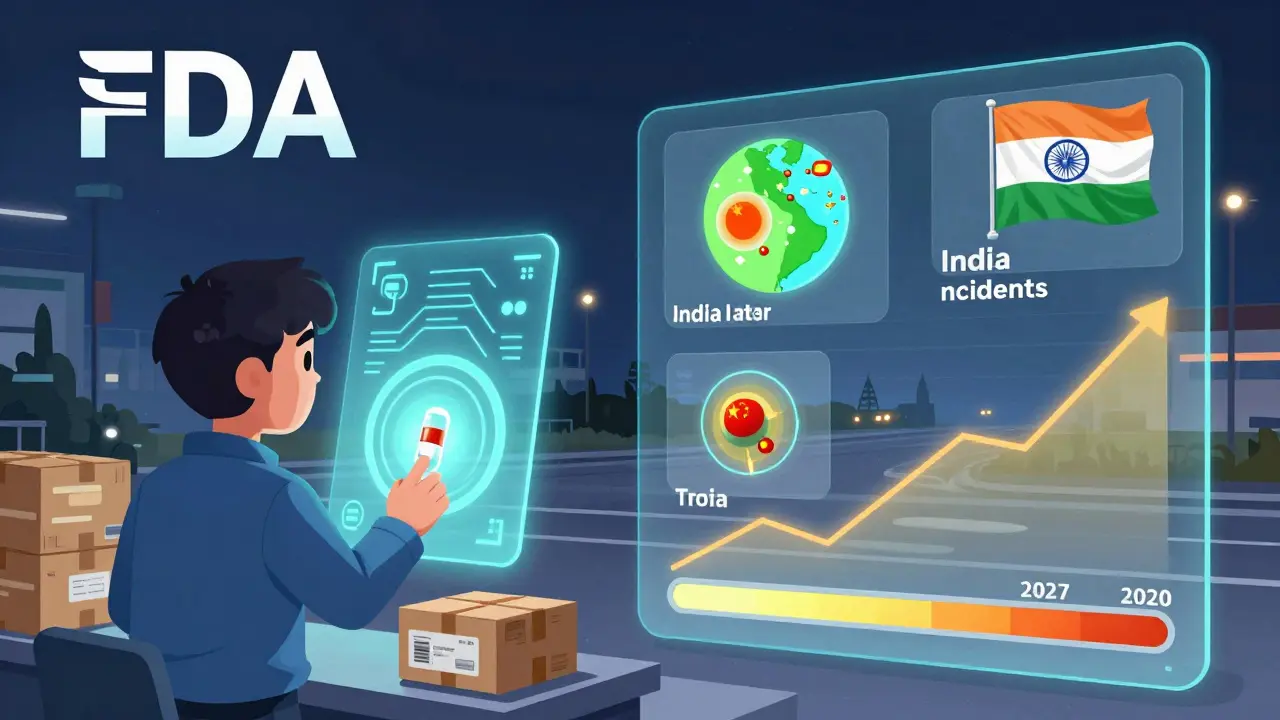
- Inspection: The FDA sends inspectors. A Form 483 lists violations. Repeat offenders face import alerts - meaning their drugs get blocked at the border.
- Costs: Each recall costs an average of $18.7 million. In 2022, 22% of all drug recalls were due to contamination - and 37% of those were generics.
But recalls don’t fix the system. They’re a band-aid.
What’s Changing in 2026?
The system is finally waking up:- PREDICT System: The FDA now flags 37% more suspicious shipments before they enter the U.S. That’s up from 2020.
- Mandatory Nitrosamine Testing: Since January 2023, all sartan-class drugs (like losartan, valsartan) must be tested for cancer-causing impurities.
- AI Monitoring: By 2024, the FDA will roll out AI systems that analyze 15,000 data points per facility to predict contamination before it happens - with 89% accuracy.
- USP <1072> Update: Disinfectants must now kill spores, not just bacteria. This is a major shift in cleaning standards.
Experts predict contamination-related recalls will drop by 40% by 2027. But supply chains won’t get simpler. Globalization isn’t reversing. The real challenge is making sure quality keeps up.
What Should You Do?
As a patient, you can’t test your pills. But you can stay alert:- Report unusual side effects to your pharmacist or doctor. Write down the lot number on the bottle.
- Check the FDA’s Recalls page if you’re on a long-term medication.
- Ask your pharmacist: "Is this generic from a facility with recent FDA inspections?" Many don’t know - but it’s worth asking.
- If you notice odd colors, smells, or textures in your pills - don’t take them. Return them.
Generic drugs saved the U.S. healthcare system over $300 billion in 2022. They’re essential. But safety can’t be an afterthought. The system is improving - but vigilance from patients, pharmacists, and regulators is still the last line of defense.
Can generic drugs be just as safe as brand-name drugs?
Yes - when they’re made properly. The FDA requires generics to have the same active ingredient, strength, dosage form, and route of administration as the brand-name version. They must also meet the same quality standards. But contamination risks arise not from the drug itself, but from how and where it’s made. Many generics are safe. But because of cost pressures and global supply chains, some facilities cut corners, increasing contamination risk.
How do I know if my generic drug is contaminated?
You usually can’t tell by looking. Contamination is often invisible - chemicals, particles, or microbes that don’t change the pill’s color or taste. But if you notice unusual side effects - like unexplained rashes, nausea, or allergic reactions - that didn’t happen before switching to a new generic, report it. Check the lot number on the bottle and compare it to FDA recall lists. If your pharmacy switched to a new generic without warning, ask why.
Are all generic drugs made overseas?
No, but most are. About 80% of the active ingredients in U.S. generic drugs come from India and China. The final packaging often happens in the U.S., but the core chemistry is done abroad. This makes oversight harder. Some U.S.-based companies do make generics domestically, but they’re a small portion of the market.
What’s the difference between contamination and impurity?
Impurities are chemical byproducts created during drug synthesis - they’re expected in small amounts and regulated. Contamination is accidental - like dust, mold, or leftover drug from another product. Impurities are part of the manufacturing process. Contamination is a failure of control.
Can I trust generic drugs from big companies like Teva or Mylan?
Some can, but not all. Teva and Mylan are large companies with multiple facilities. Some of their plants have excellent contamination controls - like Teva’s Bologna facility, which cut incidents by 78%. Others have had FDA warnings. Always check the FDA’s inspection database. A company’s reputation doesn’t guarantee every batch is safe.

Wow, this is such a wake-up call! As someone from India, I see firsthand how hard our pharma workers work - long hours, low pay, and still expected to maintain sterile conditions. It’s not just about cutting corners; it’s about systemic neglect. We make 40% of the world’s generics, and yet we’re treated like the dirty secret of Western healthcare. Let’s stop blaming the factories and start paying for quality.
Oh honey, you think this is bad? 😒 My last generic blood pressure pill had a weird taste - like metal and regret. I didn’t say anything. Now I’m wondering if I’ve been slowly poisoning myself for three years. Thanks, capitalism.
Let’s be real - this whole narrative is built on fearmongering. The FDA has stricter standards for generics than brand-name drugs in some cases. The contamination stats? Yeah, they’re higher - but that’s because they inspect generic facilities WAY more often. Brand-name companies get a pass because they’re ‘too big to fail.’ Meanwhile, the real issue is that people don’t want to pay $400 for a pill when they can get it for $4. That’s not a flaw in manufacturing - that’s a flaw in consumer demand.
Also, ‘80% from India and China’? That’s not a vulnerability - it’s efficiency. You want to pay $100 for aspirin? Go ahead. I’ll take my $1 bottle and thank the engineers who made it possible.
Listen - I’ve worked in pharma logistics for 15 years. This isn’t just about contamination - it’s about accountability. The FDA’s inspection system is broken. They show up, take samples, write a report - and then wait 18 months to follow up. Meanwhile, the same factory churns out 500,000 pills a day. We need real-time audits. We need blockchain tracking from API to bottle. We need whistleblower bonuses. And we need patients to stop treating their meds like lottery tickets.
It’s fixable. But not with more reports. With consequences.
While I deeply appreciate the thoroughness of this analysis, I must respectfully observe that the underlying tension between cost-efficiency and public safety is not unique to pharmaceutical manufacturing. It mirrors systemic challenges in food safety, aviation maintenance, and even municipal infrastructure. The globalization of supply chains, while economically rational, has indeed outpaced regulatory harmonization. A multilateral framework - perhaps modeled after the International Atomic Energy Agency - may be the only sustainable solution.
Look, I’m not a scientist. But I’ve been on the same generic for 7 years. Never had an issue. So maybe the fear is bigger than the risk? I mean, if 90% of prescriptions are generics and we’re all dropping dead, wouldn’t we know by now? Maybe the real problem is people reading too much into stuff they don’t understand.
Okay but have you SEEN the photos?? 😱 Blue specks?? Mold?? I had a friend who took a generic version of metformin and her tongue turned purple for 3 days. She thought it was ‘allergies.’ It was copper. FROM THE MACHINE. I’m not even kidding. I’ve started taking photos of my pills before I swallow. And I’ve been emailing the FDA every time I notice a weird smell. Someone has to do it. 🙏 #PharmaWatch
You’re not alone. I’m a pharmacist, and I’ve seen it. One time, a batch of generic levothyroxine came in with a weird chalky texture - I held off dispensing it, called the manufacturer, and they recalled 12,000 bottles. No one knew. No one reported it. But we caught it. That’s why frontline workers matter. You don’t need fancy tech - you need trained eyes, courage, and a culture that doesn’t punish people for speaking up. Let’s stop treating pharmacists like order-takers. We’re the last line of defense.
so like... if the pills look fine and i dont feel weird after taking them... is it really a problem? i mean i dont have time to check every lot number. also why do we even make generics overseas? cant we just make them here? i know it's more expensive but like... my life is worth more than $3
Fact: 90% of prescriptions are generic because they work. The contamination stories are scary - but they’re outliers. The real story is how many lives are saved every day because these drugs exist. We need better oversight, sure. But don’t throw the baby out with the bathwater. The system isn’t broken - it’s underfunded. Fix the funding, not the fear.
Unsurprising. India and China produce 80% of the world’s generics. What did you expect? A five-star hotel for pill manufacturing? This isn’t a scandal - it’s capitalism. If you want purity, pay for the brand. Or don’t take pills at all.
Wait - so you’re saying contamination is ‘real’? Like… I thought the FDA tested every batch? And that generics have to be bioequivalent? So if it’s contaminated, it’s not a generic anymore? It’s a counterfeit? So why are we calling it ‘contamination’? Isn’t that just fraud? And if the FDA knew this was happening - why didn’t they shut it down? Hmm. Suspicious.
They’re poisoning us. It’s not an accident. It’s a plan. The deep state, the pharma giants, the WHO - they all want us weak. Why? So we’ll keep buying more pills. They don’t want you healthy. They want you dependent. That mold? That’s not accidental. It’s a chemical signature. A marker. They’re tracking us. I’ve seen the patterns. The lot numbers. The delays in recalls. It’s all connected. And no one will tell you this - because they’re part of it. I’ve been researching this for 12 years. I’ve got documents. I’ve got contacts. I’ve got proof. But you won’t believe me. Because you’re still taking your pills without asking questions.
USA first! Why are we letting foreign countries make our medicine? We got the tech. We got the workers. We got the land. Let’s bring it home. No more imports. No more excuses. If it’s not made in America, it shouldn’t be in our bodies. Period. End of story.
Let’s be honest - this isn’t about contamination. It’s about control. The FDA doesn’t want you to know how fragile the system is. They’d rather you panic over a few bad batches than question why 80% of our medicine comes from two countries with zero transparency. This is a power play. They’re keeping us dependent. And when you realize that - you’ll stop asking ‘how’ and start asking ‘who.’