 22
Apr,2026
22
Apr,2026
Living with vitiligo often means dealing with more than just a physical change in skin color. For many, the white patches on visible areas like the face or hands can lead to social anxiety and a dip in confidence. While medical treatments like phototherapy and corticosteroids work to bring pigment back, they take time and don't always work for everyone. This is where vitiligo camouflage comes in. It isn't about "hiding" who you are, but about giving you a choice in how you present yourself to the world while your medical treatments do their thing.
Whether you are looking for a quick daily fix or a long-term solution, the world of cosmetic concealment has moved far beyond basic drugstore makeup. Modern camouflage is designed specifically for the unique challenges of depigmented skin, offering much higher pigment loads and longer wear times than standard foundations.
Quick Guide to Camouflage Options
Before diving into the details, it helps to see the landscape of your choices. Depending on your lifestyle, the stability of your vitiligo, and your budget, one of these three paths will likely be the best fit for you.
| Method | Duration | Pros | Cons | Best For |
|---|---|---|---|---|
| Foundation-Based | 6-14 Hours | Easy to adjust, high precision | Daily application required | Face, neck, and variable patches |
| Self-Tanners | 4+ Days | Less daily effort | Risk of uneven streaks | Large body areas |
| Micropigmentation | Months to Years | Zero daily maintenance | Expensive, permanent, requires stability | Lips, digits, and stable patches |
Temporary Camouflage: The Daily Toolkit
Temporary solutions are the most popular because they are flexible. If your patches change shape or size, you can simply adjust where you apply the product. Cosmetic Camouflage is a specialized category of makeup with pigment concentrations up to 25% higher than standard foundations, designed to cover high-contrast areas of the skin without streaking.
Depending on your skin type, you'll want to choose a specific formulation. Water-based products are great for normal to dry skin, while oil-free versions-often containing dimethicone-work best for oily skin to prevent the makeup from sliding off. For areas prone to rubbing, like the wrists, anhydrous (water-free) formulas are the gold standard because they are waterproof and stick to the skin much longer.
Brands like Dermablend and Dermacolour have become staples in the community. Many users report that these products stay put for up to 14 hours, which is a huge relief compared to standard makeup that fades after a few hours of sweating or movement.
How to apply camouflage like a pro
Applying these high-pigment products is different from putting on a light layer of foundation. If you just rub it on, you might end up with a "cakey" look. Follow these steps for a natural finish:
- Prep the skin: Use a pH-balanced cleanser. Avoid heavy moisturizers right before application, as they can cause the camouflage to slide.
- Match in natural light: Artificial light can lie to you. Use a window or go outside to ensure the shade matches your surrounding skin perfectly.
- Dab, don't rub: Use a sponge or your fingertips to "stipple" (dab) the product onto the white patch. This builds coverage without disturbing the skin underneath.
- Set the product: Water-based formulas need about 90 seconds to set, while waterproof versions can take up to 5 minutes. Use a translucent setting powder to lock everything in place.
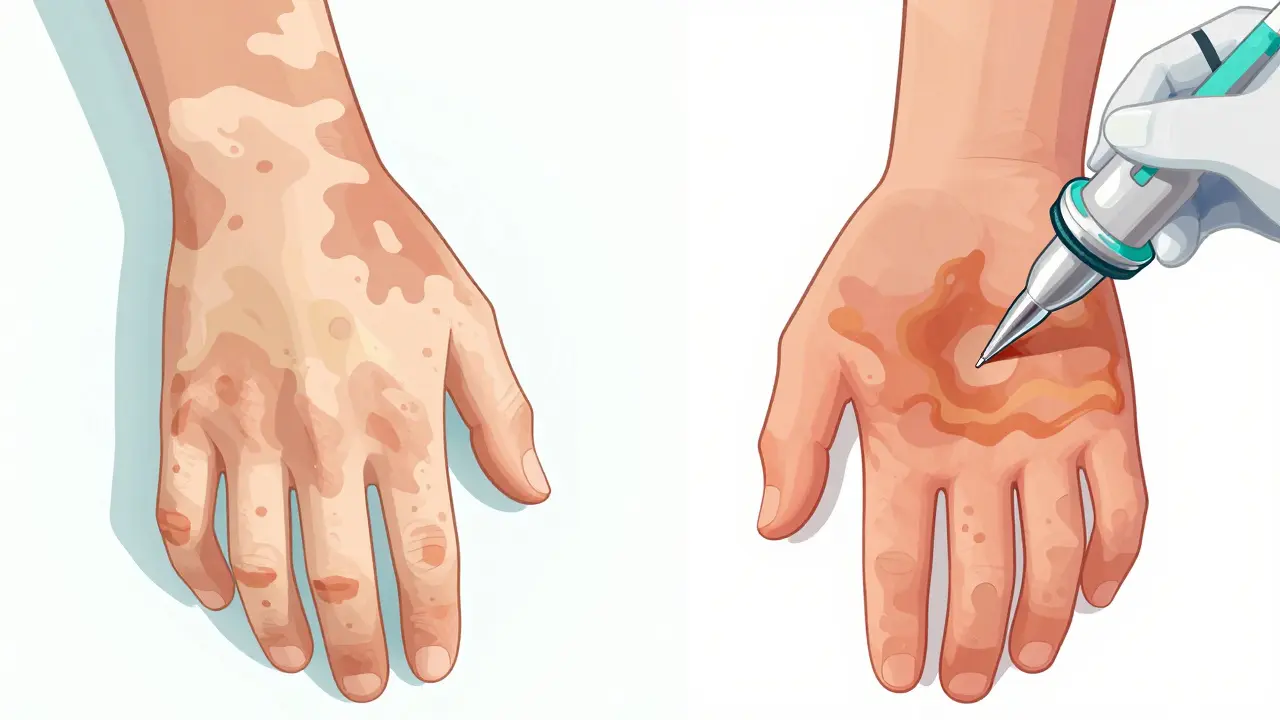
Permanent Solutions: Micropigmentation
For those tired of the 15-minute daily makeup routine, permanent camouflage-also known as Micropigmentation-is a viable option. This is essentially a medical tattoo where inert iron oxide pigments are implanted into the superficial and middle dermis.
This isn't a one-size-fits-all procedure. It is specifically effective for "recalcitrant" vitiligo-areas where the pigment simply won't return despite medical treatment. Think of the edges of the lips, the knuckles, or the elbows. However, there is a strict rule: your vitiligo must be stable for at least 12 months. If the condition is still active (meaning new patches are appearing), the tattoo can lead to a "halo effect," where a new white ring forms around the tattooed area.
Be aware that the skin on your hands and feet is different from the skin on your face. Because of the constant friction and movement, pigment in these areas can fade up to 40% faster. You'll likely need more touch-ups on your knuckles than you would on your forehead.
The Psychological Edge
While the goal is cosmetic, the result is often mental. Research shows that using camouflage can improve a person's Dermatology Life Quality Index (DLQI) score by as much as 35%. When you aren't worrying about who is looking at your skin, you can focus on the conversation, the meeting, or the date.
Many people find a hybrid approach works best. They might use micropigmentation for a small, stubborn patch on the lip and a high-coverage foundation for larger patches on the face. This reduces the daily workload while still providing a polished look.

Common Pitfalls to Avoid
Not all "skin-colored" products are created equal. Here are a few mistakes people often make when starting their camouflage journey:
- Using standard tanning lotions: Regular self-tanners often contain DHA, which can react unpredictably on depigmented skin, sometimes leaving an orange or muddy tint rather than a natural tan.
- Ignoring SPF: Vitiligo patches lack melanin, which is your skin's natural sun protector. Many camouflage products include a small amount of SPF, but you should still apply a dedicated sunscreen underneath your makeup to prevent burns.
- Rough removal: Waterproof formulas are tough. Scrubbing them off with a harsh towel can irritate the skin. Instead, use an oil-based cleanser or a dedicated makeup remover to dissolve the product gently.
Is permanent camouflage safe for everyone with vitiligo?
No. It is only recommended for patients whose vitiligo has been stable for at least one year. If the condition is still progressing, the tattoo may be surrounded by new depigmentation, creating a visible ring. It's also less effective on high-friction areas like the palms and soles of the feet.
How long does it take to learn how to apply camouflage makeup?
Most people take about 2 to 4 weeks of daily practice to feel confident. The hardest part is usually color matching and mastering the "stippling" technique. Many find that a consultation with a certified specialist helps them skip the trial-and-error phase.
Can I use camouflage while I'm undergoing phototherapy?
Yes, but you must remove all camouflage products before your treatment session. Many cosmetic products can block the UV rays needed for phototherapy to work, making the treatment ineffective. Always cleanse your skin thoroughly before your appointment.
Why is camouflage makeup more expensive than regular foundation?
These products contain a significantly higher concentration of pigments (up to 25% more) to ensure full coverage of white patches. They also use specialized waxes and polymers to make the product waterproof and long-wearing, which increases the production cost.
What happens if the micropigmentation color doesn't match?
Since iron oxide pigments come in a wide variety of hues (often over 15), specialists can mix shades to match your skin. If the result is slightly off, some pigments can be lightened or adjusted in follow-up sessions, though complete removal is difficult and requires laser treatment.
Next Steps and Troubleshooting
If you're just starting out, don't buy a dozen different shades. Start by visiting a professional who can help you find your base tone and undertone. If you find the makeup is "breaking up" or disappearing by lunchtime, try switching from a water-based to an anhydrous formula.
For those considering permanent options, start by tracking your patches for six months. If no new areas have appeared and the edges of your current patches are stable, book a consultation with a dermopigmentation specialist. Remember, these tools are here to support your journey, not replace your medical care. Combining the right cosmetics with a steady dermatological plan is the best way to feel comfortable in your own skin.