
 19
Mar,2026
19
Mar,2026
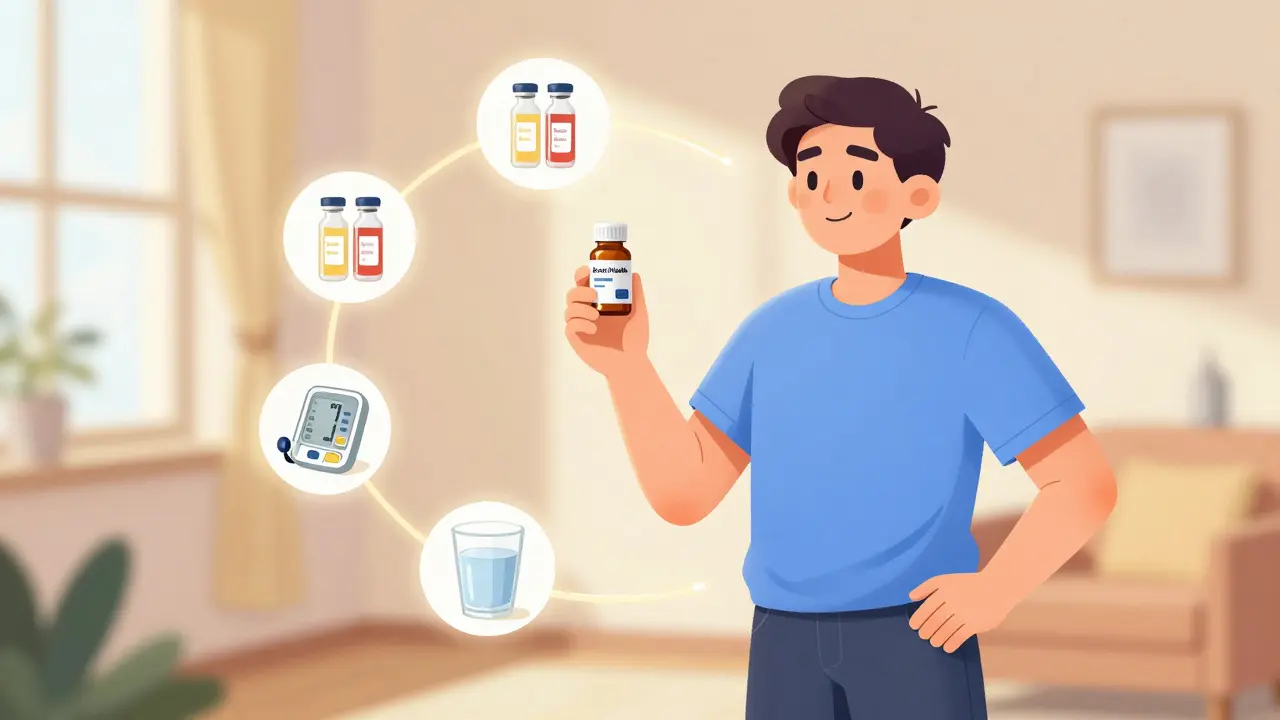
When someone says they take medication for anxiety or depression, the reaction isn’t always understanding. Sometimes it’s silence. Other times, it’s a sideways glance or a comment like, “Aren’t those just for people who can’t handle life?” This isn’t just awkward-it’s harmful. Mental health medication stigma is real, and it keeps people from getting the care they need. In Australia, as in many countries, nearly one in three people who could benefit from psychiatric medication avoid it because of shame, fear, or misinformation. The truth? These medications aren’t a sign of weakness. They’re a tool, like insulin for diabetes or blood pressure pills for heart disease. The problem isn’t the medicine. It’s the story we’ve been told about it.
Why Medication Stigma Is Different
Stigma around mental health isn’t new. But stigma around medication is its own beast. People might accept that someone has depression, but still believe taking an antidepressant means they’re “drugged up” or “losing control.” This isn’t just ignorance-it’s a deep misunderstanding of how the brain works. Unlike a broken leg, which heals visibly, brain chemistry changes happen silently. That invisibility makes it easy to doubt. And when people hear terms like “pills,” “drugs,” or “meds,” their brains often jump to street drugs, not FDA-approved treatments. Research shows using the word “medication” instead of “pills” reduces negative reactions by 41%. Language matters.What’s worse, some healthcare providers unknowingly fuel this stigma. A 2021 study found that 22% of primary care doctors felt uncomfortable prescribing psychiatric meds, worried they’d be seen as “giving up” on therapy. That’s dangerous. It tells patients: your condition isn’t real enough for proper treatment. Meanwhile, 45% of patients say they feel embarrassed taking medication, and 25% stop within 30 days because of it. This isn’t about willpower. It’s about fear of being judged.
How to Talk About It Without Shame
If you’re a provider, a loved one, or someone taking medication yourself, here’s how to change the conversation. Start with normalization. Say this: “Many people take medication for mental health, just like others take medicine for high blood pressure or thyroid issues.” Simple. Direct. No drama. A 2023 study showed that when patients heard this line from their doctor, their willingness to continue treatment went up by 38%.Then, educate. Compare it to something familiar. “Your brain makes chemicals that affect your mood. When those are out of balance, medication helps restore them-just like insulin helps balance blood sugar.” This isn’t just theory. A 2021 meta-analysis found that explaining how psychiatric medications work reduced stigma beliefs by 34%. People don’t reject what they understand.
Finally, personalize. Don’t just give facts. Share your truth. “For me, this medication means I can get out of bed without crying. It lets me be a parent, a partner, a worker.” That’s powerful. A 2023 trial with 700 students showed that hearing someone’s personal story increased their intention to take medication by 22%. Real stories beat statistics every time.
What Providers Can Do
If you’re a clinician, your words carry weight. Don’t say, “You need to take this.” Say, “How do you feel about taking medication for your condition? What worries you?” Two questions. That’s it. A 2023 study found this approach led to 33% higher adherence rates. Patients don’t want to be told what to do. They want to be heard.Train yourself. Eight hours of cultural competency training reduces provider stigma by 29%. Learn how to talk about medication without judgment. Use the right language. Say “medication,” not “drugs.” Say “treatment,” not “fix.” Say “brain health,” not “mental breakdown.” The American Psychiatric Association says this alone cuts patient shame by 27%.
Integrate care. Don’t send people to a separate mental health clinic. Bring medication management into primary care. Henry Ford Health’s 2023 study found that when patients talked to their regular doctor about antidepressants, stigma dropped by 38%. It becomes just another part of health-not a secret.
What Patients Can Do
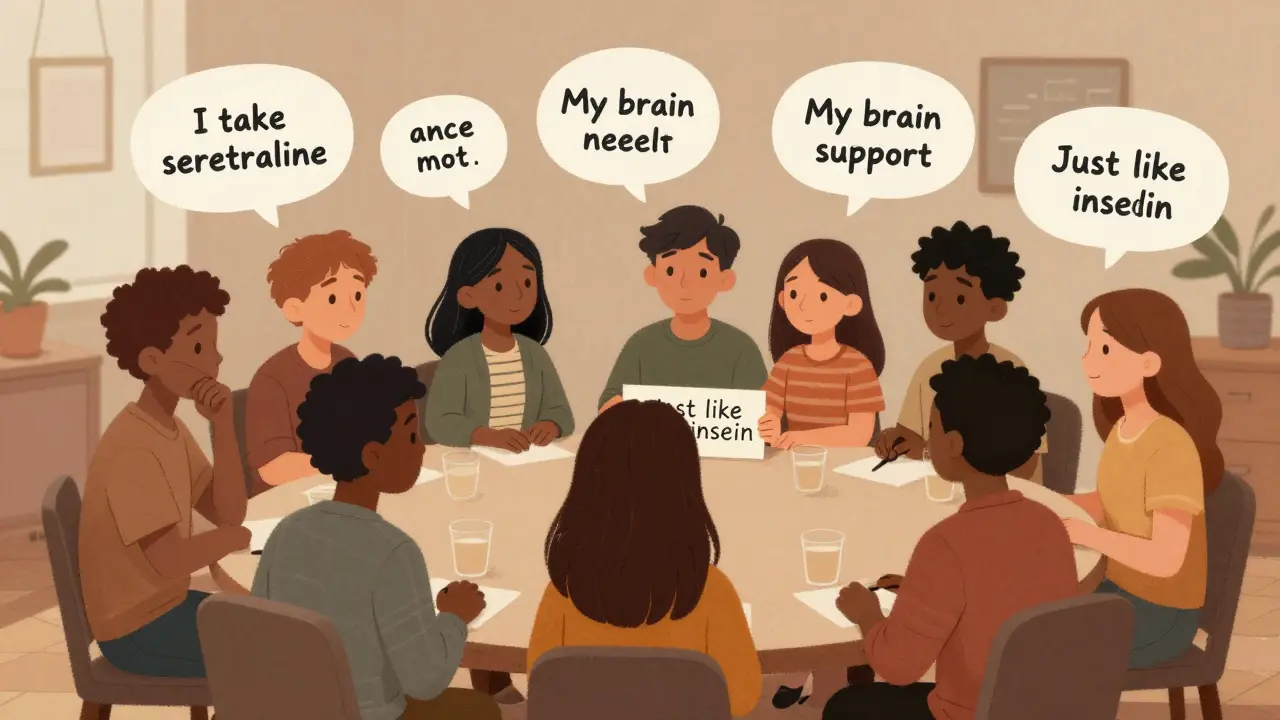
If you’re taking medication, you’re not alone. One in five Australians will take a psychiatric medication in their lifetime. But shame makes you feel like you’re the only one. Join a support group. Read stories online. Reddit’s r/mentalhealth has over 1,200 upvotes on a thread where people share how they talk about their meds. One comment: “I say I take medicine for my brain the way others take it for their heart. No one argues with that.”Practice saying it out loud. “I take sertraline for depression.” Say it in the mirror. Say it to a friend. Say it to your pharmacist. The more you say it, the less power the stigma has. YouTube creator John Green, with over 2 million subscribers, says 68% of his viewers felt less stigma after watching him talk openly about his SSRIs. You don’t need a platform. You just need to speak.
Cultural Barriers and How to Break Them
Stigma isn’t the same everywhere. In some Asian Australian communities, 47% fewer people take antidepressants than in white Australian communities. Why? Cultural beliefs that mental health issues should be handled privately, or that medication is a sign of family shame. This isn’t about ignorance. It’s about tradition. The solution? Meet people where they are. Use community leaders. Share stories from people who look like them. A 2020 study showed that when medication discussions included culturally familiar examples-like herbal remedies being used for physical illness-adherence improved. Translation: if you frame medication as part of holistic care, not a betrayal of culture, people listen.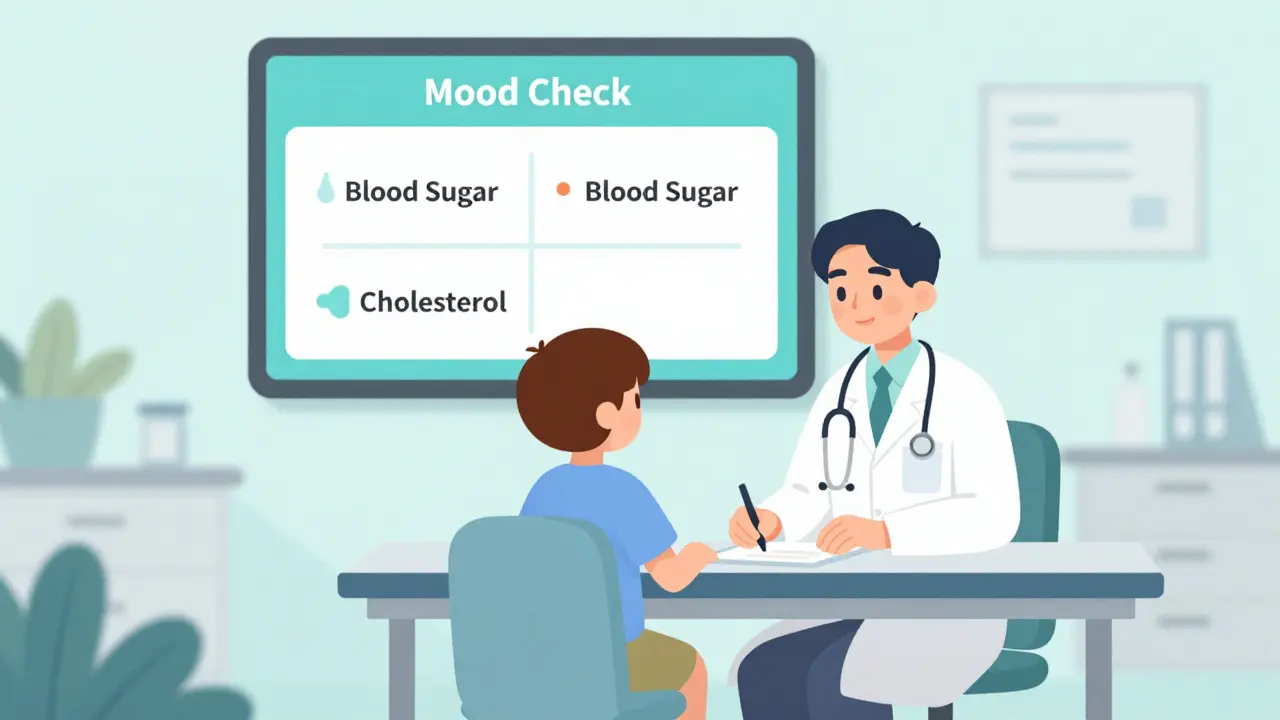
Tools That Actually Work
There are real tools out there. The SAMHSA “Medication Conversation Starter” app has been downloaded over 150,000 times. It gives you scripted responses to common stigmatizing comments: “It’s not a crutch-it’s a bridge.” “My brain needs support, just like my knee does.” The app’s users report 42% more confidence in conversations.NAMI’s 4-hour “Medication as Treatment” workshop has an 87% success rate. Participants learn how to explain, advocate, and respond. And it sticks-6 months later, they’re still using the skills.
Peer support specialists-people who’ve taken medication themselves-are proving invaluable. Programs that hire them see 28% higher long-term adherence. Why? Because they’ve been there. They don’t preach. They connect.
What Doesn’t Work
Not all efforts help. Some empathy-building exercises-like simulating hallucinations-can backfire. A 2023 study found they increased stigma by 15% when not framed properly. Trying to shock people into understanding doesn’t work. Education does. Storytelling does. Normalization does.Also, avoid saying, “It’s just like taking a pill for diabetes.” That’s close, but not perfect. Diabetes is visible. Mental illness isn’t. Instead, say: “It’s like treating a chronic condition that affects how your brain works. You wouldn’t shame someone for using an inhaler. Why shame someone for using a medication that helps their brain?”
The Future Is Integrated
By 2026, over two-thirds of antidepressant prescriptions in Australia will come from general practitioners, not psychiatrists. That’s progress. When mental health care is part of routine check-ups, stigma fades. No more separate rooms. No more whispered conversations. Just a doctor asking, “How’s your mood been?” and writing a script if needed.The CDC’s “Medications as Medicine” campaign is already showing results in pilot communities-21% more people now see psychiatric meds as legitimate treatment. The NIMH is funding a $2.4 million study across 15 health centers to train staff to normalize these conversations. And it’s working. Staff stigma dropped by 29% in just six months.
Telehealth is a double-edged sword. While it increases access, 41% of patients feel less comfortable discussing meds over video. That’s why providers need training-not just on tech, but on tone. A calm, open voice matters more than a camera.
The goal isn’t to make everyone love taking medication. It’s to make sure no one feels ashamed for doing it.
Why do some people think mental health medication is addictive?
This belief comes from confusing psychiatric medications with recreational drugs. Antidepressants, anti-anxiety meds, and mood stabilizers don’t cause euphoria or cravings like opioids or stimulants. They work slowly to balance brain chemistry. The FDA has approved over 150 such medications, all tested for safety. Withdrawal symptoms can happen if stopped suddenly-but that’s true for blood pressure or seizure meds too. It’s not addiction. It’s physiology.
How can I tell if my doctor is stigmatizing my medication use?
Watch for language and tone. If your doctor says things like, “Have you tried therapy first?” or “Are you sure you need this?” without asking about your symptoms, they may be minimizing your needs. A non-stigmatizing provider will ask, “What are your goals?” and “What concerns do you have?” They’ll treat your medication like any other chronic disease treatment-no judgment, just collaboration.
Is it okay to tell my employer I take mental health medication?
You’re not legally required to disclose. But if you need accommodations-like flexible hours or time off for appointments-you’ll need to share some details. You don’t have to say “I take antidepressants.” You can say, “I’m managing a medical condition that affects my energy and focus.” Most workplaces are legally required to protect you. Still, 43% of people report negative reactions after disclosure. Weigh your safety, your support system, and your workplace culture before deciding.
Why do young adults feel more shame about taking medication?
Teens and young adults (18-25) are especially vulnerable to stigma because their identity is still forming. Carrying pills can feel like being labeled “broken.” A 2022 study of 1,842 college students found 57% were embarrassed to carry medication in public. Social media makes it worse-people compare curated lives, not their real struggles. The fix? Normalize it early. Schools, parents, and peer groups need to talk about mental health meds like they talk about glasses or allergy pills.
Can medication stigma be overcome in rural areas?
Yes, but it takes community effort. In rural areas, stigma is often stronger because there’s less access to information and more fear of being judged by neighbors. The most effective approach? Use trusted local figures-teachers, pastors, coaches-to share stories. A 2023 pilot in regional Victoria used local health workers to host small group discussions. Within six months, medication adherence rose by 24%. Visibility and familiarity break isolation.
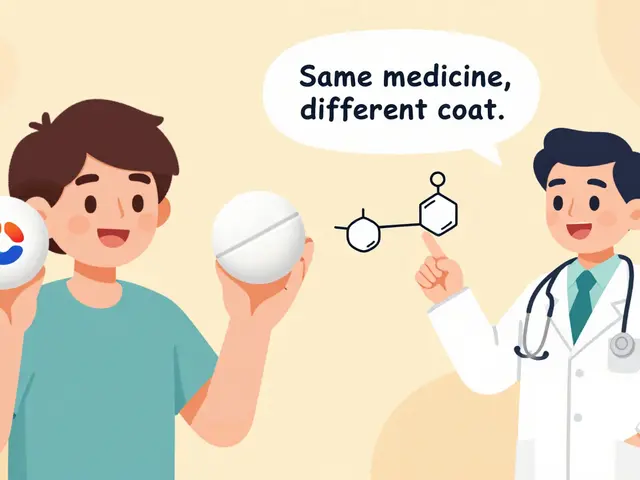

Let’s be real-stigma around mental health meds isn’t about logic, it’s about fear. People don’t get that your brain’s chemistry can be out of whack like your blood sugar. They see a pill and think ‘drug addict.’ Meanwhile, I’m taking sertraline like I take my blood pressure med. No drama. Just biology.
And honestly? The language shift from ‘pills’ to ‘medication’? Game-changer. Research backs it. 41% less negative reaction. Words matter. Stop saying ‘drugs’ when you mean ‘prescription.’
Normalization works. Just say it like you’d say ‘I take insulin.’ No need to over-explain. Simple. Quiet confidence. That’s all it takes to chip away at stigma.
Oh please. This whole post reads like a corporate DEI pamphlet. You think saying ‘it’s like insulin’ somehow magically fixes centuries of cultural misunderstanding? We’re not talking about a broken leg here. We’re talking about the soul. And you’re reducing it to a pharmaceutical vending machine.
People don’t need more meds. They need meaning. Purpose. Community. Not another chemical crutch disguised as ‘brain health.’
Actually, the insulin comparison is spot-on. The brain is an organ. It’s not ‘weakness.’ It’s physiology. If your pancreas fails, you take insulin. If your serotonin transporters misfire, you take SSRIs. Same thing. Stop making it mystical.
Okay but like… I’ve been on meds for 8 years and honestly? The worst part isn’t the stigma from strangers-it’s when your own family says ‘you used to be so happy before all this’ like it’s some kind of betrayal. Like my brain got a upgrade and I traded my personality for a mood stabilizer. Ugh.
And don’t even get me started on therapists who act like meds are a last resort. Like, bro, I tried therapy for 3 years. It helped, sure. But I still couldn’t get out of bed. Medication didn’t change me. It let me come back to myself.
Also, why do people think you’re ‘taking something’ instead of ‘replacing something your body can’t make enough of’? Like, if you’re diabetic, you don’t get praised for eating right. You get praised for taking insulin. Same thing. We’re not asking for applause. Just don’t treat us like we’re broken.
In India, we have this belief that mental health issues are caused by bad karma or lack of spiritual discipline. But my cousin? Took fluoxetine. Got her life back. Now she teaches yoga and runs a support group. We don’t call it ‘medication’ here-we call it ‘brain support.’ It’s not a betrayal of culture. It’s evolution.
And honestly? When you say ‘my brain needs help like my knee does,’ people get it. No judgment. Just nod. That’s all we need.
THIS IS WHY AMERICA IS FALLING APART. PEOPLE ARE TAKING PILLS FOR EVERYTHING NOW. YOU CAN’T JUST FIX LIFE WITH CHEMICALS. WHERE’S THE STRENGTH? WHERE’S THE GRIT? I WORK 60 HOURS A WEEK AND I DON’T NEED A PILLS TO HANDLE IT. YOU’RE CREATING A GENERATION OF WEAKNESSES.
PS: I SAW A DOCTOR WHO SAID ‘YOU NEED THIS’ AND I JUST WALKED OUT. I’M NOT A LAB RAT. 🤬
Wow. Another ‘mental health is just like diabetes’ lecture. Cool. So now we’re gonna treat depression like it’s a flat tire? Next thing you know, we’ll be prescribing ‘anxiety tires’ and ‘depression oil changes.’
Also, who authorized this? The APA? The pharma lobby? Because I didn’t vote for this.
Wait, so if I take medication, am I allowed to say I have a ‘brain condition’? Or do I have to say ‘mental health issue’? Because I’ve been told ‘brain condition’ sounds too clinical, but ‘mental health issue’ sounds too vague. And if I say ‘I’m on antidepressants,’ people either stare or say ‘oh I know someone who took that and it made them suicidal.’
Can we just… make a script? Like, ‘I take medication for my brain the way you take glasses for your eyes.’ Is that too much to ask? I just want to not feel like a freak when I say it out loud.
Let me present the peer-reviewed data: A 2023 meta-analysis of 14 randomized controlled trials demonstrated that pharmacological intervention for mood disorders, when coupled with cognitive behavioral therapy, yielded statistically significant improvements in executive functioning metrics (p < .01) when compared to placebo-controlled cohorts. The reduction in symptom severity, as measured by the HAM-D-17 and MADRS scales, was sustained over 12-month follow-up periods. The notion that ‘medication is a crutch’ is a heuristic fallacy rooted in neurophobic cultural narratives. The human prefrontal cortex is not a moral agent. It is a biological system. To pathologize its regulation is to misunderstand the nature of homeostasis itself.
Yesss. Exactly. I say ‘I take meds for my brain’ and people go ‘oh cool, like for ADHD?’ and I’m like ‘yeah, but for sadness’ and they just nod and move on. No judgment. Just normal. That’s the goal. Just… normal.
Who funds this? Big Pharma? I’ve seen the ads. They say ‘feeling down? Take this!’ Then they hide the side effects. And now everyone’s on something. I’ve got a cousin on 5 different meds. She can’t even remember her own birthday. This isn’t healing. This is chemical containment. The government’s pushing this because they don’t wanna fix housing, jobs, or trauma-they wanna drug us into silence.
Simple truth: If your body needs insulin, you take it. If your brain needs serotonin support, you take it. No shame. No drama. Just health. You wouldn’t shame someone for glasses. Don’t shame someone for their brain.
It is of paramount importance to acknowledge that the sociocultural construction of psychiatric pharmacotherapy is deeply embedded within a capitalist medical-industrial complex, wherein the commodification of neurochemical imbalance serves as a mechanism of social control. The normalization of psychotropic intervention, while ostensibly progressive, inadvertently reinforces a reductionist biomedical paradigm that pathologizes human emotional variability. The epistemological shift from ‘mental illness’ to ‘brain health’ is not merely semantic-it is ideological. One must interrogate the power structures that render pharmaceutical intervention as the default, rather than systemic reform: economic precarity, social isolation, and institutional neglect. Until we address the root causes, we are merely administering sedatives to a dying society.