
Warfarin: What You Need to Know About This Blood Thinner
When you hear warfarin, a prescription anticoagulant used to prevent dangerous blood clots. Also known as Coumadin, it's one of the most widely prescribed blood thinners in the world—used by millions to keep strokes, heart attacks, and pulmonary embolisms at bay. But warfarin isn’t like other pills. Take it wrong, and it can turn life-saving into life-threatening. Get it right, and it keeps you alive without you even noticing it’s working.
What makes warfarin so tricky? It doesn’t just work on its own. Its effect depends on your diet, other meds, even your genes. Foods high in vitamin K—like spinach, kale, and broccoli—can make it less effective. Antibiotics, painkillers, and even some herbal supplements can boost its power, raising your risk of bleeding. That’s why doctors rely on INR monitoring, a blood test that measures how long it takes your blood to clot to keep your dose just right. Most people on warfarin get tested every few weeks, sometimes more often if things change.
It’s not just about the dose. drug interactions, how warfarin reacts with other medications are a huge part of the story. A single new prescription—even something as simple as an OTC antacid—can throw your levels off. That’s why pharmacists play a critical role: they’re the ones checking your full list of meds and flagging risks before you even leave the counter. And because warfarin’s effects can linger for days, missing a dose or doubling up doesn’t just cause a hiccup—it can lead to serious complications.
People on warfarin often worry about bleeding. A cut that won’t stop, bruising for no reason, or dark stools aren’t normal. But they’re not rare either. That’s why so many posts here focus on practical safety: how to read your prescription labels, what to do when you travel, how to handle missed doses, and how to avoid dangerous mixes with other drugs. You’ll also find real advice on managing warfarin alongside other chronic conditions—like high blood pressure, atrial fibrillation, or even after a joint replacement.
There’s no sugarcoating it: warfarin demands attention. But for many, it’s the best tool they’ve got. Newer blood thinners exist, but they’re not always cheaper, accessible, or suitable. Warfarin still works for millions because it’s predictable—if you treat it right. The posts below give you the tools to do exactly that: from understanding your INR results to avoiding common mistakes with food and other meds. You won’t find fluff here. Just clear, actionable info that helps you stay safe while staying alive.
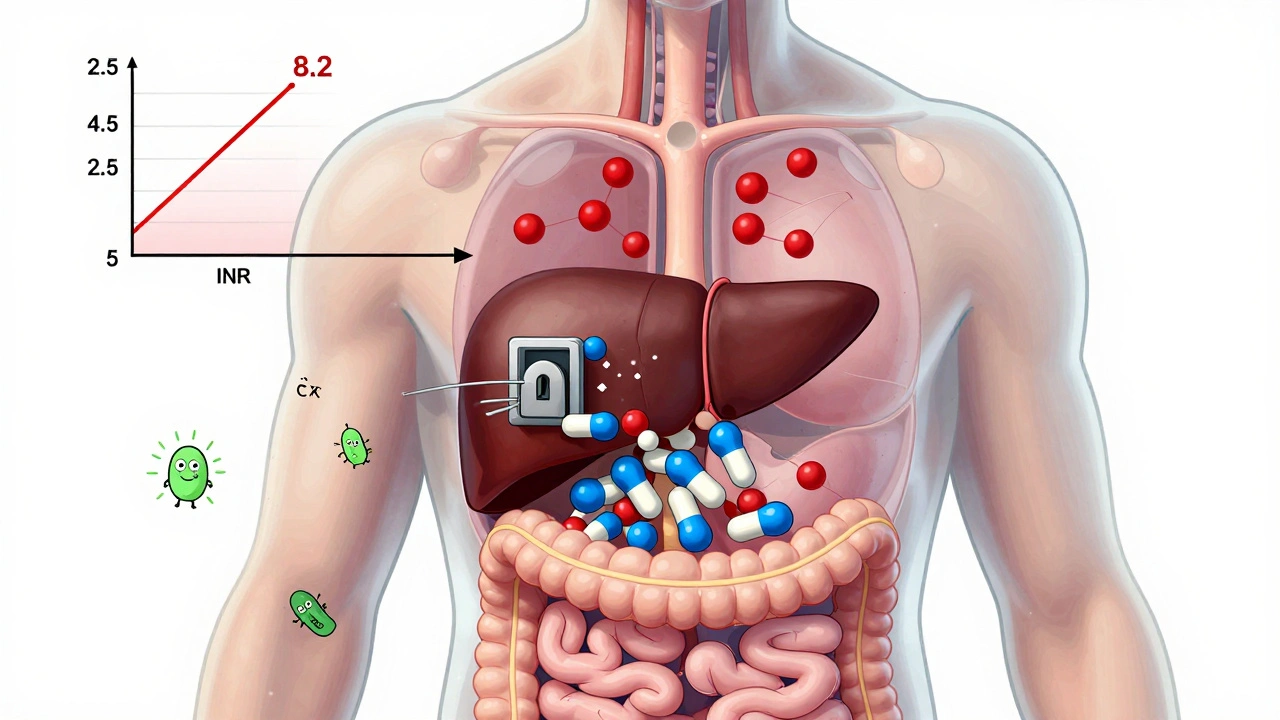
Warfarin and Antibiotics: How Common Drugs Can Spike Your INR Risk
Warfarin and certain antibiotics can dangerously raise your INR, increasing bleeding risk. Learn which antibiotics are risky, why the delay matters, and how to protect yourself with timely testing.
View more