
 18
Dec,2025
18
Dec,2025
Antibiotics save lives. But they’re not harmless. Every year, millions of people take them for infections like pneumonia, strep throat, or a urinary tract infection. Most of the time, they work exactly as they should. But for many, they also bring unwanted side effects - from mild stomach upset to serious, long-lasting damage. Understanding which antibiotics you’re taking and what they can do to your body isn’t just helpful - it’s necessary.
How Antibiotics Work (And Why They’re Not for Colds)
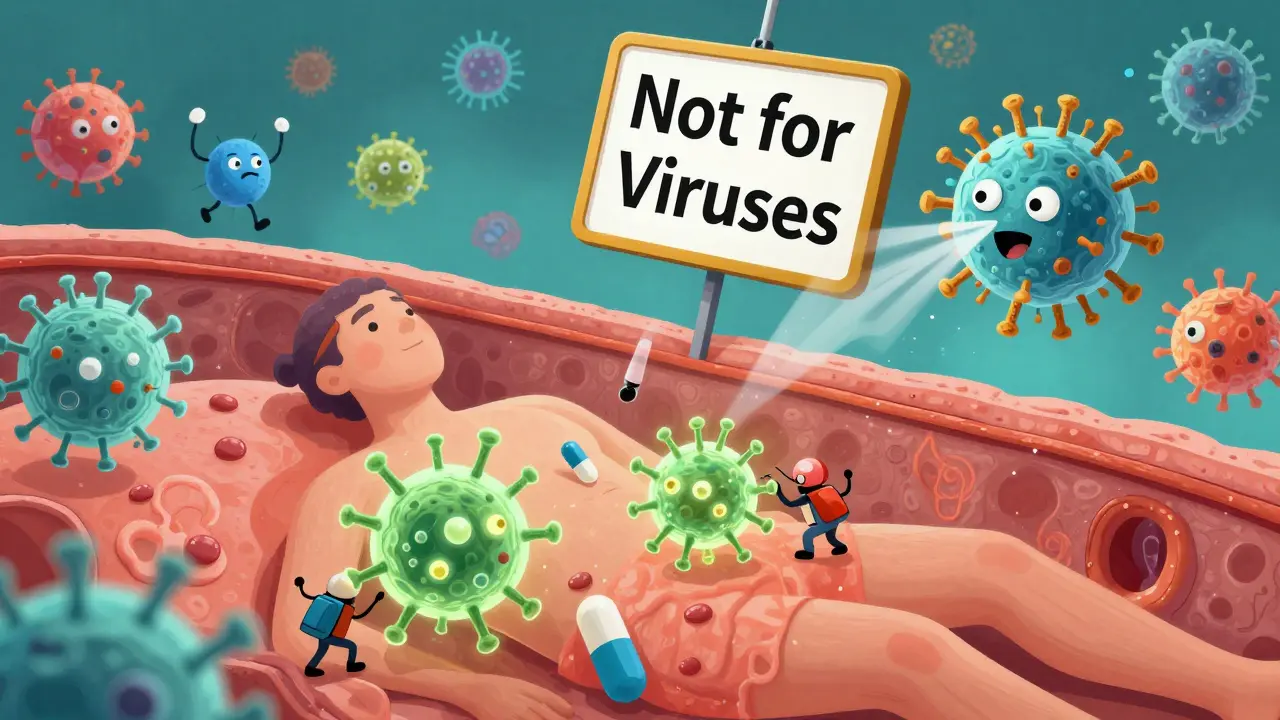
Antibiotics only work on bacteria. They don’t touch viruses. That means they won’t help with the flu, a cold, or most sore throats caused by viruses. Taking them anyway doesn’t speed up recovery - it just increases your risk of side effects and helps bacteria become resistant. This is why doctors are now more careful than ever about prescribing them.
The first antibiotic, penicillin, was discovered in 1928 by Alexander Fleming. It changed everything. Before antibiotics, even a small cut could lead to death from infection. Today, antibiotics reduce pneumonia death rates from 30% to under 5%. But overuse has created a new threat: antimicrobial resistance. The World Health Organization says resistant infections now kill about 1.27 million people each year.
The Seven Most Common Antibiotic Classes
There are dozens of antibiotics, but seven classes make up nearly all prescriptions. Here’s what you’re likely to be given - and what to watch out for.
Penicillins: The Original
Penicillins are the oldest and still the most prescribed. Amoxicillin alone accounts for nearly 18% of all antibiotic prescriptions in the U.S. It’s used for ear infections, sinus infections, and strep throat.
How it works: It breaks down the protective wall around bacteria, causing them to burst.
Common side effects: Nausea (15-20%), diarrhea (5-10%), stomach pain, and yeast infections. About 10% of people say they’re allergic to penicillin. But studies show 90% of those people aren’t truly allergic - they just had a rash or upset stomach back in childhood. If you think you’re allergic, get tested. You might be able to take it safely.
Cephalosporins: The Penicillin Alternative
Cephalexin and ceftriaxone are common in this group. They’re often used when someone says they’re allergic to penicillin - but the risk of cross-reactivity is only 1-3%. That means most people can take cephalosporins even if they had a reaction to penicillin.
How it works: Similar to penicillins - it weakens the bacterial cell wall.
Common side effects: Diarrhea (5-15%), nausea, and occasional rash. Rarely, it can cause a severe skin reaction called Stevens-Johnson syndrome - but that happens in fewer than 1 in 10,000 cases.
Tetracyclines: For Acne and Lyme Disease
Doxycycline is the most common here. It’s used for acne, Lyme disease, tick-borne illnesses, and some respiratory infections. It’s cheap, effective, and taken once or twice a day.
How it works: It stops bacteria from making proteins they need to survive.
Common side effects: Sun sensitivity - you can burn easily, even on cloudy days. Stomach upset (15-25%). And if given to children under 8, it permanently stains teeth. That’s why it’s never prescribed to young kids.
Macrolides: Azithromycin’s Popularity
Azithromycin (Zithromax) is the third most prescribed antibiotic in the U.S. It’s often given as a 5-day “Z-Pak.” People love it because it’s short and easy. But it’s not without risks.
How it works: Blocks protein production in bacteria, like tetracyclines.
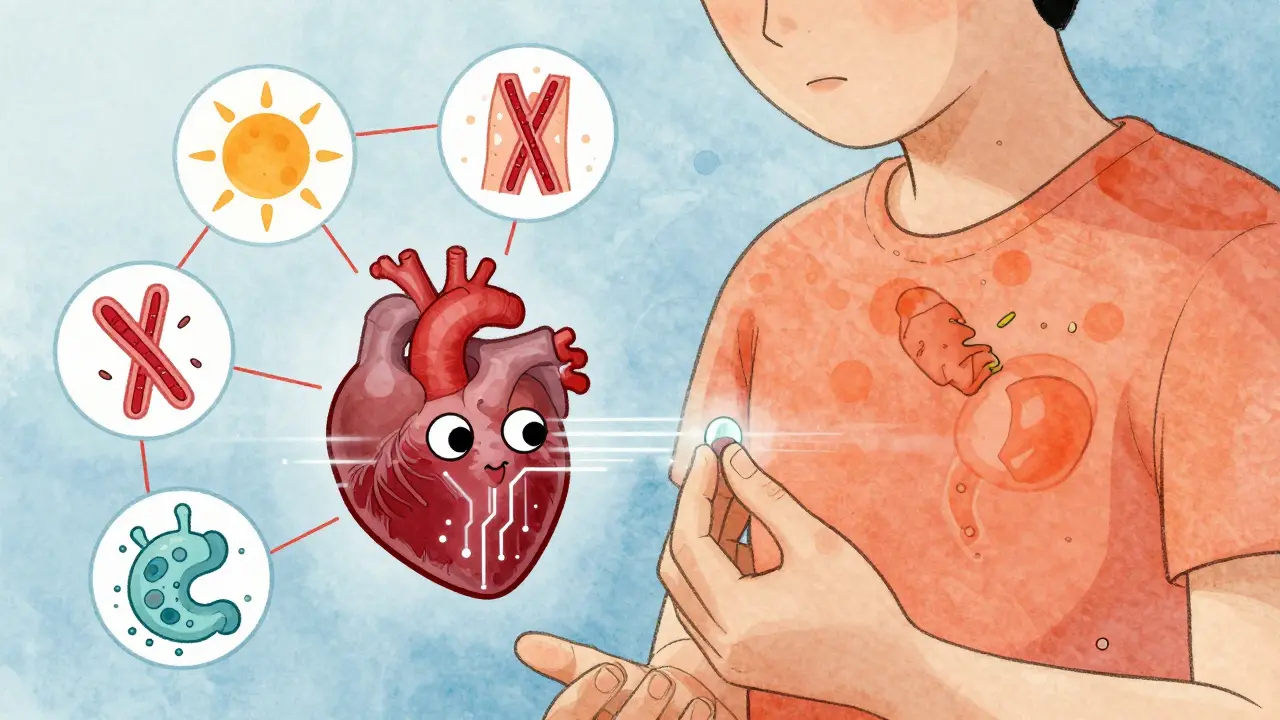
Common side effects: Diarrhea, nausea, and vomiting (10-20%). But the big concern is heart rhythm changes. A 2022 study of 1 million patients found azithromycin increases the risk of dangerous heart arrhythmias by 2.15 times. It’s not common, but if you have a heart condition or take other heart meds, ask your doctor.
Fluoroquinolones: Powerful - But Dangerous
Ciprofloxacin and levofloxacin are strong antibiotics used for serious infections like kidney infections or pneumonia when other drugs fail. But the FDA issued a black box warning in 2016 - the strongest possible - because of their risks.
How it works: It cuts up bacterial DNA so they can’t reproduce.
Common side effects: Tendon rupture (0.1-0.4%), nerve damage (peripheral neuropathy - 0.2-0.5%), and a 2.7 times higher risk of aortic aneurysm. These can happen even after just a few doses. Many doctors now avoid these unless there’s no other option. They’re not for simple sinus infections or bronchitis.
Sulfonamides: For UTIs and Immune Patients
Trimethoprim-sulfamethoxazole (Bactrim or Septra) is used for urinary tract infections and to prevent pneumonia in people with weakened immune systems, like those with HIV.
How it works: It blocks folic acid, which bacteria need to grow.
Common side effects: Nausea, rash, and sun sensitivity. But the big risk is severe skin reactions - Stevens-Johnson syndrome - which occurs in 1-6 cases per million. It’s rare, but deadly. If you get a rash, fever, or blisters, stop taking it and go to the ER.
Glycopeptides: Last-Resort Antibiotics
Vancomycin is the go-to for MRSA - a dangerous antibiotic-resistant staph infection. It’s usually given in hospitals through an IV.
How it works: It stops bacteria from building their cell walls.
Common side effects: “Red man syndrome” - a flushing, itching rash if given too fast. Kidney damage (5-30% with long use), and hearing loss (1-5% with high doses). It’s powerful, but only used when absolutely necessary.
What Side Effects Are Most Common?
Not all side effects are scary. Most are mild and go away after you stop the antibiotic.
- Diarrhea - happens in up to 20% of people. It’s often caused by the antibiotic killing good gut bacteria. Probiotics might help, but don’t rely on them alone.
- Nausea and stomach upset - very common. Take the pill with food unless your doctor says not to.
- Yeast infections - especially in women. Antibiotics kill bacteria that keep yeast in check. A simple antifungal cream usually fixes it.
- Allergic reactions - rash, hives, swelling. If you have trouble breathing or your throat closes, that’s an emergency. Call 911.
On Drugs.com, 68% of users said diarrhea was their biggest problem. Only 22% reported allergic reactions. But the scary ones - tendon tears, nerve damage, heart issues - are rare. Still, they’re real. Know the signs.
Antibiotic Resistance: Why It Matters
Every time you take an antibiotic, you’re helping bacteria adapt. If you take it when you don’t need it - like for a cold - you’re training bacteria to survive it. That’s how superbugs like MRSA and VRE (vancomycin-resistant enterococcus) appear.
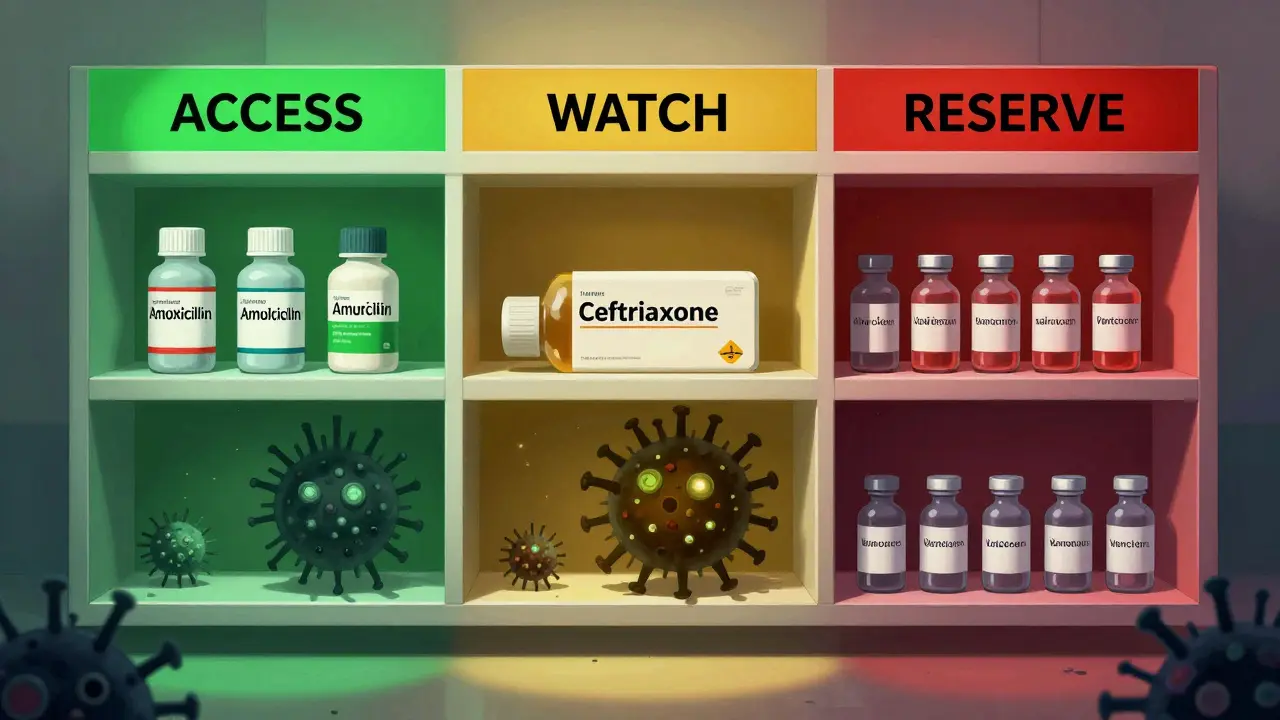
The WHO divides antibiotics into three groups:
- ACCESS - safe, first-choice drugs like amoxicillin.
- WATCH - higher risk of resistance, like ceftriaxone. Use only when needed.
- RESERVE - last-resort, like vancomycin. Only used when everything else fails.
Countries using this system have cut inappropriate antibiotic use by 27%. That’s progress. But in the U.S., 45% of bronchitis prescriptions still last longer than the recommended 5-7 days. That’s unnecessary exposure.
How to Use Antibiotics Safely
Here’s what you can do:
- Don’t ask for antibiotics - if your doctor says it’s a virus, trust them.
- Take exactly as prescribed - even if you feel better after two days, finish the whole course.
- Don’t share or save - leftover antibiotics can be dangerous if used incorrectly.
- Ask about alternatives - for some infections, watchful waiting is better than antibiotics.
- Report side effects - if something feels wrong, tell your doctor. The FDA’s reporting system helps track risks.
And if you think you’re allergic to penicillin - get tested. Many people are mislabeled. You might be able to use a safer, cheaper, more effective drug.
What’s Next for Antibiotics?
Only two new antibiotic classes have been approved since 2000. Developing them is expensive and hard. The global market is worth $42 billion, but big pharma isn’t investing much because antibiotics aren’t as profitable as drugs you take for life.
But there’s hope. The FDA approved cefiderocol in 2019 for hard-to-treat infections. And hospital antibiotic stewardship programs - now in 85% of U.S. hospitals - have cut misuse by 35%.
The bigger threat? By 2050, antimicrobial resistance could cost the world $1 trillion a year. We’re heading back to a time when a scraped knee could kill you. The solution isn’t just new drugs - it’s using the ones we have wisely.
Can I take antibiotics for a cold or the flu?
No. Colds and the flu are caused by viruses. Antibiotics only work on bacteria. Taking them for a virus won’t help you feel better faster - it just increases your risk of side effects and contributes to antibiotic resistance. If you have a cold, rest, hydrate, and let your immune system do its job.
Is it safe to stop antibiotics early if I feel better?
No. Stopping early can leave behind the strongest bacteria, which then multiply and cause a worse infection. It also increases the chance that bacteria will become resistant to the antibiotic. Always finish the full course, even if you feel fine after a few days.
What should I do if I have an allergic reaction to an antibiotic?
If you get hives, swelling, trouble breathing, or a rapid heartbeat, call emergency services immediately. These are signs of anaphylaxis - a life-threatening reaction. For milder rashes or itching, stop the medication and contact your doctor. Don’t assume it’s harmless - some reactions get worse with repeated exposure.
Can antibiotics cause long-term gut problems?
Yes. Antibiotics kill good bacteria along with bad ones. This can lead to diarrhea, yeast infections, or in rare cases, a serious infection called C. diff, which causes severe diarrhea and colitis. Some people develop lasting changes in their gut microbiome. Eating fermented foods or taking probiotics after antibiotics may help, but they’re not a guaranteed fix.
Are natural remedies like garlic or honey as good as antibiotics?
No. While honey can help soothe a sore throat and garlic has mild antibacterial properties in lab settings, they cannot replace antibiotics for serious bacterial infections like pneumonia, sepsis, or kidney infections. Relying on natural remedies instead of proven medicine can be dangerous - and even deadly.
Why do some antibiotics cause sun sensitivity?
Some antibiotics, like tetracyclines and sulfonamides, make your skin more sensitive to UV light. This can cause severe sunburns, rashes, or blistering even after short sun exposure. Always use sunscreen, wear protective clothing, and avoid tanning beds while taking these drugs - and for a few days after you finish.

Really appreciate this breakdown. I had no idea 90% of people who think they're allergic to penicillin aren't actually allergic. Got tested last year after years of avoiding it - turned out I was fine. Saved me hundreds on prescriptions and got me back on the most effective drug for my sinus infections. Always get tested if you're unsure.
Let’s be real - this is just a glorified FDA pamphlet with extra steps. The real issue? Pharma’s lobbying power. Fluoroquinolones were pulled from OTC in 2016 because of lawsuits, not safety. They’re still prescribed like candy in rural clinics. And don’t get me started on how Z-Paks are used for viral bronchitis - it’s criminal negligence masked as ‘patient satisfaction.’
I took doxycycline for Lyme last year and got sunburned through my shirt at 10 AM on a cloudy day. Like, literally turned red like a lobster. My dermatologist said it’s not even the sun - it’s the drug reacting with UV light like a chemical burn. Now I wear a hat indoors if there’s a window nearby. Also, side note: I cried when I saw ‘red man syndrome’ - not because I had it, but because I now know how terrifying it sounds.
Antibiotics aren’t magic. They’re tools. Use them like you’d use a chainsaw - respect the blade, know the limits, don’t use them to trim hedges. The fact that we treat them like candy is why we’re heading into a post-antibiotic world. Simple as that.
It’s not about antibiotics. It’s about our relationship with control. We want to fix everything with a pill - even when nature is doing its job. We fear discomfort so much we’ll poison our microbiome just to feel ‘better’ faster. But what is ‘better’? Is it the absence of symptoms? Or the presence of resilience? We’re outsourcing our immunity to Big Pharma and calling it progress.
I used to think antibiotics were like vitamins - take a few when you’re sick. Then I got C. diff after a simple UTI treatment. Spent three weeks in the hospital. Lost 20 pounds. Now I only take them if my doctor says it’s bacterial and I’ve waited 72 hours. And I eat yogurt every day. It’s not science, but it’s peace of mind.
Penicillin allergy myths are wild. My mom was told she was allergic in 1982 after a rash - turned out it was a virus. She’s 72 now, still avoids penicillin. Meanwhile, her arthritis meds cost 3x more because they can’t use the cheaper, better antibiotic. We’re all paying for her childhood rash.
Just want to say - if you’re reading this and you’ve ever been told you’re allergic to penicillin, please, please talk to your doctor about getting tested. It’s a simple skin test. No needles, no pain. You could be saving yourself from worse drugs, higher costs, and more side effects. You’ve got this.