
Statin Side Effects: What You Need to Know and How to Handle Them
When you take a statin, a class of drugs used to lower LDL cholesterol and reduce heart attack risk. Also known as HMG-CoA reductase inhibitors, they’re among the most prescribed medications in the world because they work—when taken correctly. But for many people, the benefits come with unwanted side effects. You’re not alone if you’ve felt muscle soreness, unusual tiredness, or just a general sense that something’s off. These aren’t just "in your head"—they’re real, documented reactions that happen in a significant number of users.
The most common issue is muscle pain, ranging from mild soreness to severe weakness that can limit daily movement. This isn’t always about overexertion; it’s often the drug interfering with how your muscles produce energy. Less common but more serious are signs of liver stress, shown by rising liver enzyme levels on blood tests. And yes, statin interactions, especially with grapefruit juice, certain antibiotics, or other cholesterol drugs, can make side effects worse or even dangerous.
Some people worry about memory problems or diabetes risk. Research shows a small increase in blood sugar for some, but the heart protection usually outweighs that risk. The key isn’t stopping the medication on your own—it’s talking to your doctor early. Many side effects can be managed by switching statins, lowering the dose, or adding coenzyme Q10. Others need a completely different approach.
What you’ll find in the posts below are real, practical stories and guides from people who’ve dealt with these issues. You’ll learn how to tell if your muscle pain is normal or a red flag, how to check for dangerous drug combinations, how to monitor your liver safely, and what alternatives exist if statins just aren’t working for you. No fluff. No scare tactics. Just clear, actionable info that helps you stay in control of your health without giving up the protection statins offer.
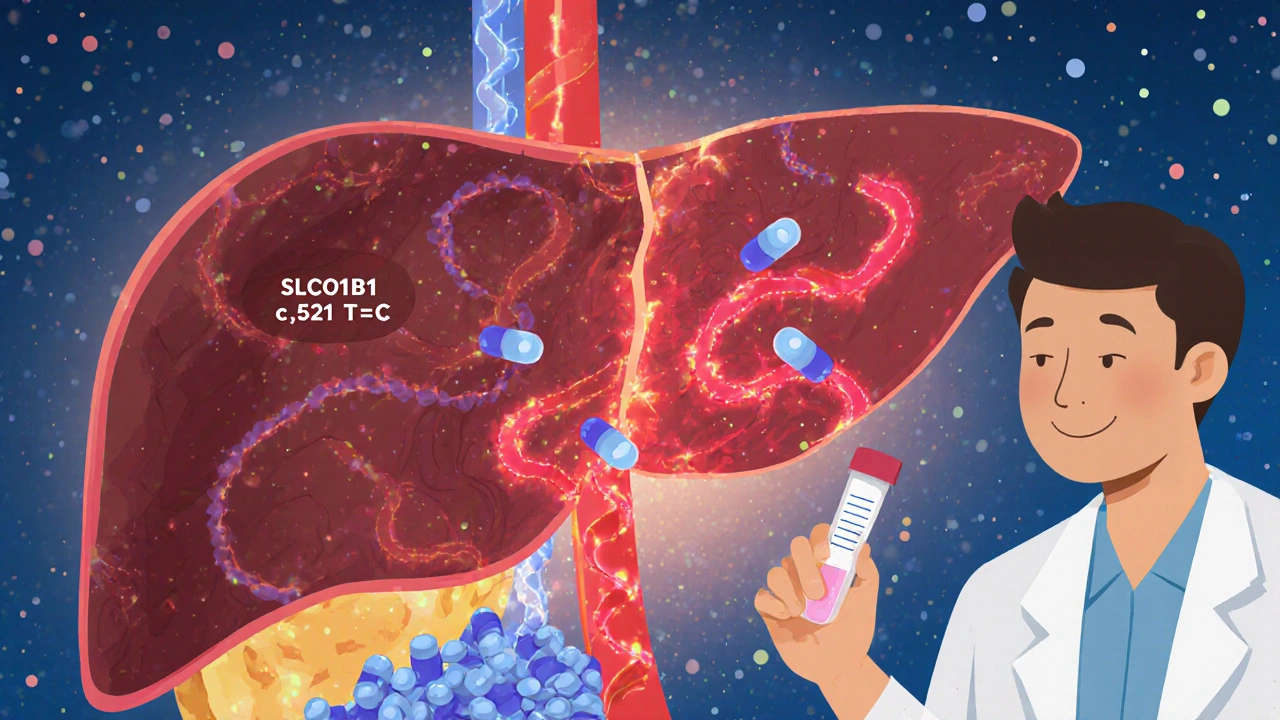
Genetic Factors in Statin Tolerance: How Pharmacogenomics Testing Can Help
Genetic factors like the SLCO1B1 gene variant can significantly affect statin tolerance, causing muscle pain in some people. Pharmacogenomics testing helps identify those at risk, guiding safer statin choices - especially for simvastatin.
View more