
Hatch-Waxman Act: How It Shaped Generic Drugs and Lowered Prescription Costs
When you pick up a generic pill at the pharmacy and pay a fraction of what the brand-name version costs, you’re seeing the impact of the Hatch-Waxman Act, a 1984 U.S. law that created a legal pathway for generic drugs to enter the market without repeating expensive clinical trials. Also known as the Drug Price Competition and Patent Term Restoration Act, it’s the reason millions of Americans can afford their meds today.
This law didn’t just make generics possible—it fixed a broken system. Before 1984, brand-name drug makers held a monopoly long after their patents expired because generic companies had to prove safety and effectiveness from scratch. The Hatch-Waxman Act changed that by letting generics submit an Abbreviated New Drug Application (ANDA), proving they’re bioequivalent to the original. That means the same active ingredient, same dose, same way it works—but without the marketing budget. It’s not magic. It’s science, streamlined by law.
The Act also gave brand-name companies something in return: up to five extra years of market exclusivity to make up for time lost during FDA review. This balance kept innovation alive while opening the door for competition. Today, over 90% of prescriptions in the U.S. are filled with generics—and most of them trace back to this one law. It’s why drugs like fluoxetine (Prozac) and bupropion (Wellbutrin) cost pennies now, even though they were once expensive brand-name only. It’s why the FDA can monitor generic safety through systems like FAERS and Sentinel, because the law set the stage for post-market tracking. And it’s why complex generics—inhalers, creams, injectables—are still hard to copy: the Act didn’t fully solve every challenge, but it gave regulators the framework to keep trying.
Related to this are drug patents, legal protections that give companies exclusive rights to sell a drug for a set time, and FDA approval, the process that ensures every drug—brand or generic—is safe and effective before it hits shelves. The Hatch-Waxman Act sits right at the intersection of these two. It doesn’t erase patents—it works around them. And it doesn’t skip safety—it just makes the path smarter. That’s why you see posts here about patent exclusivity vs. market exclusivity, why biosimilars are now catching up in the U.S., and why pharmacists are trained to report adverse events from generics. This law didn’t just lower prices. It changed how we think about access, equity, and trust in medicine.
What you’ll find below are real-world stories of how this law plays out: how generics are tested, how shortages happen, how patients verify their meds, and how the system still has gaps. No theory. No fluff. Just what happens when policy meets pharmacy shelves—and how it affects your wallet, your health, and your next prescription.
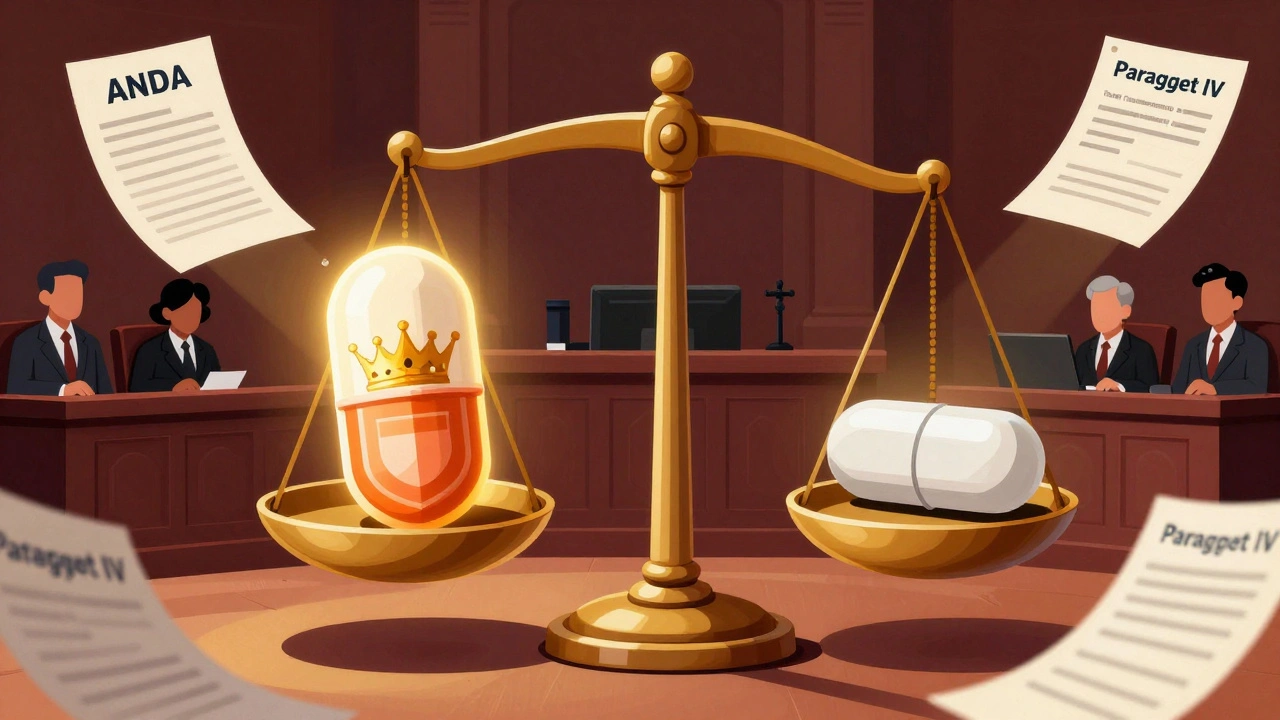
Hatch-Waxman Act: How It Shaped Generic Drugs in the U.S.
The Hatch-Waxman Act created the modern system for generic drug approval in the U.S., balancing innovation and affordability. It cut drug costs by billions while keeping new drugs coming. Here's how it works-and why it's still vital today.
View more