
Generic Drug Safety: What You Need to Know About Effectiveness and Risks
When you pick up a generic drug, a lower-cost version of a brand-name medication approved by the FDA as therapeutically equivalent. Also known as generic medications, they contain the same active ingredient, strength, and dosage form as the original—but often cost 80% less. That savings doesn’t mean lower quality. The FDA requires every generic to meet the same strict standards for purity, strength, and performance as the brand-name version. But here’s the catch: safety isn’t just about what’s in the pill. It’s about how it behaves in your body, how it’s made, and whether someone noticed something wrong before it got to you.
One big reason people worry about bioequivalence, the scientific proof that a generic drug performs the same way in the body as the brand-name version is because not all drugs are easy to copy. Simple pills? Easy. Complex ones like inhalers, creams, or injectables? Much harder. These require advanced science to match, and some generics fail the test. That’s why the FDA tracks real-world data through systems like adverse event reporting, a system where doctors, pharmacists, and patients report unexpected side effects or treatment failures. Pharmacists are on the front lines—they spot when a patient’s blood pressure suddenly spikes after switching generics, or when a depression medication stops working. Those reports matter. They’re how the FDA finds patterns no lab test ever could.
And it’s not just about the medicine itself. The Hatch-Waxman Act, the 1984 law that created the modern pathway for generic approval in the U.S. balanced innovation and affordability, but it also left gaps. Some companies exploit patent extensions to delay generics. Others cut corners on manufacturing, leading to shortages. When a cheap generic disappears from shelves, patients are forced to pay more—or go without. That’s why checking your prescription label, understanding warning stickers, and knowing how to verify your meds at the pharmacy aren’t just good habits—they’re safety steps.
You’ll find real stories here: how a patient’s muscle pain turned out to be a genetic reaction to a generic statin, why a skin rash after switching antidepressants needed urgent attention, and how a pharmacist’s report flagged a batch of generic blood pressure pills that weren’t releasing properly. These aren’t rare cases. They’re part of the system. And you have more power than you think to stay safe.
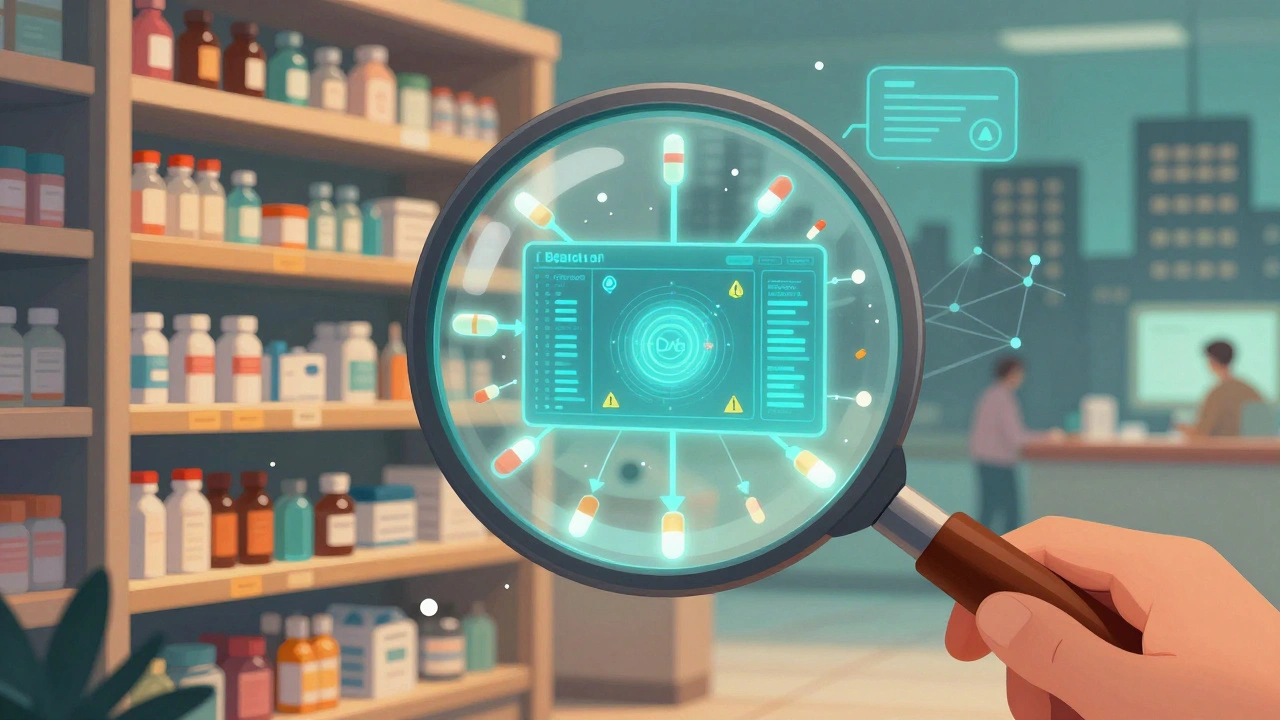
Post-Market Surveillance: How the FDA Monitors Generic Drugs After Approval
The FDA monitors generic drugs after approval using real-world data, adverse event reports, and AI tools to ensure ongoing safety. Learn how systems like FAERS and Sentinel catch problems that clinical trials miss.
View more