
Fluoxetine: What It Is, How It Works, and What You Need to Know
When you hear fluoxetine, a selective serotonin reuptake inhibitor (SSRI) used to treat depression, anxiety, and OCD. Also known as Prozac, it's one of the most prescribed antidepressants in the U.S. since the 1980s. It doesn’t make you feel "happy"—it helps your brain get back to regulating mood, sleep, and energy the way it should. Unlike older antidepressants, fluoxetine has fewer side effects and isn’t addictive, which is why doctors still reach for it first.
Fluoxetine works by increasing serotonin, a chemical in your brain that helps nerve cells communicate. Low serotonin is linked to depression, panic attacks, and obsessive thoughts. But fluoxetine isn’t a quick fix. It takes 4 to 6 weeks to kick in, and many people quit too early because they don’t feel immediate results. That’s a mistake. Studies show people who stick with it for at least 8 weeks see real improvement in daily function—not just mood, but motivation, focus, and even physical symptoms like fatigue or stomach issues.
It’s also used for more than depression. Fluoxetine is FDA-approved for obsessive-compulsive disorder (OCD), a condition where intrusive thoughts lead to repetitive behaviors, bulimia nervosa, an eating disorder involving bingeing and purging, and even premenstrual dysphoric disorder (PMDD), a severe form of PMS with mood swings and irritability. Some doctors prescribe it off-label for anxiety disorders, chronic pain, or even premature ejaculation. But it’s not for everyone. People with bipolar disorder can trigger mania. Those on MAOIs must wait two weeks before starting fluoxetine. And mixing it with alcohol? That’s a bad idea—it can make depression worse and increase drowsiness.
Side effects are common at first—nausea, dry mouth, trouble sleeping, or feeling jittery. But they usually fade after a couple of weeks. The big red flag? Suicidal thoughts in teens and young adults during the first few months. That’s why the FDA requires a black box warning. If you or someone you know starts having new or worsening thoughts of self-harm, call your doctor immediately. Don’t wait. Don’t assume it’s "just adjustment."
Fluoxetine stays in your system longer than most SSRIs—up to a month after you stop. That’s why withdrawal is usually milder, but stopping cold turkey can still cause dizziness, brain zaps, or mood crashes. Always taper under medical supervision. And if you’re switching meds? Timing matters. Too fast, and you risk serotonin syndrome—a rare but dangerous buildup of serotonin that causes high fever, rapid heartbeat, and confusion.
Below, you’ll find real-world insights from patients and professionals: how fluoxetine interacts with alcohol, what to do if it stops working, how it compares to other SSRIs like sertraline or escitalopram, and why some people swear by it while others can’t tolerate it. This isn’t theory. These are the stories, reports, and warnings that come from people living with it every day.
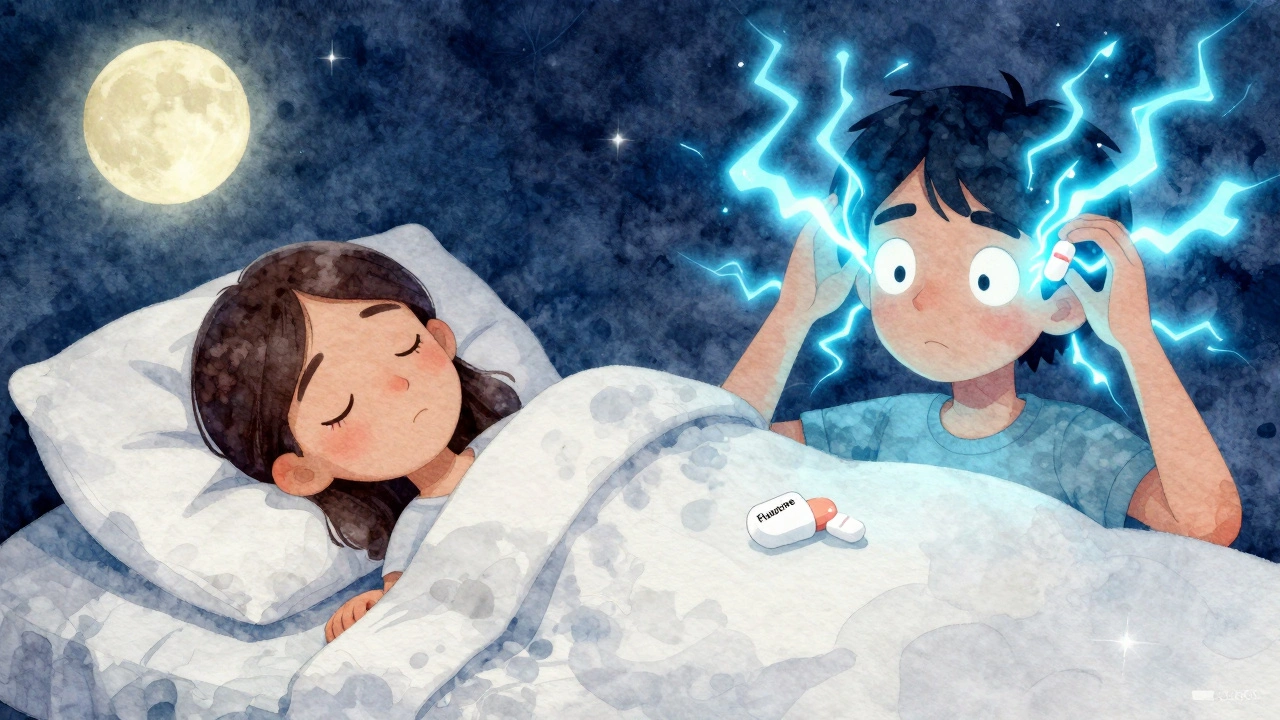
Fluoxetine Activation: How to Manage Anxiety, Insomnia, and Timing for Better Results
Fluoxetine (Prozac) can cause anxiety and insomnia because it's one of the most activating SSRIs. Learn how timing, dosing, and individual factors affect side effects - and what to do if it keeps you up at night.
View more