
Bioequivalence: What It Means for Generic Drugs and Your Health
When you pick up a generic pill, you want to know it does the same job as the brand-name version. That’s where bioequivalence, the scientific standard that proves two drug formulations release the same amount of active ingredient at the same rate in the body. Also known as therapeutic equivalence, it’s the quiet rule that keeps your prescriptions safe, affordable, and effective. Without bioequivalence, a generic drug could be too weak to work — or too strong and cause side effects. The FDA and other global health agencies require this proof before allowing a generic version to hit the shelf. It’s not about the pill looking the same. It’s about how your body absorbs it.
Bioequivalence isn’t just a lab test — it’s tied to real-world outcomes. If a drug is absorbed too slowly, it won’t control your blood pressure when you need it. If it’s absorbed too fast, you might get dizzy or nauseous. That’s why studies measure blood levels over time, comparing the generic to the original. The numbers have to fall within a tight range — usually 80% to 125% of the brand’s absorption. This isn’t guesswork. It’s based on clinical data from hundreds of volunteers. And it’s why you can trust a $5 generic for high blood pressure instead of paying $150 for the brand.
But bioequivalence doesn’t cover everything. It doesn’t guarantee identical side effects — inactive ingredients like fillers or dyes can still cause reactions. It doesn’t apply to drugs with narrow therapeutic windows, like warfarin or lithium, where even tiny differences matter. And it doesn’t mean all generics are the same. Different manufacturers might use slightly different methods, which is why some people notice a change when switching between generics. That’s why your doctor or pharmacist might stick with one brand if you’ve been stable on it.
What you’ll find in the posts below is a collection of real-world stories and science-backed comparisons that connect directly to bioequivalence. You’ll see how drugs like bupropion, clonidine, and trimetazidine are tested, why some people notice differences between generics, and how patent rules can delay access to cheaper versions. You’ll also learn how pharmacokinetics — how your body moves a drug — plays into whether a generic works for you. This isn’t theory. It’s what happens when you take a pill every day and need to know it’s doing what it should.
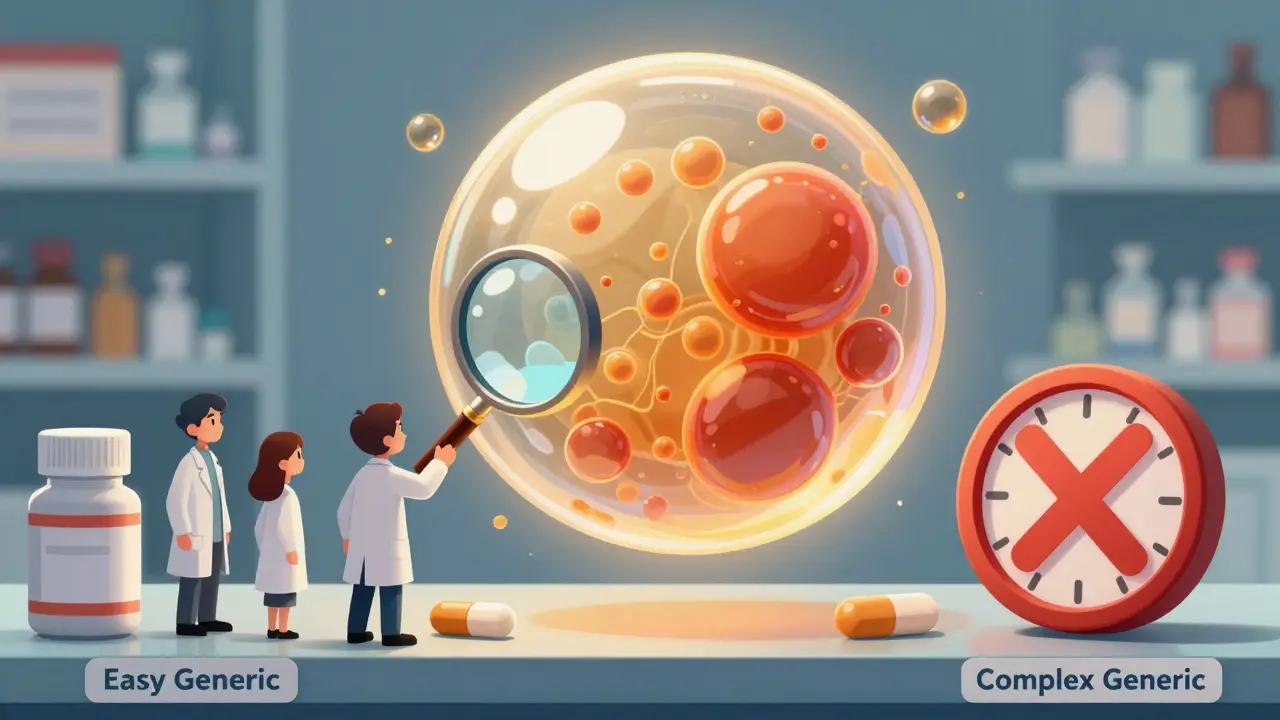
Complex Generic Drugs: Why Some Products Are Harder to Get FDA Approval
Complex generic drugs face major scientific and regulatory hurdles that delay FDA approval, leaving patients without affordable alternatives even after brand-name patents expire. Learn why these drugs are so hard to copy.
View more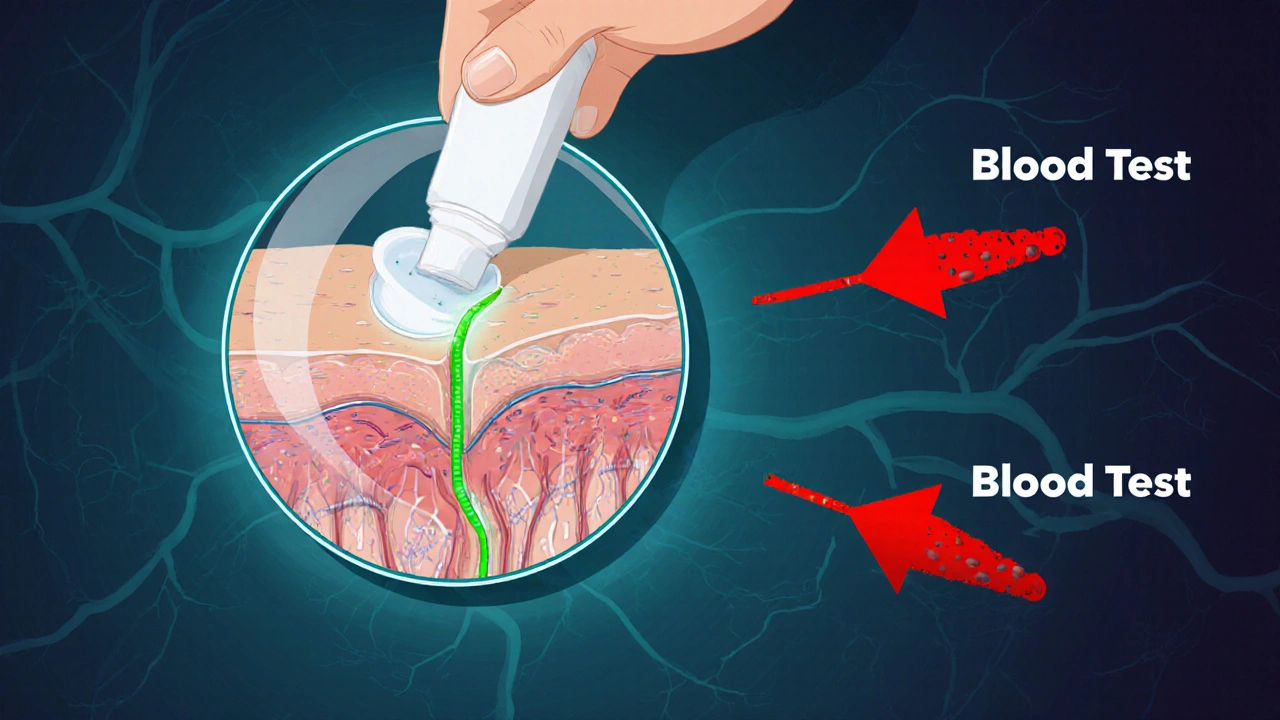
Complex Generic Formulations: Why Proving Bioequivalence Is So Hard
Complex generic formulations like inhalers, creams, and injections are hard to copy because they act locally, not in the bloodstream. Proving they work the same as brand drugs requires advanced science - and many fail.
View more