
Anxiety: Understanding Causes, Treatments, and Medications That Help
When you feel anxious, it’s not just "being nervous"—it’s your body and brain stuck in a high-alert state, often without a clear threat. Anxiety, a common mental health condition marked by excessive worry, restlessness, and physical tension. Also known as generalized anxiety disorder, it’s one of the most diagnosed conditions in the U.S., affecting nearly 40 million adults. Unlike normal stress, anxiety doesn’t fade after the problem is solved. It lingers, disrupts sleep, makes concentration hard, and sometimes triggers panic attacks. The good news? It’s treatable—and you don’t have to choose between pills and therapy. Many people find relief with a mix of both.
One of the most common prescription options is buspirone, a non-addictive anti-anxiety medication that works differently than benzodiazepines. It doesn’t cause drowsiness or dependence, making it a safer long-term choice for many. But it’s not the only path. antidepressants, especially SSRIs and SNRIs, are often used off-label for anxiety because they help regulate brain chemicals tied to mood and fear responses. For those who prefer to avoid prescription drugs, natural anxiety remedies, like L-theanine, magnesium, and valerian root, offer gentle support by calming the nervous system. And while meds can quiet the body’s alarm system, CBT for anxiety, a type of talk therapy that rewires how you respond to anxious thoughts, gives you tools that last long after treatment ends. These aren’t competing options—they’re pieces of the same puzzle.
What you’ll find below isn’t just a list of articles. It’s a practical guide to what actually works. From how buspirone compares to herbal options, to why mixing antidepressants with alcohol can be dangerous, to how CBT helps reduce panic without drugs—every post is based on real data, patient experiences, and clinical guidelines. You’ll learn how to spot early signs of medication side effects, when to ask your doctor for alternatives, and how to avoid common mistakes that make anxiety worse. This isn’t theory. It’s what people are using right now to feel better.
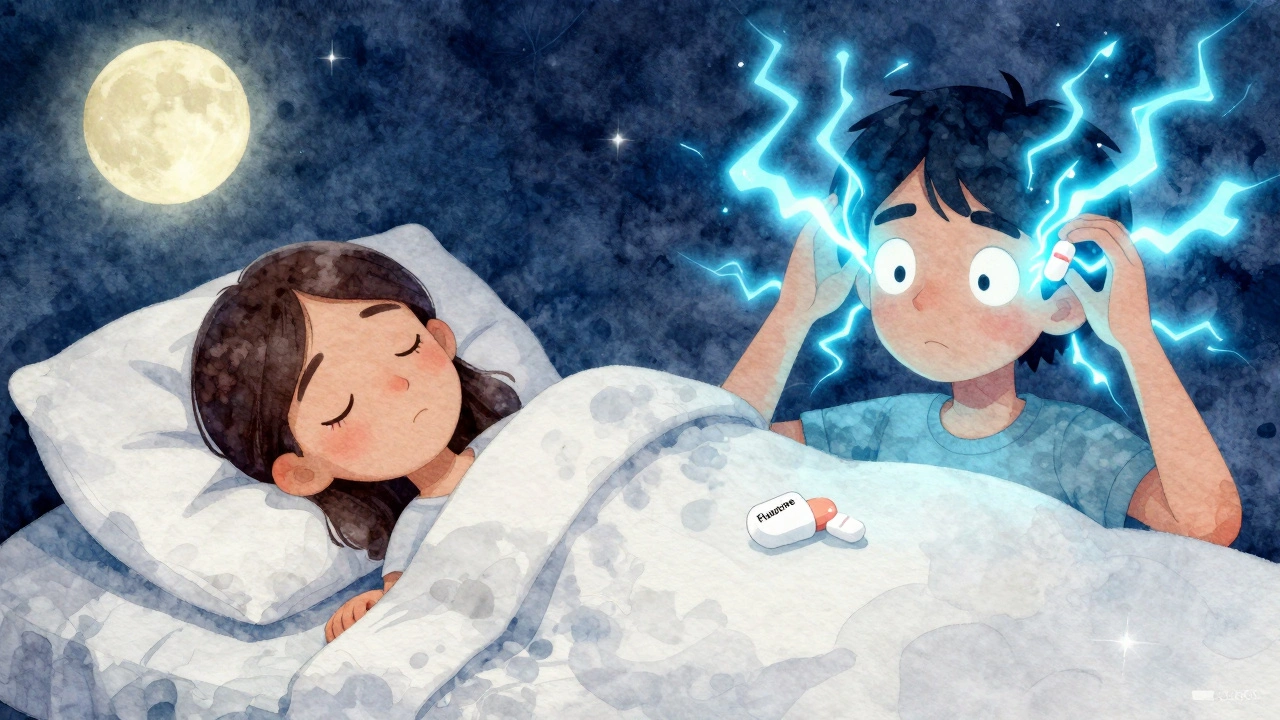
Fluoxetine Activation: How to Manage Anxiety, Insomnia, and Timing for Better Results
Fluoxetine (Prozac) can cause anxiety and insomnia because it's one of the most activating SSRIs. Learn how timing, dosing, and individual factors affect side effects - and what to do if it keeps you up at night.
View more