
Acetaminophen After Vaccines: Safe Use, Risks, and What You Need to Know
When you or your child gets a vaccine, it’s normal to feel a little sore, warm, or achy afterward. That’s your body doing its job. But when the fever hits or the pain lingers, many reach for acetaminophen, a common over-the-counter pain and fever reducer also known as paracetamol. Also known as Tylenol, it’s one of the most trusted options for easing discomfort after shots. But here’s the thing: taking it right after vaccination might not always be the best move.
Studies show that giving acetaminophen too early—especially right before or immediately after a vaccine—can slightly lower the body’s immune response. That doesn’t mean it’s dangerous, but it might make the vaccine a little less effective. The CDC and other health groups now recommend waiting to use it only if fever or pain becomes bothersome, not as a preventive measure. This is especially important for kids getting routine shots like MMR or pneumococcal, where a strong immune reaction is exactly what you want.
It’s not just about timing. acetaminophen is safe when used correctly, but it’s also one of the leading causes of accidental liver damage in the U.S. because people don’t realize how easy it is to overdose. Many cold and flu meds, sleep aids, and combination pain relievers already contain it. If you’re taking more than one product, you could be hitting the 4,000 mg daily limit without knowing it. That’s why checking labels matters—especially after vaccines, when you might be tempted to stack remedies.
What about side effects? Most people tolerate acetaminophen fine, but if you have liver disease, drink alcohol regularly, or take other medications like blood thinners, you need to be extra careful. Even a small extra dose can be risky. And if your fever lasts more than 48 hours after a vaccine, or you develop a rash, swelling, or trouble breathing, that’s not a normal reaction—it’s a sign to call your doctor.
The bottom line? Don’t rush to reach for acetaminophen the second you feel a twinge. Wait and see. Drink water. Rest. Use a cool compress. If symptoms get worse or stick around, then it’s time to think about medication. And if you do use it, stick to the lowest effective dose for the shortest time. Your immune system doesn’t need help—it just needs space to work.
Below, you’ll find real-world advice from posts that dig into how acetaminophen interacts with vaccines, what other OTC options are safe, how to avoid dangerous combinations, and what the science actually says about immune response. No guesswork. Just clear, practical info you can use.
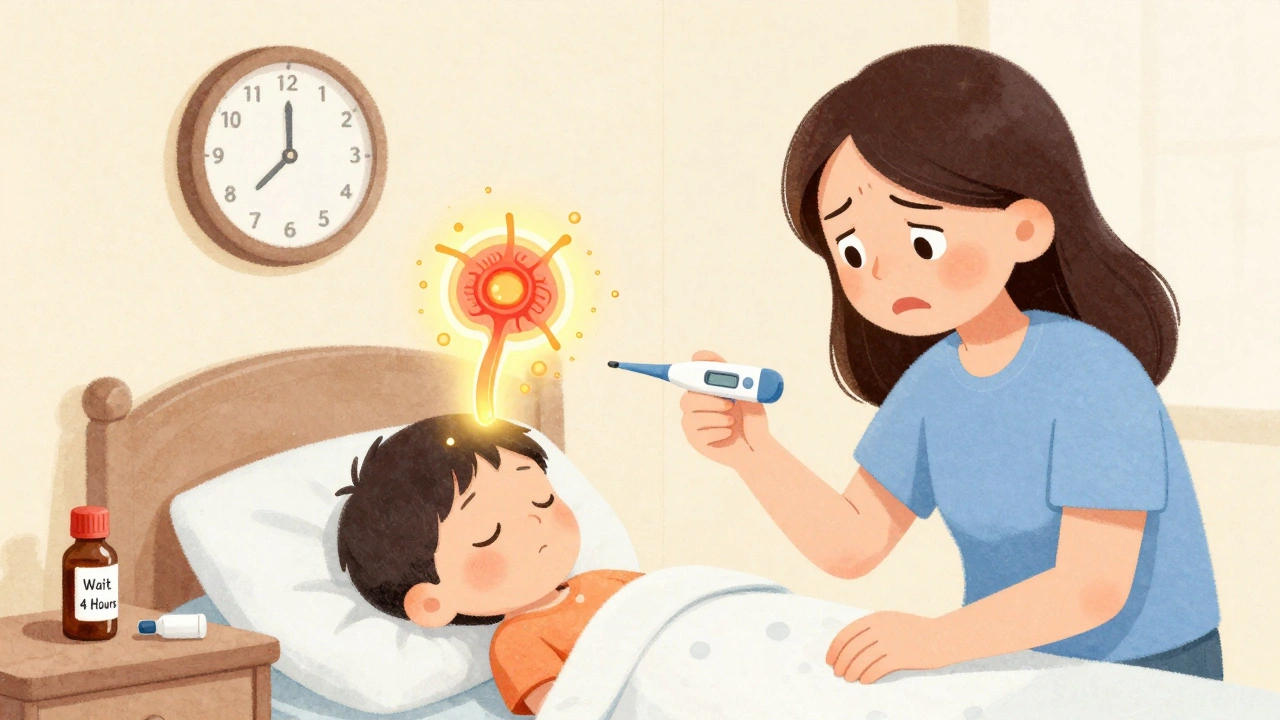
When to Give Fever Reducers After Your Child’s Vaccines
Learn the right time to give fever reducers like acetaminophen or ibuprofen after your child's vaccines. Discover why giving medicine too early can reduce vaccine effectiveness-and what to do instead.
View more