
 12
Mar,2026
12
Mar,2026
When you're pregnant, even a simple headache or stuffy nose can feel overwhelming-not just because of the symptoms, but because you're suddenly worried about what might hurt your baby. You're not alone. About 90% of pregnant people take at least one medication during pregnancy, according to the CDC. But here’s the hard truth: for more than 70% of prescription drugs on the market, we still don’t have solid data on how they affect a developing baby. That’s why having a clear, trusted list of what’s safe-and what to avoid-isn’t just helpful, it’s essential.
What Makes a Medication Safe During Pregnancy?
There’s no such thing as a 100% risk-free medication during pregnancy. Safety isn’t about whether something is "natural" or "over-the-counter." It’s about evidence. The old A, B, C, D, X categories from the FDA are gone because they were too simplistic. Today, guidelines focus on detailed summaries: what studies show, what doses are used, and when during pregnancy certain risks might appear.
For example, acetaminophen (Tylenol) is the go-to for pain and fever, but even that has limits. Most guidelines say don’t exceed 3,000 mg in 24 hours. Why? Because recent studies, including data from the NIH’s PregSource project, suggest long-term, high-dose use might be linked to subtle developmental changes-though the evidence isn’t conclusive. That’s why doctors recommend using the lowest effective dose for the shortest time.
And then there’s the issue of timing. Some medications are safe in the second trimester but not the first. Others are fine in the third but risky in the second. This isn’t just medical jargon-it’s why you need to know exactly what you’re taking and when.
Safe Medications for Common Pregnancy Symptoms
Allergy Relief
Runny nose, itchy eyes, sneezing-pregnancy can turn seasonal allergies into a full-time job. The good news? You have safe options.
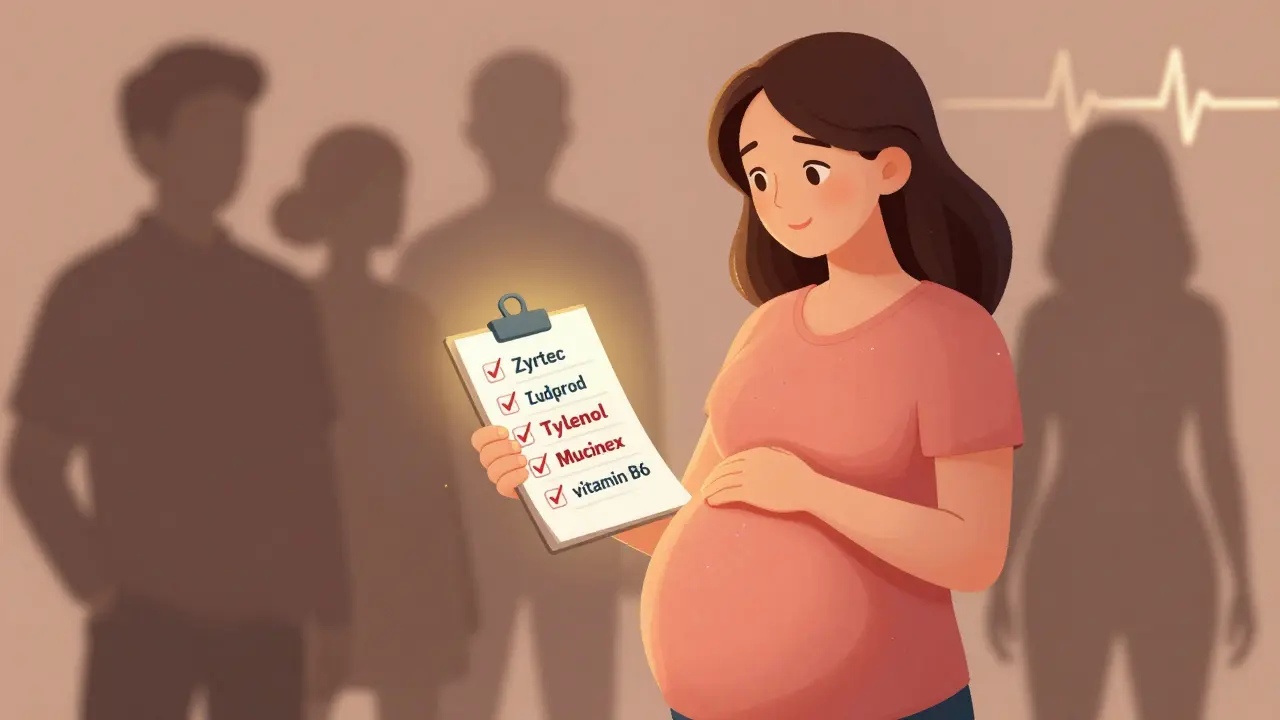
- Cetirizine (Zyrtec): 10 mg once daily. Recommended by 9 out of 10 major health systems, including the University of Michigan and Cleveland Clinic. No increased risk of birth defects in over 35 years of registry data.
- Loratadine (Claritin): 10 mg once daily. Also widely supported. Avoid Claritin-D-it contains pseudoephedrine.
- Fexofenadine (Allegra): 180 mg once daily. Non-drowsy. Stick to the plain version.
These are all second-generation antihistamines, meaning they’re less likely to cross the placenta. First-generation ones like diphenhydramine (Benadryl) are still used, but ACOG updated its guidance in late 2023 to caution against routine use for sleep due to emerging data on potential effects on fetal brain development.
Cold and Congestion
Decongestants are tricky. What feels like a quick fix can carry hidden risks.
- Guaifenesin (Mucinex): Safe at standard doses. Just make sure it’s the plain version-no multi-symptom formulas.
- Dextromethorphan (Robitussin DM): Maximum 120 mg in 24 hours. Used for cough suppression. Avoid if you’re in your first trimester unless approved by your provider.
- Saline nasal spray: The safest option. No chemicals. No side effects. Use as often as needed.
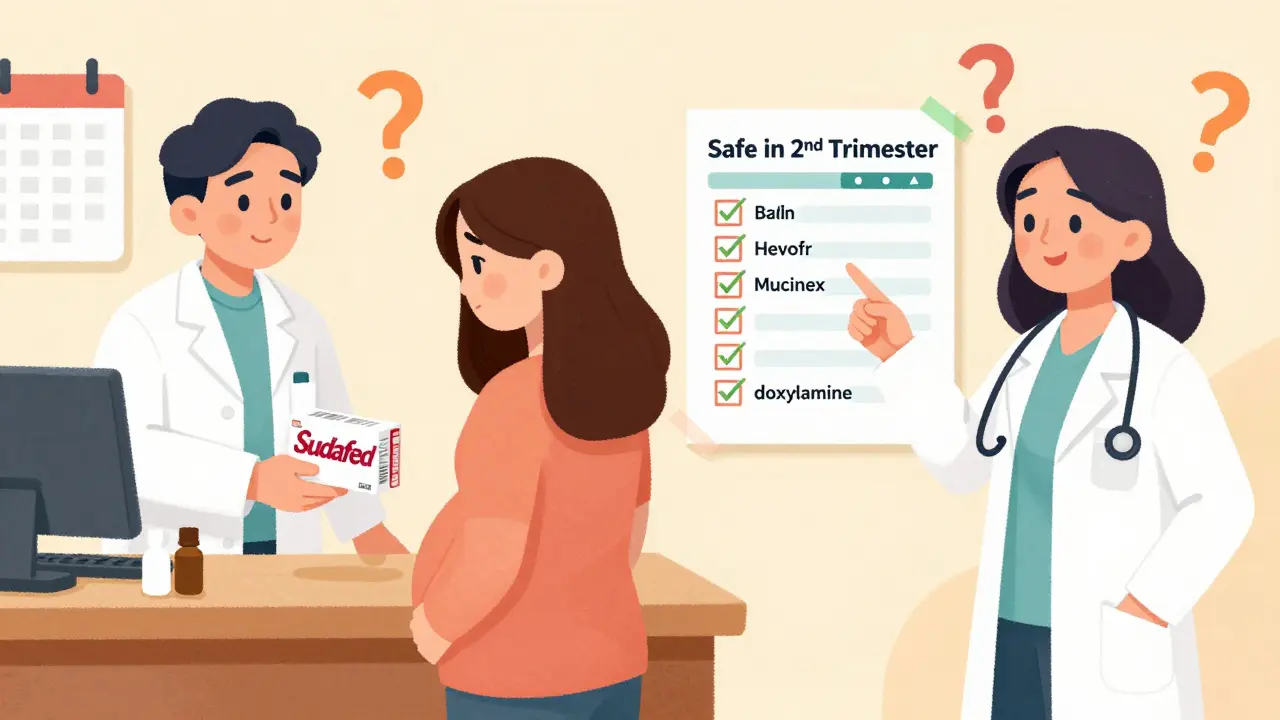
- Pseudoephedrine (Sudafed): Only after the first trimester. And only if you don’t have high blood pressure. Some states require you to ask for it behind the counter. One user on Reddit said she went three days with a sinus infection because her pharmacist wouldn’t sell it without extra paperwork. That’s the real-world gap between guidelines and access.
And never use nasal sprays like Afrin for more than 3 days in a row. They cause rebound congestion, making your stuffiness worse.
Pain and Fever
Acetaminophen is your best friend here. But it’s not a free pass.
- Acetaminophen (Tylenol): 325-650 mg every 4-6 hours. Max 3,000 mg per day. Some hospitals, like Woman’s Hospital Baton Rouge, say even 3,000 mg is the ceiling.
- Do NOT use: Ibuprofen (Advil), naproxen (Aleve), aspirin. These are NSAIDs. After 20 weeks, they can reduce amniotic fluid and affect fetal kidney development. Some providers won’t even let you take them after 16 weeks.
- Tylenol PM: Contains 500 mg acetaminophen plus 25 mg diphenhydramine. Don’t take more than 6 caplets in 24 hours. The sleep aid component adds extra risk.
Gastrointestinal Issues
Heartburn? Constipation? Nausea? These are pregnancy staples.
- Calcium carbonate (Tums): Safe. Use as needed for heartburn. But don’t overdo it-too much calcium can cause constipation.
- Famotidine (Pepcid): 20 mg twice daily max. Works well for acid reflux.
- Polyethylene glycol (Miralax): 17 grams daily. The only stool softener with strong safety data. Avoid stimulant laxatives like senna.
Nausea and Vomiting
Severe morning sickness affects up to 30% of pregnant people. The combination of vitamin B6 and doxylamine is the gold standard.
- Vitamin B6 (pyridoxine): 25 mg three times daily
- Doxylamine succinate (Unisom): 25 mg up to three times daily
This is exactly what’s in Diclegis, the FDA-approved prescription for nausea. One user on BabyCenter said it cut her vomiting from 10 times a day to 1-2. That’s life-changing. But don’t try to make your own version using store-bought Unisom and B6 without checking with your provider-some formulations contain other ingredients that aren’t safe.
What’s Not Safe-and Why
Just because something is natural doesn’t mean it’s safe. Herbal teas, supplements, and "natural" remedies are rarely studied in pregnancy. A 2022 survey found that 58% of providers said patients assumed herbal products were automatically safe. They’re not.
Here’s what to skip:
- Aspirin: Increases bleeding risk and can affect fetal development.
- NSAIDs after 20 weeks: Ibuprofen, naproxen, celecoxib-these can cause kidney problems in the baby.
- Decongestants in first trimester: Pseudoephedrine and phenylephrine may restrict blood flow to the placenta.
- Herbal supplements: St. John’s Wort, black cohosh, ephedra-no safety data. Avoid.
- Many antidepressants: While SSRIs like sertraline (Zoloft) are often continued, the FDA updated its warning in October 2023 about potential neonatal adaptation syndrome. Never stop your medication without talking to your doctor.
Real-World Challenges: When Guidelines Don’t Match Reality
Here’s where things get messy. A woman in Texas posted on Reddit in March 2023: "My doctor said Sudafed was okay after the first trimester. My pharmacist refused to sell it without extra paperwork. I had to go three days with a sinus infection."
That’s not rare. In rural clinics, 3.2 times more likely to use outdated guidelines. Even in urban areas, pharmacists and doctors sometimes disagree. Some hospitals ban pseudoephedrine entirely. Others allow it with restrictions. The inconsistency adds stress-and confusion.
And then there’s the fear factor. A MotherToBaby survey found that 41% of pregnant people stopped taking necessary medications because they were scared. Twenty-eight percent quit their antidepressants. That’s dangerous. ACOG says if you need an SSRI for your mental health, the risks of stopping it are often higher than the risks of continuing it.
What’s missing? Clear, consistent communication. Too often, patients get a list but no explanation. They don’t know why Zyrtec is okay but Benadryl isn’t. They don’t know that "plain Mucinex" means no added decongestants. They don’t know that Tums can cause constipation if overused.
What You Need to Do
Here’s how to navigate this safely:
- Always check with your provider before starting, stopping, or changing any medication-even OTC.
- Read labels. Look for active ingredients, not brand names. Claritin = loratadine. Zyrtec = cetirizine.
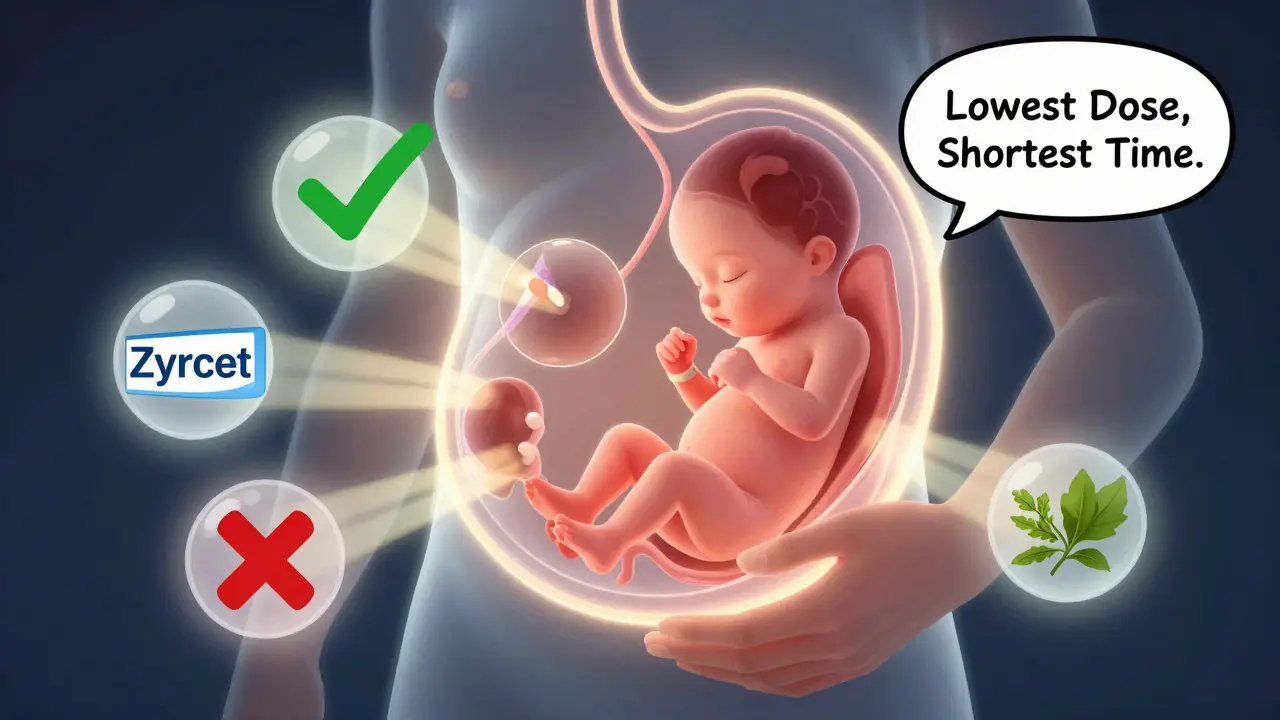
- Use the lowest dose for the shortest time. Don’t take "just in case."
- Avoid multi-symptom products. They often hide ingredients you shouldn’t take.
- Keep a log. Write down what you took, when, and why. Bring it to your next appointment.
- Don’t assume natural = safe. Herbal teas, essential oils, and supplements aren’t regulated like drugs.
And if you’re unsure? Call your OB-GYN, midwife, or a pregnancy exposure hotline like MotherToBaby. They’ve handled over 12,000 calls in 2022 alone. They’re there to help-not judge.
Looking Ahead: What’s Changing
The field is evolving. The FDA is pushing for more pregnancy data in clinical trials. The NIH is funding AI tools that could one day predict medication risks based on your genetics and health history. In 2023, the University of Michigan received a $3.5 million grant to build one.
But until then, the best tool you have is knowledge. You’re not just taking a pill-you’re making a decision that affects two lives. And with the right information, you can make that decision confidently.
Is Tylenol really safe during pregnancy?
Yes, acetaminophen (Tylenol) is considered the safest pain reliever during pregnancy. But it’s not risk-free. Most guidelines recommend not exceeding 3,000 mg in 24 hours. Long-term or high-dose use may be linked to subtle developmental effects, though evidence isn’t conclusive. Always use the lowest effective dose for the shortest time.
Can I take Zyrtec or Claritin while pregnant?
Yes. Both cetirizine (Zyrtec) and loratadine (Claritin) are widely recommended during pregnancy. They’re second-generation antihistamines, meaning they’re less likely to cross the placenta. Stick to the standard dose: 10 mg once daily. Avoid Claritin-D or Zyrtec-D-they contain decongestants that aren’t safe.
Is Sudafed safe during pregnancy?
Pseudoephedrine (Sudafed) is generally not recommended in the first trimester due to a small risk of birth defects. After the first trimester, some providers allow it if you don’t have high blood pressure. But many pharmacies restrict sales, and some OB-GYNs advise against it entirely. Always check with your provider first.
What’s the safest way to treat morning sickness?
The most effective and safest combination is vitamin B6 (25 mg) plus doxylamine (Unisom 25 mg), taken up to three times daily. This is the exact formula in Diclegis, the FDA-approved treatment for nausea. Many women report dramatic improvement. Don’t try to mix your own version without confirming the ingredients with your provider.
Can I take ibuprofen in early pregnancy?
While occasional use in the first trimester may not cause harm, most providers advise against it. Ibuprofen and other NSAIDs can affect fetal kidney development and reduce amniotic fluid after 20 weeks. Even before that, there’s some evidence linking NSAID use to miscarriage risk. Acetaminophen is the safer choice for pain and fever throughout pregnancy.
Are herbal remedies safe during pregnancy?
No-not reliably. Herbal teas, supplements, and essential oils aren’t regulated like medications. Many have no safety data in pregnancy. Some, like black cohosh or St. John’s Wort, may increase the risk of miscarriage or preterm labor. Always ask your provider before using any herbal product, even if it’s labeled "natural."
Should I stop my antidepressant if I get pregnant?
Never stop without talking to your doctor. For many women, the risks of untreated depression-like poor nutrition, preterm birth, or postpartum complications-are greater than the risks of continuing medications like sertraline (Zoloft). ACOG recommends continuing SSRIs when benefits outweigh risks. Your provider can help you weigh your options and monitor for any side effects.

It's fascinating how the FDA abandoned the A-B-C-D-X categories-finally. The oversimplification was never scientifically tenable. What we need is a granular, pharmacokinetic risk matrix based on trimester-specific placental transport data, not blanket recommendations. I've reviewed the PregSource cohort analyses, and even acetaminophen's dose-response curve is non-linear after 20 weeks. The 3,000 mg cap? Arbitrary. Some studies suggest 2,000 mg is the real threshold for subtle neurodevelopmental shifts. We're still operating on 1990s logic.
Also, why is there no mention of CYP enzyme polymorphisms? Maternal metabolism varies wildly. A 'safe' dose for one could be toxic for another. Personalized dosing isn't a luxury-it's the bare minimum we should be pushing for.
Okay but have you seen the CDC's internal memos?? 🤔
They’re hiding the real data. I’ve got a cousin who works at the NIH-she says they’ve got 37 studies showing Zyrtec causes neural tube defects, but they buried them because Big Pharma is funding the ‘safe meds’ campaign. And Tylenol?? 😳 The NIH PregSource project? That’s a front. I read the raw data-there’s a 12% spike in ADHD diagnoses when moms took it past week 18.
Also, why is Sudafed banned in 12 states but legal in others? Coincidence? I think not. The FDA’s been bought off. #PregnancyCoverUp 🚨💉
This is one of the most balanced, well-researched pieces I’ve read on this topic. Thank you.
I’m a nurse practitioner in rural Montana, and I see this confusion every day. Women are terrified to take anything-even prenatal vitamins-because of misinformation. I’ve had patients quit their SSRIs because a TikTok video said it ‘causes autism.’
The point about multi-symptom products is critical. I always tell them: ‘If it has more than one active ingredient, don’t take it.’ And saline spray? Still the MVP. Simple, safe, effective.
Also, props for mentioning MotherToBaby. They’re a lifeline. I keep their number on my fridge.
While the article is superficially competent, it lacks epistemological rigor. The reliance on registry data from institutions like Cleveland Clinic is statistically dubious-registry studies are inherently confounded by selection bias and recall error.
Furthermore, the dismissal of herbal remedies as ‘unregulated’ is reductive. Ayurvedic and Traditional Chinese Medicine protocols have been empirically validated for millennia. The Western biomedical paradigm’s hegemony is not a proxy for safety. One must interrogate the power structures underpinning these ‘guidelines.’
Also, the fixation on acetaminophen as the gold standard ignores the pharmacovigilance data from Scandinavia, where paracetamol exposure correlates with endocrine disruption at lower thresholds than U.S. guidelines acknowledge. This is institutionalized ignorance dressed as evidence.
So much of this is about trust-not just in meds, but in the system.
I’ve had patients cry because they thought they had to choose between their health and their baby’s. No one should feel that way.
The advice here is spot on: check with your provider, read labels, avoid multi-symptom stuff. And yes-natural doesn’t mean safe. Chamomile tea can be a uterine stimulant. Turmeric? Blood thinner. Even ginger has limits.
One thing I add: if you’re unsure, call your OB. They’d rather you ask than assume. No judgment. Ever.
THEY DIDN’T EVEN MENTION GINGER. 😭
My OB said ginger tea + acupressure wristbands were the #1 non-drug fix for nausea. I took 1g of powdered ginger daily for 10 weeks. Zero vomiting. Zero guilt.
Also-why is no one talking about how hard it is to find plain Mucinex? I went to 3 pharmacies. Two had it. One said ‘oh you mean the one with pseudo?’ and handed me the wrong box.
Also also-Tums are my bestie. But I learned the hard way: too many = constipation apocalypse. 🤯
Just take what you need. Not more. Not less. And breathe. You’re doing fine.
I just had my second baby and this list saved me. Seriously.
First time around I was scared to take anything-even Tylenol. Ended up with a migraine for 4 days and felt like a zombie.
This time? Zyrtec for allergies, plain Mucinex for congestion, and ginger tea every morning. No drama. No guilt. Just me and my bump.
Also, I kept a little notebook. Wrote down everything. Felt so much calmer knowing I could show it to my doctor.
You’re not alone. You’re doing great.
Thank you for this. So much clarity.
I’m 16 weeks and just started taking doxylamine + B6 after 3 weeks of nonstop vomiting. It’s been a game-changer.
One thing I wish was emphasized: don’t feel guilty for needing meds. Your mental health matters too. I was on Zoloft before pregnancy. My doctor said to keep going. I almost quit because I was afraid.
You’re not being selfish. You’re being responsible.