
ACE Inhibitors: How They Lower Blood Pressure and What You Need to Know
When your blood pressure stays too high, your heart and arteries work harder than they should. That’s where ACE inhibitors, a class of medications that block the angiotensin-converting enzyme to relax blood vessels and reduce fluid retention. Also known as angiotensin-converting enzyme inhibitors, they’re one of the most prescribed treatments for hypertension, heart failure, and kidney protection in people with diabetes. These drugs don’t just lower numbers on a monitor — they help prevent strokes, heart attacks, and long-term organ damage by easing the strain on your cardiovascular system.
ACE inhibitors like lisinopril, a widely used generic ACE inhibitor often prescribed for high blood pressure and post-heart attack care, enalapril, another common option that helps slow kidney disease progression in diabetic patients, and ramipril, frequently used in patients with high risk of cardiovascular events work by stopping the body from making angiotensin II — a chemical that narrows blood vessels and raises blood pressure. Less of this chemical means wider arteries, lower pressure, and less stress on your heart. Unlike some other blood pressure pills, ACE inhibitors often help protect your kidneys, which is why doctors reach for them in people with diabetes or chronic kidney disease.
They’re not perfect. A dry cough is the most common side effect — it’s not dangerous, but it can be annoying enough to make people switch meds. Some people also feel dizzy, especially when standing up fast. And while rare, swelling of the face or throat (angioedema) needs immediate medical attention. You’ll also need regular blood tests to check your kidney function and potassium levels, since these drugs can sometimes cause potassium to build up.
What you won’t find in most doctor’s offices is how these drugs fit into the bigger picture of drug safety and affordability. That’s why posts here cover how ACE inhibitors compare to other antihypertensives like ARBs, how they’re monitored in real-world use, and why generic versions make such a difference in long-term care. You’ll also see how they interact with other meds — like NSAIDs or potassium supplements — and why timing and dosing matter just as much as the pill itself.
Whether you’re just starting on an ACE inhibitor, switching from another drug, or wondering why your doctor chose this one over others, the posts below give you the practical, no-fluff details you won’t get from a brochure. Real stories. Real risks. Real answers.
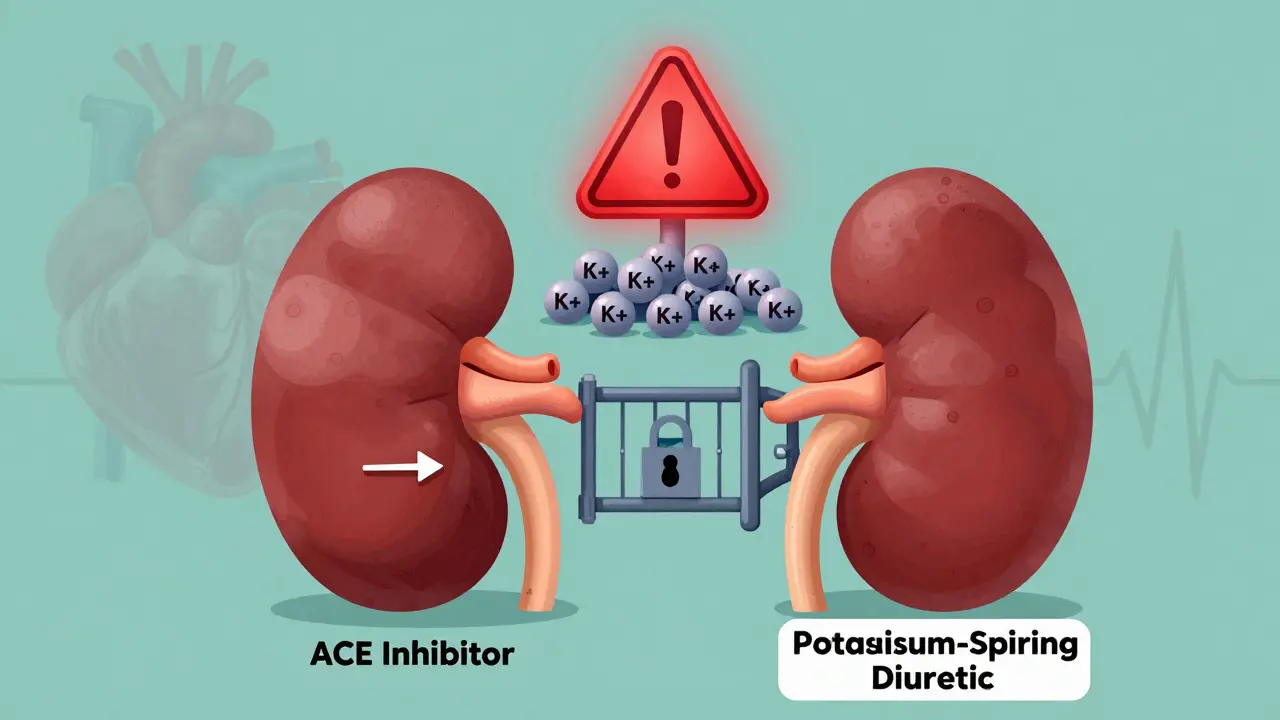
ACE Inhibitors and Potassium-Sparing Diuretics: Understanding the Hyperkalemia Risk
Combining ACE inhibitors with potassium-sparing diuretics can dangerously raise potassium levels, leading to life-threatening heart rhythm problems. Learn who’s at risk, how to monitor it, and what to do if your levels climb too high.
View more
Blood Pressure Medications: ACE Inhibitors, Beta Blockers, and More Explained
Learn how ACE inhibitors, beta blockers, calcium channel blockers, and other blood pressure medications work, their side effects, costs, and which ones are best for different patients. Get practical advice for choosing and sticking with your treatment.
View more