
 4
Apr,2026
4
Apr,2026
Sulfa Drug Cross-Reactivity Checker
Is this medication likely to trigger my sulfa allergy?
Select a medication to check its structural relationship to sulfa antibiotics.Click on a medication to the left to see the cross-reactivity analysis.
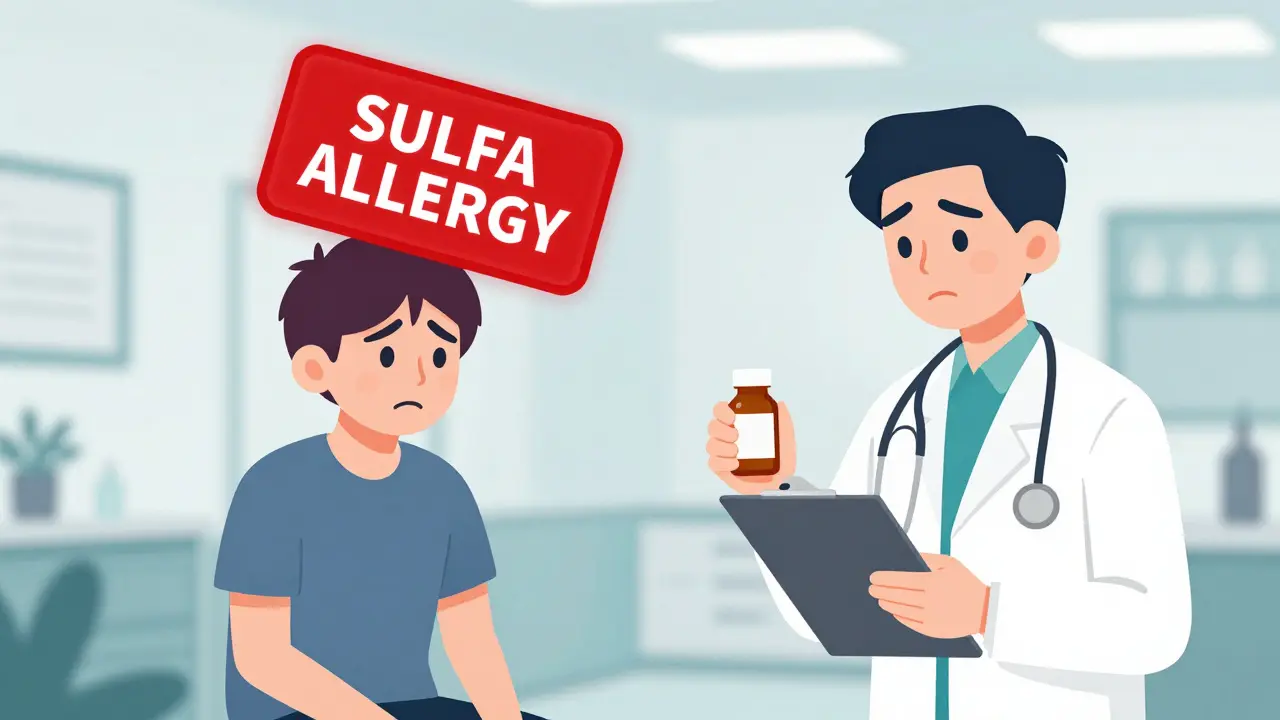
Disclaimer: This tool is for educational purposes only. Always consult a doctor before changing medications.If you've ever told a doctor you have a "sulfa allergy," you might have been denied a life-saving medication or pushed toward a stronger, riskier antibiotic. It’s a common scenario. In fact, about 3% to 12% of people have a sulfonamide allergy listed in their medical records. But here is the surprising part: most of those labels are wrong. True, immune-mediated allergies to sulfa antibiotics are actually quite rare, affecting only about 0.5% of people. The rest are often reacting to side effects or have a mislabeled history.
The real danger isn't just the allergy itself-it's the confusion surrounding it. When a patient is labeled with a sulfonamide allergy, they are often avoided across the board, including medications that aren't even antibiotics. This leads to "over-prescribing" broader-spectrum antibiotics, which fuels antimicrobial resistance and exposes patients to unnecessary side effects.
The Big Difference: Antibiotics vs. Non-Antibiotics
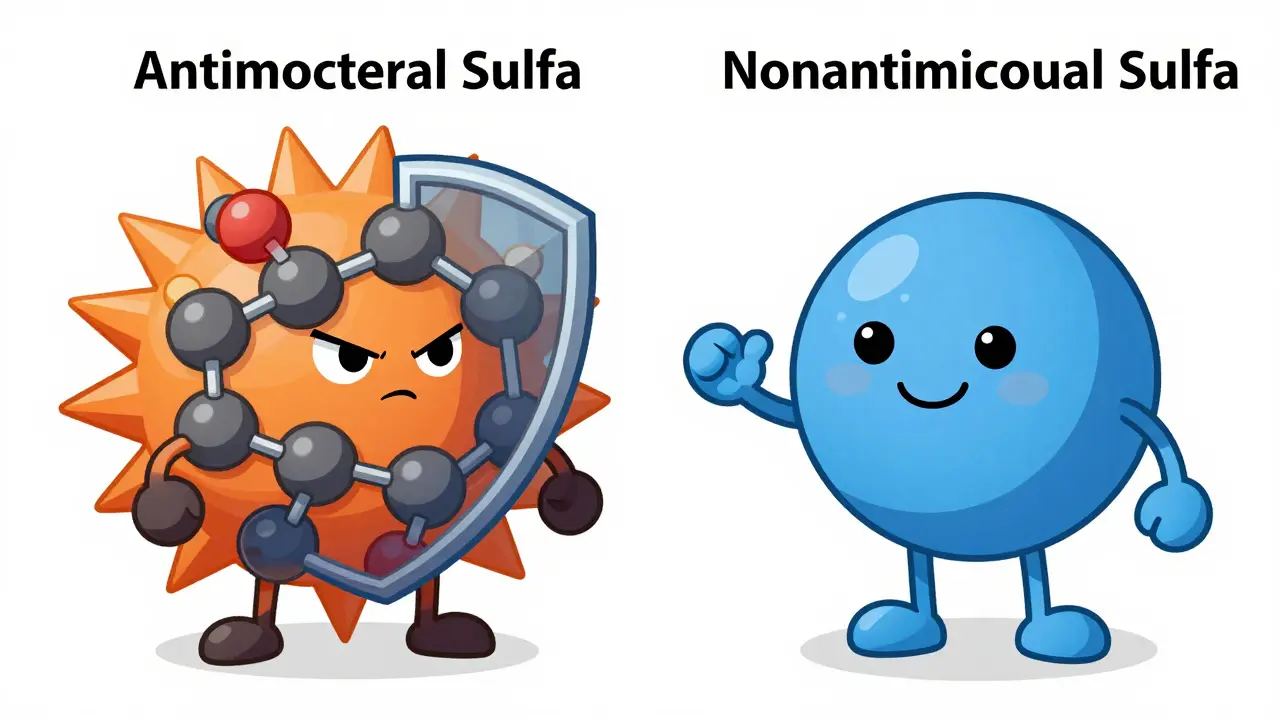
To understand what to avoid, we first have to clear up a massive linguistic mess. In medicine, "sulfa" is used as a shorthand for sulfonamides, which are compounds containing a sulfur-nitrogen group (SO2NH2). However, not all sulfonamides are built the same way.
Think of it like this: just because two cars both have wheels doesn't mean they are the same model. Antimicrobial sulfonamides (the antibiotics) have a specific chemical structure-specifically an arylamine group at the N4 position and a nitrogen ring at the N1 position. These specific parts are what the immune system usually attacks during an allergic reaction.
On the other hand, nonantimicrobial sulfonamides-like those used for blood pressure or inflammation-lack these specific trigger points. Because they don't have that N4 arylamine group, your body doesn't recognize them as the "enemy" that caused the antibiotic reaction. This is why most people with a sulfa antibiotic allergy can actually take non-antibiotic sulfa drugs without any problem.
| Feature | Antimicrobial Sulfonamides | Nonantimicrobial Sulfonamides |
|---|---|---|
| Common Examples | Sulfamethoxazole, Sulfadiazine | Hydrochlorothiazide, Celecoxib |
| N4 Arylamine Group | Present (Main trigger) | Absent |
| Primary Use | Bacterial Infections | Diuretics, Pain, Glaucoma |
| Cross-Reactivity Risk | High (within the class) | Very Low (approx. 1.1% - 1.3%) |
What You Actually Need to Avoid
If you have a confirmed, severe allergy to sulfa antibiotics, you should generally avoid other drugs in the same antimicrobial family. These often include:
- Sulfamethoxazole (often paired with trimethoprim)
- Sulfadiazine
- Sulfacetamide (often used in eye drops)
- Sulfasalazine (used for inflammatory bowel disease)
There is one tricky exception: Dapsone. While it's not a standard "antibiotic" in the way we usually think of them, it shares more structural similarities with the antimicrobial group than the blood pressure drugs do. Research shows about a 13.2% reaction rate for people with sulfa allergies taking dapsone, so this is a medication that requires a much more cautious approach.
The "Safe" List: Dispelling the Myths
One of the biggest frustrations for patients is being denied effective treatment because of a vague "sulfa allergy" label. For example, many people are told they cannot take Hydrochlorothiazide (a common diuretic for high blood pressure) or Celecoxib (for joint pain).
Clinical data shows that the risk of reacting to these non-antibiotic drugs is nearly the same for people with sulfa allergies as it is for the general population. A study of over 10,000 patients found that only 1.3% of those with a documented sulfa allergy reacted to nonantimicrobial sulfonamides, compared to 1.1% in the control group. Essentially, the risk is negligible.
Even more confusing is the overlap with other sulfur-containing substances. A "sulfa allergy" is NOT an allergy to sulfur itself. You can generally safely consume:
- Sulfites (found in dried fruits and wine)
- Sulfates (used in some skincare products)
- Elemental sulfur
These are chemically unrelated to the sulfonamide group. If you've been avoiding wine or certain skincare products because of a sulfa allergy, you've likely been restricting yourself for no medical reason.
How to Handle Your Allergy Label
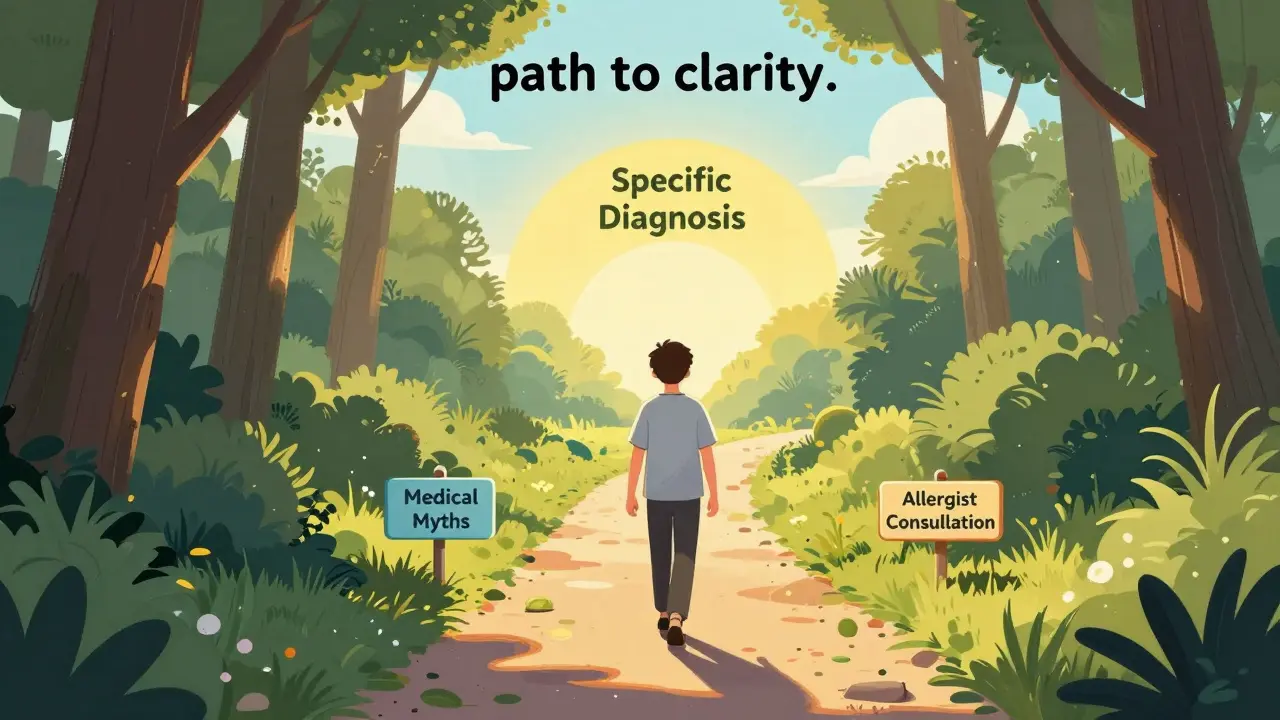
If you suspect your "sulfa allergy" might be a mistake-or if you're being denied a medication you really need-it's time to move from a vague label to a specific diagnosis. The goal is "de-labeling."
Depending on your history, there are different paths to verify your allergy. If you only had a mild rash that appeared several days after taking the drug, you are considered low-risk. In these cases, doctors can often perform a direct oral challenge, where you take a small dose of the medication under observation. This method has a safety rate of over 99% for low-risk patients.
If you've had a severe reaction, such as Stevens-Johnson Syndrome (a serious skin reaction), you should never try a challenge at home. You need a referral to a board-certified allergist who can perform skin testing and a graded challenge in a controlled medical setting.
When talking to your healthcare provider, don't just say "I'm allergic to sulfa." Be specific. Tell them: "I had a maculopapular rash on day five of taking Sulfamethoxazole ten years ago." This level of detail helps your doctor decide if a medication is truly dangerous or if you're just a victim of an outdated medical label.
The Cost of Getting It Wrong
This isn't just about one person missing out on a pill. Mislabeling is a systemic problem. In the US alone, inappropriate avoidance of sulfa drugs costs the healthcare system roughly $1.2 billion annually due to longer hospital stays and more expensive alternative drugs.
More concerning is the impact on antibiotic resistance. When doctors avoid sulfonamides, they often switch to Fluoroquinolones. While effective, these carry "black box" warnings for serious side effects like tendon rupture. By incorrectly avoiding a safe sulfonamide, patients are often traded for a drug with a more dangerous side-effect profile.
If I'm allergic to sulfa antibiotics, can I take blood pressure meds like Hydrochlorothiazide?
In the vast majority of cases, yes. Nonantimicrobial sulfonamides like hydrochlorothiazide do not have the chemical structures (the N4 arylamine group) that trigger allergic reactions to sulfa antibiotics. Clinical studies show that the risk of cross-reactivity is extremely low (around 1.1% to 1.3%), which is nearly the same as for people without any sulfa allergy.
What is the difference between a sulfa allergy and a sulfite sensitivity?
They are completely different. A sulfonamide allergy is an immune response to a specific drug structure. Sulfite sensitivity is a reaction to sulfur dioxide used as a preservative in foods like dried apricots or wine. Having a sulfa antibiotic allergy does not mean you need to avoid sulfites, sulfates, or elemental sulfur.
What is a 'graded challenge' and do I need one?
A graded challenge is a medical process where an allergist gives you tiny, increasing doses of a medication to see if you react. You need this if you have a history of severe reactions (like anaphylaxis or severe skin peeling) but need to know if you can safely use a specific sulfa-containing drug.
Can Dapsone cause a reaction if I have a sulfa allergy?
Yes, Dapsone is more likely to cause a reaction than blood pressure or pain meds. Because it is structurally closer to antimicrobial sulfonamides, some studies show a reaction rate as high as 13.2% in people with prior sulfa antibiotic allergies. You should always consult an allergist before starting Dapsone if you have a known sulfa allergy.
Why is my doctor still refusing to give me a 'sulfa' drug if the risk is low?
Many doctors are trained on outdated information or are simply playing it safe to avoid any potential liability. If you believe you are being denied effective treatment, ask your doctor about the "lack of clinically significant cross-reactivity" between antimicrobial and nonantimicrobial sulfonamides or request a referral to an allergist for formal de-labeling.




This is a huge issue in clinical practice because so many patients get tagged with a sulfa allergy after a simple side effect rather than a true hypersensitivity reaction. It is really important for people to understand that the chemical structure of a diuretic is totally different from a sulfonamide antibiotic, so they shouldn't let a vague label stop them from getting the best treatment available. If you're in this boat, definitely talk to your doctor about a formal de-labeling process to clear your records.
glad this is out there. most docs just play it safe and miss the nuance
Oh wow, imagine believing a medical record just because a doctor told you so. I'm sure the pharmaceutical companies love that you're so eager to switch to "riskier" drugs just because some blog post told you the risk is negligible. Truly groundbreaking stuff here.
We need to push for this knowledge in every clinic across the country! It is absolutely ridiculous that people are being denied the right medication because of a linguistic misunderstanding. Why is the medical system so slow to update these protocols? We should be demanding better education for providers so patients don't have to do their own research just to get a basic diuretic!
Typical oversimplification of complex chemistry.
basically just dont panic if you see sulfa in your bp meds since the cross reactivity is basically the same as the general population. just keep your doctor in the loop
The lack of rigor here is... staggering!!! Why are we trusting a summary when the actual clinical trials... might have nuances... that are being completely ignored??? This is dangerous advice for parents!!!
Big Pharma just wants us on those high-cost alternatives while they hide the truth about these labels to keep us dependent on the 'specialist' pipeline. It's a total shell game designed to fleece our insurance companies and keep us in a state of perpetual medicinal fear.
The irony of labeling a human being with a chemical category is just another example of how we've reduced the soul to a set of symptoms. Who cares if the drug is safe when the systemic failure of the medical complex is the real disease here?
It is quite quaint that anyone thinks a simple 'oral challenge' is a sufficient safeguard against the unpredictability of the human immune system. The optimism is almost as tedious as the prose.
This is all fake Western science 🚩🚩 My country has better ways of dealing with health and we don't need these complicated labels from the US 🇮🇳💪
It is very helpful to see this broken down so clearly. In many cultures, we rely heavily on the word of the physician, so providing this scientific context allows patients to have a respectful but informed conversation with their doctors to find the best path forward for their health.
I honestly think it is so incredibly inspiring that we now have the tools and the data to actually challenge these old labels and reclaim our health from outdated systems that just put us in a box without thinking about the actual chemistry involved! We should all be taking charge of our medical records because when you realize that a simple rash from a decade ago is stopping you from getting the most efficient treatment today, it just shows how much power we have to advocate for ourselves and push our doctors to be more precise and modern in their approach to patient care which is honestly just the way it should be for everyone regardless of where they are in the world!