
 12
Dec,2025
12
Dec,2025
BY : Robot San
8 Comments
When you can’t hear your grandkid laughing or struggle to follow conversations in a crowded room, it’s not just annoying-it might be sensorineural hearing loss. Unlike a clogged ear from wax or an ear infection, this isn’t something you can simply flush out or treat with antibiotics. It’s damage deep inside your inner ear, often permanent, and it’s more common than most people realize.
What Exactly Is Sensorineural Hearing Loss?
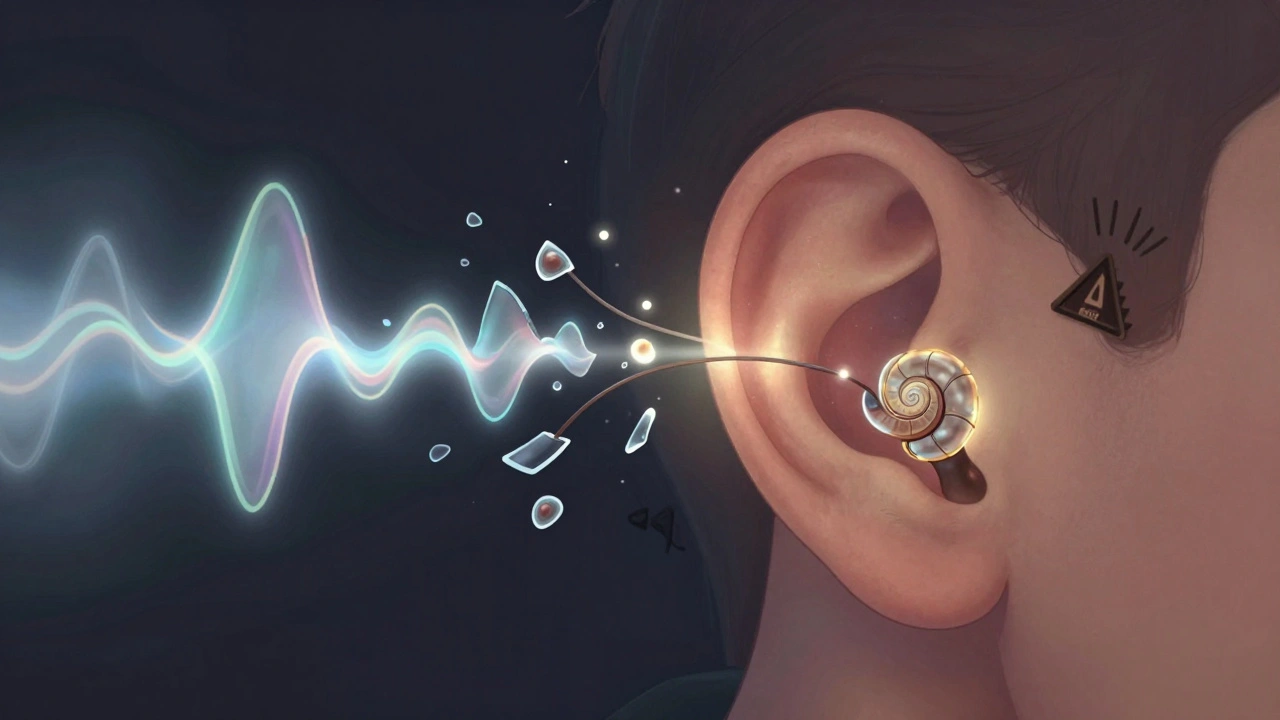
Sensorineural hearing loss (SNHL) happens when the tiny hair cells in your cochlea-the spiral-shaped part of your inner ear-or the auditory nerve that sends signals to your brain get damaged. These hair cells, called stereocilia, are like microscopic antennas. They move when sound waves hit them and turn those vibrations into electrical signals your brain understands as speech, music, or a door slamming. Once these cells are damaged, they don’t grow back. That’s why SNHL is usually permanent. Think of it like breaking a camera sensor in your phone-you can replace the whole phone, but you can’t fix the broken sensor inside. The same goes for your inner ear. About 90% of all hearing loss cases that need hearing aids are sensorineural. It’s not rare. It’s the most common type. And while it can strike at any age, it becomes much more likely as you get older. In fact, about 25% of Americans between 65 and 74 have it, and half of those over 75 do.What Causes the Damage?
There are a few big culprits behind SNHL:- Noise exposure-Listening to loud music through headphones, working in construction, or being around machinery for years slowly kills off hair cells. Damage starts at 85 decibels (about the level of heavy city traffic). After 8 hours at that volume, your ears are at risk.
- Aging-Presbycusis, the medical term for age-related hearing loss, is the #1 cause. Over time, even normal sounds wear down these delicate cells.
- Genetics-Some people are born with genes that make their hair cells more fragile.
- Illnesses-Meningitis, measles, mumps, and even untreated diabetes can damage the inner ear.
- Medications-Certain antibiotics (like gentamicin), chemotherapy drugs, and high doses of aspirin can be toxic to the inner ear.
- Trauma-A blow to the head or sudden pressure changes (like scuba diving too fast) can rupture the cochlea.
How Do You Know If You Have It?
It doesn’t always hit like a siren. Often, it creeps up slowly. Here’s what people with SNHL commonly report:- People seem to mumble, even when they’re speaking clearly.
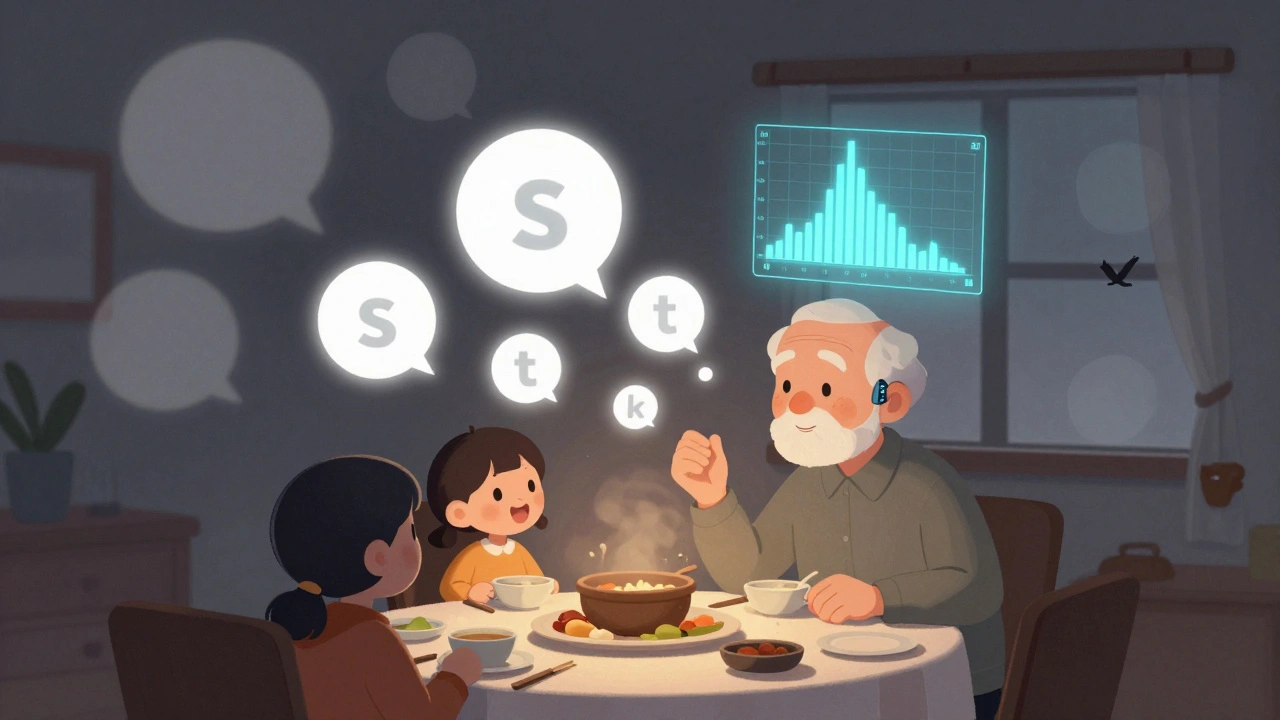
- You understand speech fine in quiet rooms but struggle in restaurants, parties, or family dinners.
- High-pitched sounds disappear first-birds chirping, children’s voices, or the beeping of a microwave.
- You hear ringing in your ears (tinnitus). About 80% of people with SNHL have it.
- Sounds feel too loud or distorted-this is called recruitment. A whisper might be fine, but a normal conversation feels painfully loud.
- You feel off-balance or dizzy sometimes. The inner ear controls balance too.
Can It Be Cured?
Here’s the hard truth: in most cases, no. Once hair cells are gone, they’re gone for good. That’s why prevention matters so much. There’s one big exception: sudden sensorineural hearing loss (SSHL). This is when hearing drops suddenly-often in one ear-over hours or days. About 5 to 20 people out of 100,000 experience this each year. If you get this, treat it like a medical emergency. Corticosteroids (oral or injected into the ear) can help recover hearing in 32% to 65% of cases-but only if you start treatment within 48 to 72 hours. After two weeks, the chances drop sharply. For everything else-noise damage, aging, genetics-it’s about managing, not curing.What Are the Treatment Options?
If you’ve been diagnosed with permanent SNHL, here’s what works:Hearing Aids
These are the go-to solution for mild to moderate SNHL. Modern digital hearing aids don’t just make everything louder-they’re programmed to boost only the frequencies you’ve lost. For age-related hearing loss, that’s usually between 2,000 and 8,000 Hz-the range where consonants like “s,” “t,” and “k” live. Brands like Widex, Phonak, and Starkey offer advanced models with AI that adapt to noisy environments. Some even have tinnitus masking features. Users report up to 78% improvement in speech clarity. But here’s the catch: they don’t restore normal hearing. In noisy places, they only help you understand speech 30% to 50% better. Many users still struggle at family gatherings. Costs range from $2,500 to $7,000 per pair. Insurance rarely covers it. That’s why many turn to over-the-counter (OTC) hearing aids, which became legal in the U.S. in 2022. Brands like Eargo and Lively offer cheaper options under $1,000, but they’re best for mild cases.Cochlear Implants
If your hearing loss is severe to profound-meaning you can’t hear sounds below 90 decibels-a cochlear implant might be the answer. This isn’t a hearing aid. It’s a surgically implanted device that bypasses the damaged hair cells and directly stimulates the auditory nerve. About 82% of recipients can understand speech without lip-reading after 6 to 12 months of rehab. But it’s not simple. Surgery takes a few hours. Recovery takes weeks. Then comes months of therapy to retrain your brain to interpret the new signals. Some users say everyday sounds-like running water or a door closing-feel shockingly loud at first. It’s overwhelming. But for many, it’s life-changing.What Doesn’t Work
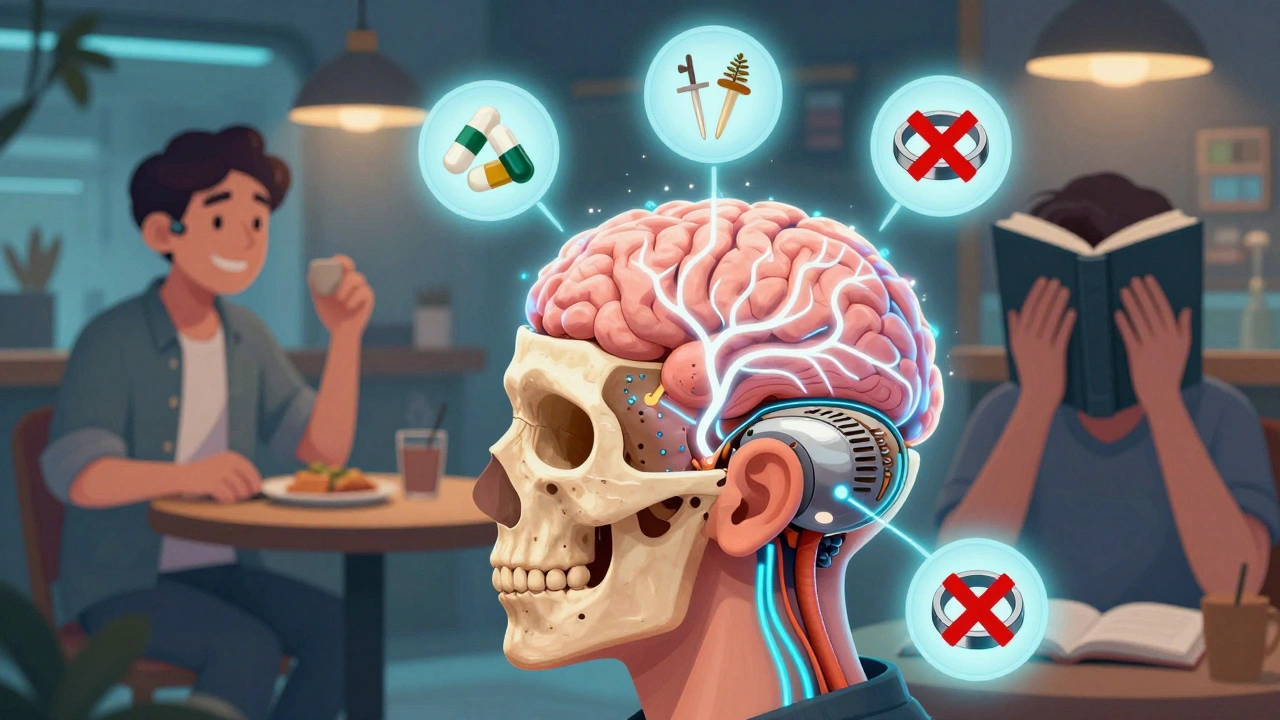
There are a lot of scams out there. Don’t waste your money on:- Herbal supplements claiming to “restore hearing.” No credible evidence supports this.
- “Hearing cure” devices sold online. If it’s not FDA-cleared, it’s not proven.
- Ear candling, acupuncture, or magnetic therapy. These don’t repair hair cells.
Living With It
People with SNHL aren’t just dealing with quiet-they’re dealing with isolation. A Reddit user named AuralAnxiety wrote: “My hearing aids cut my tinnitus from an 8/10 to a 4/10. But I still avoid parties.” That’s common. Many people stop going out. They feel embarrassed. They think everyone’s judging them for asking “What?” too often. The good news? Support is out there. The Hearing Loss Association of America (HLAA) has over 300 local chapters. Their “Hear Well, Live Well” workshops help people learn communication strategies-like facing the speaker, reducing background noise, and using captions on TV. Consistency matters. If you get hearing aids, wear them every day. It takes 4 to 8 weeks for your brain to adjust. Don’t give up after a week. And keep them clean. Wax buildup or moisture can ruin them.What’s Next?
Science is working on a cure. Stanford Medicine is testing stem cell therapies to regrow damaged hair cells. Early animal trials show promise, but human treatments are still 5 to 10 years away. In the meantime, tech is improving fast. New cochlear implants like Cochlear’s Nucleus 8 are smaller and smarter, with better noise filtering. AI-powered hearing aids now classify environments-like a café or a car-and adjust automatically. By 2035, experts predict 95% of people with SNHL will have access to tools that let them hear well enough to live fully. But that’s only if they get help. Right now, only 16% to 20% of adults who need hearing aids actually use them-mostly because of cost, stigma, or not knowing where to start.What Should You Do Now?
If you’re worried about your hearing:- Take a free online hearing screening (many audiology clinics offer them).
- If results suggest loss, book a full audiogram with a licensed audiologist.
- Don’t wait. Even mild hearing loss is linked to faster cognitive decline.
- Protect your ears. Use noise-canceling headphones, keep volume under 60%, and wear earplugs at concerts or construction sites.
- If you lose hearing suddenly-go to the ER or an ENT doctor immediately.
Write a comment
LATEST POST
Boost Your Immunity and Energy Levels with Woodbine Dietary Supplement
2 Jun 2023 | 00:54 AM
Opioids During Pregnancy: Risks, Withdrawal, and Monitoring
1 Apr 2026 | 12:59 PM
How to Buy Cheap Generic Paxil Online Safely - Complete Guide 2025
28 Aug 2025 | 15:03 PM
Postmarketing Experience Sections: What These Side Effects Mean on Drug Labels
3 Jan 2026 | 03:10 AM
Anemia in Kidney Disease: How Erythropoietin and Iron Therapy Work Together
12 Nov 2025 | 14:16 PM
Man, this hit home. My dad lost his hearing gradually over 10 years, and no one told him it wasn’t just ‘getting old.’ He stopped going to family dinners because he couldn’t keep up. We didn’t realize how much he was isolating himself until he got his first pair of hearing aids. Now he’s back at Sunday brunch, laughing louder than ever. It’s not a cure, but it’s a lifeline.
Don’t wait until you’re struggling to ask for help. Early intervention makes all the difference.
Also, if you’re worried about cost-check out local nonprofits. Some clinics offer sliding scale fees or loaner devices while you wait for insurance approval.
Ok but have you heard about the 5G conspiracy? 🤔 They say the new 5G towers are frying our inner ear hair cells like microwave popcorn. 🌐📡 That’s why hearing loss is spiking in Gen Z. No one talks about it because the FDA is in bed with the telecom giants. 😷📱 I saw a video of a guy who went deaf after his phone got too hot. Coincidence? I think not. 🤷♀️
While the clinical presentation and etiological factors of sensorineural hearing loss are well-documented in peer-reviewed literature, it is imperative to acknowledge the profound psychosocial ramifications that are frequently under-addressed in public health discourse. The phenomenon of auditory deprivation leading to social withdrawal, as referenced in the post, aligns with longitudinal studies conducted by the National Institute on Deafness and Other Communication Disorders (NIDCD).
Furthermore, the assertion that hearing aids provide only a 30–50% improvement in noisy environments warrants contextualization: this metric reflects signal-to-noise ratio limitations inherent in current transduction technology, not user inadequacy. The cognitive load required to process degraded auditory input remains a significant barrier to functional communication.
Future research must prioritize neuroplasticity-based auditory training protocols alongside device optimization. The integration of machine learning algorithms to dynamically adapt amplification profiles represents a promising frontier.
Life is like a song, ya? 🎵 But when the high notes disappear... you start listening to silence more than the music.
I lost my hearing slowly. At first, I thought the world was just too loud. Then I realized... it was me. Not the noise.
Now I sit in cafes and watch people talk. Their lips move. Their hands dance. I smile and nod. Sometimes, that’s enough.
Science says hair cells don’t grow back. But maybe… maybe the soul learns to hear differently?
Peace.
❤️
While the article presents a widely accepted medical paradigm, it fails to critically interrogate the commercialization of hearing aid technology. The assertion that hearing aids 'improve speech clarity by up to 78%' is sourced from manufacturer-funded studies with questionable methodological rigor.
Moreover, the promotion of cochlear implants as a 'life-changing' solution ignores the cultural implications for Deaf communities who view hearing loss not as a deficit to be corrected, but as an identity to be preserved. The narrative of 'fixing' deafness perpetuates ableist norms under the guise of medical progress.
One must ask: who benefits from the $7,000 hearing aid industry? And why are alternative communication models like American Sign Language systematically marginalized in public health messaging?
Hey, I just want to say-this post? Perfect. Seriously. I’ve been helping my mom navigate this for two years now, and I wish I’d found something like this back when she first started asking, 'What was that?'
She got her hearing aids, wore them for a week, hated them, threw them in a drawer. Then one day, she put them back in while watching her favorite show-remembered the dog barking in the background, and just started crying. Said she hadn’t heard the dog in three years.
It’s not about fixing hearing. It’s about bringing back the little things-the microwave beep, the rain on the roof, your grandkid saying ‘I love you’ without having to yell it three times.
And yeah, they’re expensive. But look into VA benefits, nonprofit grants, even used devices. Don’t let cost steal your quiet moments. You deserve to hear your own life.
Also-earplugs at concerts. Just do it. Your future self will thank you. 🙏
And if you’re scared to go to the audiologist? Bring a friend. I did. It helped more than I expected.
Let me be blunt: this whole 'hearing loss is just aging' narrative is a dangerous cop-out. People are getting deaf at 40 because they’re glued to their phones listening to rap music at 90% volume while walking down the street like zombies. No one teaches kids about hearing hygiene anymore. It’s not genetic-it’s negligence.
My brother lost 70% of his high-frequency hearing by 38 because he listened to hip-hop through cheap earbuds for eight hours a day. He thought he was 'just enjoying music.' Now he needs hearing aids and can’t hear his own daughter’s voice clearly.
Stop normalizing this. This isn’t inevitable. It’s avoidable. And if you’re one of those people who says 'I’ll get it fixed later'-you’re not being patient, you’re being reckless.
Save your ears before you need a cochlear implant just to hear your own grandchildren say 'hi.'
And no, earbuds with 'noise cancellation' don’t make it safe. If you can’t hear someone talking to you while wearing them, you’re damaging your ears. Period.
I just wanted to say thank you for writing this. My mom has SNHL, and I’ve watched her go from being the life of the party to sitting quietly in the corner, smiling but not saying much. It broke my heart.
She finally got hearing aids last year, and I remember the first time she heard the birds outside our window. She just stood there, quiet, tears in her eyes. Didn’t say a word.
It’s not just about sound. It’s about connection.
I wish more people knew how much this affects families-not just the person losing their hearing, but everyone who loves them.
❤️