
 4
Mar,2026
4
Mar,2026
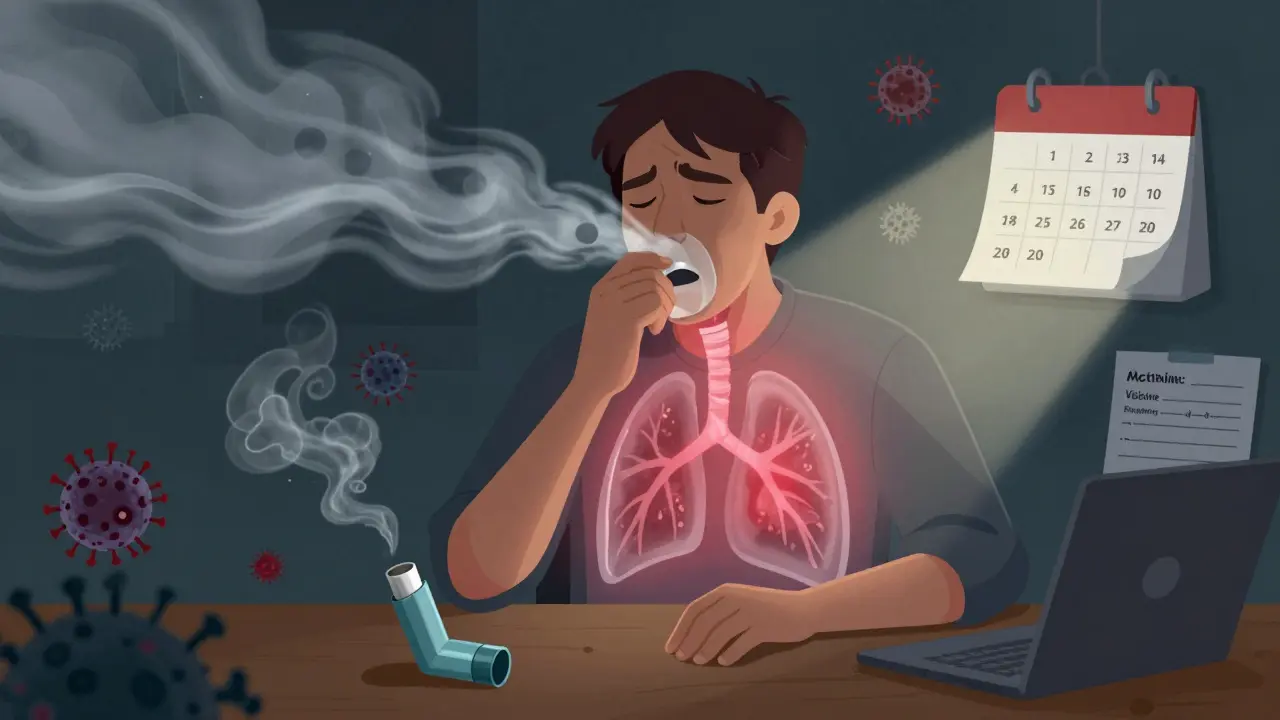
When your breathing gets worse than usual - not just a bad day, but a full-blown struggle to catch air - you’re likely facing a COPD exacerbation. This isn’t just a cough that won’t quit. It’s a medical emergency that can send you to the hospital, damage your lungs for good, and even threaten your life. If you or someone you care about has COPD, knowing what triggers these flare-ups, how to spot them early, and what to do in an emergency can make all the difference.
What Exactly Is a COPD Exacerbation?
A COPD exacerbation is when symptoms suddenly get much worse than your normal day-to-day level. It’s not a minor uptick in coughing or a little more wheezing. It’s a clear shift - you’re struggling to breathe, your sputum changes color or thickens, you feel more tired than usual, and your usual medications aren’t helping like they used to. These episodes typically last 7 to 14 days, but sometimes linger for weeks. And here’s the scary part: even after you feel better, your lungs may never fully recover. Each flare-up can leave behind permanent damage, slowly chipping away at your lung function over time.According to the National Institutes of Health, COPD was the fourth leading cause of death in 2019. A big reason? Exacerbations. In the U.S. alone, more than 10 million healthcare visits each year are due to these flare-ups. That’s not just a number - it’s 10 million times someone was scared, struggling, and needed urgent help.
Common Triggers Behind Every Flare-Up
Not all flare-ups happen for the same reason. But most of them - about 75% - are caused by infections. The rest come from environmental irritants.Infections are the biggest culprit. Viruses like rhinovirus (the common cold), influenza, coronavirus, and respiratory syncytial virus (RSV) can trigger a flare-up. Bacteria like Haemophilus influenzae, Moraxella catarrhalis, and Streptococcus pneumoniae are also common. In fact, about 25% of exacerbations are purely bacterial, another 25% are purely viral, and the rest are a mix of both.
You might think COVID-19 would be the worst trigger, but studies during the pandemic showed something surprising: people with COPD who were on regular inhaled medications often had less severe outcomes than expected. Their usual treatments seemed to offer some protection - though that doesn’t mean you should skip precautions. Stay up to date on vaccines.
Environmental triggers are just as dangerous. Cold air, air pollution, cigarette smoke (even secondhand), strong fumes from cleaners or paint, and even dust can set off an attack. These irritants inflame your already sensitive airways, making them swell and produce more mucus. The result? Less air gets in and out of your lungs.
How to Recognize the Warning Signs
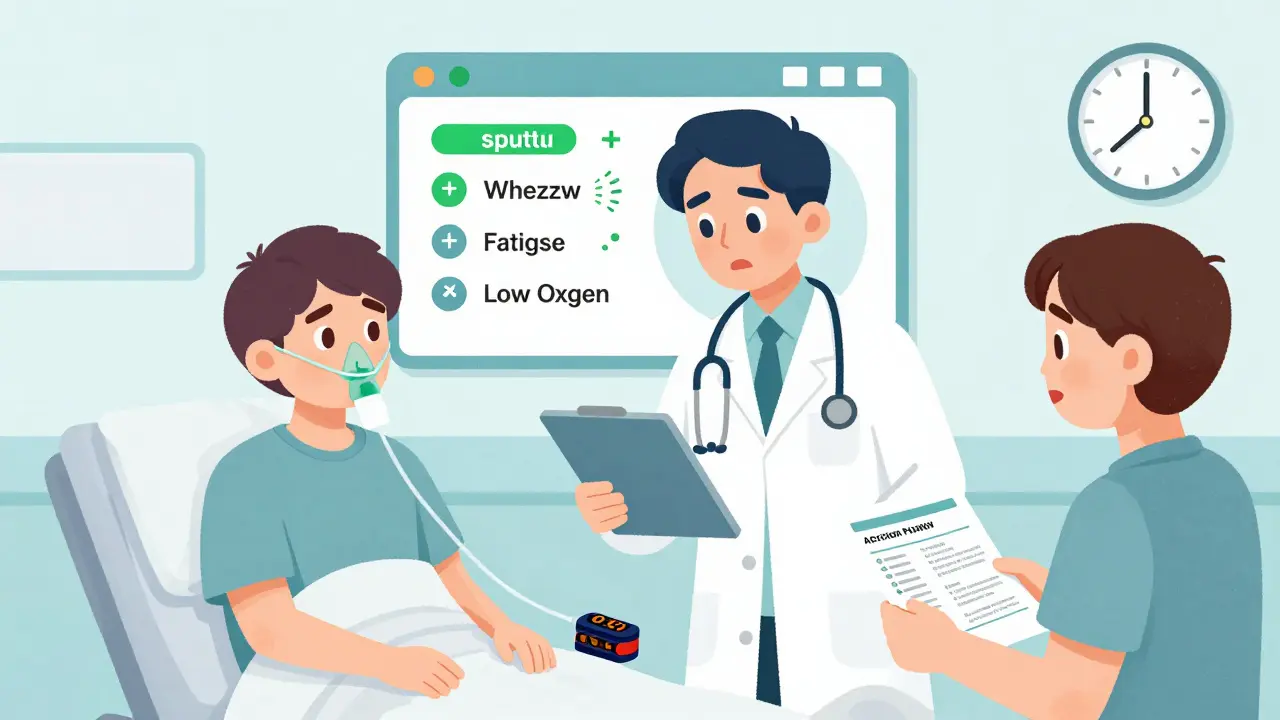
You need to know what’s normal for you - your baseline - so you can spot when things are getting worse. On a good day, you might have a mild cough, a little phlegm, and slight shortness of breath when climbing stairs. When a flare-up hits, you’ll notice changes that last more than two days:- More coughing than usual - constant, hacking, or worse at night
- Sputum changes: more of it, thicker, or a new color (yellow, green, or even streaked with blood)
- Shortness of breath that doesn’t improve with your usual inhaler
- New or worse wheezing or chest tightness
- Feeling unusually tired, weak, or confused
- Fever, chills, or body aches - signs your body is fighting infection
- Difficulty sleeping because you can’t catch your breath
If you’re using a pulse oximeter, check your oxygen levels. If they drop below 90%, that’s a red flag. Oxygen levels below 88% are dangerous and need emergency care right away. Don’t wait. Don’t hope it’ll pass. This isn’t a bad day - this is a medical emergency.
Emergency Treatment: What Happens in the Hospital?
If you’re having a severe exacerbation, you’ll likely need emergency treatment. The goal is simple: get oxygen into your body, reduce inflammation, and clear the infection.Oxygen therapy is the first step. Too little oxygen can damage your heart and brain. Doctors will give you extra oxygen through a nasal tube or mask - but carefully. Too much oxygen can be dangerous for some COPD patients, so levels are monitored closely.
Corticosteroids - usually taken as pills - are given to reduce swelling in your airways. These help open things up so you can breathe easier. They’re not a long-term fix, but they’re critical during a flare-up.
Antibiotics are used if there’s evidence of a bacterial infection. That means green or yellow sputum, fever, or recent exposure to someone with an infection. Common antibiotics include amoxicillin, doxycycline, or azithromycin, depending on your history and local resistance patterns.
In the most severe cases, you might need non-invasive ventilation - a machine that helps you breathe without a breathing tube. If your lungs are too weak, you might even need to be put on a ventilator in the ICU. These are last-resort measures, but they save lives.
What You Can Do Before It Gets Worse
The best treatment is prevention. Here’s what works:- Get vaccinated - every year: flu shot and pneumococcal vaccine. These are non-negotiable for anyone with COPD.
- Take your maintenance meds - long-acting inhalers, bronchodilators, and sometimes steroids - every single day. Skipping them makes you more vulnerable.
- Avoid triggers - stay indoors on high-pollution days, use air purifiers, avoid smoke and strong chemicals.
- Have a written action plan - your doctor should give you one. It should say: what to do when symptoms worsen, which meds to increase, and when to call for help or go to the ER.
- Monitor your symptoms daily - keep a simple log: how’s your breathing? How’s your sputum? Are you sleeping okay? This helps you catch changes early.
Studies show that patients who stick to their action plans have fewer hospital visits, fewer days lost to illness, and better long-term lung function. It’s not about being perfect - it’s about being consistent.
The Bigger Picture: Why This Matters
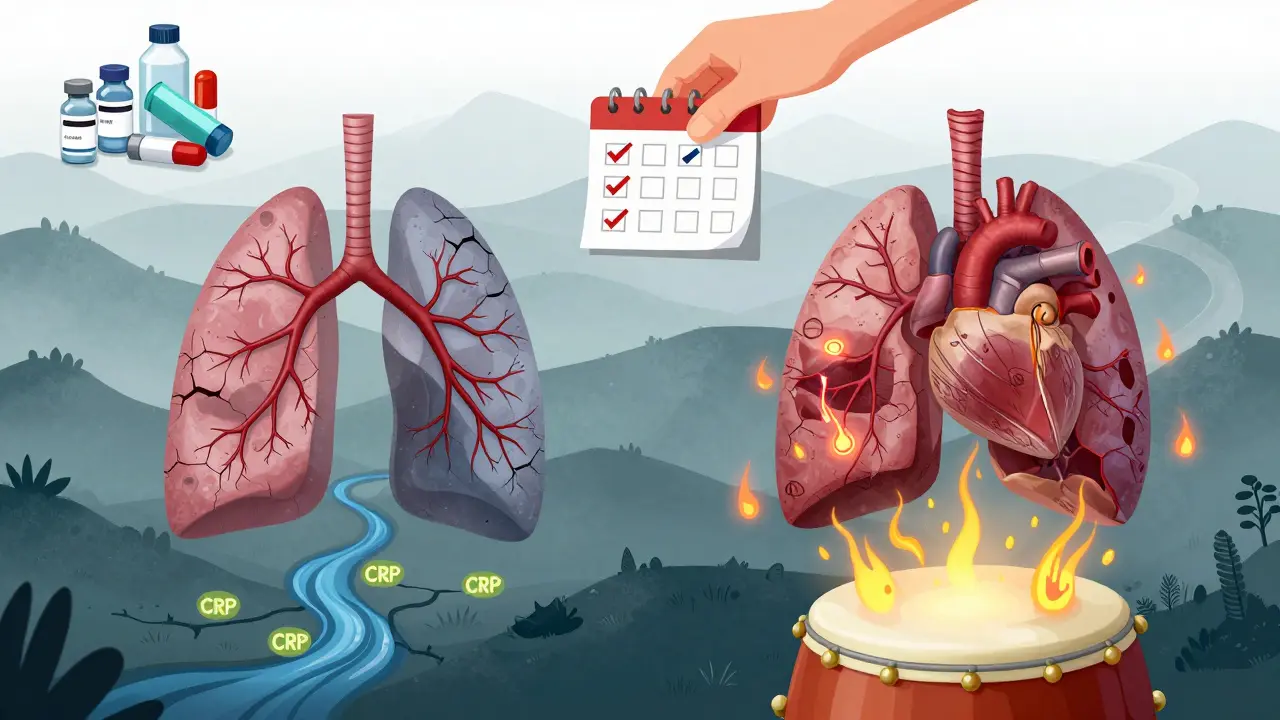
Each COPD exacerbation doesn’t just disrupt your life - it changes your future. The inflammation during these episodes doesn’t just affect your lungs. It floods your whole body with inflammatory markers like CRP and fibrinogen. That’s why people with frequent flare-ups are at higher risk for heart attacks and strokes. COPD isn’t just a lung disease. It’s a whole-body condition.And the cycle is cruel: more flare-ups → more lung damage → worse lung function → more flare-ups. It’s a downward spiral. That’s why early action is everything. Recognizing the signs, acting fast, and preventing the next one can slow this spiral - maybe even stop it.
There’s hope. With better awareness, better vaccines, and smarter management, many people with COPD live full lives - even after multiple exacerbations. But it takes vigilance. It takes knowing your body. And it takes acting before it’s too late.
How long does a COPD exacerbation usually last?
Most COPD exacerbations last between 7 and 14 days. However, some can stretch for several weeks, especially if treatment is delayed or if the trigger is severe, like a bacterial infection or pneumonia. Even after symptoms improve, lung function may not return to pre-flare levels for up to 8 weeks - and sometimes never fully recovers.
Can COPD exacerbations be prevented?
Yes, many can be prevented. The most effective strategies include getting annual flu and pneumonia vaccines, taking prescribed maintenance inhalers every day, avoiding smoke and air pollution, washing hands frequently, and having a written action plan from your doctor. Patients who follow these steps reduce their flare-up risk by up to 50%.
When should I go to the emergency room for COPD?
Go to the ER if you have: severe shortness of breath that doesn’t improve with your inhaler, confusion or drowsiness, blue lips or fingernails, a fever above 38°C (100.4°F), or oxygen levels below 90% (if you monitor them). These are signs your body isn’t getting enough oxygen - and that’s life-threatening.
Do inhaled COPD medications protect against COVID-19?
Research during the pandemic showed that people with COPD who regularly used inhaled corticosteroids and long-acting bronchodilators had less severe outcomes from COVID-19 than expected. These medications may reduce airway inflammation and help the lungs resist damage from the virus. But they’re not a substitute for vaccines or masks - they’re part of a broader protective strategy.
Can COPD exacerbations cause permanent damage?
Yes. Each flare-up causes inflammation that can scar lung tissue and destroy small airways over time. This leads to permanent loss of lung function. That’s why preventing exacerbations is just as important as treating them - it’s about protecting what’s left of your lung health.

I've been living with COPD for 12 years and let me tell you - this post is spot on. The moment my sputum turns green, I hit the steroids like clockwork. No waiting. No hoping it'll pass. I learned the hard way after one flare-up sent me to the ICU. Now I keep my action plan on my fridge next to my inhaler. Don't wait until you're gasping. Act at the first sign. Your future lungs will thank you. 🙌
I'm concerned that this article promotes an over-reliance on pharmaceutical interventions without addressing the root causes - namely, environmental toxins and corporate negligence in air quality regulation. The NIH data is misleading; it doesn't account for the fact that 78% of COPD cases in urban areas are linked to industrial emissions. And why are we not talking about the role of Big Pharma in pushing inhalers instead of pushing for clean air policies? The system is broken - and this article is part of the problem.
Honestly? This is the best rundown I've seen. I used to think 'just breathe slower' was the answer. Nope. My doc gave me a plan, I stuck to it, and I went from barely walking to the mailbox to hiking trails last fall. Vaccines? Check. Inhalers? Daily. Air purifier? Always on. And yeah, I still get coughy sometimes - but now I know when to call the doc before it turns into a nightmare. You got this. Seriously.
I think the government is hiding something. Why do they push vaccines so hard but never talk about the chemicals in the inhalers? I read online that the propellants can cause heart issues. My cousin stopped using hers and now she's fine. Maybe we're being manipulated.
I'm a nurse who works in pulmonology, and I see this every day. One thing I always tell my patients: consistency beats perfection. You don't have to be flawless. Miss a day? Okay. Just get back on track. Your body remembers the rhythm. Small daily choices - a walk, a clean filter, a pill taken on time - they add up. You're not alone in this. And yes, you can still live well. I've seen it over and over again.
This is so overly optimistic. You act like following a 'plan' magically fixes everything. Have you met actual COPD patients? Half of them can't afford their meds. Half of them live in moldy apartments. And half of them don't even have a doctor. This article reads like a corporate brochure. It's tone-deaf.
I lost my dad to a COPD flare-up in 2020. He ignored the signs for three days because he didn't want to 'be a burden.' By the time we got him to the hospital, his oxygen was at 79%. He never woke up. This isn't theoretical. It's real. If you're reading this and you're not acting on your plan - start today. Not tomorrow. Today.
COPD doesn't get the love it deserves. People think it's just 'smoker's lung' - like it's some kind of punishment. But it's not. It's a brutal, silent thief. And every time you catch a flare-up early? You're stealing back your life. I'm 64, on oxygen at night, and I still garden. I still laugh. I still dance with my grandkids. It ain't easy. But it's worth every damn breath.
I was told I had 3 years left. 7 years later, I'm still here. Not because I'm lucky. Because I learned to listen. Not to the noise. Not to the fear. But to my body. When my breath changes - I change. I don't wait for permission. I don't wait for a doctor's appointment. I act. And if you're reading this and you're scared? Good. Fear is the first step toward survival. Now go. Get your plan. Fill your prescriptions. Breathe.