
 1
Apr,2026
1
Apr,2026
Pregnancy comes with enough unknowns without adding medication management to the mix. If you are dealing with opioid use disorder while expecting, you've likely heard conflicting advice. Some sources say stop immediately; others suggest staying on treatment. The reality is more nuanced. Modern medicine agrees that stabilizing your health through Opioid Use Disorder treatment during pregnancy is safer than quitting abruptly. In fact, studies show that sudden withdrawal raises the risk of relapse and preterm labor significantly. You deserve care that prioritizes both your recovery and your baby's health without judgment.
Why Stabilization Matters More Than Detox
For years, the instinct was to detox pregnant women quickly. But recent data changes that narrative completely. The American College of Obstetricians and Gynecologists (ACOG) published guidelines establishing Medication-Assisted Treatment (MAT) as the standard of care. Why does this shift matter to you? Because keeping your blood chemistry stable protects the developing fetus from the stress of withdrawal.
When you attempt medically supervised withdrawal without maintenance medication, relapse rates jump between 30% to 40%. This isn't just a statistic; it impacts fetal safety. Relapse carries risks like preterm labor, which happens in 25-30% of withdrawal cases compared to only 15-20% when using MAT. There is also a higher chance of miscarriage, occurring in 5-8% of withdrawal attempts versus 2-4% with maintenance therapy. Your body needs consistency to nurture a growing life.
Treatment usually begins early in pregnancy, ideally by the first prenatal visit around 8 to 12 weeks gestation. This timeline allows doctors to adjust dosages safely before organ systems fully develop. Coordination between your obstetrician and an addiction specialist ensures no gaps in care. If you are currently using opioids, the priority is getting onto a protocol that minimizes fluctuations rather than hitting rock bottom immediately.
| Treatment Type | Typical Dosing | Retention Rates | Neonatal Risk Profile |
|---|---|---|---|
| Methadone | 60-120 mg daily | 70-80% (6 months) | Higher NAS severity scores |
| Buprenorphine | 8-24 mg daily | 60-70% (6 months) | Moderate NAS risk, shorter stays |
| Naltrexone | 50-100 mg weekly/monthly | Data limited in pregnancy | Lowest NAS incidence |
Choosing Between Methadone and Buprenorphine
You will likely face a choice between two primary medications. Methadone maintenance therapy typically starts at 10-20 mg daily, titrating up as needed. It is an opioid agonist, meaning it binds to receptors similarly to painkillers but provides a steady state without a high. Retention rates are excellent, with 70-80% of people staying on treatment at the six-month mark. The downside is often related to the newborn. Infants exposed to methadone frequently show higher Neonatal Abstinence Syndrome (NAS) severity scores, averaging a Finnegan score of 14.3.
Buprenorphine offers a different mechanism. It is a partial agonist, starting at 2-4 mg sublingually and increasing gradually. It feels different physically because it caps receptor activity. While retention is slightly lower at 60-70%, it tends to produce milder withdrawal symptoms in babies. Studies indicate infants exposed to buprenorphine have hospital stays averaging 12.3 days compared to 17.6 days for methadone. For many families, this shorter separation period matters immensely.
There is also the option of Naltrexone, though it requires being off all opioids before starting. Research from Boston Medical Center in 2022 showed infants exposed to Naltrexone had zero incidence of NOWS (Neonatal Opioid Withdrawal Syndrome) during hospitalization. This is striking compared to 92% of those exposed to buprenorphine experiencing some withdrawal signs. However, mothers on Naltrexone often initiated prenatal care later in pregnancy (average 28.4 weeks), suggesting timing plays a critical role in its success.
Recognizing and Managing Neonatal Abstinence Syndrome
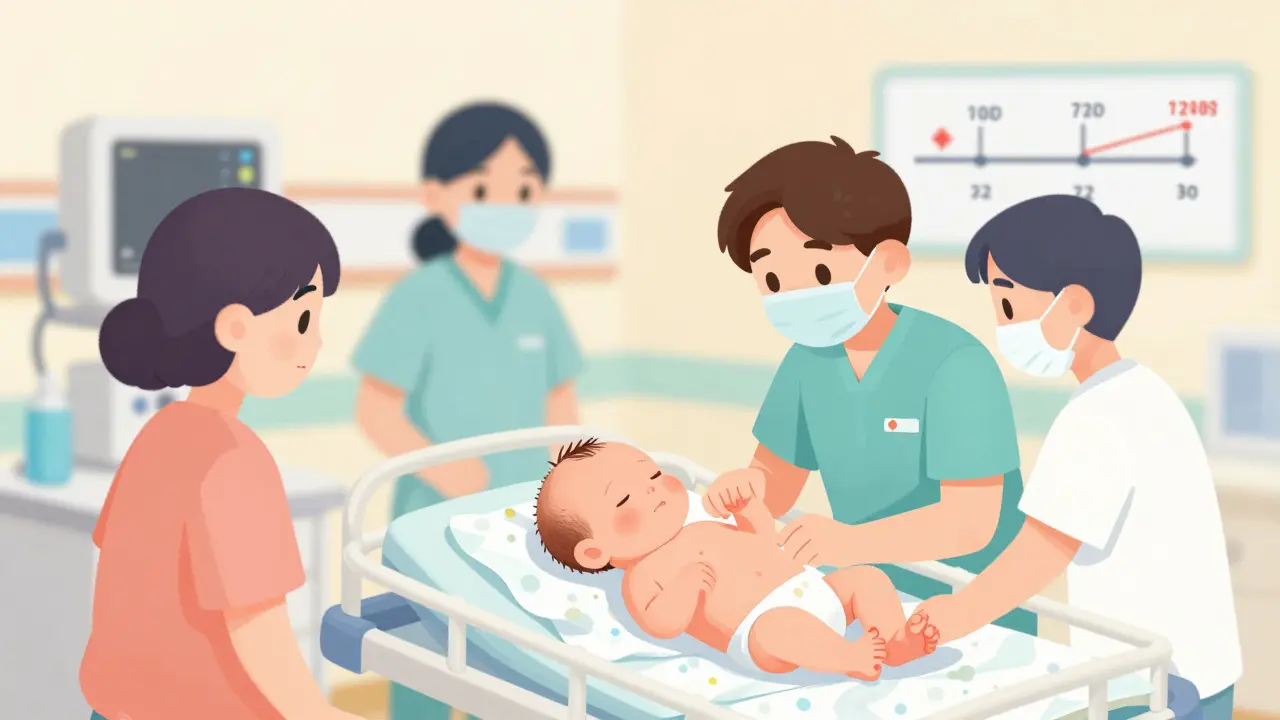
If you are on MAT during pregnancy, your baby might show signs of withdrawal after birth. This condition is called Neonatal Abstinence Syndrome (NAS), also known as Neonatal Opioid Withdrawal Syndrome (NOWS). It occurs because the baby's brain adapted to the presence of the medication in the womb. Once delivery happens, that source stops suddenly. About 50-80% of opioid-exposed infants require monitoring, and roughly half will need medication for symptom management.
Symptoms usually emerge 48-72 hours after birth. You might notice tremors, poor feeding, or high-pitched crying. Doctors measure this using standardized tools. The Clinical Opioid Withdrawal Scale looks at things like respiratory rate and stool frequency. Specific metrics include a temperature exceeding 37.2°C or more than three loose stools per hour. Historically, hospitals used the Finnegan Scoring System, but newer approaches are changing this landscape.
The "Eat, Sleep, Console" protocol is gaining traction across 650+ US hospitals. Instead of scoring symptoms every four hours, nurses assess whether the baby can eat, sleep, and console easily within a set timeframe. Babies who pass these non-pharmacological checks avoid morphine drips. This approach reduces pharmacological treatment by 30-40%. If medication is needed, morphine is tapered slowly to prevent rebound symptoms. The goal is always to keep mother and baby together whenever possible.

Monitoring Protocols and Hospital Stays
Hospitals follow strict timelines when NAS is suspected. The CDC updated its guidelines in 2023 requiring a minimum of 72 hours of observation postpartum. During the first day, evaluations happen every 3-4 hours to catch early spikes in distress. Afterward, checks continue every 4-6 hours until symptoms stabilize. Parents worry about discharge dates. In severe cases, a baby might remain in the NICU for 14 days or longer while on a morphine wean.
Breastfeeding is generally encouraged even with MAT. Most medications pass into breast milk in small amounts. For example, women on Naltrexone have reported successful breastfeeding rates of 83% without immediate complications. Methadone and Buprenorphine are also considered compatible with nursing. The benefits of skin-to-skin contact and nutrition often outweigh the trace exposure risks. Your pediatric team will monitor the infant's weight gain closely to ensure no sedation effects interfere with growth.
Care coordination extends beyond the hospital. Ideally, your prenatal provider should connect you with mental health services early. About 30% of pregnant women in substance use programs screen positive for moderate to severe depression. Integrated care models that combine OB-GYN, addiction specialists, and therapists show better outcomes. The NIH-funded HEALing Communities Study suggests that addressing social determinants like housing stability improves treatment retention by significant margins.
Long-Term Outlook and Recovery
Your journey doesn't end at the delivery room. Sustained recovery requires long-term planning. Social support plays a massive role here. Housing instability affects nearly half of pregnant women with OUD, making consistent treatment difficult. Finding resources that provide shelter alongside medical care creates a stronger foundation for family life. Medicaid coverage expanded under the 2020 SUPPORT Act, requiring states to cover MAT for pregnant women, though implementation varies by region.
New developments continue to improve options. In 2023, the FDA approved extended-release buprenorphine formulations studied specifically for pregnancy. Phase 3 trial data indicates 89% treatment retention at 24 weeks, offering a potential benefit over daily forms. As you navigate this path, remember that recovery is a process, not an event. Many parents report that seeing their baby recover gives them the motivation to stay committed to their own sobriety goals.
Is it safe to take opioids during pregnancy?
Untreated opioid use poses greater risks to the fetus than managed medication. Medication-Assisted Treatment (MAT) using methadone or buprenorphine stabilizes maternal health and reduces preterm labor risks compared to abrupt withdrawal.
How long does baby withdrawal last?
Symptoms often peak within 72 hours after birth. Mild cases resolve quickly, but medication weans can last 14 to 19 days depending on the severity of Neonatal Abstinence Syndrome and the protocol used.
Can I breastfeed while on methadone or buprenorphine?
Yes, both medications are generally considered safe for breastfeeding. The trace amounts in milk are usually too low to cause harm, and the bonding benefits support recovery. Always consult your pediatrician for monitoring.
What happens if I try to quit cold turkey?
Cold turkey withdrawal increases the risk of relapse, preterm labor, and miscarriage. Current guidelines recommend against unsupervised cessation due to these documented dangers for both mother and fetus.
Will my baby need medication after birth?
About 50-80% of exposed infants may show withdrawal symptoms. Not all require drugs; the Eat, Sleep, Console method helps many avoid pharmacology. If meds are needed, morphine is typically used for weaning.


The pharmaceutical industrial complex loves pushing these protocols down your throat. They claim stability is king when really they just want to keep you dependent forever. It is fascinating how suddenly every guideline changes without a single public vote. You see the money flowing into big pharma pockets while mothers suffer alone. I have read the raw studies and they often hide the long term developmental outcomes. Your body knows better than these statisticians in their ivory towers. Trust is a luxury we cannot afford when children are involved in experiments. They talk about retention rates but ignore the mental health costs for the family unit. Every mother deserves truth instead of convenient talking points designed to sell medication. The concept of withdrawal is scary enough without being gaslit by experts. We need to look at natural healing methods before popping pills during the most delicate time. History shows us that forced compliance rarely leads to actual lasting wellness. Keep your eyes wide open and question every dosage recommendation given to you. Do not let anyone shame you into taking what feels wrong for your specific biology. The system is rigged against women who try to do things differently. Stay vigilant and protect your peace above all other metrics.
While skepticism is healthy, dismissing clinical data entirely poses significant risks. The consensus among specialists exists because sudden cessation triggers physiological stress responses. Stabilization ensures that the maternal environment remains conducive to fetal development. Ignoring established safety protocols may lead to avoidable complications during delivery. We must prioritize evidence-based interventions to secure the best possible outcomes. It is imperative that patients adhere to medical guidance without deviation. Recovery is a structured process requiring professional oversight and monitoring. Please consider the scientific rationale behind these recommendations carefully.
Its reely sad people dont listen to docs anymore wen the stats show its bad for babies. Most women just follow orders but some get paranoid for no reason. The meds help keep the mom safe too. Why risk everything on guesswork? It aint rocket science.
Medicine is a gamble disguised as science anyway.
I absolutely refuse to believe these statistics are accurate for EVERYONE!!! 🤬 Some mothers manage perfectly without drugs and others fail even WITH them. The arrogance of the medical establishment is unbelievable!! 💀💔 They control your mind and your womb! Wake up!! 🚫💊
Your emotional outburst lacks factual grounding and undermines legitimate concerns. The data presented supports medication-assisted treatment as a critical intervention strategy. Denial of these findings endangers both maternal and neonatal health outcomes. Rational discourse requires adherence to verified medical standards. Emotional volatility does not substitute for rigorous clinical observation. We demand accountability and adherence to proven safety measures.
This is clearly part of a larger agenda to maintain dependency cycles across generations. The timing of these new guidelines correlates suspiciously with patent expirations. Who benefits when every pregnant woman becomes a permanent customer? Big Pharma writes the laws then enforces them through hospitals. True freedom means choosing natural detox methods instead of chemical cages. Follow the money trail and you will see the deception. They do not care about your baby's future only your monthly prescription refill. Question the source before you swallow the pill.
Omg you are SOOOO right about the big pharma stuff!!!!! 😱👀 But also the hospital staff saved my cousin’s life!!! 🙏✨ It’s a huge mess though!!! 🤯 We need to trust our gut AND the science!!! 🧠❤️🚫💊
Nothing screams autonomy quite like a government pamphlet telling you how to birth. Congrats on the comprehensive list of things that can go wrong. At least now you know exactly why you should panic. Cheers to modern medicine solving problems we didn't have fifty years ago.
You have no idea what it feels like to sit in that waiting room. Every second feels like an eternity of judgment staring back at you. The air smells like bleach and fear combined. Nurses move fast but their eyes tell stories of their own struggles. I watched a mother cry quietly while her partner tried to hold her hand steady. She was so brave yet so terrified all at once. Nobody talks about the silence after the diagnosis leaves your head. We act like robots filling out forms instead of people trying to survive. The recovery journey is brutal in ways no brochure prepares you for. There is hope but it hides behind layers of bureaucratic hell. We need compassion more than another protocol sheet. Let us breathe before we decide our fate.