
 17
Jan,2026
17
Jan,2026
When a child breaks out in hives after eating peanut butter, or a teenager gets stomach cramps every time they have milk, parents and doctors face a tough question: Is this a real allergy-or just a coincidence? Skin prick tests and blood work can suggest an allergy, but they often give false answers. That’s where the oral food challenge comes in. It’s not just another test. It’s the only way to know for sure.
Why Oral Food Challenges Are the Gold Standard
No other test can match the accuracy of an oral food challenge (OFC). Skin prick tests and blood tests for IgE antibodies might show a reaction, but they can’t tell you if someone will actually get sick from eating the food. Studies show these tests are wrong more than half the time. A positive IgE result for peanut could mean nothing-or it could mean life-threatening anaphylaxis. Without an OFC, you’re guessing. The OFC changes that. It gives a real-time answer. You give the food, slowly, under medical watch, and you see what happens. If the person eats a full serving without symptoms, they’re not allergic. If they react, you know exactly what triggers them and how much it takes. This isn’t theory. It’s proof. The American Academy of Allergy, Asthma & Immunology (AAAAI), the European Academy of Allergy and Clinical Immunology (EAACI), and the Italian Society of Pediatric Allergy and Immunology (SIAIP) all agree: OFC is the gold standard. No other test comes close. And for good reason. In one study, 25-30% of people told they had a food allergy turned out to be fine after an OFC. That means they were avoiding foods they didn’t need to-cutting out eggs, milk, or nuts for years, when they could have eaten them safely.How an Oral Food Challenge Works
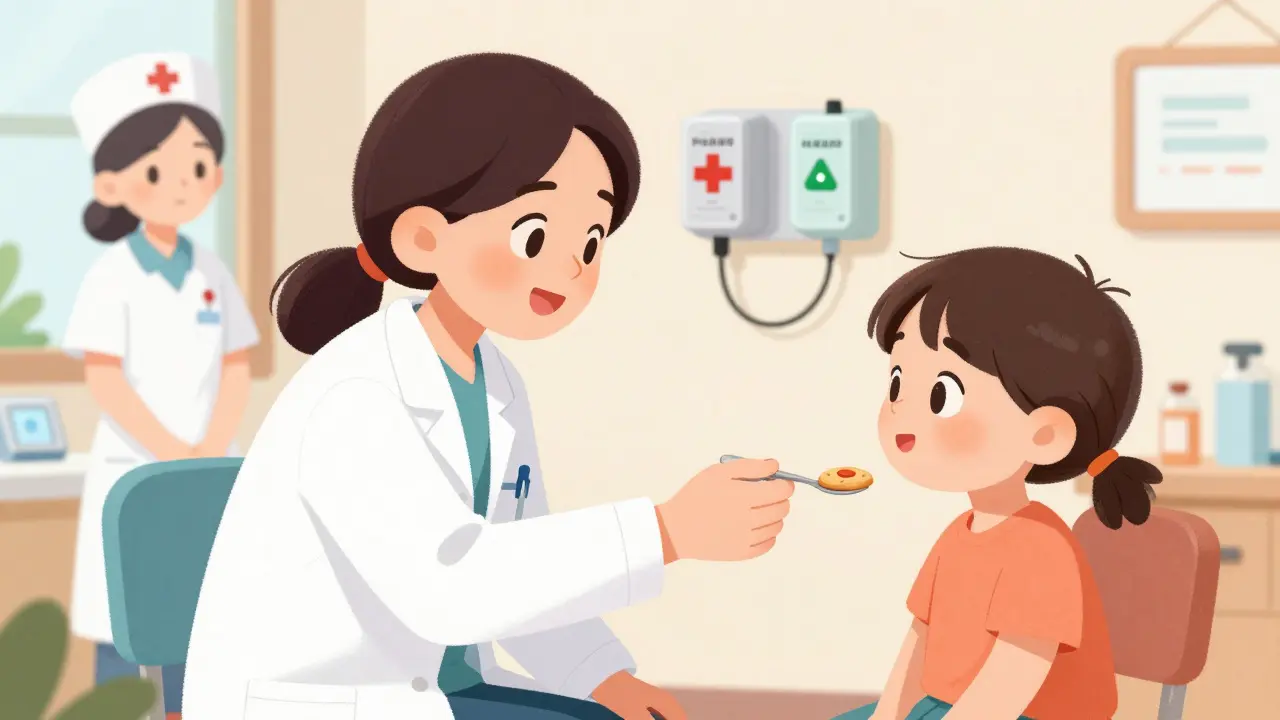
An OFC doesn’t happen in a rush. It’s slow, controlled, and carefully watched. The patient starts with a tiny amount-sometimes just 1-2 milligrams of the food, like a grain of peanut powder. That’s less than 1/1000th of a peanut. If nothing happens after 15-30 minutes, the dose goes up. Each step is bigger, until either the person eats a full serving or a reaction shows up. The whole process takes 3 to 6 hours. That’s because reactions don’t always happen right away. Some come on slowly. That’s why doctors keep watching for hours after the last bite. The setting matters too. It’s done in a clinic or hospital with emergency equipment on hand: epinephrine, oxygen, antihistamines, and trained staff. At least two medical professionals are present-one doctor, one nurse. No exceptions. There are three ways to do it:- Open challenge: Everyone knows what’s being given. This is the most common-used in 90% of cases.
- Single-blind: Only the doctor knows what’s being given. Used when anxiety might affect the outcome.
- Double-blind placebo-controlled: Neither patient nor doctor knows if it’s the real food or a placebo. This is the most accurate, but it’s rare. It’s mostly used in research, not clinics.
When an Oral Food Challenge Is Used
OFC isn’t for everyone. It’s not a screening tool. If someone had a severe reaction last week-like trouble breathing or swelling of the throat-you don’t do an OFC right away. You wait. But it’s perfect for these situations:- When blood or skin tests are unclear
- When a child might have outgrown an allergy (milk and egg allergies often fade by age 5)
- When a family wants to know if a food is truly dangerous
- When a person has been avoiding a food for years and wants to reintroduce it
Safety: How Risky Is It?
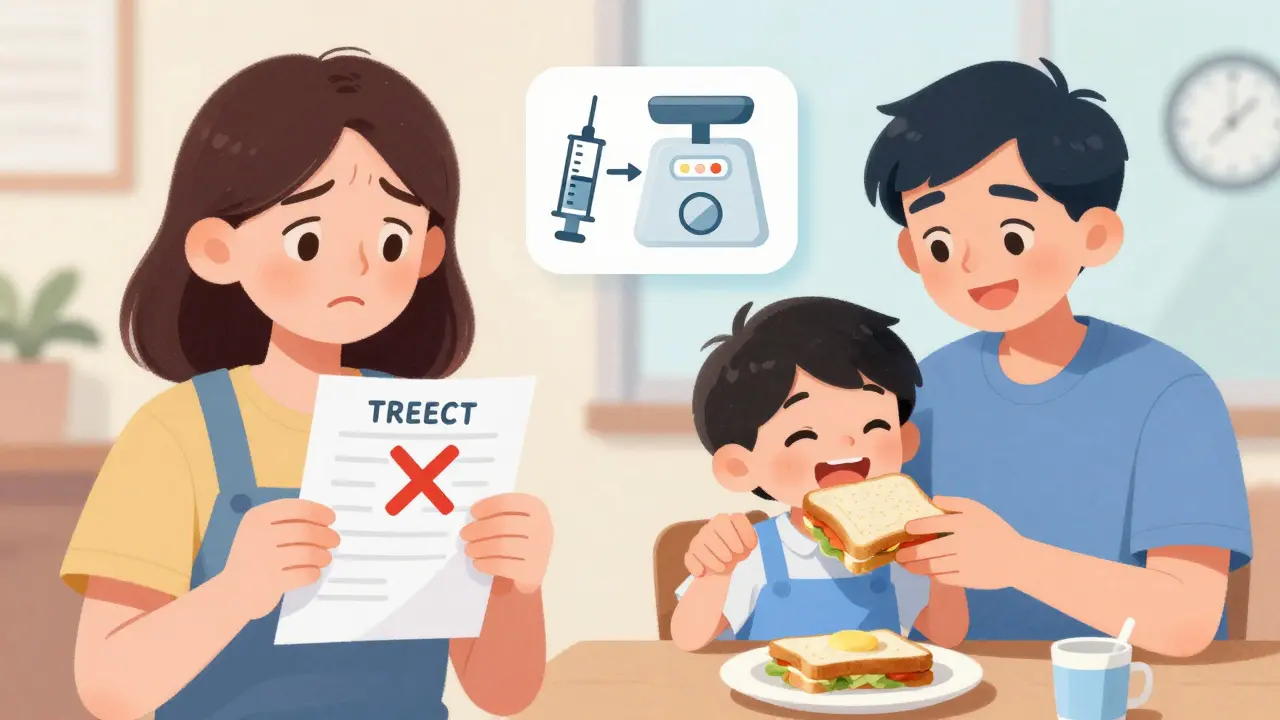
People worry. And rightly so. The idea of feeding a child a food they might react to sounds scary. But here’s the truth: severe reactions are rare. About 40-60% of OFCs result in mild symptoms-hives, flushing, a little vomiting, or stomach upset. These are uncomfortable, but they’re easy to treat with antihistamines. Severe reactions that need epinephrine? Only 1-2% of cases. And when done right, in a supervised setting, those reactions are handled immediately. One study found that 0.9% of OFCs led to treatment-requiring reactions. That’s less than 1 in 100. Compare that to the risk of accidental exposure at home, school, or a restaurant-where reactions are unpredictable and emergency help might be delayed. The biggest danger isn’t the challenge itself. It’s doing it without proper training or equipment. That’s why the AAAAI says only experienced allergists should perform OFCs. A nurse who’s never seen anaphylaxis, or a clinic without epinephrine on hand, shouldn’t be doing this.What Patients and Parents Say
Parents often describe the OFC as terrifying-but necessary. One mother on a food allergy forum said her son cried through the whole peanut challenge. He was scared. She was scared. But when it was over, the doctor said, “He’s fine.” They didn’t need to buy special snacks anymore. They didn’t need to call every restaurant. They didn’t need to live in fear. Surveys show 89% of families are satisfied with the results, even if the challenge triggered a reaction. Why? Because they finally had an answer. No more guessing. No more “maybe.” For kids who outgrow allergies, the change is life-altering. About 65% of children with milk or egg allergies outgrow them by age 5. Without an OFC, many families keep avoiding those foods for years-even decades-out of caution. That’s unnecessary. That’s stress. That’s cost. Common advice from parents? Bring favorite toys or tablets to distract the child. Wear loose clothes. Don’t do the challenge if the child is sick or tired. And never stop antihistamines before the test unless your doctor says to-those meds can hide early signs of a reaction.What You Need to Know Before the Test
Preparing for an OFC isn’t hard, but it’s important. Here’s what you need to do:- Stop antihistamines 5-7 days before. They mask symptoms and can make the test useless.
- Don’t do it if you or your child is sick. A cold or fever can increase the risk of a reaction.
- Bring a favorite snack or toy. Distraction helps kids stay calm.
- Ask your doctor what food form will be used. Will it be pure peanut butter? A cookie? A capsule?
- Know the stop criteria. If hives appear, or vomiting starts, the test stops. That’s normal.

Why Other Tests Aren’t Enough
Skin prick tests and blood IgE levels are helpful-but they’re not definitive. A high IgE level for peanut might mean a 90% chance of reaction… or it might mean nothing. It depends on the person. Component-resolved diagnostics (CRD), which test for specific peanut proteins like Ara h 2, are more precise. But even then, they’re only about 85% accurate. That’s still 1 in 7 people getting the wrong answer. OFC doesn’t guess. It watches. It listens. It sees what the body does when the food enters it. That’s why it’s still the gold standard. No biomarker, no algorithm, no new blood test has replaced it-and none will anytime soon.The Future of Oral Food Challenges
The good news? OFC is becoming more accessible. In 2023, the AAAAI updated guidelines to allow home-based OFCs for low-risk cases-like children with mild egg allergies who’ve never had a severe reaction. Under strict supervision and with clear emergency plans, families can do small challenges at home with a doctor’s approval. Researchers are also looking at ways to make OFCs safer. A 2023 NIH-funded study is testing new dosing protocols for peanut and tree nuts to lower reaction rates. But experts agree: even with better protocols, OFC will remain the standard. As Dr. Kari Nadeau from Stanford says, “It’s the only test that tells you what the body will actually do.”Final Thoughts
An oral food challenge isn’t just a test. It’s a turning point. It ends years of fear, guesswork, and unnecessary restrictions. It gives families back control. It lets children eat at birthday parties, go on school trips, and live without constant anxiety. Yes, it’s stressful. Yes, it takes time. But the cost of not doing it? Much higher. Living with a false diagnosis means missing out on life. Living with an undiagnosed allergy means risking a serious reaction. If you’re unsure whether a food allergy is real, ask your allergist about an OFC. Don’t settle for a blood test result that might be wrong. Demand the truth. And if you’re a parent, remember: the scariest part isn’t the challenge. It’s the uncertainty. The OFC ends that.Are oral food challenges safe for children?
Yes, when done in a medical setting with trained staff and emergency equipment. Severe reactions are rare-only 1-2% of cases-and most reactions are mild, like hives or stomach upset. Over 89% of families report being satisfied with the results, even if a reaction occurred. The safety of the procedure depends on proper preparation, supervision, and having epinephrine on hand.
How long does an oral food challenge take?
An oral food challenge typically lasts 3 to 6 hours. The first 1-2 hours involve gradually increasing the amount of the food, given every 15-30 minutes. After the final dose, the patient is monitored for 2-3 hours to watch for delayed reactions. This long observation window is critical because some allergic reactions don’t appear until hours after eating.
Can an oral food challenge be done at home?
Under specific conditions, yes. Updated guidelines from the American Academy of Allergy, Asthma & Immunology (2023) allow home-based oral food challenges for low-risk patients-such as children with mild, well-documented allergies who’ve never had a severe reaction. These must be approved and monitored by an allergist, with a clear emergency plan and epinephrine available. It’s not for everyone, but it’s expanding access for families in stable situations.
What if my child reacts during the challenge?
If a reaction occurs, the challenge stops immediately. Mild symptoms like hives or itching are treated with antihistamines. More serious symptoms like vomiting, wheezing, or swelling are treated with epinephrine and other emergency medications. All clinics performing OFCs are required to have emergency equipment and trained staff on-site. Reactions during the test are expected and managed safely-this is how doctors learn what your child truly reacts to.
Do I need to stop medications before an oral food challenge?
Yes. Antihistamines, including over-the-counter ones like Benadryl or Zyrtec, must be stopped 5-7 days before the challenge. These medications can block early signs of an allergic reaction, making the test unreliable. Other medications like asthma inhalers or acid reflux drugs are usually fine, but always check with your allergist. Never stop any medication without their approval.
Can an oral food challenge diagnose non-IgE allergies?
Yes. While blood and skin tests only detect IgE-mediated allergies (the kind that cause immediate reactions), oral food challenges can also identify non-IgE allergies. These include conditions like food protein-induced enterocolitis syndrome (FPIES), which causes delayed vomiting and diarrhea hours after eating. Since there are no reliable blood tests for these, the OFC is the only way to confirm them.
How often are oral food challenges done?
About 1.6 to 3.2 million oral food challenges are performed each year in the U.S., based on the 32 million Americans with food allergies and current testing rates. Usage is rising as awareness grows. Major hospitals like Cleveland Clinic and Children’s Hospital of Philadelphia perform 500-1,000 challenges annually. Private allergists typically do 50-200 per year, limited by staffing and time.

Just had my daughter do an OFC for milk last month. She’s 5. We thought she was still allergic based on her old IgE numbers. Turned out she’s totally fine. She ate a whole glass of milk like it was water. No hives, no cramps, just pure joy. We’ve been buying regular yogurt and cheese since. Life changed. Seriously.
Don’t let fear keep you locked out of normal food. The test is scary, but the aftermath? Pure freedom.
Oh wow, so now you’re telling me Big Pharma doesn’t want us to know this? OFCs are FREE, they don’t need expensive lab machines, and they actually WORK? But insurance won’t cover them unless you jump through 17 hoops? Of course. They profit off lifelong avoidance diets, gluten-free scams, and $800 allergy tests that lie. This is a cover-up. The FDA, AAP, and every ‘expert’ are in on it. They don’t want you eating peanuts again. They want you dependent. Wake up.
My cousin’s kid had a ‘positive’ test for shellfish. They did an OFC. Zero reaction. Now they’re rich from selling ‘shellfish-free’ baby food. Coincidence? I think not.
Look, I get it. People are scared. I get it. But let’s be real - this whole ‘gold standard’ thing is just a fancy way of saying ‘we don’t have anything better.’ And honestly? That’s fine. But let’s not pretend it’s some miracle cure. It’s just the least-bad option.
Also, the fact that you need a clinic, two staff members, epinephrine, and a 6-hour block of time just to find out if your kid can eat an egg? That’s not a diagnostic tool - that’s a logistical nightmare. Why can’t we just… I dunno… use AI or a smart patch or something? We’re in 2025. We have self-driving cars. Why are we still feeding kids peanut butter in a hospital like it’s 1987?
Don’t get me wrong - I’m glad it works. But we need innovation. Not just repetition.
I’m a mom of a 3-year-old with suspected egg allergy. We’re scheduled for an OFC next week. I’ve been crying every night thinking about it. But reading this - and seeing how many families come out on the other side - gives me hope. Not because it’s easy, but because it’s real.
I just want my kid to eat birthday cake without me panicking. That’s all.
Of course it’s the gold standard. Because the alternative is admitting that modern medicine doesn’t have a clue. You can’t just trust a blood test? Then why do we trust anything? Why not just ask the patient what they feel? That’s what they did in the 1800s.
And don’t even get me started on ‘home-based OFCs.’ You’re letting untrained parents play doctor? Next thing you know, people will be doing IV antibiotics in their garages. This is how epidemics start. The system is broken, and you’re just patching it with more chaos.
They say OFC is the gold standard. But what is gold? A symbol of wealth. A tool of control. A thing the rich use to feel safe while the poor die from misdiagnosis because they can’t afford the 6-hour hospital slot.
This isn’t medicine. It’s a privilege. The real allergy isn’t peanuts - it’s inequality. You want to know who’s allergic to freedom? The 70% of families who can’t take time off work, can’t afford the copay, or live 3 hours from the nearest allergist.
The system doesn’t care if your kid eats cake. It cares if you can pay for the privilege of finding out.
For anyone considering an OFC - I’ve been through it twice with my kids. First time: terrified. Second time: way less scared because I knew what to expect.
Bring a tablet loaded with their favorite show. Wear comfy clothes. Don’t overthink the food form - if they’re hiding it in pudding, just go with it. And yes, stop the antihistamines. I know it’s tempting to keep giving them, but you’re sabotaging the test.
Also - ask your doc how many OFCs they’ve done. If they say ‘a few,’ ask for a referral. This isn’t something you wing. You deserve someone who’s done this 100+ times.
You’ve got this. I believe in you.
They say ‘trust the test.’ But what if the test is just a mirror of your fear?
My son did the peanut challenge last year. He cried. I cried. The nurse gave him a sticker at the end. He hugged her. We all cried again.
Now he eats PB&J every day. No special snacks. No ‘allergy alert’ at school. Just… normal. 😊
Thank you for writing this. It’s the kind of thing I needed to read before we did it.
USA still leads in this. Other countries are still stuck in the 90s.
just did the egg challenge with my 4yo last week!! it was so scary but we did it!! he ate like 3 full eggs and didn’t even sneeze 😭 we’re so happy!! thank you for the tips about stopping benadryl - i almost forgot!! 😅
Thank you for laying this out so clearly. I’ve seen too many families avoid foods for years because of a positive IgE test that turned out to be meaningless. This isn’t just medical advice - it’s a gift to families who’ve been living in fear.
Also, the part about home-based OFCs for low-risk cases? That’s huge. Access matters. Let’s make this standard everywhere.
As a Latina mom, I can’t tell you how many relatives told me ‘your kid just has a weak stomach’ or ‘it’s just anxiety.’ Then we did the OFC and it was real. But also? It was safe. 🙏
Now I tell every mom I know: don’t let anyone dismiss your fear. Get the test. Even if you’re scared. Even if it’s expensive. Even if your abuela says ‘back in my day we just ate it and prayed.’
Our kids deserve better. 🌎❤️
did the test last year. kid reacted. mild hives. stopped. treated. turned out he’s allergic. but now we know how much he can handle. no more guessing. life better.
stop antihistamines. dont skip it.
So we’re telling parents to feed their kids potentially deadly foods… in a hospital… with doctors watching… because we’re too lazy to build a better test?
This isn’t science. This is a high-stakes game of Russian roulette with a 1% bullet. And we call it ‘gold standard’ because we’ve given up on innovation.
Next time your kid has a rash, just Google it. At least you’ll get a better algorithm than this.