
 5
Dec,2025
5
Dec,2025
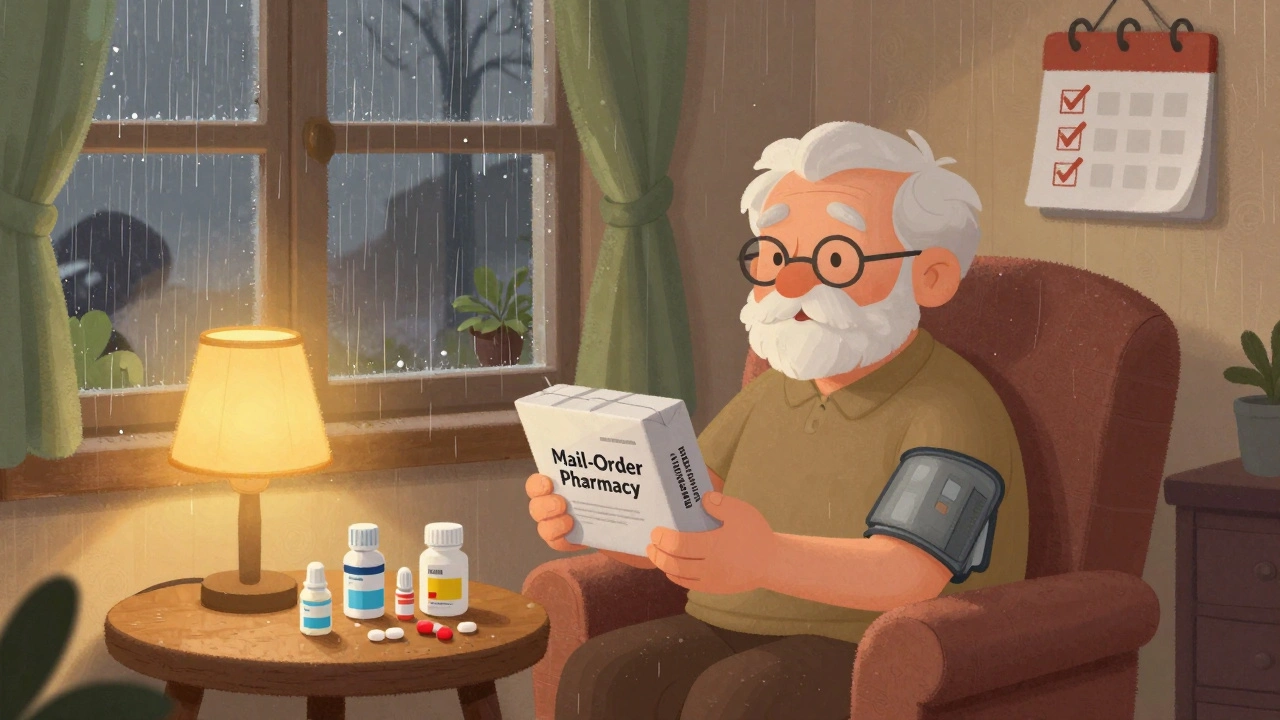
Running out of your blood pressure or diabetes meds shouldn’t mean a trip across town in the rain, waiting in line, or skipping a dose because you’re too tired. Pharmacy delivery and mail-order services are designed to remove those barriers-especially if you’re managing a long-term condition. You’re not just saving time. You’re increasing your chances of staying healthy.
Why Mail-Order Works Better for Chronic Medications
If you take the same pills every day, chances are you’re on a maintenance medication. That’s exactly what mail-order pharmacies are built for. Studies show people who get 90-day supplies through mail-order are 82% adherent to their treatment. Compare that to just 52% for those filling 30-day prescriptions at a local pharmacy. That gap isn’t random. It’s about convenience. Getting a 90-day supply means you only need to order three times a year instead of twelve. Fewer trips. Fewer chances to forget. And because pharmacies buy in bulk, your out-of-pocket cost is often lower. For example, a 90-day supply might cost the same as two 30-day refills at retail. That’s savings of $150 to $300 a year for many common drugs. The accuracy matters too. Mail-order pharmacies use robotic systems and computer checks to fill prescriptions. They’re 23 times more accurate than typical retail pharmacies. That means fewer wrong doses, fewer mix-ups, and less risk of side effects.What Medications Can You Get Delivered?
Not all prescriptions can be mailed. Controlled substances like opioids, benzodiazepines, and certain stimulants are excluded by law. These require in-person pickup for safety and regulatory reasons. But for the rest? Most chronic condition meds are eligible:- High blood pressure (lisinopril, amlodipine)
- Diabetes (metformin, glimepiride, insulin pens)
- Cholesterol (atorvastatin, rosuvastatin)
- Thyroid (levothyroxine)
- Antidepressants (sertraline, escitalopram)
- Asthma inhalers (albuterol, fluticasone)
How to Get Started
Getting set up takes less than 15 minutes. Here’s how:- Check your insurance-Most health plans, including Medicare Part D and employer-based coverage, include mail-order as a benefit. Log into your plan’s website or call the member services number. Ask: "Does my plan offer mail-order pharmacy with 90-day refills?" If yes, you’re already covered.
- Transfer your prescriptions-You don’t need to go to the pharmacy. Call your mail-order provider (like Express Scripts, CVS Caremark, or Birdi) and give them your current pharmacy’s details. They’ll handle the transfer. It takes 3-5 business days.
- Sign up online-Most services have a simple portal. You’ll need your insurance card, a list of your meds, and your home address. Some let you upload a photo of your prescription if you don’t have the original.
- Set up automatic refills-Once your first order ships, enable auto-refill. The system will track your supply and send the next batch before you run out. No more last-minute calls.
Delivery Speed and Reliability
Standard delivery usually takes 3-5 business days. If you’re running low and need it faster, some providers like Patient Direct Pharmacy offer next-day delivery for urgent cases. This is especially useful if you’ve missed a refill or your meds were lost. About 1.2% of packages get damaged or lost in transit. That’s low, but it happens. Always check your box when it arrives. If something’s missing or looks wrong, call the pharmacy right away. Most will resend the meds at no cost. Pro tip: Order your refill at least 10 days before you run out. Processing, insurance approval, and shipping can take time. Waiting until day 28 of your 30-day supply is a recipe for missed doses.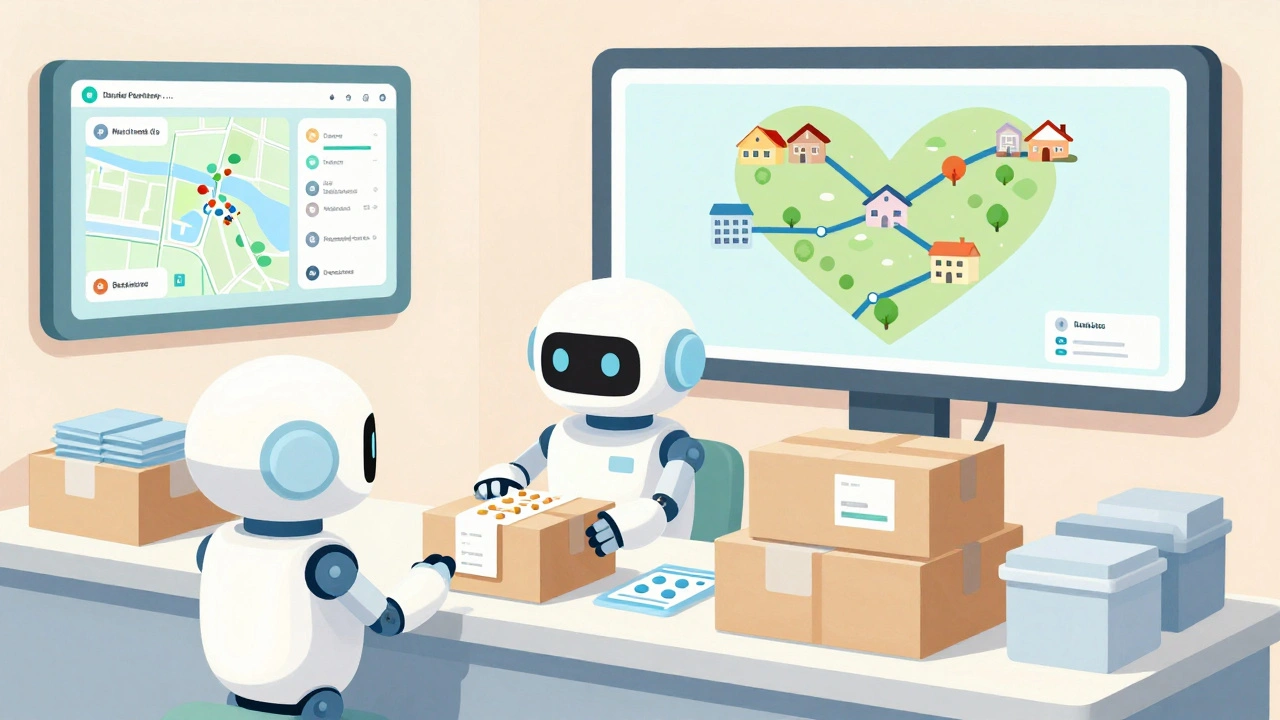
Cost Savings You Can’t Ignore
Mail-order isn’t just convenient-it’s cheaper. On average, you save 25-35% compared to buying three separate 30-day supplies. For brand-name drugs, that’s often $50-$100 per refill. Some plans even let you pay nothing for your 90-day supply if you’re on a generic. For example, metformin 500mg might cost $0 with mail-order, but $25 at retail. That’s $300 saved a year just on one pill. Employers and Medicare plans are pushing mail-order because it works. The industry saved $23.5 billion over 10 years in reduced hospital visits and ER trips thanks to better adherence. That’s not marketing-it’s data.When to Stick With a Local Pharmacy
Mail-order isn’t for everything. If you need a new antibiotic for a sinus infection, a steroid for sudden swelling, or a painkiller after surgery, go to your local pharmacy. You need it now, not in three days. Also, if you’re starting a new medication, it’s smart to pick it up in person. A pharmacist can explain side effects, check for interactions, and answer questions on the spot. Once you’re stable, you can switch to mail-order for refills. Some people also prefer local pharmacies for complex regimens-like those taking 10+ pills a day. You can build a relationship with the pharmacist, who remembers your history and catches errors.What to Watch Out For
There are a few common pitfalls:- Delays-About 8.3% of users report late deliveries. Always plan ahead.
- Multiple prescriptions-If you take several meds, they might arrive on different days. Most mail-order pharmacies now let you request synchronized delivery so everything comes on the same day.
- Insurance changes-If your plan switches PBMs (pharmacy benefit managers), your mail-order provider might change. Check your benefits every year during open enrollment.
- Controlled substances-No refills for opioids or Xanax via mail. Keep a small supply on hand for emergencies.
Real Stories, Real Impact
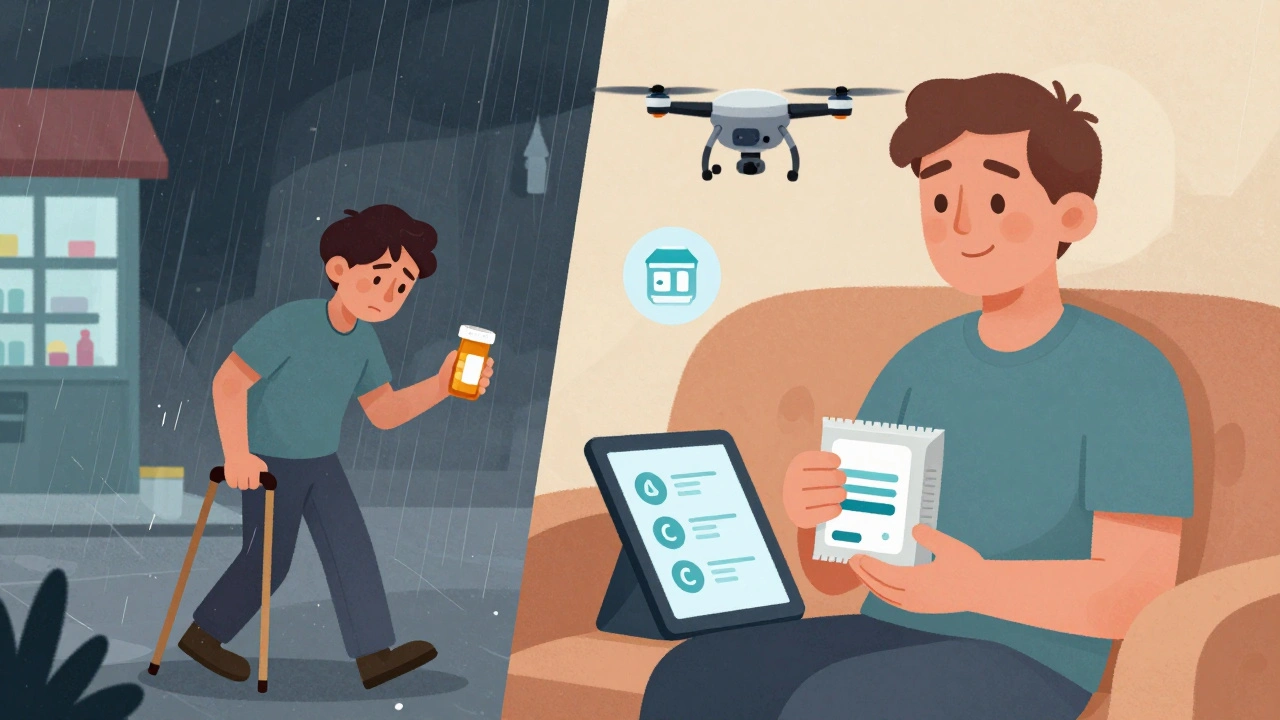
One Reddit user with multiple sclerosis wrote: "Mail-order has been life-changing. I can’t walk far anymore. Getting my meds delivered means I don’t have to beg for rides or risk missing a dose." A Medicare beneficiary in rural Ohio said: "The closest pharmacy is 40 miles away. I’ve been getting my heart meds by mail for two years now. Never missed a day." Patient Direct Pharmacy has a 4.7/5 rating on Trustpilot. People praise the next-day delivery and how easy it is to work with workers’ comp claims.What’s Next for Pharmacy Delivery?
The industry is growing fast. By 2028, mail-order will handle nearly $190 billion in prescriptions. New tech is making it smarter:- AI tools now predict when you’re likely to miss a dose and send reminders.
- Some pharmacies bundle telehealth visits with your refill-so you can talk to a doctor while ordering meds.
- Drones are being tested in North Carolina to deliver meds to remote areas in under an hour.
- Smart packaging with temperature sensors is rolling out for high-value biologics.
Final Tip: Make It Part of Your Routine
Think of mail-order like automatic bill pay. Set it up once, and it runs in the background. Your health shouldn’t depend on remembering to drive to the pharmacy. Especially when you’re tired, sick, or busy. Start with one medication. Transfer your blood pressure pill. See how easy it is. Then add the next one. Within months, you’ll wonder why you ever went to the pharmacy at all.Can I use mail-order pharmacy if I don’t have insurance?
Yes. Many mail-order pharmacies like Patient Direct Pharmacy and Birdi offer cash pricing that’s often lower than retail. You can compare prices online before ordering. Some even have discount programs for low-income patients.
How long does it take to transfer a prescription to mail-order?
Typically 3 to 5 business days. The mail-order pharmacy contacts your current pharmacy, requests the transfer, and verifies your details. If your prescription is electronic, it can be faster. Call ahead to check status.
Are mail-order pharmacies safe and licensed?
Yes. All major mail-order pharmacies are licensed in multiple states and must follow HIPAA rules for privacy. They’re regulated by the FDA and state pharmacy boards. Look for the VIPPS seal (Verified Internet Pharmacy Practice Sites) on their website to confirm legitimacy.
Can I get my meds delivered to a PO Box?
Most mail-order pharmacies require a physical street address for delivery. PO Boxes are often not accepted because couriers can’t leave packages there securely. Some may allow it for non-controlled meds, but it’s rare. Always check with your provider.
What if I need to change my dose or stop a medication?
Call your mail-order pharmacy immediately. They can pause your refill and connect you with a pharmacist or your doctor. For urgent changes, it’s best to visit a local pharmacy first, then switch back to mail-order once stable.
Do mail-order pharmacies offer pharmacist consultations?
Yes. Most offer 24/7 phone access to pharmacists. You can call to ask about side effects, drug interactions, or how to take your meds correctly. Some even send follow-up texts with tips.
Is mail-order better for seniors?
Absolutely. Seniors are the biggest users of mail-order pharmacy-42% of Medicare beneficiaries use it. It reduces the burden of travel, helps manage multiple prescriptions, and cuts costs. For older adults with mobility issues, it’s not just convenient-it’s essential for safety.
So... who's really behind these "mail-order pharmacies"? I mean, Big Pharma + insurance + robots = you think you're saving money, but you're just feeding the machine that controls your life... they track your every pill, your every dose, your every heartbeat... they know when you're sick before you do... and they charge you $0 for metformin... but only because they own your data... and your soul...
Let’s be precise: the 82% adherence stat is cherry-picked from a 2018 JAMA study with selection bias. Mail-order users are typically older, sicker, and more compliant by default. The control group? Younger, transient, non-chronic users. That’s not causation - it’s correlation with baseline health literacy. Also, robotic accuracy? Sure, if you ignore the 1.2% loss rate and the fact that human pharmacists catch 40% more drug interactions than algorithms. Don’t let convenience blind you to systemic risk.
Why are we letting corporations deliver our medicine? This is America. We don’t need robots filling our prescriptions. We need American workers. We need local pharmacies. We need face-to-face care. And now they want to replace it all with drones and AI? Next thing you know, they’ll be sending your insulin via drone from China. I’ve got news for you - I don’t trust a machine to handle my life-saving meds. I trust my neighbor who’s been my pharmacist for 20 years. This is socialism with a corporate logo.
But... what if convenience is the opiate of the masses? We’ve outsourced our health to algorithms because we’re too tired to care. We don’t ask questions anymore. We don’t build relationships with pharmacists. We don’t even remember what our meds are for. Mail-order isn’t liberation - it’s quiet surrender. You think you’re saving time? You’re losing agency. And the real cost? The erosion of human connection in healthcare. Who’s going to hold your hand when you’re scared? A barcode?
I tried mail-order once. Got my blood pressure pills... three weeks late. My BP spiked. I had to drive 50 miles to a pharmacy that didn’t take my insurance. Now I just go in person. It’s not about savings. It’s about control. And trust. You can’t trust a system that doesn’t even know your name. And why do they always send my meds in different boxes? One day it’s metformin. Two days later, it’s lisinopril. I have to keep a spreadsheet. That’s not convenience. That’s chaos with a pretty website.
One must interrogate the epistemological foundations of pharmaceutical logistics. The commodification of therapeutic adherence via algorithmic dispensation represents a profound ontological shift in the patient-provider dyad - one where the body becomes a data stream, and pharmacokinetics are reduced to a supply chain optimization problem. The VIPPS seal? Merely a performative signifier of regulatory compliance, masking the neoliberal colonization of bodily autonomy. One wonders: if the drone delivers your insulin, does it also deliver your dignity?
I’ve been using mail-order for my diabetes meds for 3 years now. It’s changed my life. I’m 72, live alone, and I don’t drive anymore. I used to skip doses because I couldn’t get to the pharmacy. Now? I get everything on time, every time. I don’t have to beg anyone for rides. I don’t have to stress about rain or snow. It’s simple. It works. And yes, the pharmacist called me last week to ask if I was feeling okay - because my refill was late. That’s care. That’s human. Don’t overcomplicate it. This isn’t a conspiracy. It’s just good sense.
There’s a critical flaw in the cost analysis: the 25–35% savings assumes perfect insurance alignment and no prior authorization delays. In reality, 41% of mail-order refills require manual intervention from the PBM, adding 7–14 days to processing. And for patients on multiple meds? Synchronized delivery is a myth - only 12% of providers offer it reliably. Also, the ‘$0 metformin’ claim? Only applies if you’re on a Tier 1 generic plan. If you’re on a high-deductible plan? You’re paying $15 out of pocket - same as retail. This article is dangerously oversimplified.
It is imperative to acknowledge that the institutionalization of mail-order pharmacy represents a systemic abdication of personal responsibility in healthcare. The reliance upon corporate intermediaries for the delivery of life-sustaining pharmaceuticals constitutes a profound abdication of civic agency. One must question the moral imperative of surrendering autonomy to algorithmic systems governed by profit motives. The convenience is illusory; the dependency is real. One cannot be truly free when one’s survival is contingent upon a delivery schedule.
so i tried mail order for my antidepressants and the box came with like 3 different pills in it?? like one was my blood pressure one was my thyroid and one was a vitamin?? i called and they said "oh sorry we had a system glitch"... then they sent me a new box with the same thing again... i just went back to the pharmacy. they remembered my name. and they gave me a lollipop. i’ll take the lollipop.
For those considering mail-order: start slow. Pick one medication - maybe your blood pressure pill. Set up auto-refill. Make sure your address is correct. Call the pharmacy to confirm the first shipment. Then, once you’re confident, add another. It’s not about doing it all at once. It’s about building a habit that protects your health. You’re not just saving time - you’re protecting your future. And if you’re helping someone else set this up? That’s kindness in action.
Mail-order? Yeah right. That’s how they track you. They know when you’re taking your meds. They know when you’re not. They know if you’re sick. They know if you’re lying. And then they raise your rates. Or deny your insurance. Or send you a "wellness survey" that turns into a lifetime surveillance contract. This isn’t healthcare. It’s behavioral conditioning with a pill bottle.
Just use mail-order. It’s cheaper. It’s easier. You’re not a child. Stop overthinking it. Your meds will arrive. If they don’t, call. Done.