
 15
Dec,2025
15
Dec,2025
BY : Robot San
8 Comments
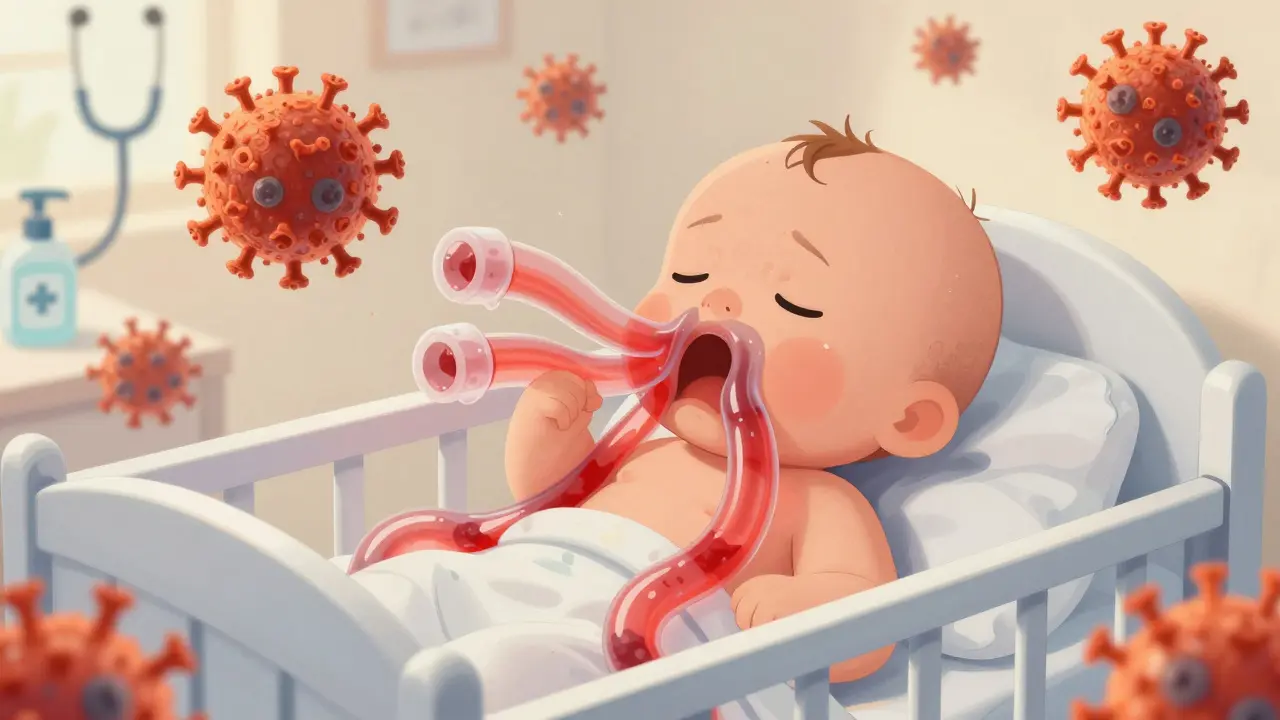
RSV isn’t just a bad cold. For babies and older adults, it can turn deadly. Every year in the U.S. alone, RSV sends about 80,000 children under 5 to the hospital and causes up to 14,000 deaths in adults 65 and older. It’s the top reason babies end up in the ICU with breathing trouble. And yet, many people still think it’s just a harmless winter sniffle. That’s not true - especially when you’re under 1 year old or over 65.
What Is RSV, Really?
Respiratory Syncytial Virus, or RSV, is a common virus that attacks the lungs and breathing passages. It’s so widespread that nearly every child gets infected by age 2. Most adults get it too - often every few years. But for most healthy people, it feels like a cold: runny nose, sore throat, cough, maybe a low fever. The problem is, it doesn’t stay mild for everyone. RSV spreads easily. You can catch it from someone coughing or sneezing nearby. You can pick it up by touching a doorknob, toy, or phone that an infected person touched - the virus lives on surfaces for up to 10 hours. And you’re contagious for 3 to 8 days, sometimes longer if you’re an infant or have a weak immune system. That’s why it spreads fast in daycares, nursing homes, and households.Why Infants Are at Highest Risk
Babies, especially those under 6 months, have tiny airways. When RSV hits, those airways swell and fill with mucus. Their lungs can’t handle it. That’s why RSV is the #1 cause of bronchiolitis (inflamed breathing tubes) and pneumonia in infants. About 2 to 3% of babies under 6 months with RSV end up hospitalized. That’s 58,000 to 80,000 kids in the U.S. every year. And globally, RSV kills more than 100,000 children under 5 annually - 97% of those deaths happen in countries without access to oxygen tanks, ventilators, or neonatal care. Some babies are at even higher risk:- Preemies born before 29 weeks
- Babies with congenital heart disease
- Children with chronic lung disease from birth
- Fast, shallow breathing (more than 60 breaths per minute)
- Chest muscles pulling in with each breath (retractions)
- Nostrils flaring
- Refusing to feed or drinking less than half their usual amount
- Limpness, extreme fussiness, or not waking up to eat
Why Older Adults Are in Danger Too
People over 65 are now recognized as one of the most vulnerable groups for RSV. The CDC estimates 60,000 to 160,000 hospitalizations and 6,000 to 14,000 deaths each year in this group. Why? As we age, our immune system weakens. That makes it harder to fight off viruses. And if you already have heart or lung problems, RSV can push your body over the edge. Older adults with COPD are 4 times more likely to be hospitalized with RSV. Those with heart failure face nearly 3 times the risk. Once hospitalized, adults 75+ stay in the hospital almost 3 times longer than younger patients. And 1 in 5 of them don’t survive. RSV doesn’t just cause pneumonia in older adults - it often makes existing conditions worse. Nearly 8 out of 10 hospitalized seniors see their heart or lung disease get significantly worse because of RSV. About 1 in 3 end up in intensive care. And after recovery, 42% can’t do basic tasks like bathing or dressing without help. Many need to move to a rehab center or nursing home.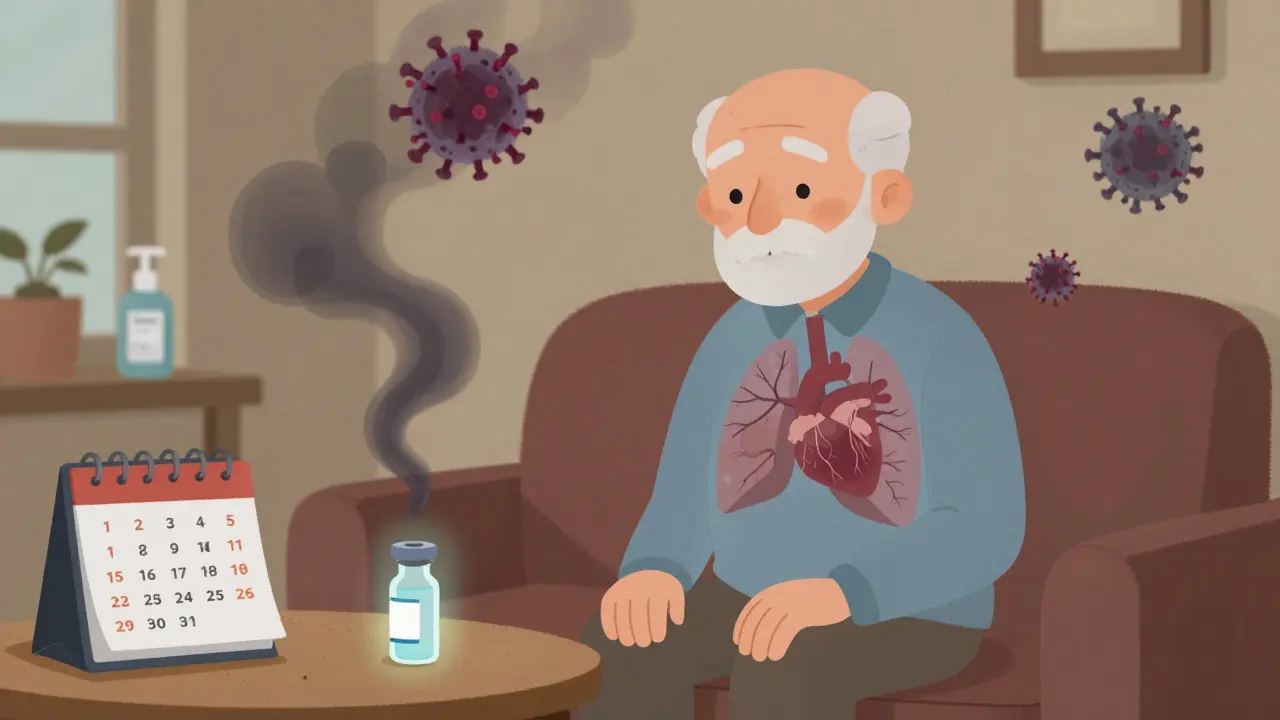
How RSV Spreads - And How to Stop It
RSV doesn’t need fancy conditions to spread. It thrives in homes, schools, and nursing facilities. Here’s how it moves:- Through coughs and sneezes (65% of cases)
- By touching contaminated surfaces like toys, light switches, or phones (10% of cases)
- Through direct contact - like kissing a child with a cold (25% of cases)
- Wash hands with soap for at least 20 seconds - the same time it takes to sing "Happy Birthday" twice. This cuts spread by up to 50%.
- Don’t touch your face, especially eyes, nose, and mouth.
- Sanitize high-touch surfaces daily with EPA-approved disinfectants. RSV dies quickly on clean surfaces.
- Avoid close contact with sick people. If you’re sick, stay home.
- Keep babies away from crowded places during peak RSV season (late fall to early spring).
The Big Breakthroughs in Prevention (2023 and Beyond)
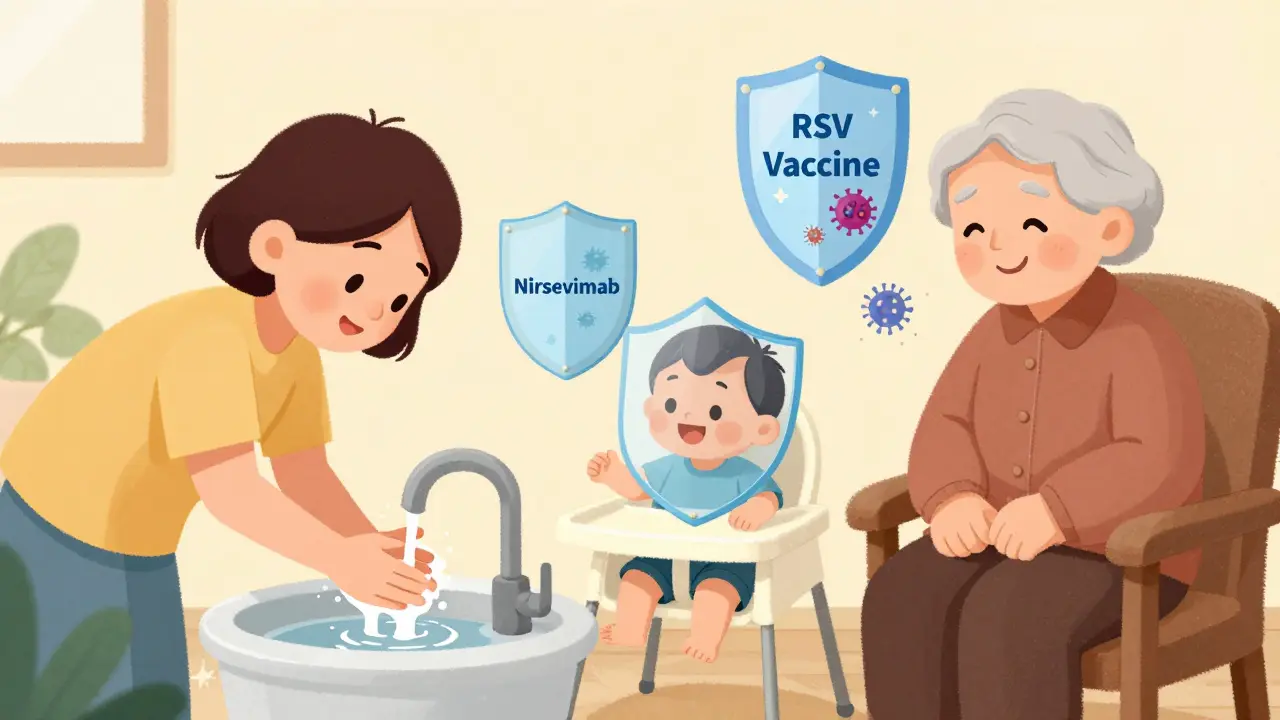
For decades, we had almost nothing to protect the most vulnerable. Then, in 2023, everything changed. For babies: The FDA approved nirsevimab (brand name Beyfortus) in July 2023. It’s a single shot given before or during RSV season. It cuts the risk of hospitalization by 75% for all infants under 8 months. Even high-risk kids 8 to 19 months old get protection if they’re getting their second RSV season. For older adults: Two vaccines are now available:- GSK’s Arexvy - 82.6% effective at preventing severe lower respiratory disease
- Pfizer’s Abrysvo - 66.7% effective
Long-Term Effects You Might Not Know About
Even after a baby recovers from RSV, the damage can last. Children who were hospitalized with RSV before age 2 are:- 4 times more likely to develop recurrent wheezing
- 3 times more likely to be diagnosed with asthma by age 7
- Showing reduced lung function that lasts into their teens
What You Can Do Right Now
If you have a baby:- Ask your pediatrician about nirsevimab - it’s recommended for all infants under 8 months.
- Wash your hands before touching your baby.
- Keep them away from crowded places and sick people.
- Don’t let anyone smoke near your baby.
- Ask your doctor about the RSV vaccine - even if you’ve had it before.
- Get the flu shot and COVID booster - they help reduce overall respiratory strain.
- Keep your home clean, especially doorknobs, remotes, and phones.
- If you’re sick, wear a mask around others.
- Stay home if you have a cold, even if it’s "just a sniffle."
- Wash your hands before hugging a baby or visiting a nursing home.
- Don’t assume RSV is harmless - it can be deadly for the people you love.
RSV Is Not Just a Cold. It’s a Threat. But It’s Not Unstoppable.
We now have the tools to protect babies and older adults from RSV. We have vaccines. We have monoclonal antibodies. We know how to stop the spread. The challenge isn’t science - it’s action. If you’re a parent, ask about the shot. If you’re an older adult, talk to your doctor. If you’re a caregiver, be the one who washes hands and wipes surfaces. RSV doesn’t care if you’re rich or poor, young or old. But you can care enough to act. And that’s what saves lives.
Write a comment
LATEST POST


Kidney Stones and Pregnancy: Essential Facts & Safe Management Tips
21 Oct 2025 | 00:11 AM
Cefaclor (Ceclor CD) vs Common Antibiotic Alternatives - Full Comparison
24 Sep 2025 | 12:24 PM
IBS Diet Guide: FODMAP, Low-Residue, and Elimination Plans Explained
1 Feb 2026 | 11:47 AM
medixrx.com Online Pharmacy: Your Guide to Safe, Affordable Medications
29 Jul 2025 | 20:43 PM
Where to Safely Buy Grifulvin V Online: Trusted Pharmacies, Tips, and What to Watch Out For
26 Jul 2025 | 00:02 AM
This whole post is just fearmongering dressed up as public health advice. RSV? It's been around since the Stone Age. Kids get sick, they recover. We used to raise children without monoclonal antibodies and fancy vaccines. Now we treat every sniffle like a biothreat. Pathetic.
And don't get me started on the cost. £400 for a shot? In my day, we wiped noses with a handkerchief and called it good.
Stop infantilizing parents and elderly people. Toughen up.
Britain handled this fine without American overreach.
Wake up, people. This is corporate profit masquerading as protection.
The data presented here is both comprehensive and alarming. RSV represents a significant public health burden that has been systematically underestimated for decades. The clinical distinctions between mild upper respiratory infection and severe lower respiratory tract disease in vulnerable populations are well-documented in peer-reviewed literature, and the epidemiological trends align with CDC surveillance reports from 2020–2023.
The introduction of nirsevimab and the two RSV vaccines marks a paradigm shift in preventive medicine. The efficacy metrics cited-75% reduction in hospitalization for infants and 66–83% reduction in severe disease among seniors-are statistically robust and clinically meaningful.
What remains unaddressed in mainstream discourse is the logistical challenge of equitable distribution. The disparity between access in high-income nations and low-resource settings mirrors patterns seen with COVID-19 vaccines and maternal tetanus immunization. This is not merely a medical issue-it is a global justice issue.
Long-term pulmonary sequelae in children who survived severe RSV bronchiolitis warrant longitudinal cohort studies. The association with subsequent asthma development suggests a potential epigenetic or structural remodeling component that merits further investigation.
Hand hygiene remains the most cost-effective intervention. The 50% reduction in transmission through proper handwashing is one of the most underutilized public health tools in modern medicine.
Recommendations for pregnant individuals to receive Abrysvo between 32 and 36 weeks are grounded in robust passive antibody transfer data. This approach has precedent with pertussis and influenza vaccines during pregnancy.
Systemic barriers to care, including insurance coverage, provider awareness, and vaccine hesitancy, must be addressed through coordinated policy and education. The science is ready. The infrastructure is lagging.
Okay but CAN WE TALK ABOUT HOW AMAZING THESE NEW PREVENTION TOOLS ARE?? 🙌
I had a cousin whose baby was in the NICU for 3 weeks because of RSV. She still has nightmares. Now? A single shot before birth or right after? That’s life-changing.
My grandma got her RSV shot last fall. She’s 78, has COPD, and she’s been going to her book club and gardening like nothing happened. Last year she was in the hospital for 10 days after a cold. This year? Zero.
And yes, it’s expensive-but if your kid or parent is at risk, this is worth every penny. Ask your doctor. Don’t wait until it’s too late.
Also-washing hands like your life depends on it? It does. Seriously. I’ve been doing it since my nephew was born. It’s not hard. Just do it.
Stop normalizing "just a cold" when it could kill someone you love. 💪❤️
The scientific foundation supporting the deployment of nirsevimab and RSV vaccines is unequivocal. Clinical trials conducted by AstraZeneca and Pfizer demonstrated statistically significant reductions in hospitalization rates among infants and elderly populations, with p-values below 0.001 in primary endpoints.
The CDC’s Advisory Committee on Immunization Practices (ACIP) issued a Category A recommendation for both vaccines in adults 60+, based on risk-benefit analyses that accounted for comorbidities, age-related immunosenescence, and healthcare utilization metrics.
Moreover, the economic modeling conducted by the Institute for Health Metrics and Evaluation indicates that widespread adoption of these interventions would yield a net savings of $2.1 billion annually in the U.S. healthcare system by reducing ICU admissions, mechanical ventilation, and long-term rehabilitation costs.
It is imperative that primary care providers proactively initiate conversations about RSV prevention during annual wellness visits, particularly for patients with chronic obstructive pulmonary disease, congestive heart failure, or immunocompromising conditions.
Public health messaging must evolve beyond fear-based appeals and instead emphasize agency, efficacy, and empowerment. Knowledge is not merely power-it is prevention.
Finally, the assertion that RSV causes permanent lung development alterations in early childhood is supported by longitudinal data from the COAST and VIBRANT cohorts. These findings necessitate a reevaluation of pediatric asthma screening protocols.
Let us not mistake accessibility challenges for scientific inadequacy. The tools exist. The evidence is clear. The moral imperative is undeniable.
THEY’RE PUSHING THIS ON US BECAUSE THEY WANT TO MAKE MONEY!!
It’s a scam! Every single one of these "breakthroughs" is owned by Big Pharma! You think they care about your baby? NO! They care about your insurance card!
And don’t even get me started on the pregnant woman thing-injecting chemicals into a woman’s body to protect the baby? That’s not medicine-that’s genetic manipulation!
My uncle had RSV in 1972 and he’s still alive and golfing at 82! No shot, no vaccine, no problem!
Wash your hands? HA! That’s what they want you to think! They don’t want you to know the truth!
Stop listening to the media! Stop listening to the doctors they pay! They’re lying to you to sell more shots!
THEY’RE LYING TO YOU!
And now they want to make it mandatory?!
NO!
NO!
NO!
in india, rsv is a silent killer. no one talks about it. my cousin’s baby died last winter-no oxygen, no hospital, no vaccine. just a cough that got worse.
we had no idea it was rsv. thought it was just a bad flu.
now i tell everyone: if your kid is breathing fast, or not eating, go to the clinic. don’t wait.
the shots? yeah, expensive. but even a clean cloth over your nose when you’re sick helps.
and wash hands. always. with soap. no excuse.
we don’t have fancy vaccines here. but we can still save lives. with simple things.
please don’t forget us.
we’re not less important because we’re poor.
I just want to say thank you for writing this. I’m a nurse and I see this every winter. Parents blaming themselves. Grandparents scared to hug their grandkids. It’s heartbreaking.
And honestly? Most people don’t realize how easily it spreads. I had a mom come in last week saying her 4-month-old got sick because the neighbor’s toddler "just waved."
It’s not their fault. It’s just how the virus works.
I’m so glad we have the tools now. Even if they’re not perfect. Even if they’re not everywhere yet.
Just… be kind to each other. Stay home when you’re sick. Wash your hands. It’s not dramatic. It’s just… human.
That’s enough.
My son was hospitalized with RSV at 3 months. We spent 11 days in the NICU. I still wake up at 3 a.m. thinking about the sound of his breathing.
He’s 5 now. Healthy. But he still gets wheezy when he catches a cold.
I got the RSV vaccine for my mom last fall. She cried when she told me she didn’t have to cancel her trip to see him.
This isn’t about fear. It’s about love.
So if you’re reading this and you’re wondering whether to get the shot?
Yes.
Just say yes.