
 15
Dec,2025
15
Dec,2025
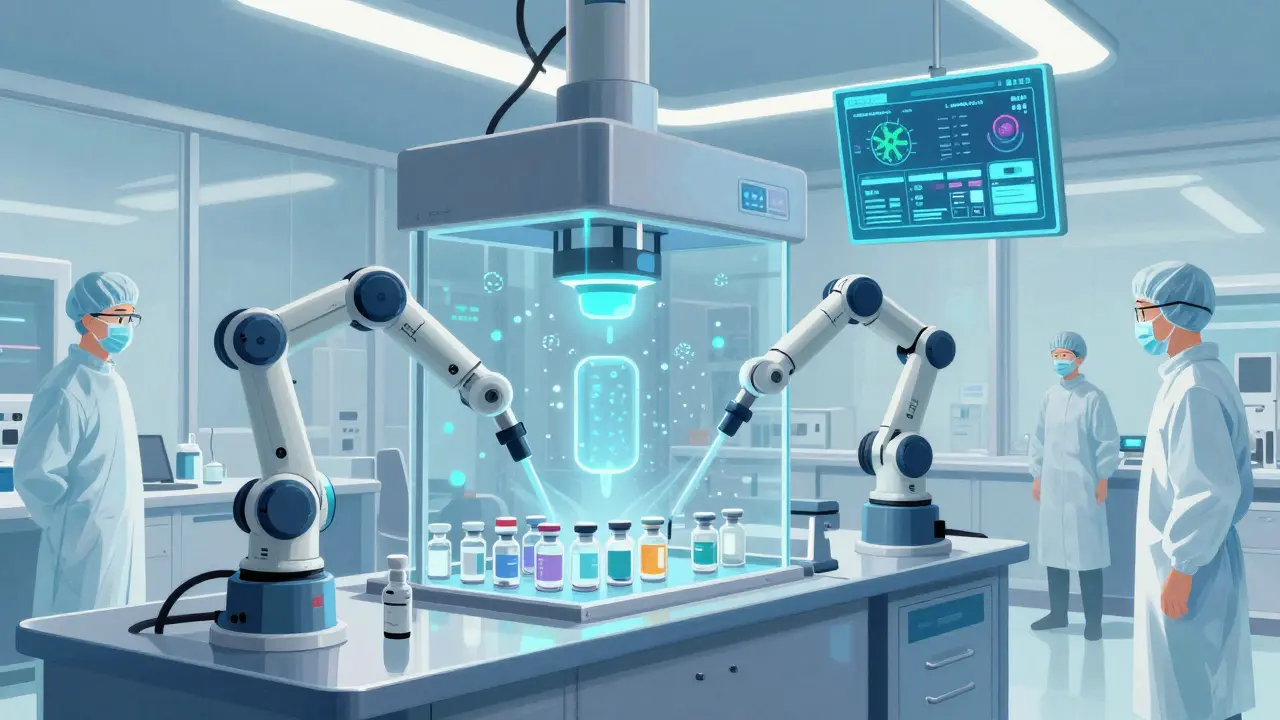
When you take a pill, inject a vaccine, or use a sterile eye drop, you expect it to be safe, pure, and effective. That’s not luck. It’s the result of Current Good Manufacturing Practice (GMP) standards - the strict rules that keep medicines and medical products from being contaminated, mislabeled, or weak. These aren’t suggestions. They’re legally enforced requirements. And as of 2025, they’ve changed more than ever before.
What Exactly Are Current GMP Standards?
Current GMP, or CGMP, stands for Current Good Manufacturing Practice. The word ‘current’ is the key. It means manufacturers can’t just follow old methods. They have to use modern technology, up-to-date science, and proven systems. The U.S. FDA first codified these rules in 1978, but they’ve been updated constantly since then. The European Union, WHO, and other regulators have their own versions, but they all share the same goal: ensure every batch of medicine is made the same way - every time.
It’s not just about cleanliness. It’s about control. Control over the environment. Control over equipment. Control over people. Control over data. If any one of these fails, the whole batch could be unsafe. That’s why GMP isn’t just a checklist. It’s a culture.
The Nine Core Requirements of GMP in 2025
There are nine pillars that every GMP-compliant facility must meet. Missing one can lead to a warning letter, a production halt, or even a product recall.
- Quality Management - Every company needs a dedicated quality unit with real authority. This team doesn’t report to production. They report to the top. They approve every batch, investigate every failure, and sign off on every change. No exceptions.
- Sanitation and Hygiene - Cleanrooms aren’t just cleaned. They’re validated. Airflow, particle counts, microbial levels - all monitored continuously. In sterile manufacturing, the EU’s Annex 1 now requires closed isolator systems to prevent human contamination. No more open aseptic filling.
- Building and Facilities - Layout matters. Production, packaging, and storage areas must be physically separated to avoid cross-contamination. Air handling systems must meet ISO 14644-1 Class 5 standards for sterile zones. Temperature and humidity logs? Not optional. They’re reviewed daily.
- Equipment - Machines don’t just work. They’re qualified. Installation Qualification (IQ), Operational Qualification (OQ), and Performance Qualification (PQ) are mandatory. If you replace a pump, you don’t just install it. You prove it works exactly as needed. And you document every step.
- Raw Materials - Every ingredient must be tested for identity and purity before it touches the product. Suppliers aren’t trusted blindly. They’re audited. Storage conditions? Monitored. If a batch of lactose gets too humid, it’s rejected. No ifs, ands, or buts.
- Personnel - Staff don’t just show up. They’re trained. Quarterly competency assessments are required. Gowning procedures? Strict. In EU Grade A/B cleanrooms, full-body sterile garments with face masks, hoods, and double gloves are now mandatory. No bare skin allowed.
- Validation and Qualification - You can’t just say a process works. You have to prove it. Process validation isn’t a one-time event. It’s ongoing. The FDA’s January 2025 guidance says you must validate every step - from mixing to packaging - and show it consistently produces the same result. And you can’t rely on models alone. You need real-time testing.
- Complaints and Recalls - If a customer says a pill looks wrong, you have 72 hours to investigate. Root cause analysis? Required. Recall procedures? Tested annually. In 2024, 18% of recalls were traced back to poor supplier oversight. That’s on you.
- Documentation and Record Keeping - If it wasn’t written down, it didn’t happen. Records must be contemporaneous (written at the time), legible, and permanent. Electronic records? They must follow ALCOA+ principles: Attributable, Legible, Contemporaneous, Original, Accurate, plus Complete, Consistent, Enduring, Available. Audit trails? Mandatory. Deleting a record? Illegal.
FDA vs. EU GMP: Key Differences in 2025
Not all GMP rules are the same. The FDA and EU have different styles - and different consequences.
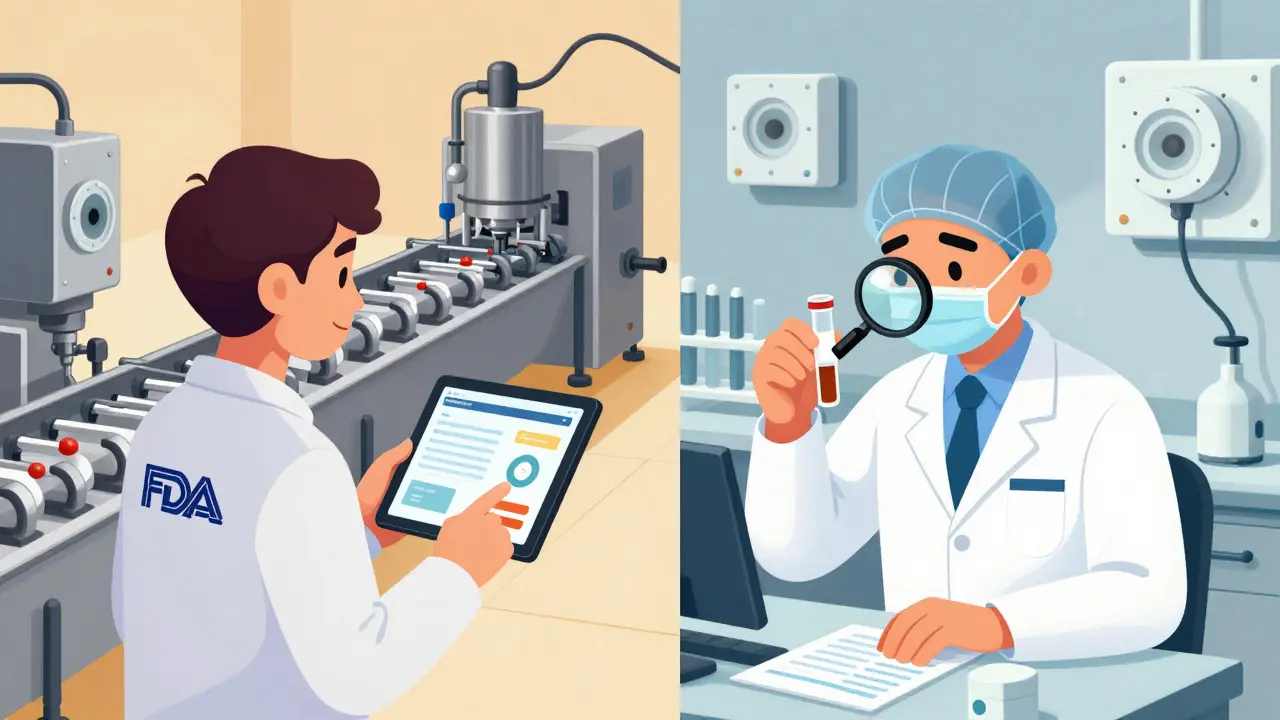
The FDA gives you flexibility. You can choose how to meet the standard, as long as you can prove it works. That’s why you see more companies using in-line sensors, real-time monitoring, and AI-driven quality tools. The FDA now explicitly allows these methods instead of pulling physical samples - saving time and reducing contamination risk.
The EU is more prescriptive. Annex 1, fully in force since August 2024, spells out exactly how to do things. For sterile manufacturing, you must use isolators. You must gown a certain way. You must monitor air particles every minute. No room for interpretation.
Here’s a quick comparison:
| Requirement | FDA (21 C.F.R. Parts 210-211) | EU GMP (Annex 1) |
|---|---|---|
| Sterile Manufacturing | Flexible - open or closed systems allowed if validated | Must use closed isolators for aseptic processing |
| Sampling | In-line, at-line, or on-line measurements permitted | Physical sampling still required for critical attributes |
| Personnel Gowning | Based on risk - less prescriptive | Full-body sterile garments mandatory in Grade A/B |
| Data Integrity | ALCOA+ enforced; audit trails mandatory for electronic records | Annex 11 requires audit trails and access controls |
| Enforcement | 2,147 warning letters issued in FY2024 (mostly data integrity) | Fewer warnings, but higher penalties and longer shutdowns |
Why does this matter? If you’re exporting to both markets, you’re doing double work. One facility, two sets of procedures. One study says it costs $75,000 extra per year just to meet both FDA and EU environmental monitoring rules.
WHO GMP: The Global Baseline
The World Health Organization’s GMP standards are the baseline for over 100 countries. They’re not as strict as FDA or EU rules. And they’re not enforced the same way. Many low- and middle-income countries still struggle to implement even basic GMP. WHO’s 2024 report found only 43% of facilities in emerging markets meet their own GMP standards.
That’s a global risk. In 2024, 12% of substandard medicines seized by global authorities came from WHO-GMP compliant facilities. The problem isn’t the rules - it’s the lack of inspectors, training, and funding.
What’s New in 2025?
Three big shifts define 2025:
- Data Integrity Is the #1 Focus - The FDA issued 2,147 warning letters last year. Over 70% cited data integrity issues - fake logs, deleted records, unapproved changes. Companies are now spending an average of $185,000 per facility to fix it.
- Advanced Manufacturing Is Here - Continuous manufacturing and real-time quality control (PAT) are growing fast. Merck’s Whitehouse Station plant went zero FDA 483s after installing PAT tools. But AI-driven quality prediction? Still risky. PharmUni warns that machine learning models need extreme validation - and that’s expensive.
- Supply Chain Security Is Non-Negotiable - The FDA now requires risk-based audits of all suppliers. EMA says 27% of 2024 recalls came from supplier failures. You can’t just trust a certificate. You have to verify.
And remember: pandemic flexibilities ended January 1, 2025. No more extensions. No more grace periods. If your GMP certificate expired after December 31, 2024, you’re non-compliant.
How Much Does It Cost to Be GMP-Compliant?
It’s not cheap. For a mid-sized pharmaceutical company, full GMP compliance takes 18 to 24 months and costs about $1.2 million. That includes:
- Hiring a dedicated compliance team (minimum 3 full-time roles)
- Writing 120-150 standard operating procedures (SOPs)
- Training staff 40+ hours per year
- Upgrading equipment and sensors
- Implementing electronic record systems with audit trails
And it’s ongoing. The American Pharmaceutical Review says companies are now spending 12-15% of their entire quality budget just on GMP updates in 2025.
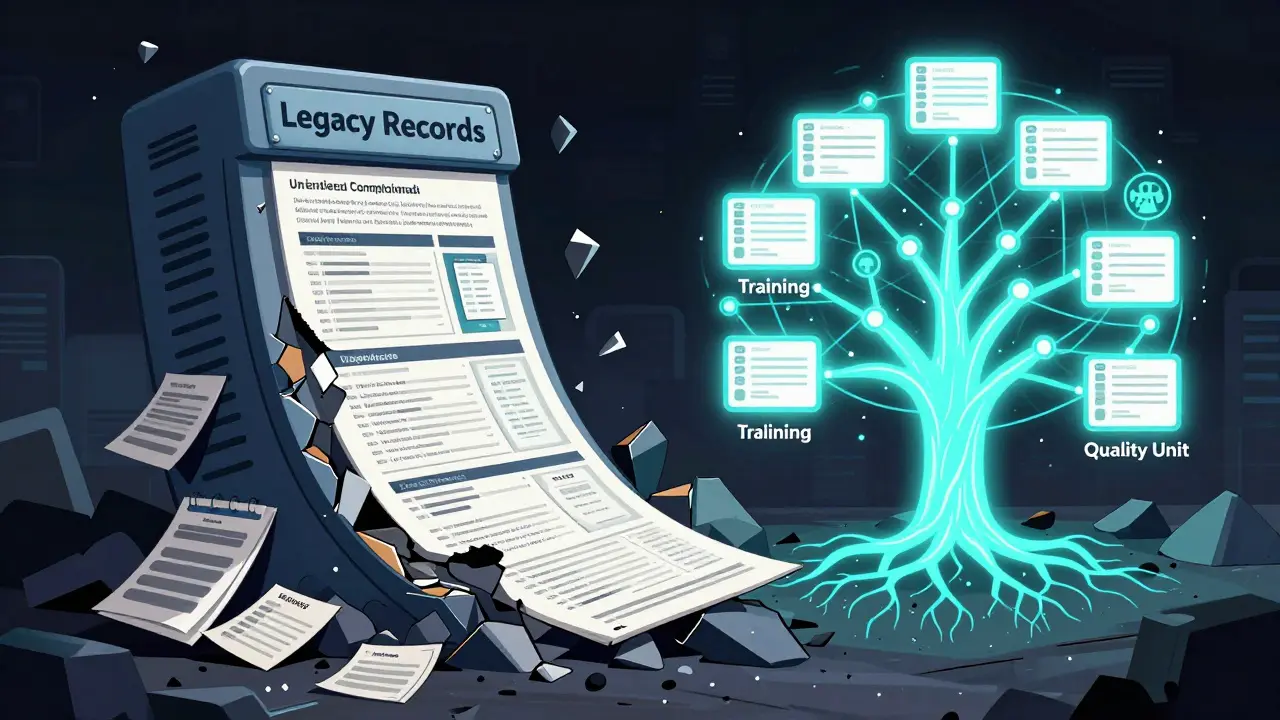
Legacy systems are the biggest headache. One QA manager on Reddit said upgrading sensors on a single production line cost $250,000. And that’s just the hardware. Validation takes months.
What Happens If You Fail?
Failure isn’t just a fine. It’s a crisis.
A single FDA 483 observation can trigger a product recall. A Warning Letter can shut down production for months. A Consent Decree? That’s a federal court order forcing you to fix everything - under government supervision.
And it’s not just financial. Reputation takes years to rebuild. Patients lose trust. Investors pull out. Competitors gain market share.
How to Get Compliant - Step by Step
If you’re starting from scratch, here’s how to do it right:
- Gap Assessment - Hire an independent auditor. Compare your systems to FDA, EU, and WHO requirements. Don’t guess. Document every missing piece.
- Build Your Team - You need a Quality Unit, a Validation Lead, a Data Integrity Officer, and a Compliance Manager. Don’t try to do this with part-timers.
- Update Your SOPs - Write them. Review them. Train on them. Every process, every step, every form.
- Validate Everything - Equipment, processes, cleaning methods, computer systems. No shortcuts.
- Train Your People - Not once. Quarterly. With tests. Document every session.
- Go Live - With Oversight - Run a pilot batch. Have your quality unit approve it. Then scale.
- Keep Improving - GMP isn’t a finish line. It’s a treadmill. Audit yourself. Fix gaps. Update your systems. Every year.
There’s no magic bullet. But if you treat GMP like a system - not a checklist - you won’t just pass inspections. You’ll make better medicine.
What’s Next?
By 2027, experts predict FDA, EU, and ICH standards will start aligning - especially on data integrity and supply chain tracking. But sterile manufacturing? That’s still a divide. The EU’s rules are too strict. The FDA’s are too flexible. Harmonization is coming - but slowly.
One thing’s clear: GMP isn’t going away. It’s getting harder. And smarter. If you’re in pharma, medical devices, or even food manufacturing, your next audit is coming. Are you ready?
Are GMP standards the same worldwide?
No. While the WHO provides a global baseline, the FDA (U.S.), EMA (EU), and other agencies have their own rules. The FDA allows more flexibility in how you meet requirements, while the EU is more prescriptive - especially for sterile products. Companies exporting to multiple regions often have to run parallel systems, which increases cost and complexity.
What happens if I don’t follow GMP?
You risk product recalls, regulatory shutdowns, legal action, and loss of market access. In 2024, the FDA issued over 2,100 warning letters, mostly for data integrity violations. A single FDA 483 observation can trigger a recall. In severe cases, companies face federal Consent Decrees - court orders forcing full operational overhaul under government watch.
Can I use AI or machine learning in GMP processes?
Yes - but with heavy documentation. The FDA allows AI for real-time quality prediction, but you must validate the algorithm like any other process. You need to prove it’s reliable under all conditions, document its limitations, and maintain human oversight. PharmUni warns that many companies underestimate the validation burden - which can cost hundreds of thousands of dollars.
Do I need to change my equipment to meet 2025 GMP?
Not always - but you must prove your equipment works as intended. If you’re using old machines, you need full IQ/OQ/PQ documentation. If you want to use in-line sensors instead of physical sampling (a new FDA preference), you’ll need to install new hardware and validate it. Many companies spend $200,000-$300,000 per production line to upgrade for modern monitoring.
How often do GMP standards change?
Constantly. Major updates happen every few years - like the EU’s Annex 1 revision in 2022-2024. But minor guidance updates come out monthly. The FDA released three major GMP clarifications in January 2025 alone. Compliance isn’t a one-time project. It’s an ongoing program requiring regular review and adaptation.
Is GMP only for pharmaceuticals?
No. GMP applies to pharmaceuticals, medical devices, biologics, and even some food products - especially those marketed as dietary supplements or infant formula. The principles are the same: control, documentation, and consistency. The FDA’s 21 C.F.R. Part 111 covers dietary supplements under GMP rules.
What’s the biggest challenge companies face with GMP today?
Data integrity. Over 68% of facilities in a December 2024 survey said it’s their top challenge. Fake logs, deleted records, unapproved changes - these are common in legacy systems. Fixing them requires new software, training, and culture change. It’s not just technical. It’s human.
Can small companies afford GMP compliance?
Yes - but it’s harder. Small firms often outsource validation, hire contract QA staff, or partner with contract manufacturers who are already compliant. The average cost for a mid-sized company is $1.2 million, but startups can start with a scaled-down system and build up. The key is not cutting corners - it’s prioritizing. Focus on the highest-risk areas first: raw materials, documentation, and change control.


Man, this post is a goldmine. I work in pharma QA and honestly, I wish more people understood how much goes into making a pill safe. It’s not magic - it’s hours of validation, endless documentation, and people who refuse to cut corners. The fact that we’re moving toward real-time monitoring instead of batch sampling? Huge win. Less contamination, faster releases. GMP isn’t sexy, but it’s the reason your insulin doesn’t kill you.
Also, that $75k/year cost to meet both FDA and EU? Yeah, that’s real. My plant just spent six months reconfiguring cleanroom airflow just to satisfy Annex 1. No one talks about that.
TL;DR - GMP is boring until you need it. Then you’re praying someone did their job right.
Hard to believe some facilities still use paper logs in 2025. I saw a lab last year where they handwrote temperature readings on clipboard sheets. No audit trail. No backups. Just someone scribbling in pencil. And they passed their last inspection. I don’t know whether to laugh or cry.
ALCOA+ sounds like a new phone model but it’s literally the difference between a recall and staying in business.
Interesting breakdown. I’ve never worked in pharma but I’ve had to take a lot of meds over the years. It’s wild to think how much infrastructure is behind something so small. That $1.2M cost figure really puts it in perspective. No wonder generics are so cheap - someone’s cutting corners somewhere.
Okay but what if all this is just a scam to make big pharma richer? I mean, why do we need isolators and audit trails? Why not just let them use the old way? I read online that the FDA and WHO are in bed with the big labs to push expensive tech so they can charge more. And don’t get me started on the ‘data integrity’ push - it’s just a way to punish small companies so the giants can monopolize everything. They’re scared of innovation because it’s harder to control. This whole GMP thing? It’s control. Not safety.
Oh sweet baby jesus. You wrote a novel. I skimmed it. Bottom line: if you’re not using isolators and electronic logs, you’re a walking biohazard. Stop pretending you’re ‘efficient’ - you’re just lazy. And if your QA team reports to production? Fire them. Now. You’re not a startup. You’re making medicine. Act like it.
EU rules are ridiculous. Why should American companies have to follow European babysitting guidelines? We’ve been making safe drugs since the 1950s. Now we have to buy fancy robots and wear full-body suits just to fill a vial? Meanwhile, China and India are making cheaper meds without all this nonsense. If we keep over-regulating ourselves, the whole industry will move overseas. We’re killing innovation with paperwork. And don’t even get me started on WHO - they’re not even real regulators. Just bureaucrats with fancy titles.
Anyone else feel like data integrity is the new religion? I get it - fake logs are bad. But I’ve seen teams spend 80% of their time chasing audit trails instead of fixing real problems. Like, yes, the system flagged a deleted entry from 2023. But the batch was fine. The patient got better. Why are we punishing people for a typo in a timestamp instead of asking why the machine failed in the first place?
Maybe we need less perfection and more practicality. Validation shouldn’t be a full-time job. It should be a safety net, not a cage.
Thank you for this comprehensive and well-structured overview. The clarity with which you’ve outlined the nine core requirements is invaluable - particularly the distinction between flexibility and prescriptiveness in FDA versus EU standards. For those new to the field, this serves as both a primer and a reminder that GMP is not merely regulatory compliance - it is a commitment to patient safety at every level of operation.
One critical point often overlooked: culture. Technology can be purchased. Software can be installed. But a culture of integrity, accountability, and continuous improvement must be cultivated. That takes leadership. That takes time. And that, more than any audit, determines whether a facility truly meets GMP standards.
As someone who’s worked in both US and Indian manufacturing plants, I can tell you the biggest difference isn’t the rules - it’s the mindset. In the US, people treat GMP like a law. In India, they treat it like a suggestion - until someone gets hurt. Then suddenly everyone’s terrified.
But here’s the thing: the WHO standards exist for a reason. Not because they’re perfect, but because they’re possible. You can’t expect a clinic in rural Kenya to install Class 5 cleanrooms. But you can expect them to wash their hands, label bottles correctly, and keep records. Those are the real foundations.
Maybe the future isn’t harmonizing rules - it’s harmonizing intent.
Just read this while waiting for my prescription to be filled 😅
Now I’m weirdly proud of my meds. Like, yeah, this little pill went through a whole army of checks before it got to me. Respect. 🙌
Also, the part about AI in quality control? Mind blown. So cool that tech is helping make things safer. Not all robots are trying to take our jobs 😄
Too long. Don't care. Just tell me if my medicine is safe.
Let me guess - this was written by someone who got paid by the FDA to scare small businesses into buying $300K sensors. Real talk: the whole GMP circus is a racket. They want you to think your life depends on these rules - but here’s the truth: 99% of the time, the medicine works fine even if the logs are sloppy. The real danger? The FDA and EMA are using ‘data integrity’ as a weapon to crush competitors. They don’t want innovation. They want control. And they’ve convinced everyone that paperwork = safety. It’s not. It’s bureaucracy with a white coat.
Remember when they said cell phones caused cancer? Same playbook. Fear. Confusion. Profit.
Wake up. This isn’t about safety. It’s about power.