
Statin Tolerance: What It Means and How to Manage Side Effects
When people talk about statin tolerance, how well your body handles cholesterol-lowering medications like atorvastatin or simvastatin without causing bothersome or dangerous side effects. Also known as statin adherence, it’s not just about taking the pill—it’s about whether you can keep taking it without feeling worse. Many assume if a doctor prescribes a statin, you just take it and move on. But for a lot of people, that’s not the case. Muscle pain, fatigue, or even liver enzyme changes can turn what’s meant to be a life-saving drug into something you can’t tolerate.
Statin tolerance isn’t binary. It’s a spectrum. Some people feel nothing. Others get mild muscle soreness after a workout and blame the statin—even if it’s unrelated. Then there are those who develop real statin intolerance, a condition where side effects are severe enough to force discontinuation, often confirmed by symptom relief after stopping the drug. This isn’t rare. Studies show up to 1 in 10 people stop statins because of side effects, and many never tell their doctor why. The real issue? They don’t know what alternatives exist, or they think there’s nothing else that works.
That’s where context matters. If you can’t tolerate one statin, it doesn’t mean you can’t tolerate any. Switching from simvastatin to pravastatin, lowering the dose, or trying a non-daily schedule can make a difference. And if that doesn’t help, there are other options: ezetimibe, PCSK9 inhibitors, or even lifestyle tweaks that reduce LDL without drugs. Your body’s response isn’t a dead end—it’s a signal to adjust.
Statin tolerance also ties into how you monitor your health. Regular blood tests for liver enzymes and CK (creatine kinase) levels aren’t just routine—they’re tools to tell you whether the drug is working or harming you. And if you’re also taking other meds—like fibrates or certain antibiotics—that can change how your body processes statins, increasing risk. It’s not just about the statin. It’s about the whole picture.
What you’ll find in the posts below are real, practical stories and guides from people who’ve been there. You’ll learn how to tell if your muscle pain is from statins or something else, how to talk to your doctor without sounding like you’re just complaining, and what to try when the usual options don’t work. No fluff. No sales pitches. Just clear, usable info that helps you decide what’s right for your body—not just what’s on the prescription pad.
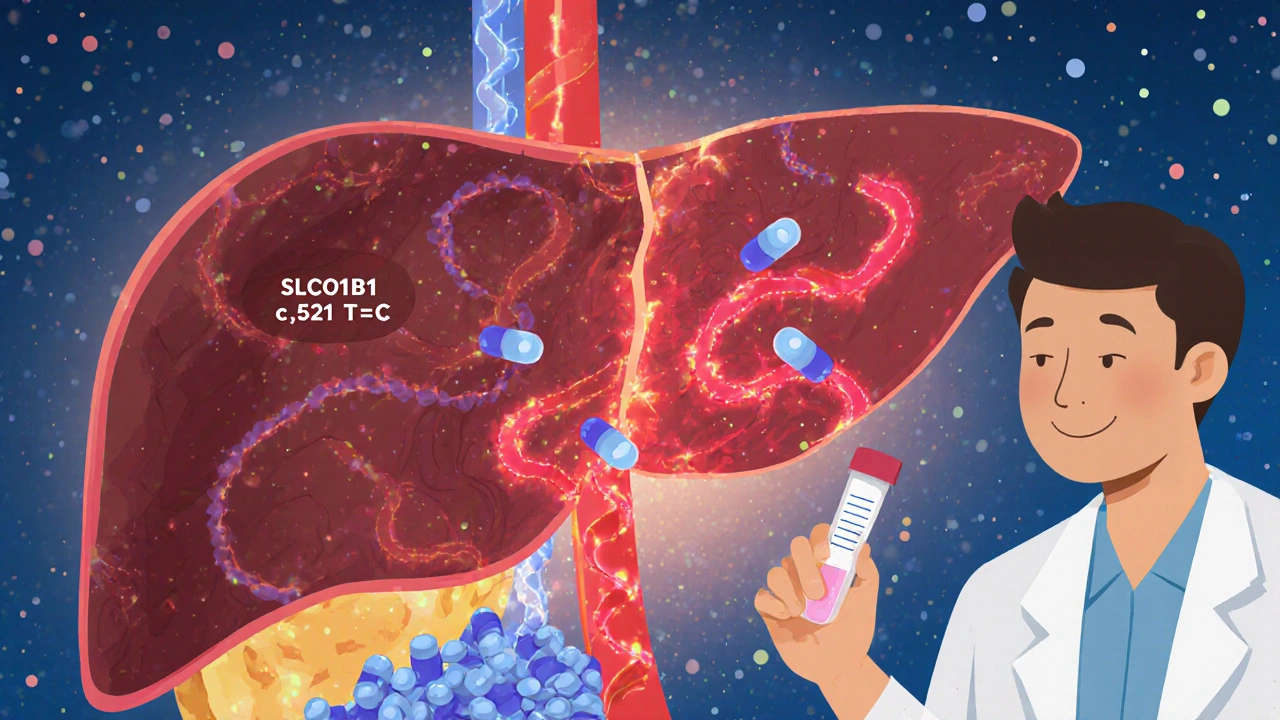
Genetic Factors in Statin Tolerance: How Pharmacogenomics Testing Can Help
Genetic factors like the SLCO1B1 gene variant can significantly affect statin tolerance, causing muscle pain in some people. Pharmacogenomics testing helps identify those at risk, guiding safer statin choices - especially for simvastatin.
View more