
Pediatric Vaccine Fever: What Parents Need to Know About Fever After Vaccines
When your child gets a pediatric vaccine fever, a mild rise in body temperature that follows routine childhood immunizations. It’s one of the most common reactions parents see—and one of the most feared. This isn’t a sign the vaccine is working too hard. It’s a sign the immune system is doing exactly what it’s supposed to: learning how to fight off what’s in the shot. Most kids get a low-grade fever—around 100.4°F to 102°F—within 24 hours after vaccines like DTaP, MMR, or Hib. It usually lasts less than 48 hours and goes away on its own.
Not every vaccine causes fever, but some are more likely to. The DTaP vaccine, a combination shot for diphtheria, tetanus, and pertussis often triggers a mild fever, especially after the fourth or fifth dose. The MMR vaccine, which protects against measles, mumps, and rubella can cause fever about 7 to 12 days after injection, sometimes with a rash. These aren’t side effects gone wrong—they’re expected responses. What’s not normal? A fever over 104°F, lasting more than 3 days, or one that comes with seizures, extreme fussiness, or trouble breathing. Those need a doctor’s eye.
Parents often reach for fever reducers right away, but sometimes less is more. If your child is playful, drinking fluids, and sleeping okay, you don’t need to medicate. Fever helps the body fight infection. Tylenol or ibuprofen can help if your child is uncomfortable, but don’t give them just to prevent fever. Don’t use aspirin—it’s linked to Reye’s syndrome in kids. Keep your child cool, offer water or breast milk often, and skip the bundling. Overdressing traps heat and makes fever feel worse.
What you won’t find in most doctor’s offices is a clear explanation of why some kids get fever and others don’t. Genetics, immune history, and even the timing of shots can play a role. One baby might run a fever after every shot. Another might never. Neither is better or worse. The goal isn’t to avoid fever—it’s to recognize when it’s part of the process and when it’s a warning sign.
You’ll also see stories online about vaccines causing high fevers, seizures, or long-term issues. Most of those are coincidences, not causes. Febrile seizures—brief convulsions triggered by fever—happen in about 1 in 30 children between 6 months and 5 years. They’re scary to watch, but they don’t cause brain damage or epilepsy. Still, if your child has one, call your pediatrician. They’ll want to rule out other causes like meningitis.
The good news? Pediatric vaccine fever is predictable, manageable, and rare in its severe forms. The CDC tracks millions of doses every year. Serious reactions are extremely rare—far less likely than the diseases these shots prevent. That’s why experts keep recommending them. What matters isn’t whether your child gets a fever. It’s whether you know how to respond without panic.
Below, you’ll find real-world advice from parents and medical professionals on handling fever after shots, spotting red flags, and understanding which vaccines are most likely to cause a spike. No fluff. No fearmongering. Just what works.
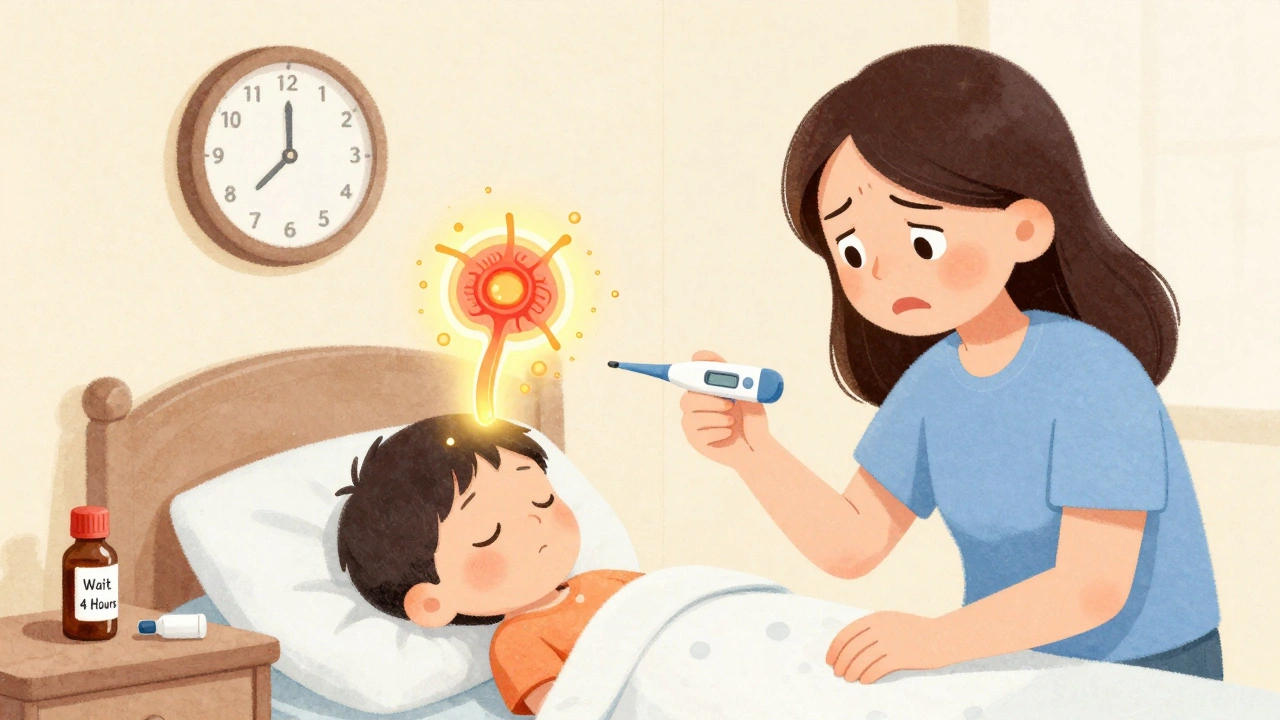
When to Give Fever Reducers After Your Child’s Vaccines
Learn the right time to give fever reducers like acetaminophen or ibuprofen after your child's vaccines. Discover why giving medicine too early can reduce vaccine effectiveness-and what to do instead.
View more