
Generic Drug Market: What You Need to Know About Prices, Access, and Quality
When you pick up a generic drug, a copy of a brand-name medicine that works the same but costs far less. Also known as non-brand medication, it makes up over 90% of prescriptions filled in the U.S. and is the backbone of affordable healthcare. But behind that simple label is a tangled system of patents, manufacturing limits, and scientific hurdles that directly affect whether you can get your medicine at all—and at what price.
The generic drug market, the global network of manufacturers, regulators, and distributors that produce and sell copycat medications. Also known as off-patent pharmaceuticals, it’s supposed to drive down costs after a brand-name drug’s patent expires. But it doesn’t always work that way. Some generics, especially complex ones like inhalers, creams, or injectables, are incredibly hard to copy. Proving they behave the same in the body—what’s called bioequivalence, the scientific proof that a generic performs identically to the original drug—takes advanced labs and years of testing. Many companies can’t afford it, so fewer makers enter the market. That’s one reason why shortages happen.
Then there’s drug pricing, the cost structure that determines how much you pay, even for generics. You’d think generics are cheap because they’re copies. But when only one or two factories make a drug, and those factories are overseas, any hiccup—like a quality inspection failure or a shipping delay—can cause prices to spike. A pill that cost $10 a year ago might suddenly be $50. And when that drug treats something critical, like high blood pressure or epilepsy, you don’t get to wait. This is why drug shortages, times when a medication isn’t available in enough supply to meet patient needs keep happening. It’s not random. It’s systemic.
What you see at the pharmacy counter is the final result of a chain that starts with patents, passes through manufacturing capacity, runs into regulatory reviews, and ends with who’s willing to make a low-margin product. The generic drug market isn’t broken—it’s working exactly as designed, but the design has serious gaps. Some drugs are easy to copy. Others? Not so much. And when the market can’t keep up, patients pay the price—in money, stress, and sometimes health.
Below, you’ll find real-world stories from people who’ve dealt with these issues: how a simple pill change affected their diabetes control, why an asthma inhaler vanished off shelves, how a generic heart drug suddenly cost 10 times more, and what you can do to spot problems before they hit you. These aren’t theoretical debates. They’re daily realities for millions.
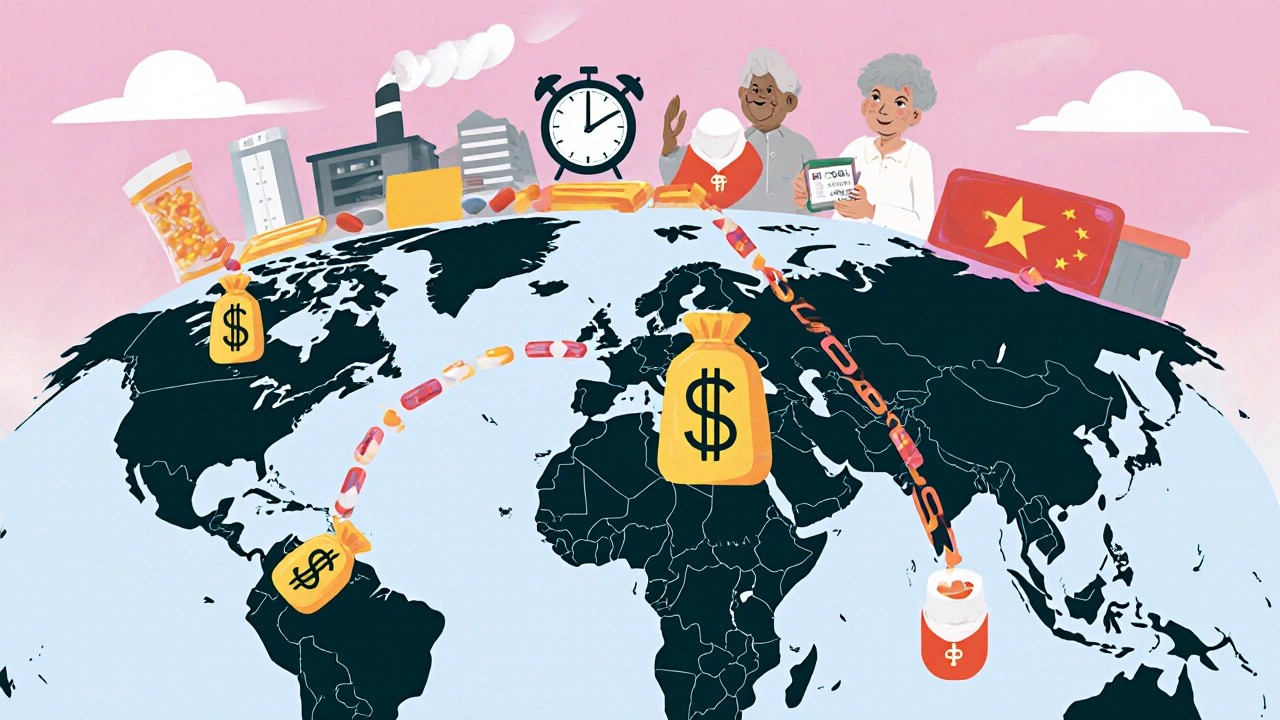
Future Economic Trends: Forecasts for Generic Drug Markets
The global generic drug market is set to grow to over $700 billion by 2030, driven by patent expirations, aging populations, and cost-saving policies. Learn how biosimilars, India and China's manufacturing power, and regulatory shifts are reshaping affordable healthcare.
View more