
Drug Rash: Causes, Common Triggers, and What to Do When Your Skin Reacts
When your skin breaks out in redness, bumps, or itching after starting a new medicine, you might be dealing with a drug rash, an immune or toxic reaction to a medication that shows up on the skin. Also known as medication-induced rash or drug hypersensitivity, it’s one of the most common reasons people visit a doctor after starting a new pill or injection. It’s not always an allergy — sometimes it’s just your body’s way of saying, "This doesn’t sit right." But you can’t ignore it. Some drug rashes fade on their own. Others, like Stevens-Johnson syndrome or toxic epidermal necrolysis, can be deadly if not caught early.
What medicines cause this? Antibiotics like penicillin and sulfa drugs are top offenders. But it’s not just antibiotics. Anticonvulsants, NSAIDs like ibuprofen, and even common drugs like allopurinol or certain antidepressants can trigger a reaction. The timing matters too. A rash might show up days or even weeks after you start the drug. That’s why people often think it’s a virus or an allergic food reaction — until they realize they started a new pill around the same time.
Not every red spot means danger. A mild, itchy, flat rash that covers a small area is often harmless. But if it spreads fast, blisters, peels, or affects your mouth, eyes, or genitals — stop the medicine and get help immediately. Your skin is a warning system. It’s telling you something inside your body is reacting badly. And while many drug rashes go away once you stop the drug, others need treatment. Steroids, antihistamines, or hospital care might be needed depending on severity.
What’s interesting is how often these reactions are missed. Doctors don’t always connect the dots between a new medication and a rash, especially if the patient didn’t mention taking something new. And patients? They often assume it’s just a bug or dry skin. But if you’ve started a new drug and your skin changes, it’s not a coincidence. It’s a signal.
This collection of posts dives into the real-world side effects of medications — not just rashes, but how drugs interact with your body in unexpected ways. You’ll find guides on how to spot dangerous reactions, what to do when a medication causes problems, and how to talk to your pharmacist about risks you didn’t know existed. Whether you’re managing a chronic condition or just started a new prescription, knowing how your body responds to drugs can save you from serious harm.
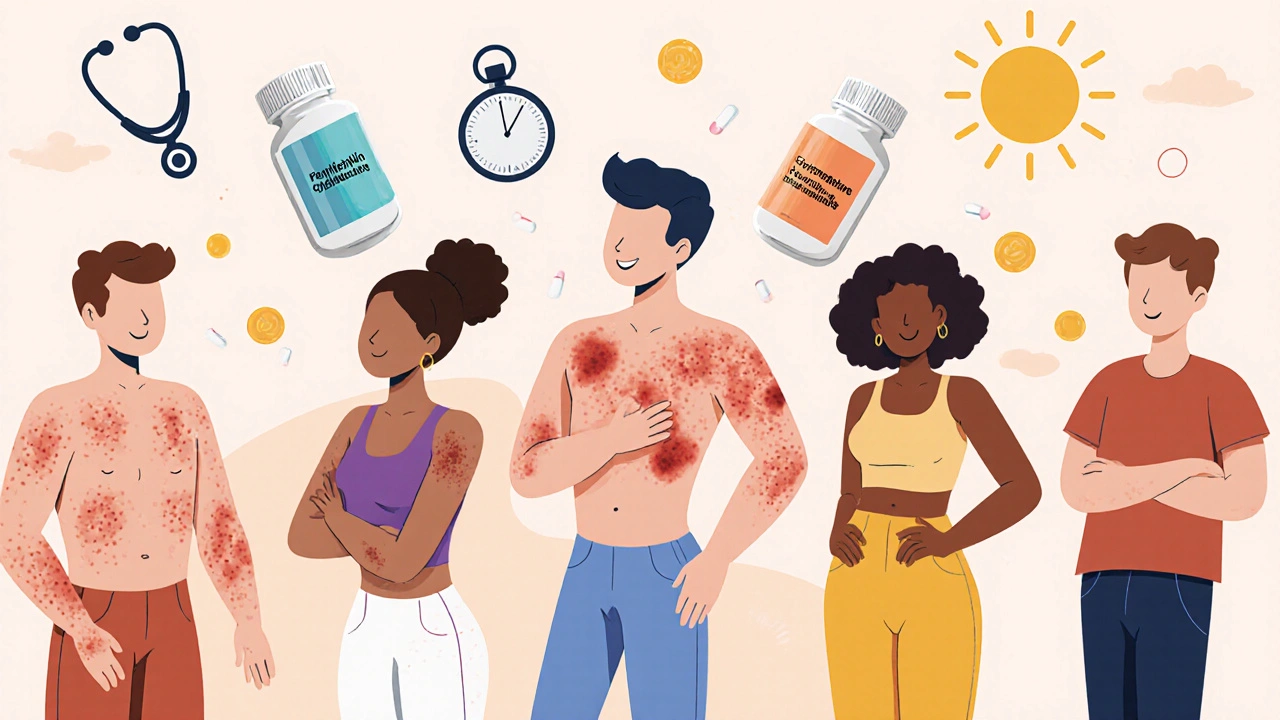
Skin Rashes and Medication-Induced Dermatitis: What Patients Should Know
Learn how to recognize, respond to, and prevent skin rashes caused by medications. Understand which drugs are most likely to trigger reactions and when to seek emergency care.
View more