
Children's Fever After Vaccines: What Parents Need to Know
When a child develops a fever after vaccines, a temporary rise in body temperature following immunization. It's one of the most common and expected reactions—not a sign something went wrong, but proof the immune system is doing its job. About 1 in 4 kids gets a low-grade fever after routine shots like DTaP, MMR, or Hib. This isn’t an infection. It’s the body’s natural response to the harmless pieces of virus or bacteria in the vaccine.
Pediatric fever, a body temperature above 100.4°F (38°C) in children, is rarely dangerous when it follows vaccination. Most fevers stay under 102°F and last just 1 to 2 days. You won’t see rash, lethargy, or trouble breathing—those are red flags for something else. What you will see is a fussy, warm, maybe sleepy child who still drinks fluids and responds to you. That’s normal. Immunization reactions, expected side effects from vaccines like soreness, swelling, or fever are signs the vaccine is working, not failing. The CDC and AAP both say: if your child is drinking, peeing, and responding normally, the fever isn’t an emergency.
So what should you actually do? Keep your child lightly dressed. Offer fluids—water, breast milk, or electrolyte solutions if they’re older. Acetaminophen or ibuprofen can help if they’re uncomfortable, but don’t give it just to prevent fever. That might reduce the immune response. Don’t sponge them with cold water. Don’t overdress them to "sweat it out." And don’t panic if the fever hits right after the shot—timing doesn’t mean causation. The body doesn’t react instantly; fever usually shows up 12 to 24 hours later, sometimes even the next day.
Now, when should you call the doctor? If your baby under 3 months has a fever of 100.4°F or higher, get help right away. For older kids, call if the fever lasts more than 48 hours, if they won’t drink, if they’re unusually sleepy or hard to wake, or if they have a seizure. Febrile seizures happen in about 1 in 50 kids with fever, and while scary, they rarely cause lasting harm. Still, if it happens, call 911 or go to the ER.
The good news? Fever management in kids, practical steps to ease discomfort and monitor safety after vaccination is simple. You don’t need special tools, expensive remedies, or endless research. Just watch, wait, and comfort. Most parents worry more than their kids feel. The vaccines are safe. The fever is temporary. And the protection lasts a lifetime.
Below, you’ll find real, practical advice from parents and doctors on what to expect, what to avoid, and how to tell the difference between a normal reaction and something that needs attention. No fluff. No fear. Just what works.
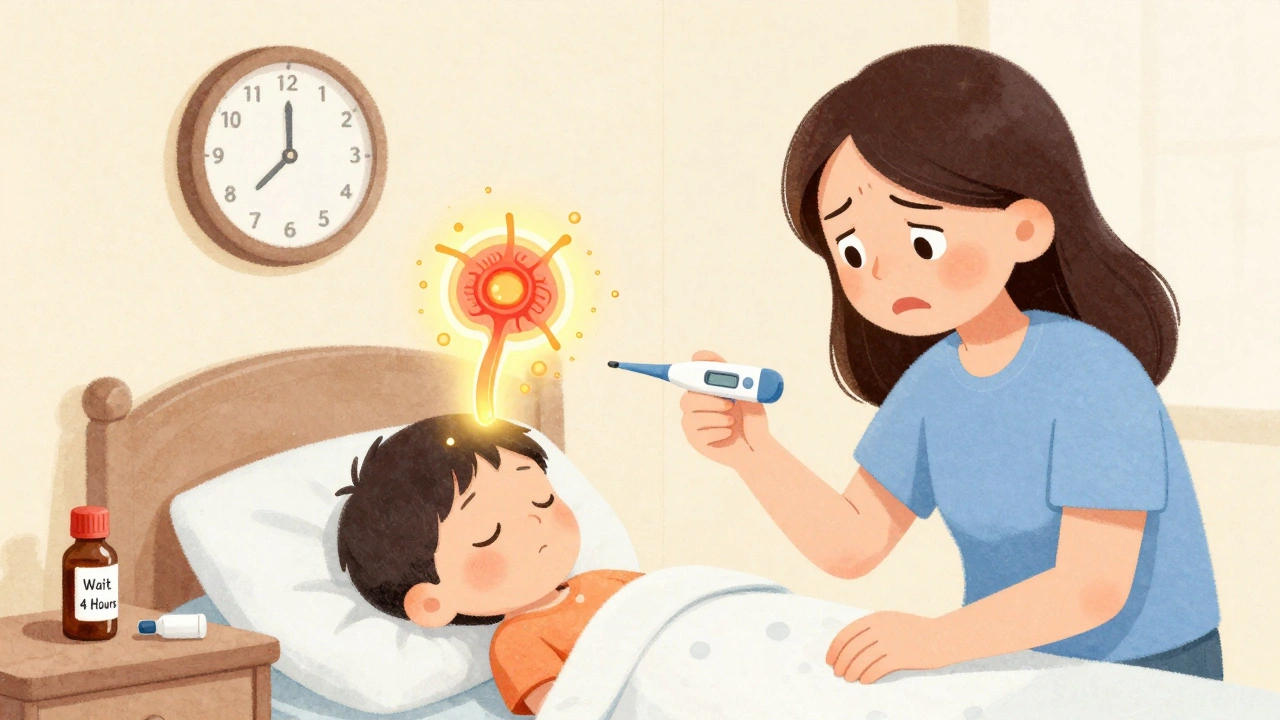
When to Give Fever Reducers After Your Child’s Vaccines
Learn the right time to give fever reducers like acetaminophen or ibuprofen after your child's vaccines. Discover why giving medicine too early can reduce vaccine effectiveness-and what to do instead.
View more