
ANDA: What It Is and How It Shapes Generic Drug Access
When you pick up a generic pill at the pharmacy, chances are it got there through an ANDA, Abbreviated New Drug Application, the FDA’s official pathway for approving generic versions of brand-name medications. Also known as Abbreviated New Drug Application, it’s the backbone of affordable medicine in the U.S. Unlike brand-name drugs that need full clinical trials, generics use existing safety data—saving time, money, and lives.
What makes an ANDA different? It doesn’t start from scratch. The maker proves the generic drug is bioequivalent to the brand—meaning it delivers the same active ingredient at the same rate and amount. This isn’t just about pills looking the same. For complex drugs like inhalers, creams, or injectables, proving they work the same way in the body takes advanced science. Many applications fail because the formulation doesn’t match. That’s why not every generic works the same, even if the label says it does.
Behind every approved ANDA is a system of oversight. The FDA doesn’t just approve and walk away. It watches for problems using tools like FAERS, the FDA Adverse Event Reporting System, which collects real-world reports of side effects from patients and doctors, and Sentinel Initiative, a national system that tracks drug safety across millions of health records. Pharmacists, patients, and even manufacturers report issues—because a drug that works for most can still cause harm to some. And when shortages hit, it’s often because the low-margin generics under ANDA aren’t profitable enough to keep making.
ANDA isn’t just paperwork. It’s what lets a $300 brand-name drug become a $5 generic. It’s why your insulin, blood pressure pill, or antidepressant costs less than it used to. But it’s also why some generics fail—because cutting corners on formulation or quality control leads to dangerous gaps. The FDA doesn’t approve every application, and not every approved drug performs the same in real life. That’s why knowing how to check your prescription, understand label warnings, and report side effects matters.
What you’ll find below are real stories, tools, and breakdowns of how ANDA affects you—from the science of bioequivalence to how post-market surveillance catches problems before they hurt people. Whether you’re taking a generic, prescribing one, or just trying to save money on meds, this collection gives you the facts behind the bottle.
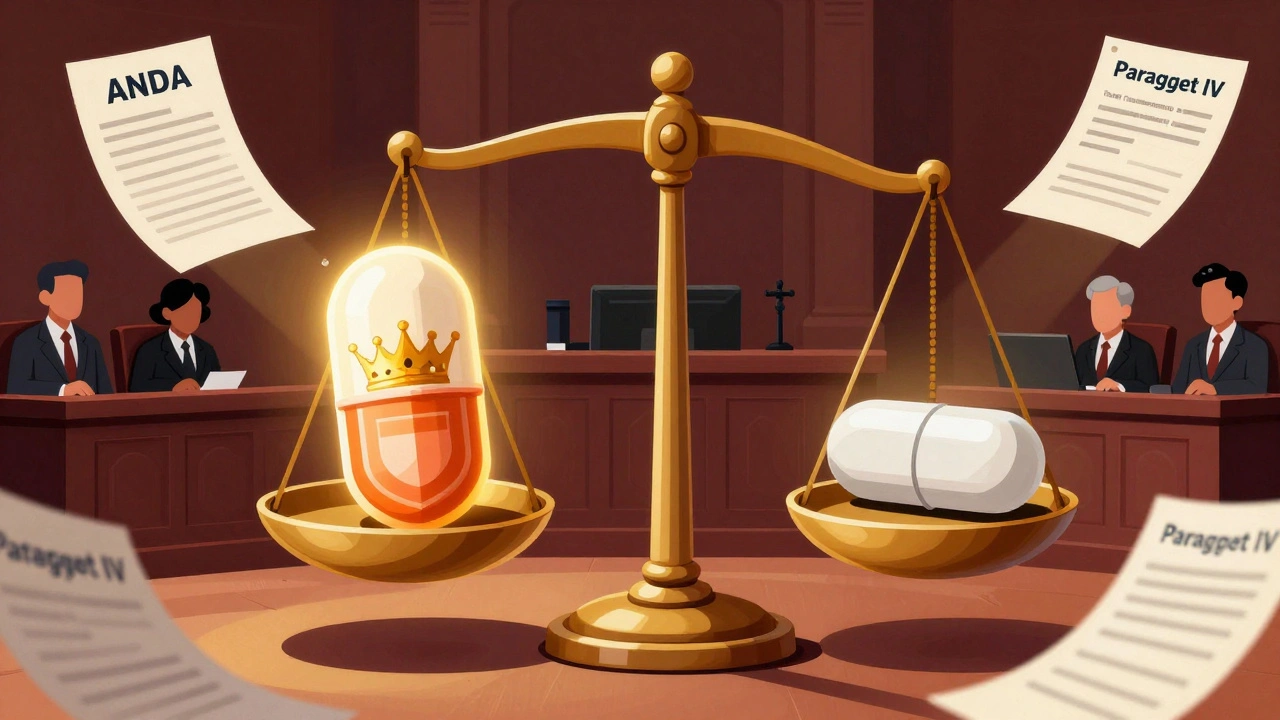
Hatch-Waxman Act: How It Shaped Generic Drugs in the U.S.
The Hatch-Waxman Act created the modern system for generic drug approval in the U.S., balancing innovation and affordability. It cut drug costs by billions while keeping new drugs coming. Here's how it works-and why it's still vital today.
View more