
 5
Mar,2026
5
Mar,2026
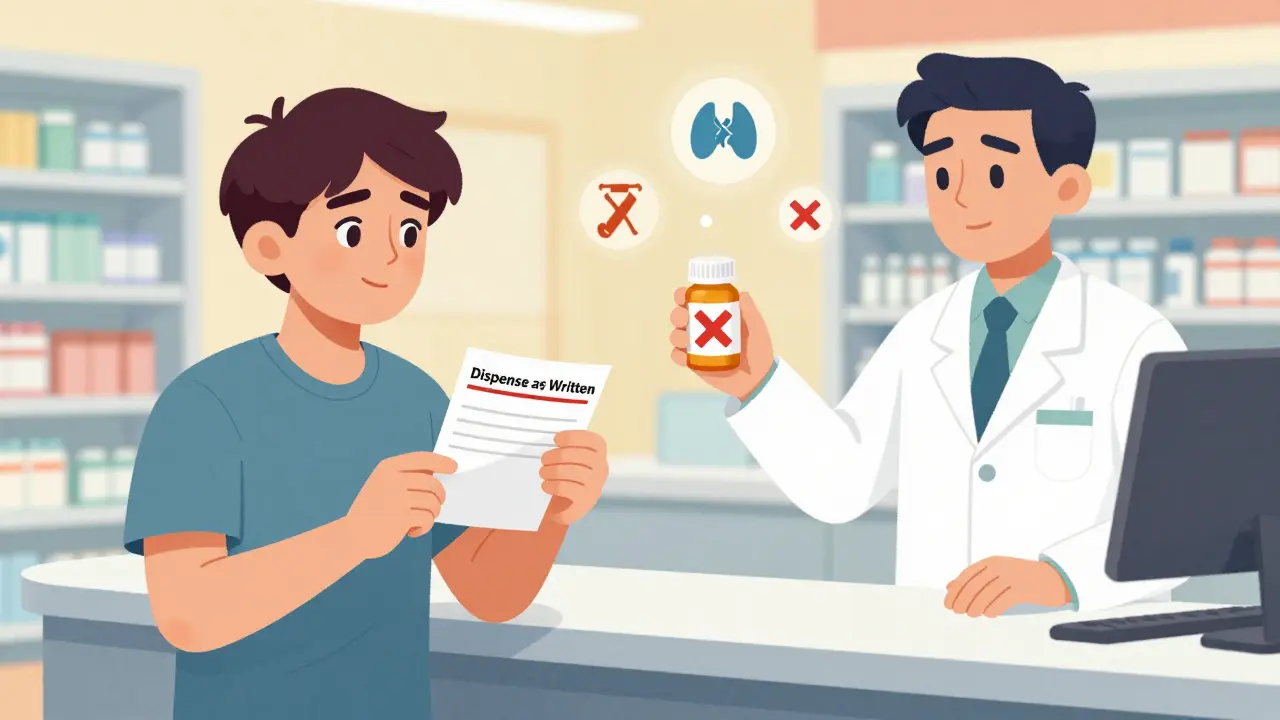
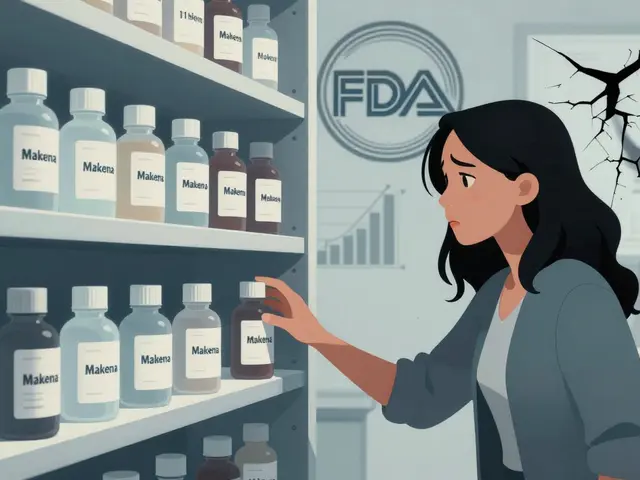
When you pick up a prescription, you might not realize you have a legal right to say no. Pharmacists often swap your brand-name medication for a cheaper generic version without asking. But if you’ve had bad reactions before, or if your doctor specifically prescribed a brand, you don’t have to accept it. In fact, in many states, the pharmacy must ask you first.
What Is Generic Substitution?
Generic drugs are copies of brand-name medications. They contain the same active ingredients, work the same way, and are approved by the FDA as safe and effective. The big difference? Price. Generic drugs cost 80-85% less than their brand-name equivalents. That’s why pharmacies automatically substitute them - it saves money for you, your insurance, and the healthcare system overall. But here’s the catch: not all drugs are created equal. For some medications, even tiny differences in how they’re made can cause big problems. Think of it like two identical-looking cars - one runs on premium gas, the other on regular. They look the same, but if you put the wrong fuel in, things go wrong fast. That’s why drugs like levothyroxine (for thyroid issues), epilepsy meds, and certain insulins are treated differently.Your Legal Right to Say No
In 19 states, pharmacists can switch your medication without your permission - as long as a generic is available. But in 7 states - Alaska, Connecticut, Hawaii, Maine, Massachusetts, New Hampshire, and Vermont - plus Washington, D.C., you must give your consent before a substitution happens. That means the pharmacist has to ask you: "Would you like the generic?" And if you say no, they have to fill the brand-name prescription. Even in states where substitution is automatic, you still have the right to refuse. All you have to do is say: "I decline substitution." That phrase alone is legally enough in 43 states. You don’t need a note. You don’t need to argue. Just say it clearly at the counter.When Brand-Name Drugs Are Necessary
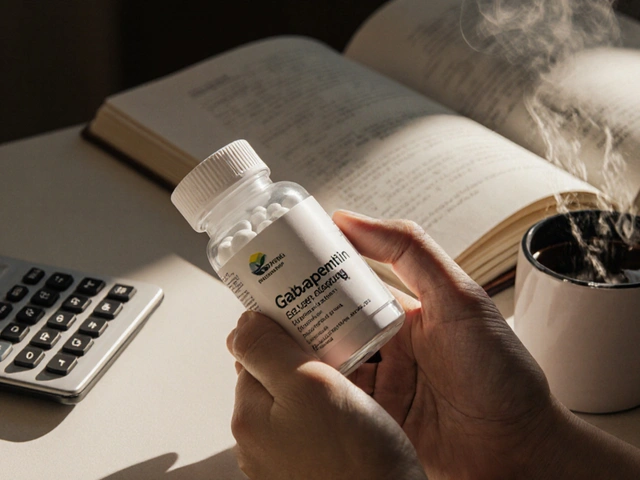
Some medications have a narrow therapeutic index (NTI). That means the difference between a dose that works and one that’s dangerous is very small. For these drugs, even slight changes in how the drug is absorbed can lead to serious side effects. - Levothyroxine (Synthroid, Levoxyl): Used for hypothyroidism. Even a 10% change in absorption can throw off your thyroid levels. Many patients report fatigue, weight gain, or heart palpitations after switching to generics. - Antiepileptic drugs (like phenytoin, carbamazepine): A small drop in blood levels can trigger a seizure. Kentucky, Hawaii, and several other states have lists of drugs that can’t be substituted without doctor approval. - Insulin (Lantus, Humalog): Biosimilar insulins are not exact copies. Patients have reported unstable blood sugar after automatic switches. One user on Diabetes Daily described erratic highs and lows for weeks before realizing the pharmacy had changed their insulin without telling them. If you’re on one of these drugs, ask your doctor to write "Dispense as Written" or "Brand Medically Necessary" on the prescription. That legally blocks substitution in 48 states. It’s not a request - it’s a directive.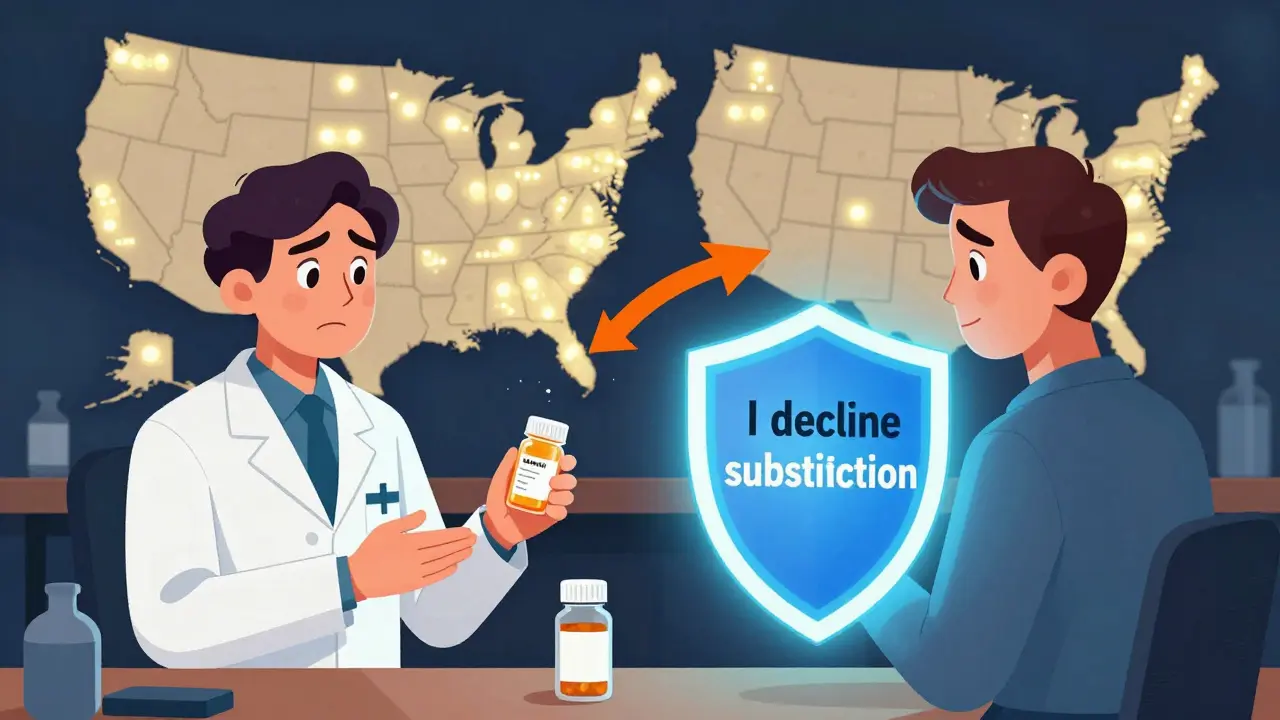
What Pharmacists Can and Can’t Do
Pharmacists aren’t trying to trick you. Most are following state laws and pharmacy policies. But some don’t know the rules - or they’re pressured by insurance companies and pharmacy benefit managers (PBMs) to cut costs. Here’s what’s legal:- Substituting generic for brand if allowed by state law
- Asking if you want the generic
- Informing you if the brand is cheaper than your copay (thanks to the 2018 Know the Lowest Price Act)
- Refusing to fill a prescription because you asked for the brand
- Claiming substitution is mandatory in states that require consent
- Not telling you a substitution happened
What to Do at the Pharmacy
You don’t need to be confrontational. But you do need to be clear. Here’s a simple script:- When the pharmacist hands you the bottle: "Is this the brand-name I was prescribed?"
- If it’s generic: "I decline substitution. I need the brand-name."
- If they push back: "I have a right under state law to refuse. Can I speak to the manager?"
- If they still refuse: "I’ll file a complaint with the state pharmacy board. Here’s their number." (Most boards list this on their website.)
Why This Matters
In 2021, a Consumer Reports survey found 28% of patients who tried to refuse substitution faced resistance. Some were told they’d pay more. Others were told the generic was "just as good." One woman in Michigan had a seizure after her pharmacy switched her antiepileptic drug without telling her. She sued - and won. On the flip side, 83% of patients who got proper notice and chose a generic were happy with the switch. They saved an average of $27.50 per prescription. The problem isn’t generics. It’s lack of transparency.What You Can Do Next
1. Check your state’s law. Search "[Your State] pharmacy generic substitution law". The JAMA Internal Medicine study lists all 50 states and D.C. 2. Talk to your doctor. If you’re on a high-risk medication, ask them to mark "Dispense as Written" on future prescriptions. 3. Keep records. Save receipts, prescription labels, and notes from conversations with pharmacists. 4. Use GoodRx or SingleCare. Sometimes, paying cash for the brand-name drug is cheaper than your insurance copay - especially for older medications. Pharmacists are now legally required to tell you this. 5. Report problems. If you had a bad reaction after a substitution, report it to the FDA’s MedWatch system. Your report helps track unsafe switches.FAQ
Can my pharmacy refuse to fill my prescription if I ask for the brand-name drug?
No. If your doctor prescribed a brand-name drug and you refuse substitution, the pharmacy must fill it as written. Refusing to do so is a violation of pharmacy law in most states. If they refuse, ask for the manager and threaten to file a complaint with your state’s board of pharmacy.
Do I have to pay more if I want the brand-name drug?
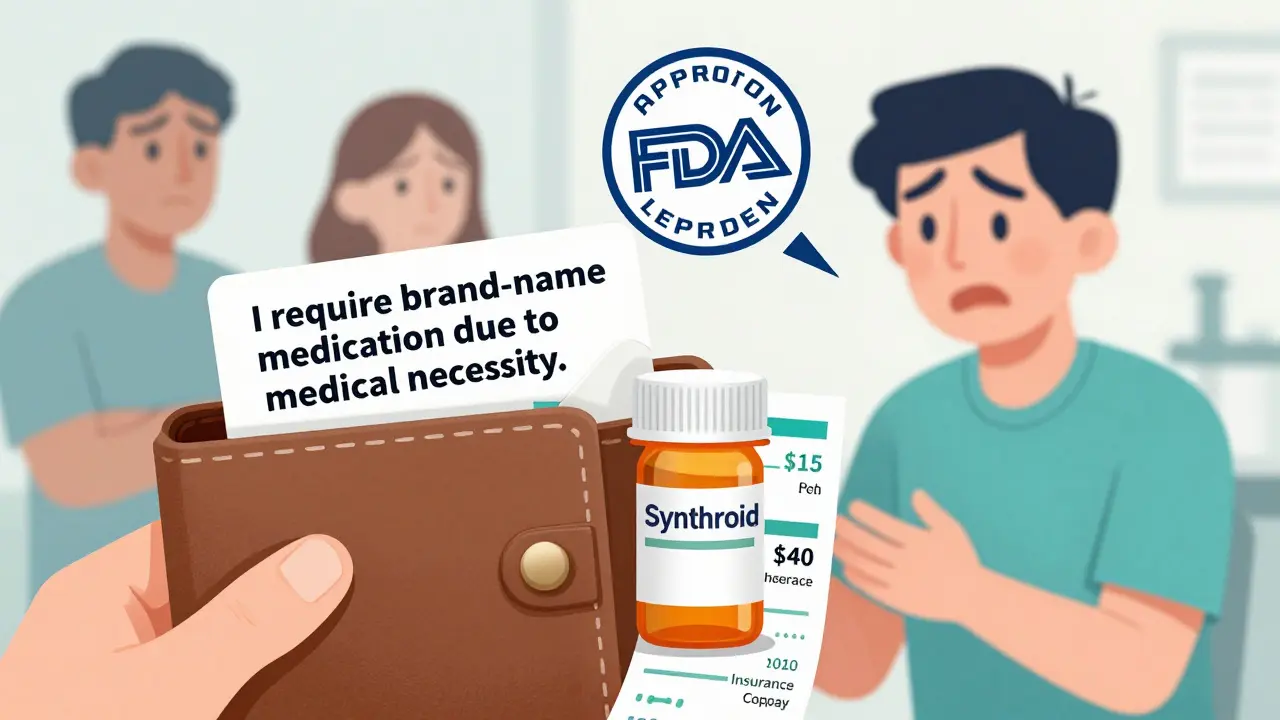
Not necessarily. Thanks to the 2018 Know the Lowest Price Act, pharmacists must tell you if paying cash for the brand-name drug is cheaper than using your insurance. Sometimes, the brand costs $15 cash, while your copay is $40. Always ask: "What’s the cash price?"
Can my doctor prevent substitution even if I don’t ask for it?
Yes. If your doctor writes "Dispense as Written" or "Brand Medically Necessary" on the prescription, the pharmacy is legally required to honor it. This is recognized in 48 states. It doesn’t matter if you’re okay with generics - the doctor’s order overrides automatic substitution.
Are biosimilars the same as generics?
No. Biosimilars are not exact copies like generics. They’re made from living cells, not chemicals, and can have small but meaningful differences. All 50 states and D.C. require prescribers to indicate "Dispense as Written" for biologics, and 47 states now require pharmacists to notify both the patient and doctor before substituting. Always confirm if your insulin, rheumatoid arthritis drug, or cancer treatment is a biosimilar.
What if I’m on Medicare Part D?
Medicare Part D plans have very high generic use rates - around 95%. But you still have the right to refuse substitution. If your plan requires prior authorization for brand-name drugs, your doctor can submit a letter explaining medical necessity. Many seniors with thyroid, seizure, or heart conditions successfully get coverage for brand-name drugs with this process.

I just got my levothyroxine switched last month and woke up feeling like a zombie for 3 weeks. 😵💫 My pharmacist didn't even tell me. Now I have a note taped to my fridge: "NO GENERIC THYROID."
You're not alone. I fight this every time. Just say "I decline substitution" - it's that simple. Pharmacies hate it when you know your rights. 💪
LOL my pharmacist tried to guilt-trip me into generics last week. I said, "Cool. Can I have your manager? Also, here's the link to the state pharmacy board." She handed me the brand name and apologized. 😏
I'm sorry, but if you're taking generic levothyroxine and you're still fatigued and gaining weight, you're basically letting Big Pharma play Russian roulette with your thyroid. 🤦♀️
For anyone on NTI drugs like phenytoin or carbamazepine - this isn't about preference. It's about survival. I've seen patients crash after a switch. The FDA says generics are "bioequivalent," but bioequivalent doesn't mean identical. There's a reason some states ban substitution for these meds.
I call it pharmaceutical identity theft. They swap your life-saving med like it's a coupon deal. I keep a laminated card in my wallet that says: "I am not a cost center. I am a human being with a brain that doesn't tolerate chemical variations."
In India, biosimilars are common but poorly regulated. I've seen insulin vials with inconsistent glucose-lowering effects. The FDA’s standards are light-years ahead. If you're on biologics, demand the original. No compromises.
Why are you even mad? Generics work for 95% of people. Stop being a drama queen. Just pay cash if you want brand. Easy.
I used to think generics were just cheaper. Then my dad had a seizure after a switch. Now I carry his old prescription bottle like a relic. It's not about money. It's about trust. The body remembers. And sometimes, it never forgives.
In the UK, we have similar issues. The NHS pushes generics hard. I had to threaten to go private to get my original insulin. Funny how cost-cutting becomes life-threatening when you're the one losing sleep over it.
This is all a scam. The FDA is owned by Big Pharma. The "same active ingredient" line? Lies. They change the fillers to make you dependent on more meds. I stopped taking all generics after 2018. Now I get my drugs from Canada. And yes, I'm still alive.
I'm not saying this is wrong... but have you considered that the real issue is not substitution, but the fact that we've outsourced our health to profit-driven systems? The pharmacy, the insurer, the PBM - they're all nodes in a machine designed to reduce you to a data point. You're not fighting a pharmacist. You're fighting capitalism.
i got my insuline switched and i had a 14 hr hypo and i cried in the grocery store and now i just pay cash for the brand and i dont even tell anyone because i dont want to deal with the drama
I'm from the South. We don't always trust doctors. But we trust our bodies. If your skin crawls after a generic switch, you're not crazy. You're just paying attention. Listen to your body. It's the only thing that's been with you since day one.