
 17
Dec,2025
17
Dec,2025
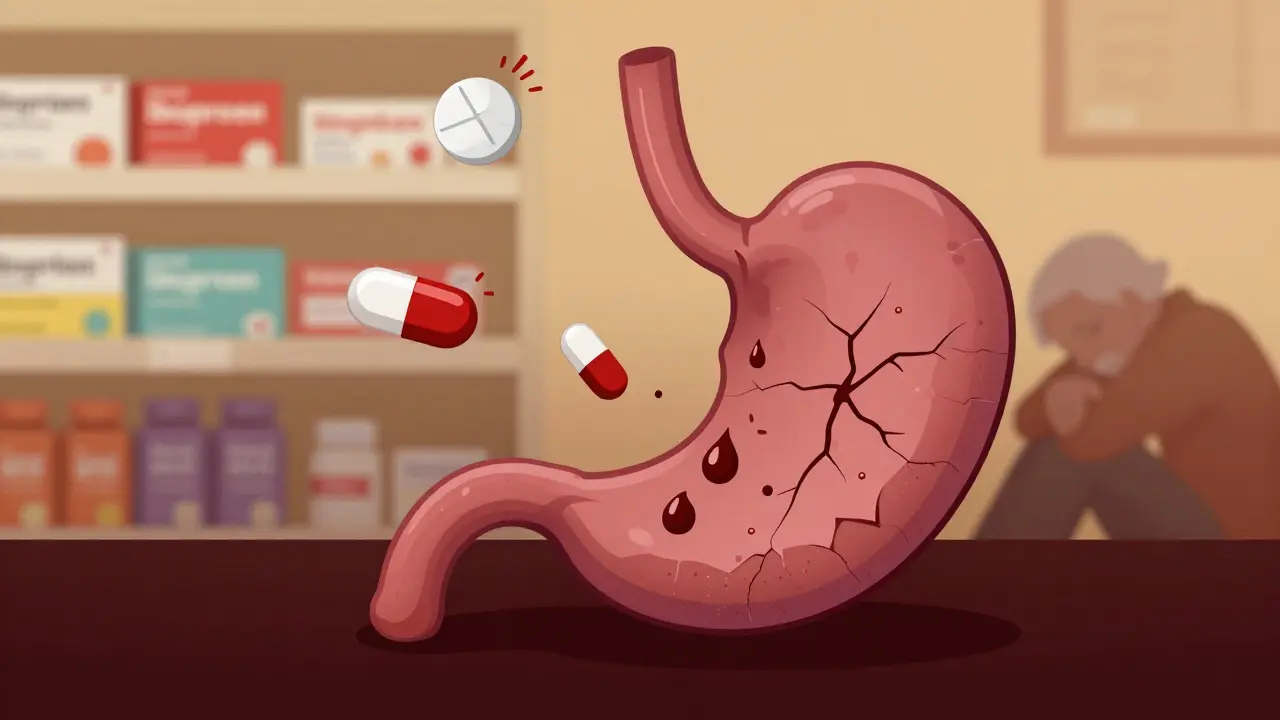
Every year, thousands of people end up in the hospital because of something they thought was harmless: a daily painkiller. NSAIDs-like ibuprofen, naproxen, and even low-dose aspirin-are everywhere. You can buy them over the counter. Your neighbor swears by them for arthritis. Your doctor might have prescribed them for back pain. But here’s the truth most people don’t know: NSAID overdose isn’t always about taking too many pills at once. Often, it’s about taking them too long, too often, or mixing them with other meds-especially aspirin.
What Really Happens When NSAIDs Attack Your Gut
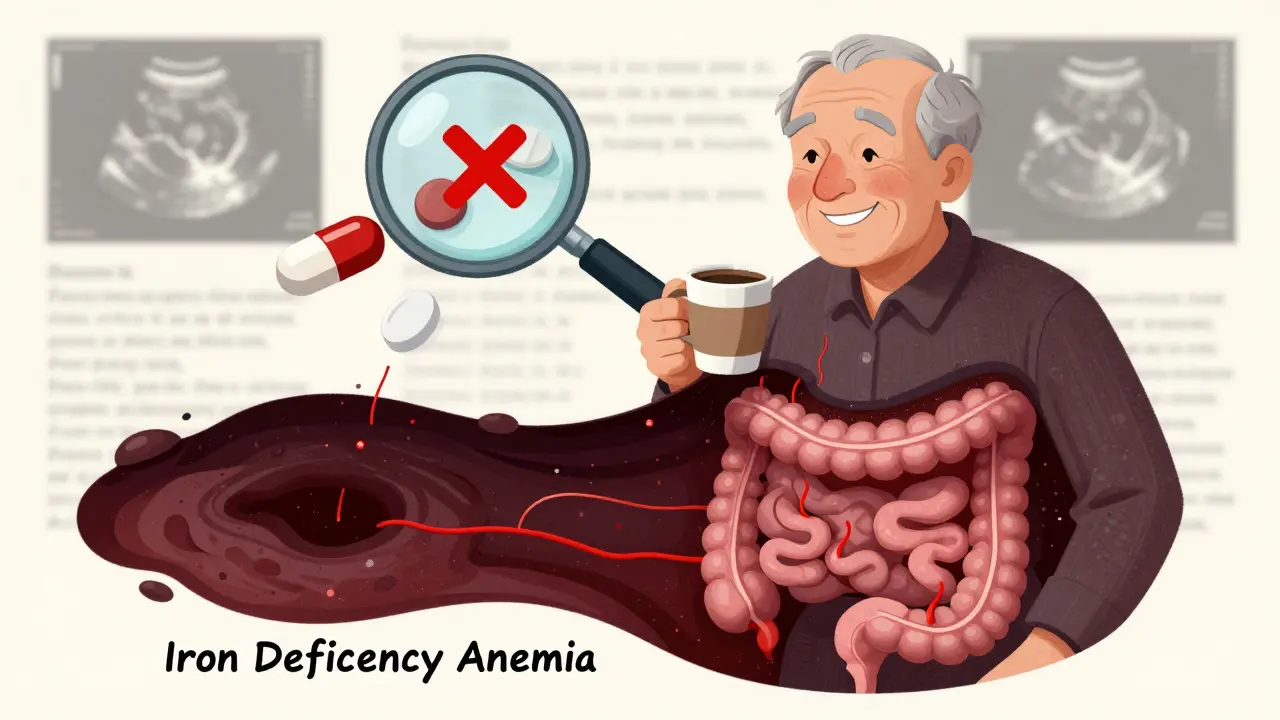
NSAIDs don’t just block pain. They block enzymes your stomach needs to protect itself. These drugs stop the production of prostaglandins, which keep the stomach lining healthy and lubricated. Without them, acid eats away at the lining. It doesn’t always burn. It doesn’t always hurt. Sometimes, it just bleeds-slowly, silently.Up to 70% of people who take NSAIDs regularly show signs of damage on endoscopy: erosions, ulcers, tiny bleeds. Yet only about 10% feel any symptoms. That’s the silent danger. You might feel fine, but your body is losing blood. Over weeks or months, this leads to iron deficiency anemia. You get tired. You feel dizzy. You think it’s stress or aging. But it’s your gut quietly bleeding out.
And it’s not just the stomach. NSAIDs damage the entire digestive tract-from the esophagus down to the colon. Studies show they can cause inflammation, leaky gut, and bleeding in the small and large intestine. These lower GI bleeds are harder to spot because they don’t always show up in standard tests. You might need a capsule endoscopy or a CT scan just to find the source.
Who’s Most at Risk? It’s Not Who You Think
People assume only heavy users or elderly folks are at risk. But the real danger zones are more specific:- You’re over 65
- You’ve had a stomach ulcer or GI bleed before
- You take low-dose aspirin for heart protection
- You’re on blood thinners or antiplatelets like clopidogrel
- You have H. pylori infection (a common stomach bacteria)
- You take more than one NSAID at a time
Here’s the worst combo: aspirin + another NSAID. If you’re on daily low-dose aspirin for your heart, adding ibuprofen or naproxen doesn’t just double your risk-it can multiply it by 2 to 4 times. The 2008 expert guidelines from the American College of Cardiology, the American College of Gastroenterology, and the American Heart Association make this crystal clear: there’s no safe way to mix them. Even enteric-coated or buffered aspirin doesn’t help. The damage still happens.
And it’s not just prescription users. Over one-third of people admitted for GI bleeding were taking over-the-counter aspirin daily-often without telling their doctor. They thought it was just a heart pill. They didn’t realize it was also a gut killer.
Why PPIs Don’t Fix Everything
Doctors often prescribe proton pump inhibitors (PPIs) like omeprazole to protect the stomach when someone needs NSAIDs long-term. That helps-mostly for the upper GI tract. But here’s the catch: PPIs don’t stop bleeding in the small intestine. They don’t fix the microscopic damage that leads to anemia. Studies show over 60% of NSAID users who become anemic show no visible ulcers on endoscopy. That means the bleeding is happening lower down, where PPIs can’t reach.So if you’re on a PPI and still feeling tired or getting pale, don’t assume it’s fine. Your doctor needs to check your iron levels, your hemoglobin, and maybe even look at your small bowel. Don’t stop the PPI. But don’t think it’s a magic shield either.
The Aspirin Trap: How a Heart Pill Becomes a GI Hazard
Low-dose aspirin (75-100 mg) is one of the most prescribed drugs in the world. It’s cheap. It’s proven. It saves lives by preventing heart attacks and strokes. But here’s the trade-off: it also causes GI bleeding.Studies show the risk of bleeding rises with the dose:
- 75 mg/day: 2.3 times higher risk
- 150 mg/day: 3.2 times higher risk
- 300 mg/day: 3.9 times higher risk
That’s why guidelines say: stick to 81 mg. Anything higher doesn’t give you more heart protection-but it definitely gives you more bleeding. And if you’re already taking another NSAID? The risk skyrockets. Many older adults don’t realize they’re doubling down on danger. They take aspirin for their heart, ibuprofen for their knee, and naproxen for their back. Three pills. One gut.
What to Do If You’re Already Taking NSAIDs
If you’ve been taking NSAIDs for more than a few weeks, here’s your action plan:- Check your iron and hemoglobin levels. Ask your doctor for a full blood count. Fatigue isn’t normal at 60, 70, or 80-it could be internal bleeding.
- Review every medication. Write down everything you take, including OTC pills. Bring it to your doctor. Don’t assume they know you’re taking ibuprofen daily.
- Ask: Do I still need this? Can I switch to acetaminophen? Can I use physical therapy instead? Is there a non-drug option?
- If you’re on aspirin for heart health, never stop it without talking to your doctor. But do ask if you’re also taking another NSAID-and if you can stop that one.
- If you’ve had a GI bleed before, NSAIDs are generally off-limits. Ask about alternatives like physical therapy, topical treatments, or non-NSAID pain relievers.
When to Go to the ER
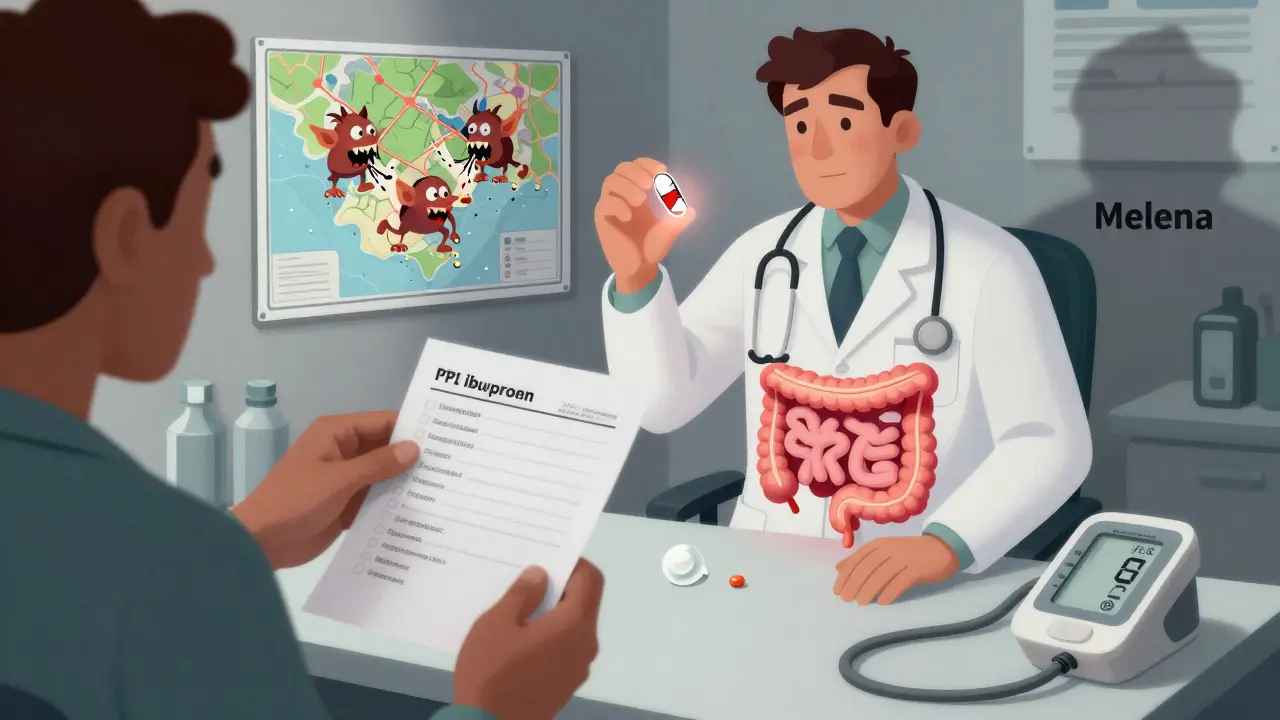
You don’t need to wait for a crisis. But if you notice any of these, go immediately:- Black, tarry stools (melena)
- Bright red blood in stool
- Vomiting blood or material that looks like coffee grounds
- Sudden dizziness, fainting, or rapid heartbeat
- Unexplained weakness or shortness of breath
These aren’t just ‘bad days.’ These are signs your body is losing blood fast. Emergency treatment-endoscopy, transfusions, maybe even surgery-can save your life.
The Bigger Picture: NSAIDs Are Not Harmless
NSAIDs are not the villain. They’re tools. For some people, they’re essential. But they’re not candy. They’re not ‘just painkillers.’ They’re drugs with real, documented risks that stack up over time. The medical community has known this for decades. Yet, millions still take them without knowing the cost.The solution isn’t fear. It’s awareness. It’s asking questions. It’s refusing to accept that chronic pain means lifelong pills. There are better ways-physical therapy, weight management, acupuncture, nerve blocks, even cognitive behavioral therapy for chronic pain. NSAIDs should be the last resort, not the first.
If you’re managing pain, talk to your doctor about a plan that doesn’t rely on daily NSAIDs. If you’re on aspirin, make sure you’re not adding another NSAID on top. If you’re over 60 and taking anything for pain, get your blood checked. Simple steps. Big impact.
The numbers don’t lie: NSAID-related GI bleeding is one of the top 15 causes of hospital admissions for digestive bleeding. It’s preventable. But only if we stop treating it like a side effect-and start treating it like the serious medical risk it is.
NSAIDs are just lazy man's pain management. If you're popping ibuprofen daily, you're not treating pain-you're masking symptoms while your gut turns to Swiss cheese. End of story.
This is one of the clearest explanations I've read on NSAID risks. Many people don't realize that even low-dose aspirin can cause silent GI bleeding, especially when combined with other OTC painkillers. Regular blood work is non-negotiable for long-term users.
Let's be real-the entire medical establishment has been complicit in normalizing NSAID abuse. PPIs are prescribed like candy while the real issue-the mucosal erosion from COX-1 inhibition-is ignored. The data's been there since the 90s. Why are we still acting surprised?
I've been on naproxen for 8 years for my back. Felt fine. Then one day I passed out in the grocery store. Turned out my hemoglobin was 6.8. No warning. No pain. Just… collapse. This article saved my life. Thank you.
I just started taking baby aspirin for my heart and didn't realize it could hurt my stomach too like really i thought it was just for blood thinning like magic pills but now i'm scared and going to ask my doc to check my iron cause i've been so tired lately and i just thought it was stress or being a mom of three
The fact that people still think 'enteric-coated' means 'safe' is why we're in this mess. It's like putting a Band-Aid on a gunshot wound and calling it a solution. PPIs don't fix the small intestine. They're a distraction. A corporate-funded placebo.
In my country, we use turmeric and ginger for pain. No pills. No side effects. Just real food. Maybe we don't need to medicate every ache.
I used to take ibuprofen every day for headaches. Then I started getting dizzy and pale. My doctor found I was anemic. Turns out my gut was bleeding slowly for months. I switched to acetaminophen and now I feel like a new person.
The 2008 ACC/AHA/ACG guidelines are clear: combining aspirin with other NSAIDs increases GI bleeding risk 2-4x. This isn't speculation-it's evidence-based medicine. Yet, patients still self-prescribe combinations. Education is the gap.
It is an incontrovertible fact that the indiscriminate use of nonsteroidal anti-inflammatory agents constitutes a profound dereliction of personal responsibility in the context of modern medical knowledge. One must exercise prudence.
Bro I had no idea 😳 I’ve been taking aspirin + ibuprofen for my back and heart like a champ… guess I’m basically a walking time bomb 🤯 Gonna call my doc tmrw 🙏
I'm so glad someone finally said this. I've been telling my mom for years that her daily naproxen isn't harmless. She thought it was 'just a painkiller.' Now she's getting her iron checked. 🥹 Thank you for writing this.
I'm a physio and see this all the time. People come in with chronic pain and immediately reach for pills. We need to shift the culture. Movement therapy, posture work, load management-these work better long term and don't destroy your gut
I used to think people who complained about side effects were just being dramatic. Then I got my own silent bleed. Now I get it. It's not about being weak. It's about being informed.
This is why the pharmaceutical industry thrives. They sell you a solution to a problem they helped create. NSAIDs are the perfect product: addictive, profitable, and buried in plain sight. Wake up.