 11
Apr,2026
11
Apr,2026
QT-Prolongation Risk Stratification Tool
Patient & Medication Profile
Risk Assessment
Adjust the parameters on the left to see the risk stratification and monitoring recommendations.
Imagine a heart rhythm that suddenly twists into a chaotic spiral. In medical terms, this is called Torsades de Pointes, and it can lead to sudden cardiac arrest. While rare, this dangerous event often happens when two or more medications that affect the heart's electrical system are taken at the same time. For people taking antipsychotics is a class of medication used to manage psychosis, including schizophrenia and bipolar disorder, adding just one other common drug-like a specific antibiotic or a nausea pill-can push the heart into a danger zone.
The Core Problem: What is QT Prolongation?
Your heart beats because of a precise electrical cycle. After every contraction, the heart needs to "reset" itself-a process called repolarization. On an electrocardiogram (ECG), this is measured as the QT interval. When this interval gets too long, it's called QT prolongation, a condition where the heart muscle takes longer than normal to recharge between beats. This delay creates a window of vulnerability where a misplaced electrical impulse can trigger a fatal arrhythmia.
The real trouble starts when we talk about "additive risk." This isn't just about one drug; it's about the stack. When you combine an antipsychotic with another drug that also prolongs the QT interval, the effect isn't just doubled-it can be multiplied. A 2021 study from the University of Pennsylvania found that polypharmacy can cause a 2.3 to 4.7-fold increase in QTc prolongation compared to taking a single medication. Essentially, the drugs team up to slow down the heart's reset button, making a cardiac event much more likely.
Which Antipsychotics Carry the Highest Risk?
Not all psychiatric meds are created equal. The risk depends largely on how strongly the drug blocks the hERG potassium channel in the heart. If the block is strong, the QT interval stretches.
High-risk agents include Thioridazine and Ziprasidone. Thioridazine is so risky that it was pulled from the US market in 2005, though it's still used globally. Haloperidol also sits in the high-risk camp. These drugs have a very high potency for blocking those critical potassium channels, which is why doctors watch patients on them much more closely.
Then there are the moderate-risk options, like Quetiapine and Risperidone. These are incredibly common-millions of prescriptions are written for them every year-but they still carry a measurable risk, especially if the patient has other health issues. Finally, we have low-risk alternatives such as Aripiprazole and Brexpiprazole, which generally don't cause significant heart rhythm delays and are becoming more popular for this very reason.
| Risk Level | Examples | Cardiac Impact |
|---|---|---|
| High | Thioridazine, Ziprasidone, Haloperidol | Significant QT prolongation; high TdP risk |
| Moderate | Quetiapine, Risperidone, Olanzapine | Mild to moderate QT prolongation |
| Low | Aripiprazole, Brexpiprazole, Lurasidone | Minimal to no effect on QT interval |

The "Danger List": Common Drug Interactions
The risk spikes when antipsychotics meet other QT-prolonging drugs, medications from various classes that extend the heart's repolarization phase. You might be surprised by what's on this list. For example, Fluoroquinolones (like moxifloxacin), which are common antibiotics, are known culprits. Combining an antipsychotic with one of these can lead to a rapid spike in the QT interval.
Anti-nausea medications, specifically Ondansetron, also play a role. A meta-analysis from the University of Michigan showed that using an antiemetic alongside an antipsychotic increased the QTc interval by nearly 39 ms, significantly more than using the antipsychotic alone. Even some antidepressants can add to the risk, with one JAMA study suggesting a 4.3-fold increase in Torsades de Pointes risk when these two classes are mixed.
Who is Most at Risk?
Medication is only part of the story. Your biology plays a huge role in how your heart handles these drugs. If you fall into any of these categories, the risk of an arrhythmia is higher:
- Age: Being over 65 can add roughly 15 ms to your QTc.
- Sex: Women naturally tend to have slightly longer QT intervals than men (adding about 13 ms).
- Electrolyte Imbalance: This is a big one. Low potassium (hypokalemia) or low magnesium can make the heart unstable. Low potassium alone can add over 22 ms to the QT interval.
- Existing Heart Conditions: A slow heart rate (bradycardia) makes the heart more susceptible to these drug effects.
There is also a genetic component. Some people are "poor metabolizers" due to their CYP2D6 enzyme status. If your body can't break down the drug efficiently, the levels of the antipsychotic in your blood rise, which in turn increases the risk of heart rhythm issues.
Practical Steps for Safety and Monitoring
So, does this mean these medications are too dangerous to use? Not at all. It just means we need a smarter way to monitor them. The key is risk stratification-treating high-risk patients differently than low-risk ones.
For someone starting a high-risk antipsychotic or combining it with another QT-prolonging drug, the American Heart Association recommends a baseline ECG within the first week. If you're in a high-risk group, weekly ECGs for the first month, followed by monthly checks, can catch a problem before it becomes a crisis. In fact, therapeutic monitoring can reduce the risk of a fatal event by up to 67%.
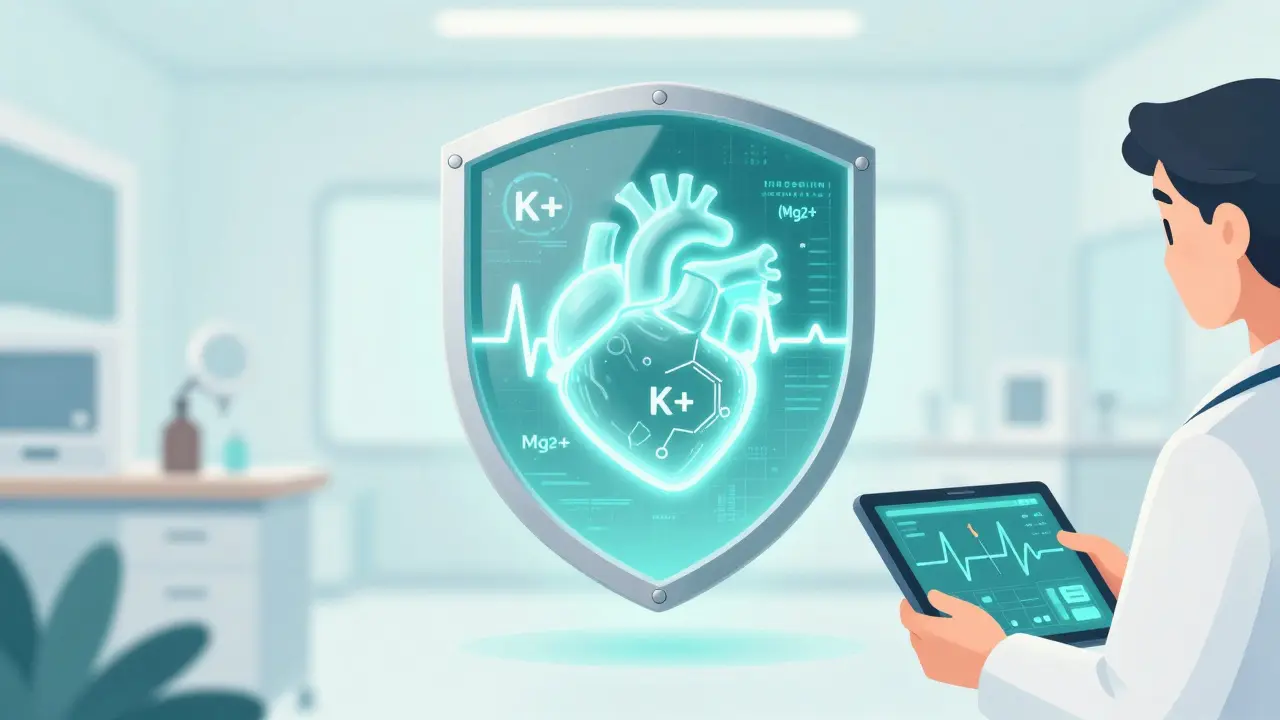
One of the most effective ways to prevent these issues isn't actually an ECG, but a simple blood test. Monitoring potassium and magnesium levels can prevent 82% of Torsades de Pointes cases in patients on multiple risky drugs. If your electrolytes are balanced, your heart is much more resilient to the effects of the medication.
What is a "normal" QTc value?
Generally, a QTc value under 440 ms for men and under 460 ms for women is considered normal. Once the value exceeds 500 ms, the risk of a dangerous arrhythmia increases significantly, though the absolute risk for most psychiatric patients remains low.
Can I stop my medication if I'm worried about my heart?
You should never stop antipsychotic medication abruptly, as this can cause severe withdrawal or a relapse of psychiatric symptoms. Instead, talk to your doctor about switching to a low-risk alternative like Aripiprazole or requesting an ECG to see where your baseline stands.
Are there any non-drug ways to lower the risk?
Maintaining healthy electrolyte levels through diet or supplements (under medical supervision) is the best non-drug intervention. Ensuring you have enough potassium and magnesium helps stabilize the heart's electrical activity.
How often do I actually need an ECG?
It depends on your risk. Low-risk patients rarely need one. Moderate-risk patients usually get one at the start, at 4 weeks, and then quarterly. High-risk patients (especially those on multiple QT-prolonging drugs) may need weekly checks for the first month.
What are the warning signs of a QT-related arrhythmia?
The most common signs include sudden dizziness, fainting (syncope), palpitations, or a feeling that the heart is skipping beats. If these occur while taking multiple QT-prolonging drugs, seek medical attention immediately.
Next Steps for Patients and Caregivers
If you or a loved one is taking an antipsychotic, start by making a complete list of all medications, including over-the-counter pills and supplements. Ask your provider: "Does this medication prolong the QT interval?" and "Are any of my other meds adding to that risk?"
For those in rural areas where ECG machines aren't common, ask about digital ECG patches or telehealth monitoring options. The most important thing is to keep a dialogue open with your healthcare team-especially when starting a new antibiotic or anti-nausea medication-to ensure your heart stays in a safe rhythm.