 8
Apr,2026
8
Apr,2026
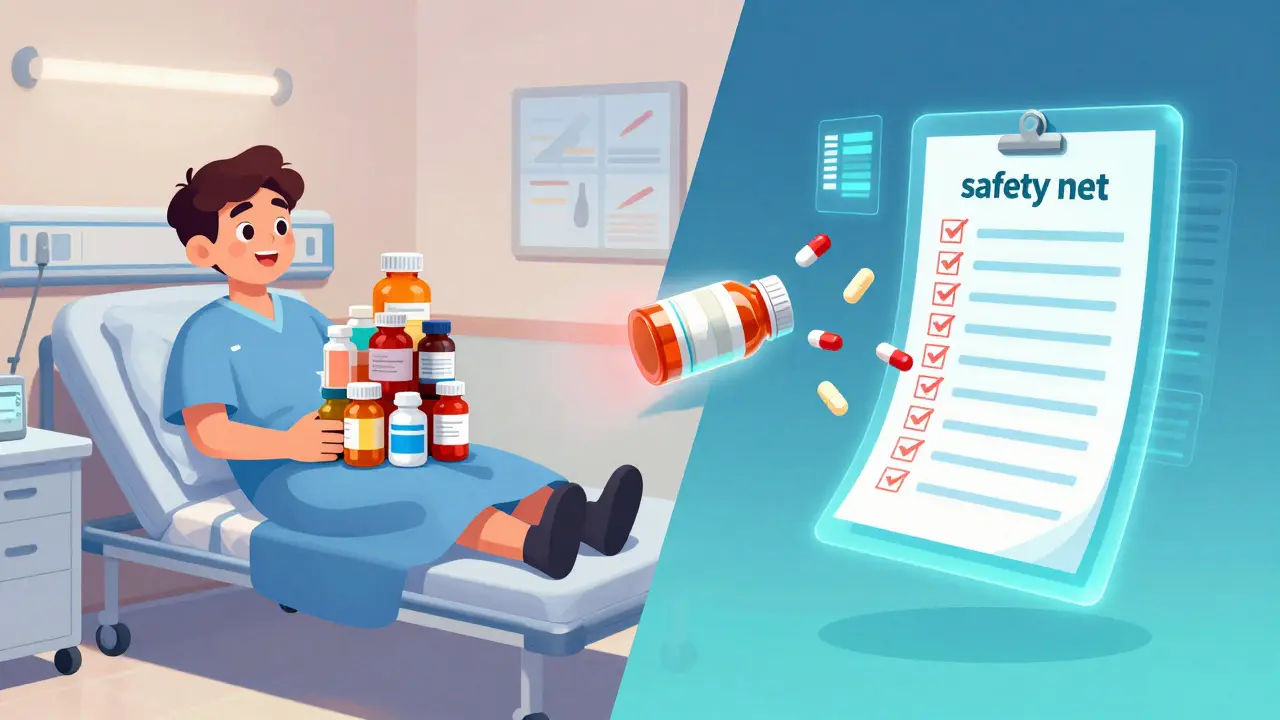
Imagine a patient leaving a hospital after a complex heart surgery. They've been on five new medications during their stay, but they're also taking three blood pressure pills and a daily aspirin from home. If the discharge paperwork misses just one of those home medications or lists a dosage incorrectly, the results can be catastrophic. This isn't a rare scenario; research shows that medication errors happen in 50% to 70% of all patient transitions. When we talk about medication reconciliation, we aren't just talking about a paperwork exercise-we're talking about a critical safety net that prevents patients from ending up back in the emergency room.
At its core, Medication Reconciliation is the formal process of creating the most accurate list possible of all medications a patient is taking-including name, dose, frequency, and route-and comparing that list against physician orders to ensure no errors occur during a transition of care. This process was formalized by the Institute for Healthcare Improvement (IHI) back in 2005 to stop the dangerous "information gap" that happens when a patient moves from a primary care office to a hospital, or from a hospital to a rehab center.
Why This Process Is a Life-Saver
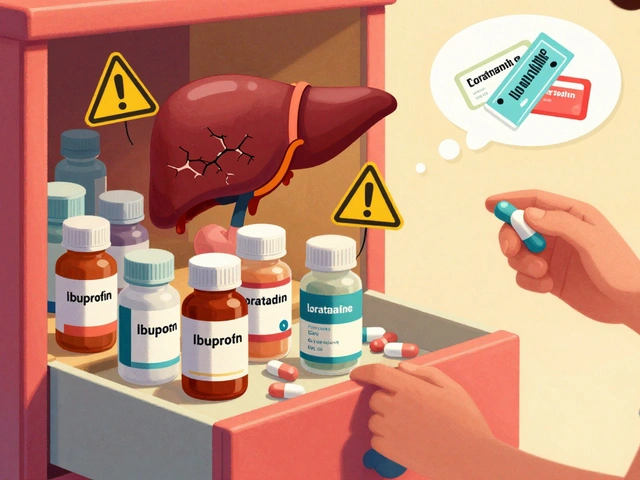
Why do we put so much effort into these lists? Because the stakes are incredibly high. Adverse Drug Events (ADEs) are not just minor mishaps; they are a leading cause of hospital readmissions. According to data from the Agency for Healthcare Research and Quality (AHRQ), ADEs account for about 6.5% of all hospital admissions and nearly 19% of medical inpatient admissions. When a doctor prescribes a new drug without knowing the patient is taking a specific herbal supplement or an over-the-counter diuretic, the risk of a dangerous drug-drug interaction skyrockets.
The goal here is to eliminate four specific types of errors:
- Omissions: Forgetting to restart a critical home medication after surgery.
- Duplications: Prescribing a brand-name drug and its generic equivalent simultaneously.
- Dosing Errors: Misinterpreting "once daily" as "twice daily" during a transfer.
- Interactions: Overlooking how a new hospital medication reacts with a long-term home prescription.
The Five Steps of a Proper Reconciliation
Effective reconciliation isn't a quick glance at a chart; it's a structured five-step workflow. If any step is skipped, the entire process can fail.
- Develop a Comprehensive List: This is where you build the Best Possible Medication History (BPMH). You don't just ask the patient; you check community pharmacy records, electronic medical records, and talk to family members. Relying only on a patient's memory leads to errors in about 42% of histories.
- Create the New Prescription List: Document exactly what the provider wants the patient to take in the current care setting.
- The Comparison: Place the BPMH and the new orders side-by-side. This is the "detective" phase where you spot the gaps.
- Clinical Decision Making: A provider reviews the discrepancies. For example, if a patient was on a beta-blocker at home but it's now omitted, the doctor must decide if that was intentional or an error.
- Communication: The final, verified list is given to the patient and sent to their primary care provider. If the patient doesn't understand the changes, the reconciliation hasn't actually succeeded.
| Feature | Medication Reconciliation | MTM Services |
|---|---|---|
| Primary Focus | Transitions of care (Admission/Discharge) | Long-term therapy optimization |
| Timing | Acute episodes or transfers | Routine or scheduled reviews |
| Core Goal | Prevent errors during handover | Improve clinical outcomes and adherence |
| Key Requirement | BPMH comparison | Comprehensive medication review (CMR) |

Where Reconciliation Happens in the Healthcare Journey
Reconciliation isn't a one-time event; it's a recurring requirement at every "interface of care." Whether it's a quick visit to the emergency department or a long-term stay in a nursing facility, the list must be updated.
Hospital Admission: This is the most critical point. The team must identify what the patient was taking at home before the first dose of hospital medication is given. Using the "verify, clarify, reconcile" approach from the IHI has been shown to reduce the time spent on this from 28 minutes down to just 12, while actually increasing accuracy from 63% to 89%.
Internal Transfers: Moving a patient from the ICU to a general medical ward often involves changes in medication delivery (e.g., switching from an IV drip to an oral pill). This is a high-risk zone for dosing errors.
Hospital Discharge: This is where the most confusion happens. Over 60% of patients report feeling confused about their medication changes after leaving the hospital. A pharmacist-led discharge process is the gold standard here, as it can reduce 30-day readmissions by as much as 18%.

The Role of Technology and the Human Element
We have incredible tools today, from Epic Systems' transition modules to interoperability standards like USCDI Version 4 . These systems allow providers to pull data from pharmacies and other hospitals instantly. In some cases, AI tools like those from Google's DeepMind Health have predicted discrepancies with 89% accuracy.
However, technology is only as good as the data entered into it. Many pharmacists report that discharge reconciliation still takes an hour per patient because electronic health records (EHRs) are often fragmented. There is also the challenge of patient health literacy. Nearly 40-50% of elderly patients struggle to name their medications or explain why they take them. This is why a human-specifically a pharmacist-is essential. They can interpret the data, spot the "red flags," and explain the changes to the patient in plain English.
Common Pitfalls and How to Avoid Them
Even with a system in place, things go wrong. One of the biggest mistakes is treating reconciliation as a "checkbox exercise." When clinicians just click "agree" on a list without actually verifying it, the system fails. This "checkbox mentality" is why 31% of reconciliation errors persist even when electronic tools are used.
Another pitfall is ignoring non-prescription items. The Joint Commission now requires the reconciliation of traditional and alternative medicines. With over 50% of patients using complementary therapies (like St. John's Wort or Ginkgo Biloba), omitting these from the list can lead to severe interactions with conventional drugs.
To avoid these traps, facilities should:
- Implement Pharmacist-Led Models: Pharmacists reduce error rates by 47% compared to nurse-only models.
- Use Patient Diaries: Encouraging patients to keep a simple log of their meds can improve accuracy by 27%.
- Standardize the Timing: Ensure reconciliation happens within 24 hours of admission and immediately prior to discharge.
What is the difference between a medication review and medication reconciliation?
A medication review is a general assessment usually done during a routine checkup to see if a treatment is working. Medication reconciliation is a specific, structured process that happens only during a transition of care (like being admitted to or discharged from a hospital) to ensure the medication list is accurate and consistent across different settings.
Why is the "Best Possible Medication History" (BPMH) so important?
BPMH is the foundation of the entire process. If the starting list is wrong, the reconciliation will be wrong. By using at least two independent sources (e.g., the patient and a pharmacy record), providers can avoid the 42% error rate associated with relying solely on patient memory.
Can AI completely replace pharmacists in medication reconciliation?
No. While AI can identify discrepancies with high accuracy, it lacks the clinical judgment needed to resolve them. Human verification is still required for 100% accuracy, and the human element is necessary to communicate changes to patients who may have low health literacy.
What are the most common medication errors found during reconciliation?
The most common errors include omissions (forgetting a home med), duplications (prescribing two versions of the same drug), dosing errors (wrong frequency or amount), and dangerous drug-drug interactions.
How does medication reconciliation impact hospital readmission rates?
Rigorous reconciliation protocols, especially those led by pharmacists, have been shown to reduce 30-day readmissions by up to 18% by preventing adverse drug events that would otherwise send a patient back to the hospital.