
 26
Feb,2026
26
Feb,2026
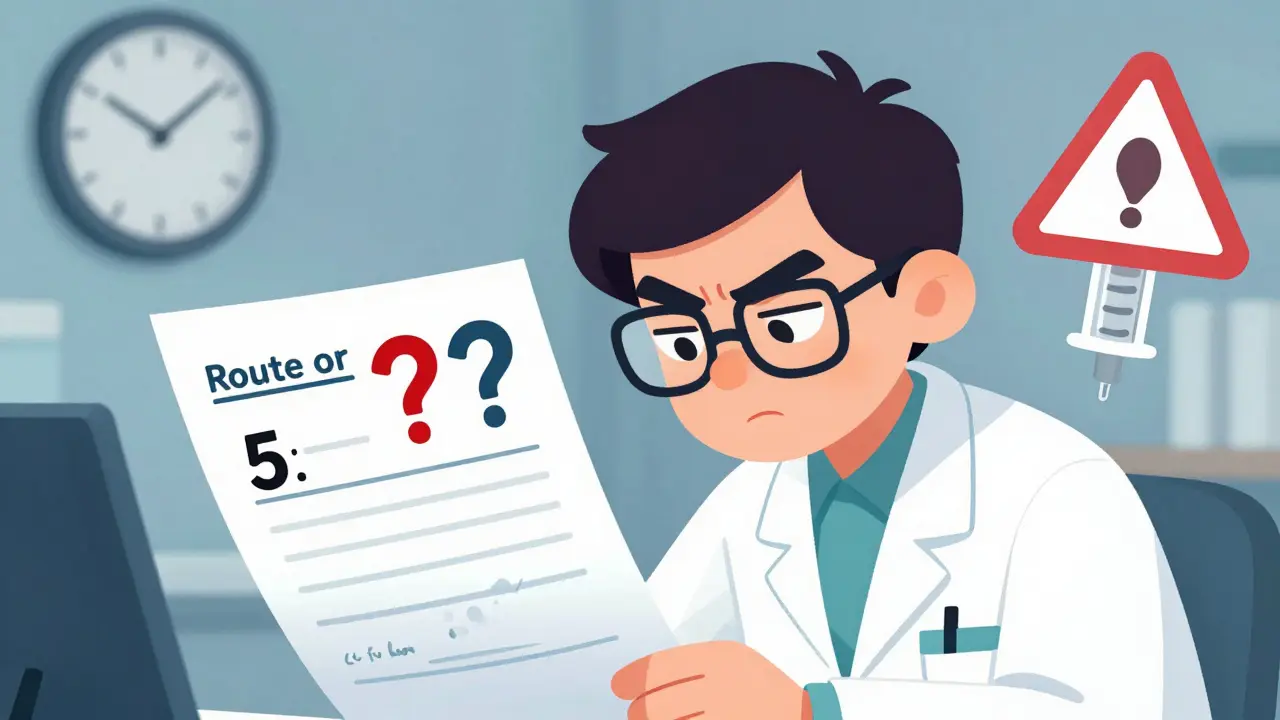
Imagine this: a pharmacist holds a prescription in their hand. The handwriting is messy. The dose is smudged. The route of administration? Barely visible. They call the doctor’s office. Again. This happens 150 million times a year in the U.S. alone. That’s not just a nuisance-it’s a life-or-death problem. Illegible handwriting on prescriptions isn’t an old-school annoyance. It’s a leading cause of preventable medication errors, and it’s still happening today-even in 2026.
Why Bad Handwriting Kills
It’s not just about messy penmanship. It’s about missing information. A doctor writes "5 mg" but the "5" looks like a "9." The pharmacist dispenses nine times the intended dose. A patient takes it. They end up in the ER. Or worse. According to the Institute of Medicine, 7,000 deaths per year in the U.S. are directly tied to unreadable prescriptions. That’s more than the number of people killed in car accidents in a typical year.Errors aren’t just about numbers. They’re about abbreviations. "QD" for daily? Some people read it as "QID" (four times a day). "U" for units? Looks like a "0" or a "4." The Joint Commission banned these abbreviations years ago, but they still show up on handwritten scripts. Even doctors who know better slip up. Time pressure, multitasking, and fatigue make it worse. A 2022 study found that 92% of medical students and doctors made at least one prescription error-on average, two each.
Nurses aren’t immune. One study found they spend 12.7 minutes per illegible prescription just trying to clarify what was written. That’s over 100 hours a year for every nurse in a busy hospital. Time they could’ve spent with patients.
The Shocking Accuracy Gap
Here’s the real kicker: handwritten prescriptions are dangerously inaccurate. A 2025 study in JMIR compared safety compliance between handwritten and electronic prescriptions. The results were staggering.Handwritten prescriptions? Only 8.5% met basic safety standards.
E-prescriptions? 80.8%.
Even when clinicians typed prescriptions manually-without templates or auto-fill-they still hit a 56% accuracy rate. That’s more than six times safer than scribbling by hand.
And it’s not just about accuracy. It’s about clarity. A 2005 study of surgical notes found only 24% were rated "excellent" or "good" for legibility. Over a third were "poor." That’s not a one-off. It’s the norm.
How E-Prescribing Fixed the Problem
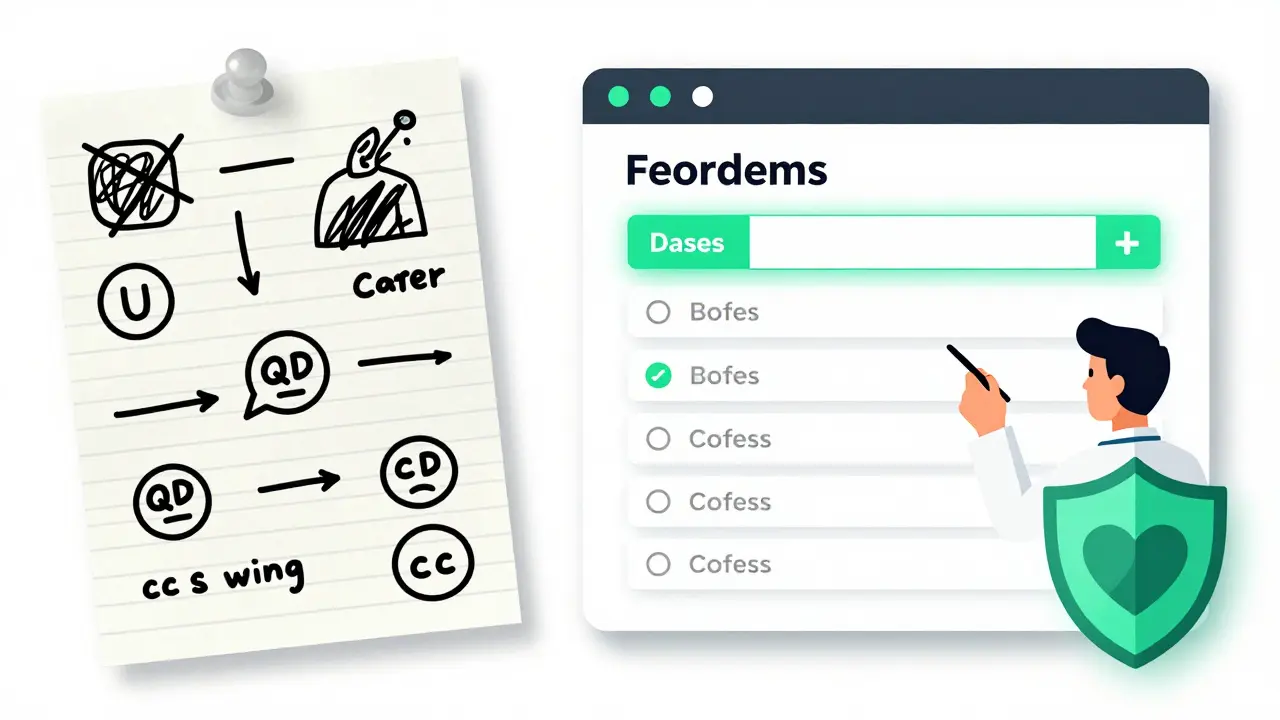
Electronic prescribing didn’t just make handwriting disappear. It forced structure. When you type a prescription, the system doesn’t let you skip fields. You must pick the drug from a list. You can’t use "U" for units. You can’t write "q.d." You pick the correct dose from a dropdown. The system flags dangerous interactions. It checks for allergies. It tells you if the dose is outside safe limits.Since e-prescribing became widespread, errors due to illegibility have dropped by 97%. That’s not a small win. That’s a revolution.
By 2019, 80% of U.S. office-based providers were using e-prescribing. The numbers keep climbing. Regulatory pushes helped-Medicare incentives in 2008, the 21st Century Cures Act in 2016. Now, it’s not just smart. It’s expected.
Dr. Cheryl Reifsnyder from Veradigm put it simply: "E-prescribing has absolutely lived up to expectations in improving patient safety."
But It’s Not Perfect
E-prescribing isn’t magic. It introduces new risks. Alert fatigue is real. Clinicians get so many pop-up warnings-"This drug interacts with that one!"-that they start clicking "ignore" without reading. That’s how safety features backfire.Some systems are clunky. Entering data takes longer than scribbling on paper. Doctors complain they’re spending more time on screens than with patients. Integration with electronic health records can be messy. A system crash? A login error? Suddenly, you’re back to pen and paper.
And let’s not forget: not every clinic has the budget. The cost of a full e-prescribing system? $15,000 to $25,000 per provider. Training? Eight to twelve hours per clinician. For small practices or rural clinics, that’s a huge barrier.
What to Do If You Still Use Handwritten Prescriptions
In some places-hospitals in developing countries, rural clinics, emergency settings-paper is still the only option. If you’re in one of those places, here’s how to cut risk:- Print, don’t cursive. Block letters are easier to read.
- Avoid dangerous abbreviations. No "U," no "QD," no "cc." Use "units," "daily," "milliliters."
- Write everything. Patient name, drug, dose, frequency, route, duration, prescriber name and contact. Skip any part? You’re inviting error.
- Use numbers, not words. Write "5 mg," not "five milligrams."
- Double-check. Use a checklist before signing. Even a simple 15-item list can cut errors by half.
One study showed that when doctors self-assessed their handwriting using a checklist, errors dropped significantly. Just paying attention helps.
The Future Is Digital-But Not Everywhere
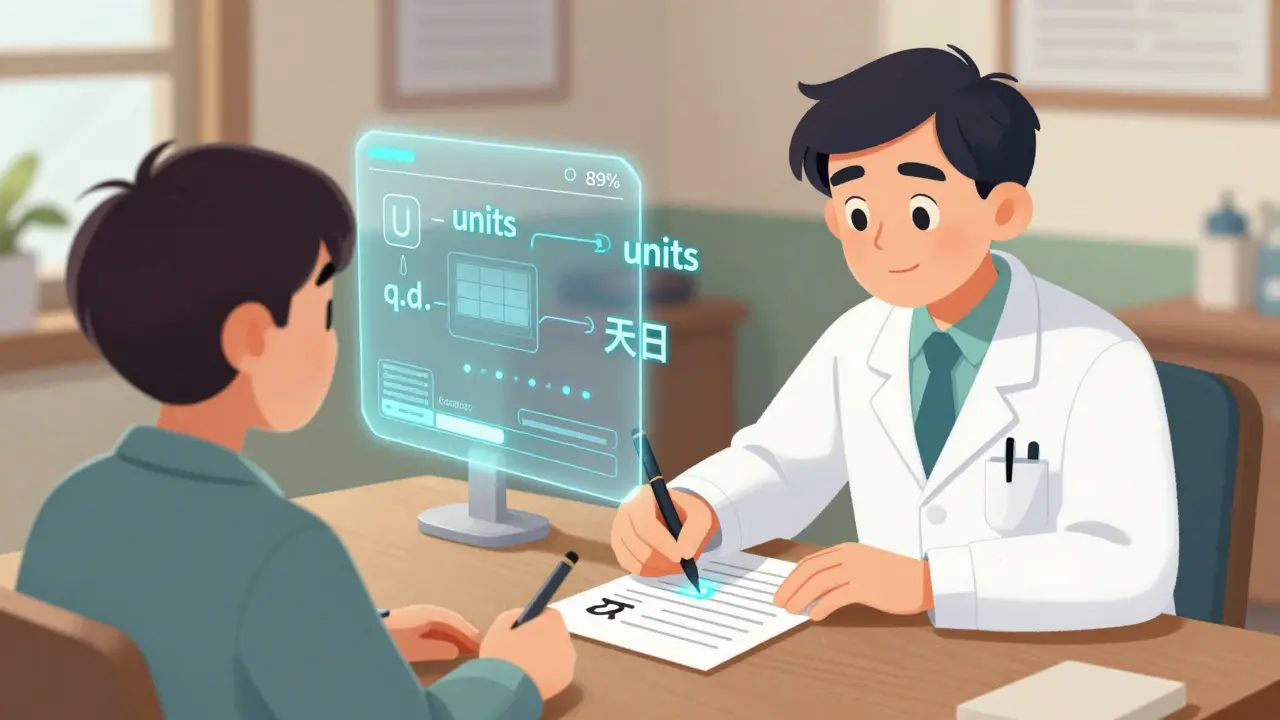
By 2030, handwritten prescriptions will be rare in wealthy countries. The trend is clear: they’re being phased out. The cost of errors-financial, human, emotional-is too high.But in low-resource settings? The transition is slower. That’s where AI-assisted handwriting recognition is stepping in. Early tools can now read handwritten scripts with 85-92% accuracy. They flag unclear doses, suggest corrections, and even auto-fill drug names. It’s not perfect, but it’s better than guessing.
The goal isn’t just to eliminate bad handwriting. It’s to eliminate preventable harm. Every unreadable script is a chance for someone to get hurt. Every e-prescription is a shield.
What You Can Do
If you’re a patient: Ask. If your prescription looks messy, ask the pharmacist to confirm the drug and dose. Don’t assume they’ve figured it out.If you’re a clinician: Switch. If you’re still writing by hand, consider the cost-not just in time, but in risk. The data doesn’t lie. Electronic prescribing saves lives.
If you’re a policymaker or hospital administrator: Invest. The upfront cost of e-prescribing is nothing compared to the $20 billion U.S. healthcare system loses each year to preventable errors. The return on investment isn’t just financial. It’s human.
Illegible handwriting isn’t just outdated. It’s dangerous. And the solution isn’t complicated. It’s already here.



I've seen this firsthand in rural India. Handwritten scripts are still the norm, and I've watched nurses spend hours on the phone just to clarify a dose. But we're slowly introducing tablet-based prescribing with AI-assisted handwriting recognition. It's not perfect, but it's cut our medication errors by nearly 40% in the last year. Small steps, but they matter.
Everyone deserves safe care, no matter the budget.
E-prescribing is a no-brainer. The system flags interactions I’d never catch on my own. I used to think typing was slower, but now I save time because I don’t have to call back. Alert fatigue? Yeah, it’s real-but you tune it. Filter out the noise. Keep the critical ones. Game changer.
Let’s be real-the whole e-prescribing push was a corporate cash grab masked as patient safety. The vendors lock you in, charge insane fees for updates, and then the system crashes during peak hours. Meanwhile, the FDA and CDC keep pushing mandates while ignoring the fact that 70% of errors come from miscommunication between departments, not handwriting. They’re fixing the wrong problem. The 97% reduction stat? Cherry-picked. They didn’t count the new errors introduced by system glitches. And don’t get me started on how the EHRs force you to document 17 fields just to prescribe aspirin. This isn’t progress. It’s bureaucratic overreach dressed in white coats.
You're all missing the point. The real issue isn't handwriting-it's credentialing. Half the docs writing scripts shouldn't be licensed. Look at the data: 92% of medical students make errors. That's not a system flaw. That's a selection flaw. We're training people who can't write legibly and then blaming the medium. Fix the pipeline. Stop the flood at the source.
I’ve been in this field for 22 years. I’ve seen handwritten scripts, I’ve seen faxed scripts, I’ve seen the first e-prescribing systems that crashed every time you clicked ‘submit.’ And yes, the transition was messy. But let’s not pretend this was just about technology. It was about power. The hospitals and insurers wanted control over prescribing patterns. They wanted to track every pill. They wanted to push formularies. The safety argument? That’s the cover story. The real win? Profit margins improved by 14% in the first three years. The patient safety narrative? It’s convenient. It’s emotionally manipulative. And yes, I’m not saying it’s wrong-but it’s not the whole truth.
E-prescribing is a government overreach. I used to be able to write a script in 10 seconds. Now I’m stuck in a 15-minute digital loop just to order a simple antibiotic. And don’t tell me it’s safer-my cousin got a drug interaction alert for Tylenol and a multivitamin. They blocked it. She had to drive 40 miles to another clinic. This isn’t safety. It’s control. And it’s killing autonomy.
The 80.8% accuracy rate for e-prescriptions? That’s from studies funded by Epic and Cerner. They own the data. They own the metrics. They own the narrative. Meanwhile, the real-world data from VA hospitals shows that after e-prescribing rollout, error rates spiked for 18 months before stabilizing. Why? Because the system was so bad, people started guessing again. And now? The alerts are so loud, they’re ignored. It’s a placebo effect. We’re not fixing safety-we’re just making it look like we are.
I’m a doctor. I switched to e-prescribing in 2019. It saved my life. Literally. I used to get 15-20 calls a day from pharmacists asking what I meant. Now? Zero. I have more time for patients. I sleep better. My error rate dropped to near zero. Yes, the system has flaws. But the alternative? A child overdosing because I wrote a ‘5’ that looked like a ‘9.’ No thanks. This isn’t perfect-but it’s the best thing we’ve done for patient safety in decades.
You all are ignoring the linguistic aspect. Handwritten prescriptions rely on orthographic consistency. The shift to digital eliminates ambiguity in spelling, dosage units, and abbreviations. This is not merely technological-it is epistemological. The act of prescribing becomes a formalized, syntactically constrained linguistic act. The reduction in errors is not incidental-it is a direct result of the imposition of standardized syntax upon a previously chaotic semiotic field. The data confirms it. The resistance? It is fear of linguistic control.
I work in a clinic in Lagos. We still use paper. But we started using a simple app that lets us take a photo of the script and sends it to a pharmacist with AI transcription. It’s not fancy, but it’s cut our errors in half. We don’t need $20K systems. We need low-cost, low-tech solutions that actually work. Tech isn’t the hero-human ingenuity is. Let’s stop pretending we need Silicon Valley to save lives.