
 26
Jan,2026
26
Jan,2026
When someone you love dies, it’s normal to feel broken. You cry. You can’t sleep. You lose interest in everything. But is that grief-or is it depression? Many people assume they’re the same. They’re not. And confusing them can delay the help you actually need.
What grief really looks like
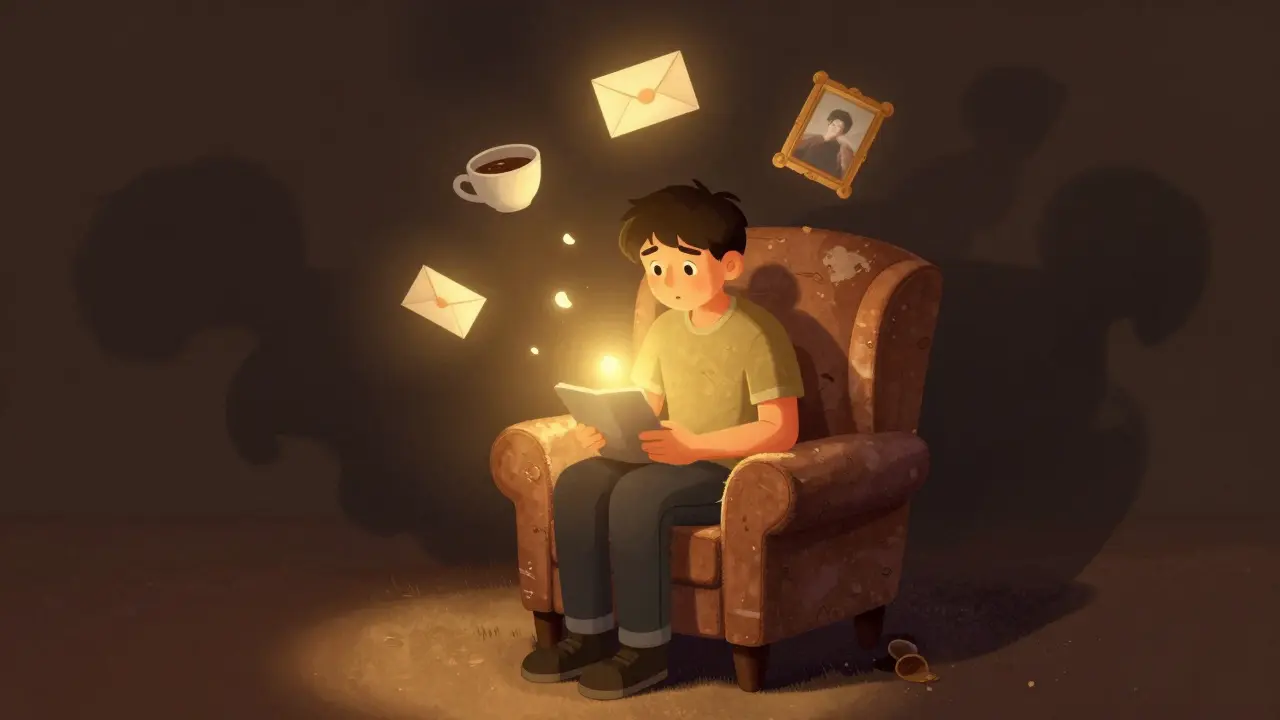
Grief isn’t a disorder. It’s a natural response to loss. It hits in waves. One moment, you’re crying over a photo of your partner. The next, you laugh at a memory of them making coffee the wrong way. That’s not a sign you’re healing too fast. It’s proof you’re still connected to them. The American Psychiatric Association’s DSM-5, updated in 2022, recognizes this as Prolonged Grief Disorder when it becomes disabling. But even then, the core experience remains tied to the person you lost. You miss their voice. You keep checking your phone for their texts. You replay conversations in your head. The pain isn’t random-it’s anchored to them. Studies show that 7-10% of bereaved people develop prolonged grief. For most, the sharp edges soften over six to twelve months. You still feel sad, but you also find moments of peace. You start to enjoy a meal again. You answer the phone without bracing for bad news. That’s grief working its way through you.What depression actually feels like
Depression doesn’t ask for permission. It doesn’t care if you just buried your mother. It doesn’t care if you’re surrounded by people who love you. It just shows up and stays. Major Depressive Disorder, as defined by the DSM-5, means five or more symptoms lasting two weeks or longer: constant low mood, no interest in anything, weight changes, sleep problems, fatigue, feelings of worthlessness, trouble concentrating, and thoughts of death. The key difference? These symptoms aren’t linked to a specific person. They’re about you-your entire sense of self. People with depression often say things like: “I’m a burden.” “Nothing matters.” “I don’t deserve to feel better.” They don’t miss someone. They feel like they’ve lost everything-including their own value. And unlike grief, there are no flashes of warmth. No laughter through tears. Just a heavy, unbroken gray. A 2017 study found that 92.6% of people with depression felt worthless. Only 18.4% of those with prolonged grief did. That’s not a small gap. That’s the difference between mourning a person and losing your place in the world.How to tell them apart
Here’s what sets them apart in real life:- Grief: You feel pain when you think of the person you lost. You still feel joy when you remember them. You want to talk about them. You cry, but you also smile.
- Depression: You feel empty. You don’t want to talk about anyone. You can’t recall happy moments. You feel guilty for not being “strong enough.” You don’t miss the person-you miss the version of yourself that existed before they died.
What happens if you mix them up
Too many people are told, “You’re just depressed,” when what they really need is to be heard. Or worse-they’re prescribed antidepressants for grief, and nothing changes. The National Institute for Health and Care Excellence (NICE) says antidepressants shouldn’t be used for uncomplicated grief. Why? Because 73% of people naturally improve within six months without medication. Giving them pills doesn’t help them process the loss. It just masks the pain. On the flip side, someone with depression who’s told, “It’s just grief,” might go months without treatment. Depression doesn’t fade on its own. Left untreated, it can lead to hospitalization, self-harm, or suicide. A 2016 study tracked nearly 400 bereaved people. Only 2.6% had both prolonged grief and depression. That means most people are dealing with one or the other-not both. Getting the diagnosis right matters.
How to support someone who’s grieving
Don’t say, “They’re in a better place.” Don’t tell them to “stay strong.” Don’t rush them. Say this instead:- “I’m here. I don’t need you to be okay.”
- “Tell me about them. I want to hear their name.”
- “I brought soup. We don’t have to talk.”
How to support someone with depression
Depression lies. It tells them they’re alone. That no one cares. That they’re a burden. You can’t talk them out of it. But you can show up.- “I’m taking you to therapy this week. I’ll sit with you in the waiting room.”
- “Let’s walk for ten minutes. No pressure to talk.”
- “I know you think you’re a burden. I’m not leaving.”
When to see a professional
If grief hasn’t eased after six months-and you’re still unable to function, feel numb, or can’t accept the death-talk to a therapist trained in Complicated Grief Treatment. This is a 16-session therapy developed at Columbia University. It’s not talk therapy. It’s targeted. It helps you rebuild your life without forgetting them. If you’ve had a low mood for two weeks or more, with no connection to a recent loss, and you’re feeling worthless or hopeless-see a doctor. Depression responds well to treatment. The sooner you start, the faster you recover.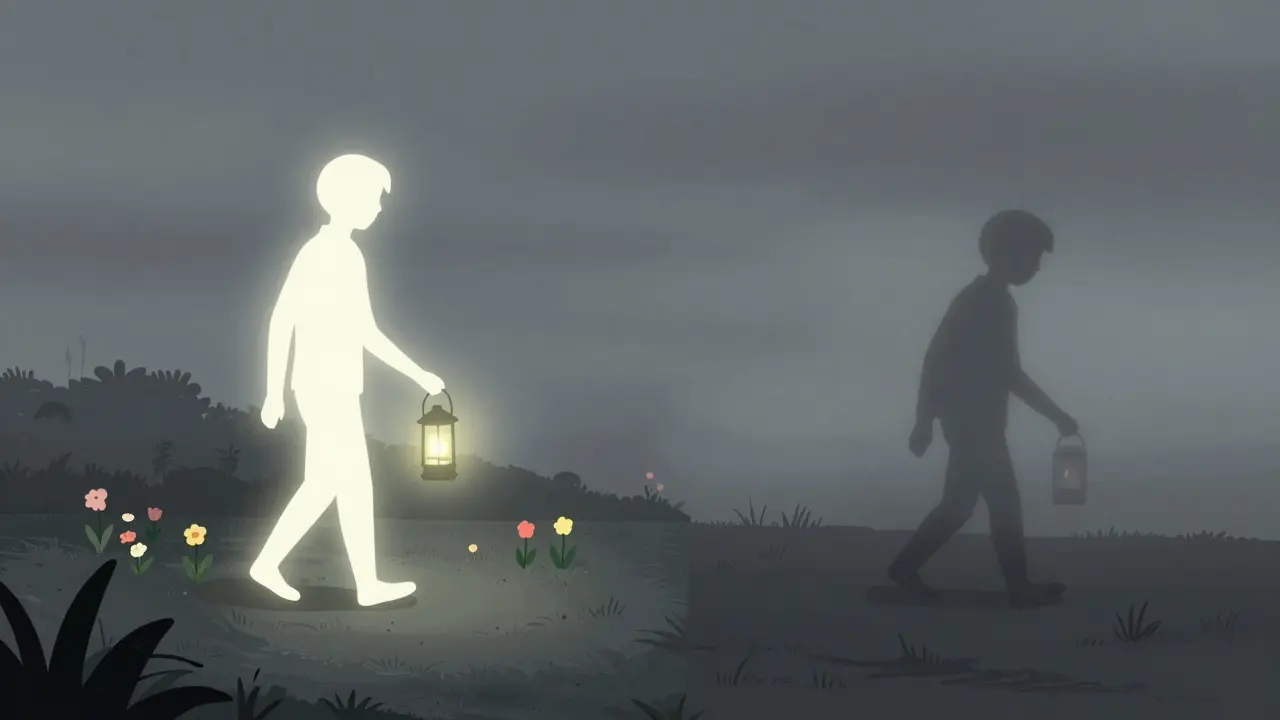
What recovery looks like
Recovery from grief isn’t about forgetting. It’s about carrying them with you. You learn to live with the absence. You find new routines. You start to laugh again-not because you’re over it, but because you’re still alive. Recovery from depression is about reclaiming your sense of self. It’s waking up and not dreading the day. It’s remembering what it felt like to care about things. It’s not about being happy all the time. It’s about having space to feel again. Both are possible. Neither is a weakness. But you need the right support to get there.What’s changing in treatment
The field is finally catching up. In 2023, the NIH spent $47.3 million on grief research-up 28% from 2020. Scientists are now using AI to analyze speech patterns and tell grief apart from depression with nearly 90% accuracy. Apps like GriefShare are helping people process loss with guided exercises. One trial showed a 42% reduction in symptoms after 12 weeks. Meanwhile, depression apps like MoodKit reduced symptoms by over 50%-but only for depression, not grief. Specialized grief counselors are growing in number. In Australia, more than 4,200 professionals are now certified in grief counseling. That’s up from 2,800 in 2019. The demand is real. The help is here. You don’t have to suffer in silence. You don’t have to guess what’s wrong. There are people who know how to help. You just have to ask.Can grief turn into depression?
Yes, but not always. About 14% of bereaved people develop major depression, while 10% develop prolonged grief. Only 2.6% experience both at the same time. Grief doesn’t automatically become depression. But if your sadness becomes constant, you stop connecting with memories of the person, and you feel worthless or hopeless, that’s a sign you may need help for depression.
Is it normal to feel guilty after someone dies?
Yes, guilt is common in grief. You might replay conversations, wish you’d said more, or feel angry at yourself. That’s part of processing loss. But if the guilt becomes overwhelming, includes thoughts like “I’m a bad person” or “I don’t deserve to live,” that’s more typical of depression. Guilt in grief is tied to the loss. Guilt in depression is tied to your worth.
Should I take antidepressants for grief?
No, not for uncomplicated grief. Guidelines from NICE and the APA say antidepressants aren’t recommended for grief because they don’t help you process the loss. They may mask the pain, but they don’t help you heal from it. Most people recover naturally within six to twelve months. If you’re still struggling after that, or if you’re showing signs of depression, then medication may be appropriate.
How long should grief last?
There’s no timeline. Some people feel better in months. Others take years. But if, after six months (or 12 months for children), you still can’t accept the death, feel emotionally numb, avoid reminders, or can’t function in daily life, you may have prolonged grief disorder. That’s treatable with specialized therapy-not just time.
Can I have grief and depression at the same time?
Yes, but it’s rare. Only about 2.6% of bereaved people experience both conditions together. That’s why it’s so important to get a proper diagnosis. Treating both at once requires a different approach than treating one alone. A therapist trained in both grief and depression can help untangle them.
What’s the best therapy for grief?
Complicated Grief Treatment (CGT), developed at Columbia University, is the most effective. It’s a 16-session therapy focused on processing the loss, rebuilding identity, and reconnecting with life. Studies show 70% of people recover after CGT. Talk therapy alone isn’t enough. You need a structured, grief-specific approach.
Is it okay to laugh again after someone dies?
Yes. Laughing doesn’t mean you’ve forgotten them. It means you’re still alive. Grief isn’t about staying sad forever. It’s about learning to carry love without being crushed by it. If you can smile at a memory, that’s not betrayal. That’s healing.
What to do next
If you’re unsure whether you’re grieving or depressed, start here: write down your thoughts for a week. Note when you feel sadness, and what triggers it. Is it tied to memories of the person? Or is it just a constant weight? Show that to a counselor. If you’re supporting someone, don’t wait for them to ask. Say: “I’ve noticed you’ve been quiet. I’m here if you want to talk-or just sit.” Grief and depression aren’t the same. But both need compassion. And both can be healed-with the right help.


lol so now grief is a DSM diagnosis? next theyll say missing your dog is a clinical disorder. they just wanna drug everyone and sell more pills. i lost my dad and i cried for 3 years straight-no therapy, no meds, just whiskey and silence. now they call that ‘prolonged grief disorder’? nah, thats just being human.
thank you for writing this. 💙 i lost my sister last year and everyone kept saying ‘you’ll get over it’-but i didn’t want to get over it. i wanted to carry her with me. this post got it right: grief has light in it. even when it hurts, i still smile when i hear her laugh in my head. you’re not broken if you still miss them.
the distinction between grief and depression is profound, and yet so rarely understood. grief is love with nowhere to go-it’s the echo of a voice you still long to hear. depression is the silence where love used to be, and now even the memory feels like a weight.
the fact that 92.6% of depressed people feel worthless, while only 18.4% of the grieving do-that’s not just data, that’s the difference between mourning a person and losing your soul.
we treat grief like a phase to be fixed, but it’s not. it’s a sacred space. and depression? it’s a prison with no key. one needs witness, the other needs intervention. both need compassion, not diagnosis.
THIS IS WHY WE’RE ALL LOST. THE DSM IS A CORPORATE TOOL. THEY MADE GRIEF A DISORDER SO THEY COULD SELL ANTIDEPRESSANTS. THEY’RE TURNING HUMAN SUFFERING INTO A PRODUCT. YOU THINK THE PHARMA COMPANIES WROTE THIS? NO. THEY OWN THE PEOPLE WHO WROTE IT. LOOK AT THE NIH FUNDING SPEND-$47 MILLION ON GRIEF RESEARCH? THAT’S A COVER FOR DRUG TRIALS. THEY WANT YOU TO THINK YOU NEED HELP. YOU DON’T. YOU NEED TRUTH.
Really appreciate the nuance here. I’ve seen both sides-my mom died last year, and for months I was in that wave pattern: crying over her favorite sweater, then laughing at how she’d burn toast every time. But then I hit a wall-no joy, no motivation, just this hollow dread that had nothing to do with her. That’s when I realized it wasn’t grief anymore. It was depression.
What’s interesting is how the triggers differ. Grief is triggered by reminders-her voice, her smell, her coffee mug. Depression? It’s triggered by nothing. It just… shows up. And it doesn’t care if you’re mourning or not. It just sits there, heavy and silent.
The part about therapy being different for each is spot on. I tried talk therapy for grief-it helped a little, but didn’t fix the numbness. Then I got CBT and sertraline. Took 10 weeks, but I started sleeping again. Not because I forgot her. Because I finally stopped fighting myself.
you say grief has light depression doesnt but what if the light is just denial? what if the laughter is a defense mechanism? you cant just say one is pure and the other is evil. the brain doesnt work like that. also 2.6% both? where did that number come from? citation needed. and why is no one talking about trauma? grief and depression are both symptoms of trauma. stop labeling. start listening. and stop using emoji like you’re a therapist on instagram
Oh please. Grief is just depression with a trigger. You think people who lost someone are somehow ‘special’ and deserve to be sad longer? Newsflash: everyone suffers. Your ‘light in grief’ is just guilt dressed up as love. You’re not healing-you’re clinging. And that’s not noble. That’s unhealthy. Stop romanticizing pain. Get help. Or shut up.
Respected sir/madam, I am deeply moved by the clarity of your exposition on the differential phenomenology of bereavement and depressive states. In the Indian context, where familial duty and ancestral reverence are deeply embedded in cultural frameworks, the Western medicalization of grief presents a paradox. Many of our elders express sorrow through silence, ritual, and prolonged fasting-not as pathology, but as sacred discipline. The DSM criteria, while scientifically rigorous, may not be universally applicable. I respectfully suggest that we must not confuse cultural expression with clinical disorder. Thank you for your thoughtful contribution.
Problems with this article: 1) DSM is a cult. 2) NIH funding is controlled by Big Pharma. 3) AI analyzing speech? That’s surveillance. 4) You’re telling people to see a therapist-like that’s a solution. No one cares. Everyone’s just pretending to heal. This is performative grief. You’re all just performing sadness for likes. I’m not buying it.