
 19
Feb,2026
19
Feb,2026
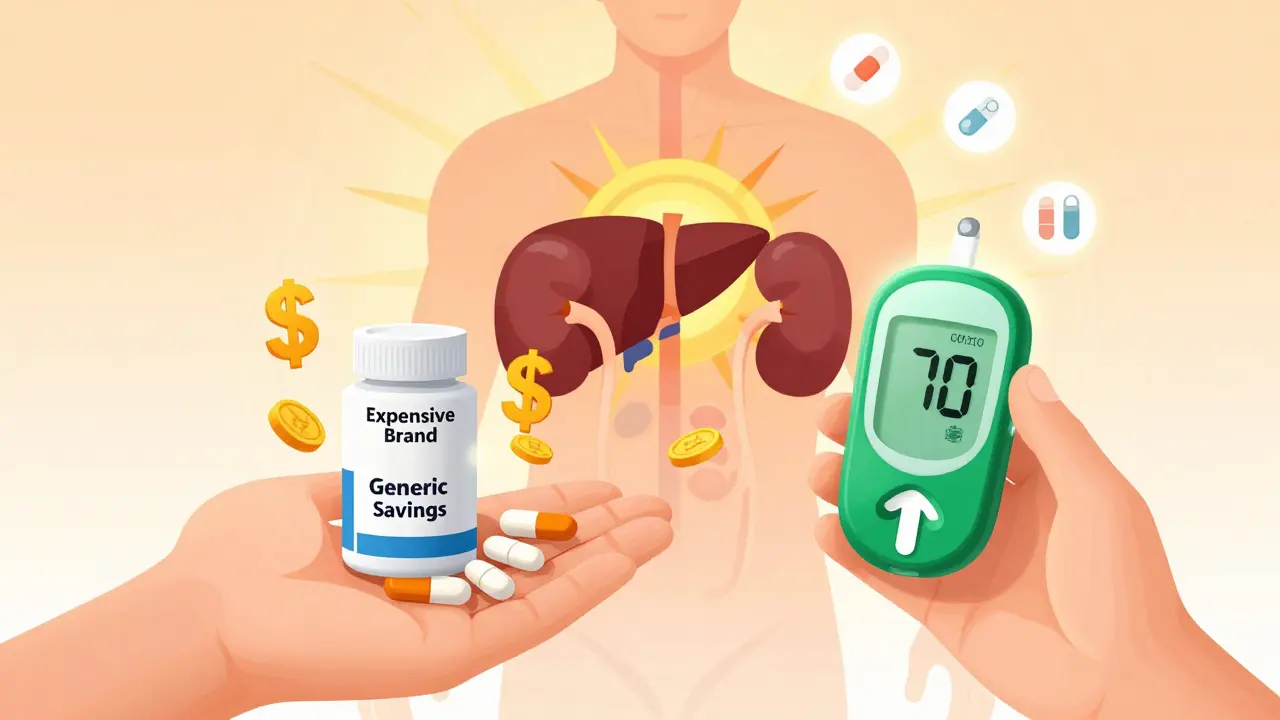
Managing Type 2 diabetes often means taking more than one medication. For many people, that’s not just inconvenient-it’s expensive, confusing, and hard to stick with. That’s where diabetes combination medications come in. These pills bundle two drugs into one, cutting down the number of pills you swallow each day. But here’s the real question: can you switch to a cheaper generic version? And if you do, will it still work?
Why Combination Medications Exist
Type 2 diabetes isn’t caused by one thing. It’s a mix of insulin resistance, poor insulin production, and sometimes even how your liver handles sugar. A single drug rarely fixes all of it. That’s why doctors often start with metformin, then add another medication when blood sugar stays too high. Combination pills make this easier. Instead of taking two or three separate pills, you take one. Studies show this improves adherence by nearly 37%. People who take fewer pills are more likely to stick with their treatment.The most common combinations pair metformin with another drug. Why metformin? Because it’s effective, safe, and cheap. It’s in about 80% of all combination pills. The second drug usually comes from one of three classes:
- DPP-4 inhibitors like sitagliptin (Janumet) or linagliptin (Jentadueto)
- SGLT2 inhibitors like empagliflozin (Synjardy) or dapagliflozin (Xigduo)
- Sulfonylureas like glipizide (Metaglip) or glyburide (Glucovance)
These combinations don’t just add effects-they work together. Metformin reduces liver sugar production. DPP-4 inhibitors help your body make more insulin when needed. SGLT2 inhibitors make your kidneys flush out extra sugar. Together, they lower HbA1c by 1.2% to 1.8% on average. That’s a lot more than what either drug does alone.
Generic Options: What’s Available Now
As of 2026, only 5 out of 25 diabetes combination medications have generic versions. That means most are still brand-name only-and expensive. But the generics we do have? They’re game-changers.Here’s what’s available as a generic:
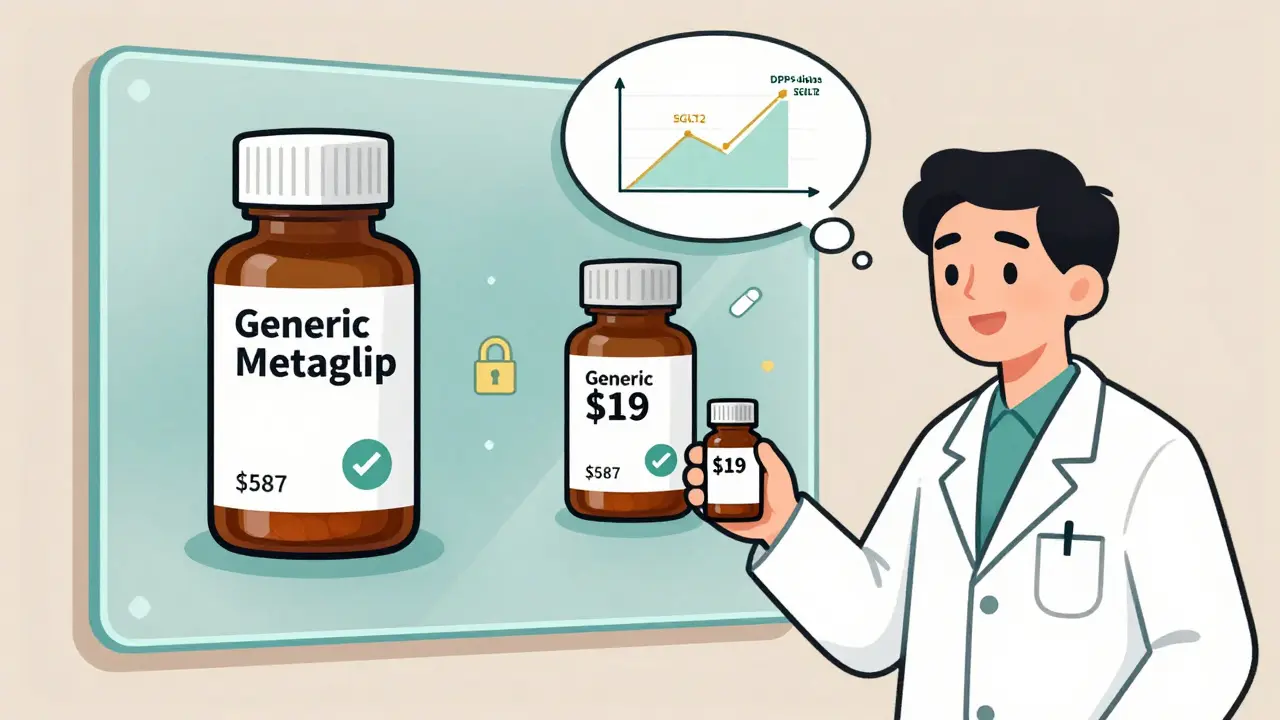
- Metaglip (glipizide + metformin): Generic since 2012. Costs about $19 for 60 tablets. Brand price was over $300.
- Glucovance (glyburide + metformin): Generic since 2010. Around $15 for 60 tablets. Brand cost was $320.
- Jentadueto (linagliptin + metformin): First generic approved in 2023, but not widely available until 2025 due to legal delays.
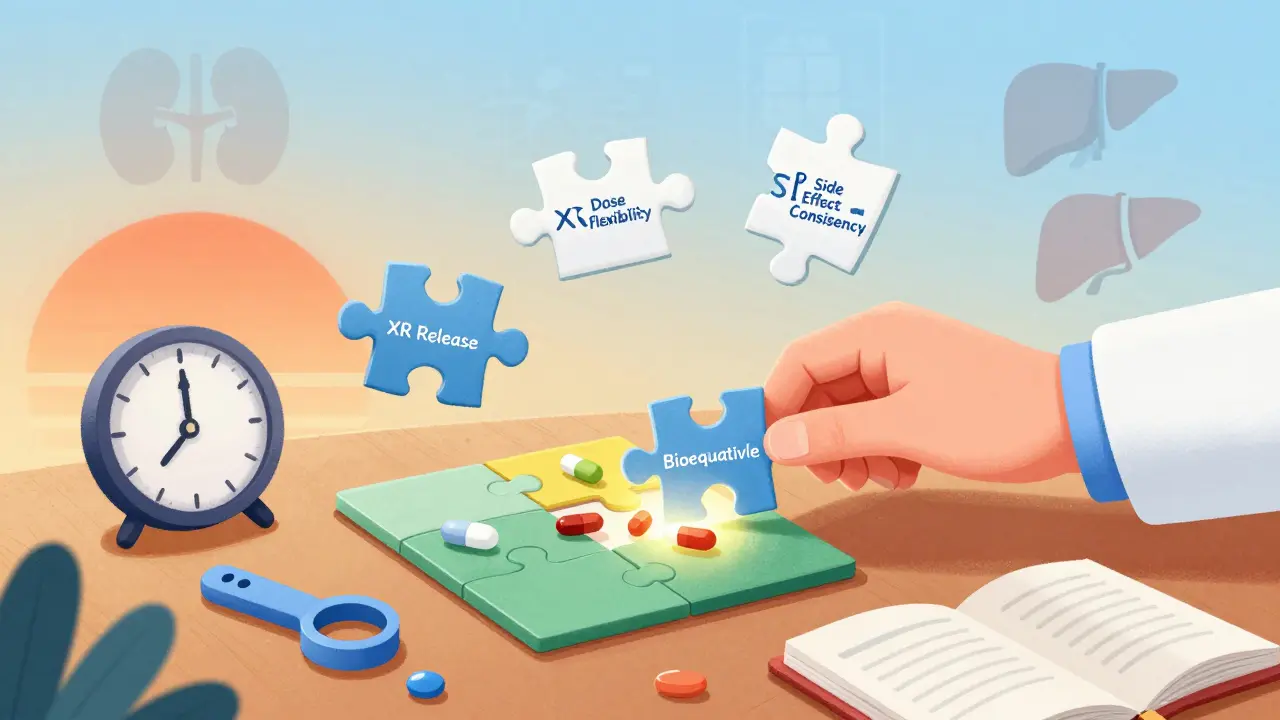
These generics are not just cheaper-they’re just as effective for most people. The FDA requires generics to be bioequivalent: meaning they deliver 80% to 125% of the same amount of drug into your bloodstream as the brand. For many, that’s enough. A 2022 Joslin Diabetes Center survey found that 76% of patients who switched from brand to generic metformin combinations had no noticeable change in blood sugar control.
Where Generics Fall Short
Not all combinations are created equal. The problem with generics isn’t safety-it’s flexibility.First, generics are almost always immediate-release. Brands offer extended-release (XR) versions that release the drug slowly over 24 hours. XR versions are easier on the stomach and often mean fewer side effects like nausea or diarrhea. But generic XR versions? They don’t exist yet for most combinations. If your doctor prescribed Janumet XR, you can’t switch to a generic because there isn’t one.
Second, you can’t adjust doses. A combination pill has fixed amounts. If you need 50 mg of sitagliptin and 1000 mg of metformin, you get that exact ratio. If you need 100 mg of sitagliptin and 500 mg of metformin? You’re stuck. With separate pills, you can fine-tune. With combinations? You can’t.
Third, some patients report differences in side effects. One user on the Diabetes Daily forum described recurrent low blood sugar after switching from brand Glucovance to generic. The glyburide component released differently, and it took weeks to adjust. Pharmacists report that about 12% of patients notice changes in how they feel after switching.
Cost Savings: The Real Advantage
Let’s talk numbers. A brand-name combo like Synjardy (empagliflozin + metformin) costs about $587 for 30 tablets. That’s nearly $20 a pill. No generic exists yet-patents block it until 2026.But if you’re on Metaglip or Glucovance? The generic costs under $20 for a full 60-pill supply. That’s 85-95% cheaper than the brand. For someone paying out-of-pocket, that’s $3000 a year vs. $200. Even with insurance, copays for generics are often $5-$15. For brands? $50-$100.
The savings add up fast. In 2023, generics made up 28% of all combination pills filled-but only 8% of the total spending. That’s because they’re so cheap. The Congressional Budget Office projects that by 2030, generic substitution could cut annual diabetes medication costs for patients from $2,850 to just $420.
Switching to a Generic: What to Do
If your doctor says you’re a good candidate for a generic, here’s how to make the switch safely:- Don’t switch without talking to your doctor. Even if your pharmacy automatically substitutes, ask if it’s right for you.
- Monitor your blood sugar closely. Test 4 times a day for the first 2-4 weeks. Look for patterns: are your numbers higher? More unstable? Are you having more lows?
- Check pill appearance. Generics look different. If your pill suddenly changes color, size, or shape, that’s normal. But if you can’t swallow it, or it feels different, tell your pharmacist.
- Watch for side effects. Nausea, diarrhea, or low blood sugar can happen. If they’re worse than before, call your provider.
- Ask about assistance programs. Even brand-name drugs sometimes offer copay cards. Generic manufacturers rarely do-but you can still ask your pharmacist about patient support.
Many people switch successfully. On Reddit’s r/Diabetes community, 42% of users who switched to generics said they noticed no difference. Another 31% said they had minor changes but could manage them with diet or timing of meals.
What’s Coming Next
The next few years will change the game. Patents for Janumet XR and other DPP-4/metformin combos expire in 2024-2026. That means generics for these popular pills could hit the market soon. If they do, we could see another 10-15% drop in out-of-pocket costs for Type 2 diabetes patients.But newer combos-especially those with SGLT2 or GLP-1 drugs-will stay brand-only for longer. These drugs are more complex to copy, and patents are longer. Don’t expect generics for Ozempic combos anytime soon.
Who Should Avoid Generics
Not everyone should switch. Here’s when you should stick with the brand:- You need an extended-release version.
- Your blood sugar is hard to control and needs fine-tuning.
- You’ve had a bad reaction to a generic in the past.
- You’re on a very specific dose that doesn’t match a generic combo.
If you’re stable, on an older combo like Metaglip or Glucovance, and cost is a problem-switching is usually safe. But always monitor. And always talk to your doctor before making any changes.
Can I switch from a brand-name diabetes combo pill to a generic without my doctor’s approval?
No. Even if your pharmacy substitutes automatically, you should always consult your doctor first. Diabetes medications affect your blood sugar in complex ways, and switching can cause unexpected changes in control or side effects. Your doctor may want you to monitor your levels more closely during the transition.
Are generic diabetes combination pills as effective as brand-name ones?
For most people, yes. The FDA requires generics to deliver the same amount of active drug into your bloodstream as the brand, within a small range (80-125%). Studies show that 70-80% of patients maintain the same blood sugar control after switching. But some people notice differences in side effects or how the pill works-especially if they’re switching from an extended-release version to an immediate-release generic.
Why are some diabetes combo pills still brand-only?
Patents protect the formulas and manufacturing processes of newer combination pills. Drugs like Synjardy (empagliflozin/metformin) and Janumet XR are still under patent until at least 2026. Once those patents expire, generics will become available. Older combos like Metaglip and Glucovance lost patent protection years ago, which is why generics are widely available.
Do generic diabetes pills have different side effects?
Sometimes. While the active ingredients are the same, the inactive ingredients (fillers, coatings, release agents) can differ. These can affect how quickly the drug is absorbed or how it feels in your stomach. Some users report more nausea, different pill size causing swallowing issues, or slight changes in blood sugar patterns after switching. These are usually manageable but should be reported to your doctor.
How can I save money on diabetes combination medications if generics aren’t available?
Even if a generic isn’t available, you can still save. Ask your doctor about switching to a different combo that has a generic option. Use pharmacy discount apps like GoodRx. Many brand manufacturers offer copay cards that reduce your cost to $0-$10 per month. Patient assistance programs through nonprofits or drugmakers may also help if you qualify based on income.

Switched from Janumet to the generic metformin/sitagliptin last year. No difference in my A1c, but my copay dropped from $87 to $12. I didn’t even notice until I checked my bank statement.
Worth it. Just monitor your sugars for the first few weeks-your body might need to adjust, but it’s not scary.
People act like generics are magic, but they’re not. The fillers change everything. I had a 3-week spiral of hypoglycemia after switching from Glucovance to generic. My endo said ‘it’s placebo’-but my glucose monitor doesn’t lie.
The assertion that generics are bioequivalent within an 80-125% range is technically accurate, yet misleading. That margin permits a 45% variance in systemic exposure-far beyond what is clinically inert for pharmacokinetic-sensitive populations. Moreover, the absence of extended-release formulations in generic iterations fundamentally compromises therapeutic continuity, particularly in patients with erratic gastric motility.
You’re risking your life for $20. That’s not smart. That’s stupid.
Yessss! America needs cheaper meds 😎💊
Generic = win. Brand names = Big Pharma scam.
Switch now. Your wallet will thank you. 🇺🇸
I’ve been on Metaglip generic for 4 years. Zero issues. I used to panic every time the pill looked different-turns out, that’s just how generics work. The FDA doesn’t mess around. If your doctor says it’s safe, trust the science. And save your money for something better than a $600 insulin co-pay.
Let’s be real-most people who say generics don’t work are just attached to the pill color. I had a patient switch from Janumet to generic and swear it ‘felt different.’ Turned out he’d been taking it with coffee instead of water. The drug didn’t change. His habits did.
Also, the ‘side effects’? Usually just GI stuff. Drink water. Eat food. Wait 3 days. Problem solved. Not every difference is a failure.
My dad switched to generic Glucovance after Medicare denied the brand. He was terrified. But within 2 weeks, his numbers were better than before. He says the pills are ‘easier to swallow’ now. No idea why, but hey-glad it worked.
Point is: don’t assume the worst. Give it time. Talk to your pharmacist. They’re the real MVPs.
India here. We use generics for everything here-diabetes, BP, even heart med. No problem. US people overthink it too much. If FDA says same, it is same. My cousin switched and saved 90%. He’s happy. You can too. 😊
While cost savings are undeniably compelling, one must not overlook the importance of individualized therapeutic response. The pharmacodynamic variability inherent in generic formulations-particularly with drugs exhibiting narrow therapeutic indices-demands careful, clinically guided transition protocols. Patient education, longitudinal monitoring, and provider communication remain non-negotiable pillars of safe substitution.
Always, always, always talk to your doctor before switching. I had a friend who switched without telling anyone-and ended up in the ER with a low-blood-sugar episode. It was avoidable. Please don’t be that person. Your health isn’t a gamble.
Oh wow, a 76% success rate? That’s… actually impressive. I thought generics were just ‘placebo pills with cheaper packaging.’ Turns out, Big Pharma’s marketing is what’s expensive-not the drug.
Also, why does it take 15 years for generics to get approved? Someone’s got a yacht. 🤷♂️
I switched to generic Metaglip and it was a nightmare. My stomach felt like it was full of rocks. I couldn’t sleep. I had to go back to the brand. My pharmacist said, ‘It’s just the coating.’ But the coating was the whole problem. I spent $300 more a year, but I sleep better. And I don’t have to Google ‘is this a heart attack?’ every time I feel a burp. Some things aren’t worth saving money on. Your body is one of them.
In Japan, we have generics for nearly all combination therapies. The government mandates bioequivalence testing beyond FDA standards. And yet, here in the U.S., we treat generic substitution like a risky gamble. It’s not. It’s policy failure. The real scandal isn’t the cost-it’s that we’ve made a scientifically sound solution seem dangerous.