
 21
Mar,2026
21
Mar,2026
TCA Therapeutic Level Calculator
Therapeutic Drug Monitoring Calculator
Tricyclic antidepressants (TCAs) like amitriptyline and nortriptyline were among the first effective treatments for depression. But they come with a hidden danger: a narrow therapeutic index. That means the difference between a helpful dose and a toxic one is razor-thin. A single extra pill can push someone into life-threatening territory. That’s why therapeutic drug monitoring (TDM) isn’t just helpful-it’s often lifesaving.
Why TCAs Are So Dangerous
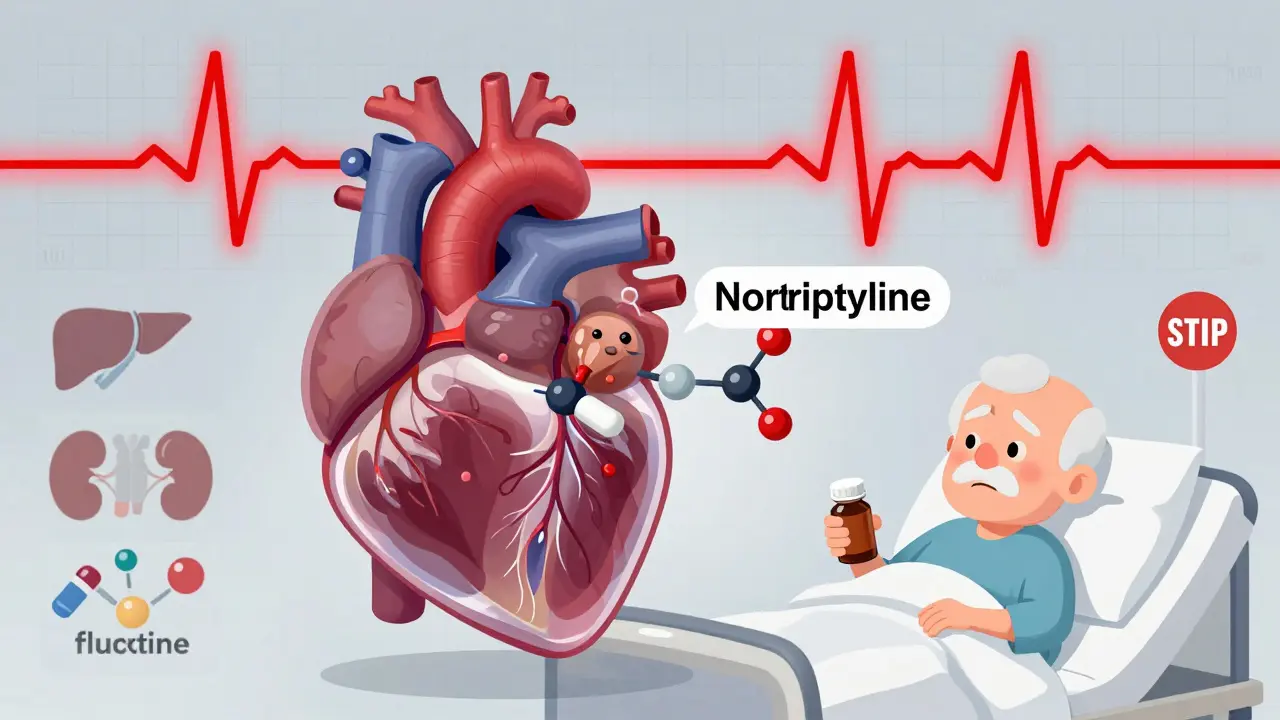
TCAs work by boosting serotonin and norepinephrine in the brain. But they don’t stop there. At higher doses, they start blocking other receptors across the body-heart muscle cells, nerve endings, even saliva glands. This is why overdose symptoms aren’t just about feeling drowsy. They include dry mouth, blurred vision, fast heartbeat, confusion, seizures, and worst of all, irregular heart rhythms that can stop the heart.
Studies show that TCA overdose has a fatality rate 5 to 10 times higher than SSRIs like fluoxetine. Even when taken as prescribed, some people accidentally cross into toxic territory. Elderly patients, those with liver issues, or those on other medications are especially at risk. In Melbourne, the Victorian Poisons Information Centre handles hundreds of TCA-related cases each year, and about two-thirds of the most serious ones happened because blood levels weren’t checked.
What Therapeutic Drug Monitoring Actually Measures
TDM for TCAs isn’t just about checking a number. It’s about understanding the full picture. Blood tests measure the exact concentration of the drug-and its metabolites-in your system. For example:
- Amitriptyline: 80-200 ng/mL is the safe zone
- Nortriptyline: 50-150 ng/mL
- Desipramine: 100-300 ng/mL
Anything above 500 ng/mL is considered toxic. But here’s the catch: some people feel fine at 190 ng/mL, while others start having heart problems at 160. That’s why TDM isn’t just about the number-it’s about the number plus what’s happening in the body.
Doctors also look at ECG results. A QRS complex longer than 100 milliseconds on an electrocardiogram is a red flag-even if blood levels look okay. This is because TCAs block sodium channels in the heart, slowing electrical signals. That delay can spiral into dangerous arrhythmias like torsades de pointes.
When and How Blood Tests Are Done
You can’t just walk into a lab and get a TCA test anytime. Timing matters.
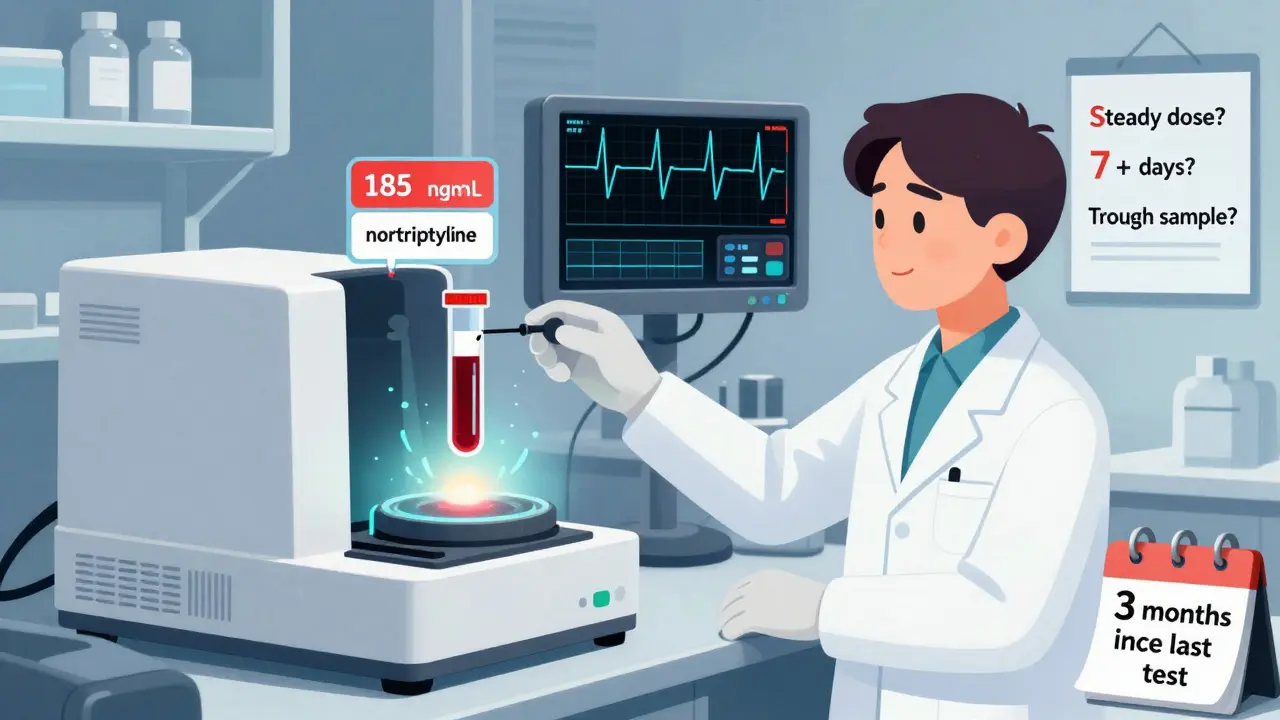
First, you need to be on a steady dose for at least 5 to 7 days. That’s how long it takes for the drug to reach a stable level in your blood. Then, the blood sample must be taken right before your next dose-that’s called the trough level. If you take the test too soon after a dose, you’ll get a falsely high reading and might get your dose lowered unnecessarily.
Most labs use high-performance liquid chromatography (HPLC) or mass spectrometry to measure concentrations. Results usually take 24 to 48 hours. That delay is one reason why TDM isn’t used for emergencies. If someone overdoses, treatment starts immediately with sodium bicarbonate and cardiac monitoring-no waiting for lab results.
Who Benefits Most from TDM
Not everyone on TCAs needs regular blood tests. But certain groups absolutely do:
- Elderly patients: Over 40% of TCA users are over 65. Their livers process drugs slower, and their brains are more sensitive to side effects like confusion and falls.
- Patients with liver or kidney disease: These organs clear TCAs. If they’re not working well, the drug builds up.
- People on multiple medications: Many common drugs-like fluoxetine, bupropion, or even some antibiotics-block the enzymes (CYP2D6, CYP2C19) that break down TCAs. This can cause levels to spike 20 to 30 times higher than normal.
- Those with treatment-resistant depression: TCAs are still one of the most effective options when SSRIs fail. But because they’re so risky, monitoring is non-negotiable.
At Johns Hopkins, one elderly patient had nortriptyline levels at 185 ng/mL-above the 150 ng/mL ceiling. He wasn’t showing symptoms yet. But his doctor lowered the dose based on TDM. A week later, his ECG showed improved heart rhythm. He avoided ICU admission.
The Limits of TDM
TDM isn’t perfect. For one, results aren’t instant. If a patient feels worse, you can’t adjust their dose the same day. Also, not all labs use the same reference ranges. One lab might say 150 ng/mL is toxic; another says 180. That can lead to confusion.
And here’s another problem: doctors sometimes order the test but forget to include key details-like what dose the patient is on, or whether they took their last pill on time. The German Commission for Pharmacological Therapeutic Monitoring found that nearly a third of TDM requests were missing this basic info. That leads to wrong dose changes.
Also, TDM doesn’t tell you how the patient feels. Someone might have perfect blood levels but still be exhausted, dizzy, or confused. That’s why clinical judgment always comes first. TDM is a tool-not a replacement for listening to the patient.
New Tech Is Making TDM Better
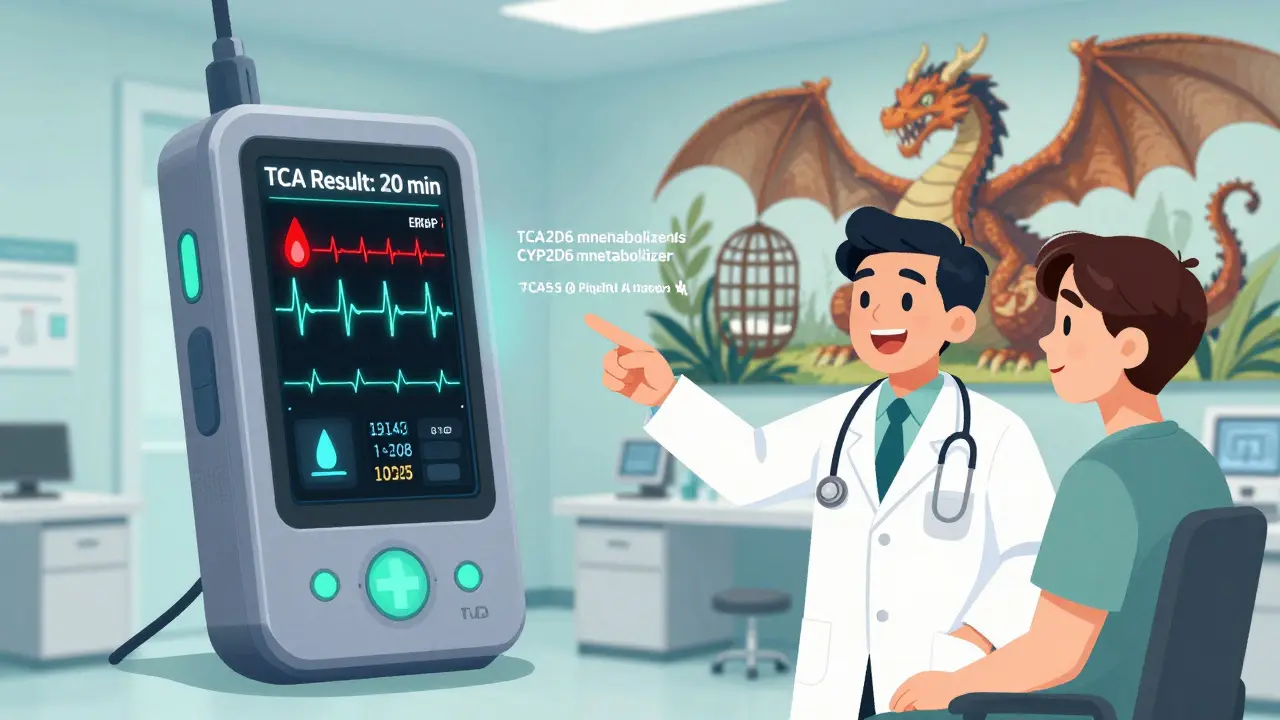
There’s exciting progress on the horizon. Siemens Healthineers recently rolled out a pilot handheld device in Europe that gives TCA results in 20 minutes-not two days. That’s huge for outpatient clinics.
AI tools like PsychX Analytics, cleared by the FDA in 2022, now combine blood levels, ECG data, and symptoms to predict toxicity risk. One system flagged a patient at risk of cardiac arrest even though their amitriptyline level was technically in the therapeutic range. The doctor lowered the dose. The patient stayed out of the hospital.
And now, more clinics are combining TDM with genetic testing. About a third of U.S. academic centers now check for CYP2D6 and CYP2C19 gene variants before prescribing TCAs. This helps predict who will metabolize the drug slowly (and risk toxicity) versus who will clear it too fast (and need higher doses). Mayo Clinic reports this cuts the time to find the right dose by 40%.
The Bottom Line
TCAs are powerful. They work when other antidepressants don’t. But they’re not safe by default. Without monitoring, they’re a ticking time bomb.
Therapeutic drug monitoring turns guesswork into precision. It’s not about avoiding TCAs-it’s about using them safely. For elderly patients, those on multiple meds, or people with chronic pain and depression, TDM can mean the difference between relief and tragedy.
The American Psychiatric Association calls TDM for TCAs a Level 1 recommendation-meaning it’s backed by strong evidence. Experts like Dr. Christoph Hiemke say it’s indispensable. And in Melbourne, where the Poisons Centre sees the aftermath of poor monitoring, the message is clear: if you’re on a TCA, get your levels checked. Don’t wait until it’s too late.
How often should TCA blood levels be checked?
The first test should be done after 5-7 days of stable dosing to confirm steady-state levels. After that, repeat every 3-6 months if the dose is stable and the patient is doing well. More frequent checks are needed after a dose change, if new medications are started, or if side effects appear. Elderly patients or those with liver disease may need testing every 2-3 months.
Can TDM prevent overdose in people taking TCAs as prescribed?
Yes. Studies show that using TDM reduces hospitalization risk by 35% compared to adjusting doses based on symptoms alone. Many overdoses happen because patients are unaware they’re reaching toxic levels-especially when they’re on other drugs that interfere with metabolism. TDM catches these hidden risks before symptoms appear.
Why are TCAs still used if SSRIs are safer?
TCAs are more effective for certain conditions: treatment-resistant depression, chronic nerve pain (like diabetic neuropathy), and insomnia linked to depression. They also work faster in some patients. While SSRIs are safer for first-time use, TCAs remain a vital tool for patients who don’t respond to other options-especially when monitored closely.
What should I do if I feel worse while on a TCA?
Don’t stop taking it suddenly. Contact your doctor right away. Symptoms like confusion, fast heartbeat, blurred vision, or muscle stiffness could signal toxicity. Your doctor may order a blood test and ECG. Even if you feel fine, if you’re on other medications or over 65, ask about getting your levels checked-even if you’ve been on the same dose for months.
Is TDM covered by insurance?
In Australia, Medicare covers TDM for TCAs when ordered by a specialist for patients at high risk of toxicity. In the U.S., coverage varies by insurer, but most plans cover it for elderly patients, those on multiple drugs, or those with a history of adverse reactions. The cost ranges from $150 to $250 per test. Always check with your provider and ask if prior authorization is needed.

TDM for TCAs is one of those things that seems obvious once you know about it. I’ve seen patients crash because no one checked levels. Simple blood test could’ve saved a lot of trouble. Glad it’s getting more attention.
Nortriptyline at 185 ng/mL is dangerously close to the edge. My mom was on it for years and never got tested. She’s fine now, but lucky doesn’t mean safe.
I work in a clinic that just started doing TDM routinely for anyone over 60 on TCAs. We’ve caught 3 near-toxic cases already. One guy was on fluoxetine and didn’t even know they interacted. Game changer.
TDM... really? 😴
The stakes here are not merely clinical-they are existential. A single unmonitored dose can extinguish a life that might have otherwise found peace. This is not medicine. This is moral responsibility.
i just read this whole thing and honestly i didn’t know tcas were this dangerous. like i thought they were just old school but turns out they’re basically landmines if you don’t check your levels. my uncle was on one for 15 years and never got tested. he’s fine but... wow. maybe we should all get checked if we’re on them. also i love that new handheld device thing. 20 mins? that’s wild.
If you’re not getting TDM, you’re gambling with your life. No excuses.
Oh look, another ‘science is magic’ post where we pretend doctors didn’t know this in the 80s. TDM? Groundbreaking. Next you’ll tell us we should wash our hands before surgery.
TDM is expensive and not always accurate. Some patients get fine results but still feel awful. Doctors rely too much on numbers and forget the person.
Let me break this down for you real quick. TCAs are potent. They work. But they’re not toys. Every single person on them-especially if they’re on other meds, over 60, or have liver issues-needs their levels checked. Not ‘maybe.’ Not ‘if you feel like it.’ EVERY SINGLE TIME. And yes, that handheld device? It’s the future. Stop waiting for someone to die before you act. This isn’t rocket science. It’s basic pharmacology. Get it done.
This is why I love modern psychiatry-science meeting real-world care. TDM isn’t about being paranoid, it’s about being smart. I’ve had patients go from suicidal to stable because we caught their levels creeping up. No drama. Just data. And now with genetic testing? Even better. You’re not just treating depression-you’re protecting their whole body. That’s powerful.
USA best health care 🇺🇸 even if you're poor you can get TDM! 🤘 no one else does this like us! 🚀