
Zyban: What It Is, How It Works, and What You Need to Know
When you hear Zyban, a brand-name version of the antidepressant bupropion used primarily to help people stop smoking. Also known as bupropion, it doesn’t contain nicotine but still targets the brain’s reward system to reduce cravings and withdrawal symptoms. Many people assume quitting smoking is just about willpower. But for most, it’s a chemical battle — and Zyban helps tip the scales.
Zyban works differently than nicotine patches or gum. Instead of replacing nicotine, it changes how your brain responds to it. It increases dopamine and norepinephrine levels, two chemicals that drop when you stop smoking. That’s why people on Zyban often feel less anxious, less irritable, and less tempted to light up. It’s also the same drug used under the name Wellbutrin for depression, but the dosing and timing for quitting smoking are specific. You don’t take it right away — you start it one to two weeks before your quit date so it builds up in your system.
It’s not for everyone. If you’ve had seizures, an eating disorder, or are on certain other meds, Zyban could be risky. Side effects like dry mouth, trouble sleeping, or dizziness are common, but most people tolerate it fine. What’s interesting is how often it shows up in discussions about bupropion, a non-nicotine smoking cessation aid with dual use in depression and addiction and smoking cessation, the process of stopping tobacco use, often requiring behavioral and pharmacological support. You’ll find posts here that dig into how drugs like Zyban interact with other medications, why some people respond better than others, and how it compares to newer options like varenicline. There’s also real talk about what happens when you mix it with alcohol or antidepressants — something the FDA has flagged as a concern.
What you won’t find here are fluff pieces or ads for online pharmacies. Instead, you’ll get straight answers based on real studies and clinical experience — like how Zyban affects sleep, whether it helps with weight gain after quitting, and why some people still relapse even while taking it. The posts below cover the science behind it, the real-life trade-offs, and the practical steps to use it safely. Whether you’re thinking about trying it, already on it, or just curious why it works for some and not others, you’ll find something useful here.
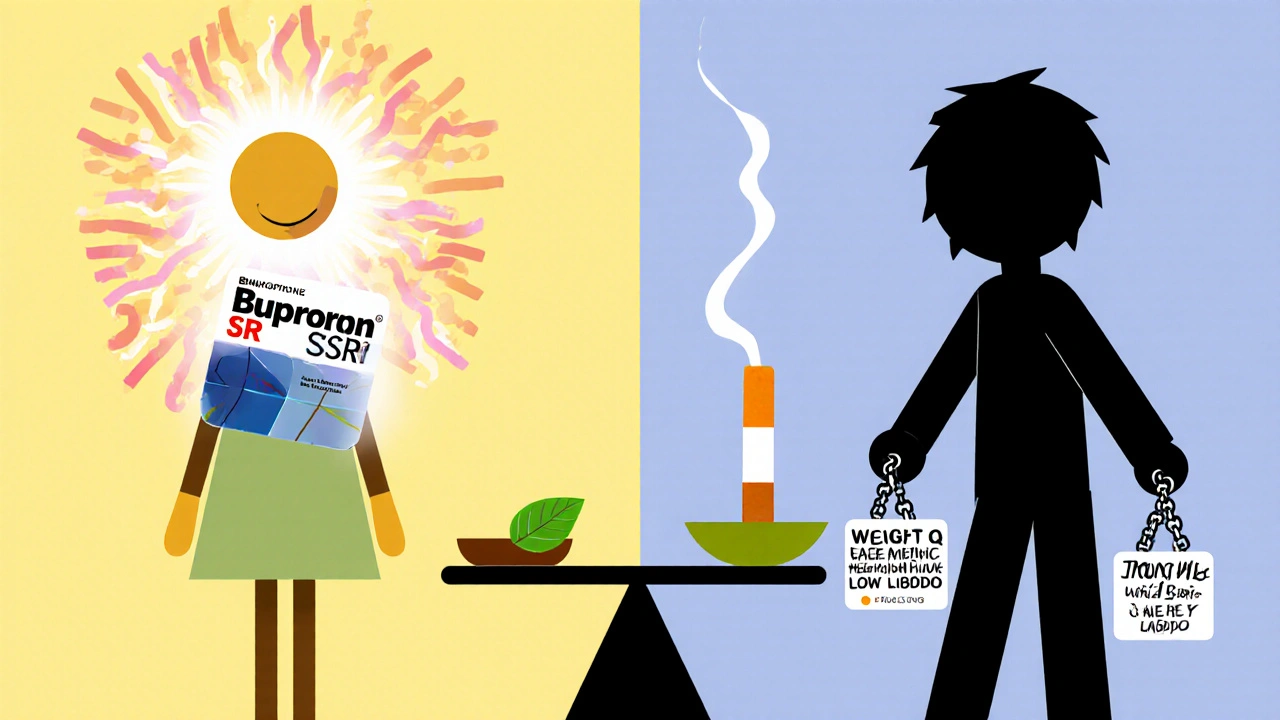
Compare Bupron SR (Bupropion) with Alternatives for Depression and Smoking Cessation
Compare Bupron SR (bupropion) with alternatives like SSRIs, SNRIs, and varenicline for depression and smoking cessation. Learn which works best for energy, weight, and quitting smoking in Australia.
View more