
Travel with Insulin: What You Need to Know Before You Go
When you travel with insulin, a life-saving medication for people with diabetes that must be kept at stable temperatures to remain effective. Also known as insulin therapy, it’s not just a pill you pop—it’s a delicate biological tool that can fail if mishandled. Millions of people with diabetes fly, drive, or hike every year, and most do it without a hitch—if they know the basics.
One big mistake? Storing insulin in checked luggage. The cargo hold can drop below freezing, turning your vial into a frozen brick. Or worse, leave it in a hot car while running errands—heat breaks down the protein structure, and suddenly your blood sugar spikes for no reason. Insulin storage, the practice of keeping insulin at 36°F to 46°F when unopened, and below 86°F once in use. That’s why a small insulated bag with a cool pack is non-negotiable. You wouldn’t trust your phone to survive a desert without a case—why risk your insulin?
Then there’s insulin travel tips, practical steps to avoid delays, confiscation, or confusion at security checkpoints. TSA and international airports have clear rules: you can bring insulin, syringes, pens, and glucose tabs through security, but you must declare them. Keep your prescription or a doctor’s note handy—especially when crossing borders. Some countries require a letter in their language. Don’t wait until you’re at the gate to find out. And always carry twice as much as you think you’ll need. Time zones change your schedule. Delays happen. Your body doesn’t care about your itinerary.
What about airport scanners? Will they ruin your insulin? No. X-rays and metal detectors won’t harm it. But don’t let it go through the full-body scanner if you’re using an insulin pump—ask for a hand search. Same goes for your glucose monitor. Some people panic and hide their supplies, but that’s riskier than being upfront. Security officers see insulin every day. They’re trained to handle it.
And don’t forget about time zones. If you’re on a long-haul flight, your insulin schedule gets messy. Do you take your evening dose before takeoff or after landing? Most endocrinologists recommend sticking to your home time zone until you’ve adjusted—especially if you’re on basal-bolus therapy. Use your phone’s alarm to remind you, even if it’s 3 a.m. local time. Your pancreas doesn’t know it’s vacation.
Some travelers skip meals because they’re too busy or jet-lagged. That’s dangerous. Low blood sugar doesn’t wait for your flight to board. Pack snacks—granola bars, juice boxes, glucose tabs—right next to your insulin. Keep them in your carry-on, not your purse or coat pocket. If you’re flying internationally, check local regulations on bringing food. Some countries restrict dairy or meat-based snacks.
There’s also diabetes travel, the broader experience of managing diabetes outside your usual environment. It’s not just about insulin. It’s about sleep, stress, activity levels, and access to clean water. A long walk in a new city? Your body might need less insulin. A stressful flight delay? Your liver might pump out extra glucose. You need to be flexible, not rigid.
You’ll find real stories here—how people kept insulin cool during a desert road trip, how one traveler got through customs in Japan with a translated note, how another avoided a hospital stay by packing backup pens in their sock. These aren’t theoretical tips. They’re from people who’ve been there. No fluff. No jargon. Just what works.
Whether you’re flying to Europe, camping in the Rockies, or just heading to the airport for a weekend getaway, you’ve got this. The rules are simple, the tools are simple, and the stakes are high. Get it right, and your trip stays smooth. Get it wrong, and it can turn dangerous fast. Below, you’ll find detailed guides on every step—from packing your bag to handling emergencies abroad.
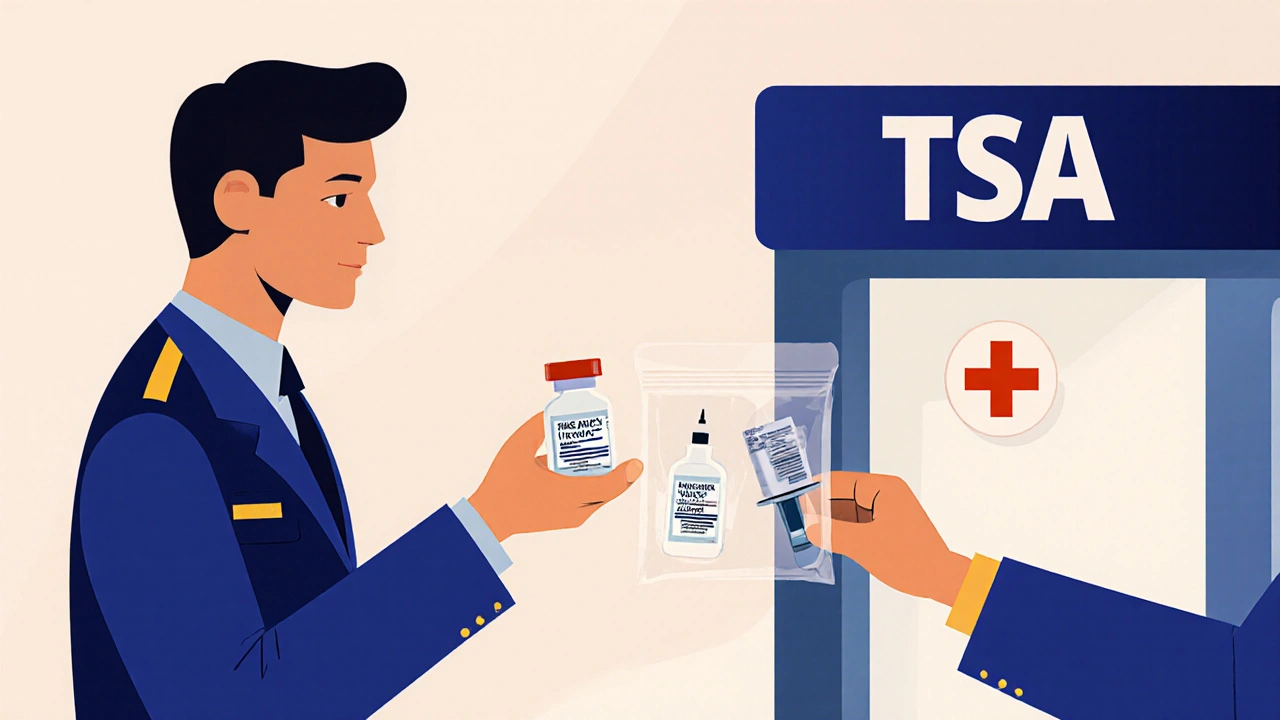
How to Clear Airport Security with Liquid Medications and Supplies
Learn how to pass airport security with liquid medications like insulin, EpiPens, and prescription liquids without delays. Follow TSA’s 2025 rules, packing tips, and expert advice to avoid common mistakes.
View more