
Medication Stickers: What They Are, Why They Matter, and How to Use Them Safely
When you pick up a prescription, you might not notice the small medication stickers, adhesive labels applied by pharmacies to help patients identify and organize their drugs. Also known as pill labels, these stickers are one of the simplest tools for reducing medication errors—and one of the most overlooked. They don’t just say "take twice daily." They tell you which pill is which, when to take it, what to avoid, and sometimes even why it matters. For people juggling five or more meds, these stickers aren’t optional—they’re lifesavers.
Medication stickers tie directly into pharmacy labeling, the system pharmacies use to ensure patients get the right drug, dose, and instructions. But they’re more than just text. Good stickers use color codes, icons, and clear timing cues—like "AM" or "before bed"—to cut through confusion. Think of them as visual reminders designed for busy mornings, tired nights, or memory lapses. They’re especially critical for older adults, caregivers, and anyone managing chronic conditions like diabetes, high blood pressure, or depression. Studies show that clear labeling improves adherence by up to 30%, and reduces dangerous mix-ups with similar-looking pills.
Not all stickers are created equal. Some pharmacies print them by hand, others use automated systems. Some include warnings like "Avoid alcohol" or "May cause dizziness," while others leave it out. That’s why you need to check them every time you get a new prescription. A sticker saying "take with food" might be missing from a new batch of your blood pressure pill—and that could mean your numbers spike. The same goes for drug safety, the practice of preventing harm from medications through clear communication and proper handling. A sticker that says "Do not crush" on a time-release capsule isn’t a suggestion—it’s a safety rule. Crush it, and you risk an overdose.
And then there’s medication adherence, how consistently a patient takes their drugs as prescribed. Stickers help here too. They turn abstract instructions into visible routines. Stick one on your toothbrush holder for morning meds. Put another on the fridge for dinner-time pills. They’re not just labels—they’re behavior triggers. When you forget your pill, you’re not just being lazy. You’re fighting a system that rarely designs for real life. Stickers bridge that gap.
You’ll find plenty of posts here that dig into how meds work, what side effects to watch for, and how to avoid dangerous interactions. But none of that matters if you’re taking the wrong pill at the wrong time. That’s where medication stickers come in. They’re the quiet, unsung heroes of safe drug use. Below, you’ll see real examples of how people use them, what happens when they’re missing, and how to make sure yours are doing their job.
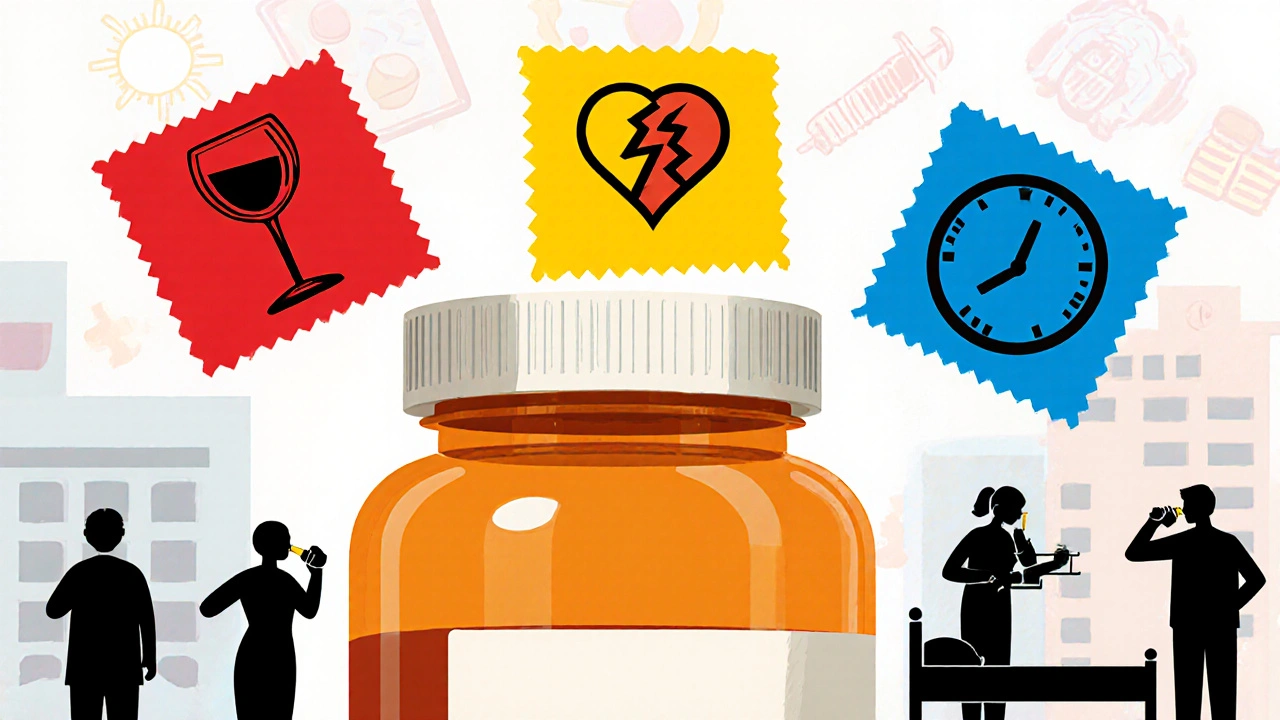
Prescription Label Warnings: What Medication Stickers Really Mean
Prescription label warnings aren't just fine print-they're life-saving instructions. Learn what the colors, symbols, and phrases on your medication stickers really mean, and how to avoid dangerous mistakes.
View more