
Market Exclusivity: How Drug Patents Shape Access and Prices
When a drug company launches a new medicine, market exclusivity, the period during which only the original manufacturer can sell a drug without competition. Also known as drug patent protection, it’s the legal shield that lets companies recoup billions in research costs before generics appear. This isn’t just a corporate perk—it directly affects how much you pay, when you can get cheaper versions, and even which treatments your doctor can prescribe.
Market exclusivity isn’t just about patents. The FDA, the U.S. agency that approves drugs and monitors their safety and availability also grants data exclusivity—meaning competitors can’t copy clinical trial data to speed up their own approvals. For complex drugs like biologics, this can mean 12 years without generics. Meanwhile, generic drugs, lower-cost versions of brand-name medicines that must prove they work the same way can’t hit the market until those clocks run out. That’s why some medications stay expensive for over a decade, even after the original patent expires.
But here’s the catch: market exclusivity isn’t always fair. Some companies stretch it by making tiny changes to a drug—like switching from a pill to a liquid—and get new exclusivity periods. Others file dozens of secondary patents just to delay generics. That’s why posts on this page dig into real cases: how market exclusivity blocks access to affordable bupropion, why complex generics like inhalers struggle to get approved, and how drug pricing stays high even when science says it shouldn’t. You’ll find guides on how to spot when exclusivity is being abused, what to ask your pharmacist, and how to find legal alternatives before the brand name drops in price.
What you’ll see here isn’t theory. It’s real-world impact: patients waiting years for cheaper meds, pharmacies juggling limited stock, and doctors choosing between cost and coverage. These aren’t abstract policy debates—they’re daily decisions that shape your health. Below, you’ll find clear breakdowns of how exclusivity affects everything from HIV meds to statins, birth control to painkillers. No fluff. Just facts you can use.
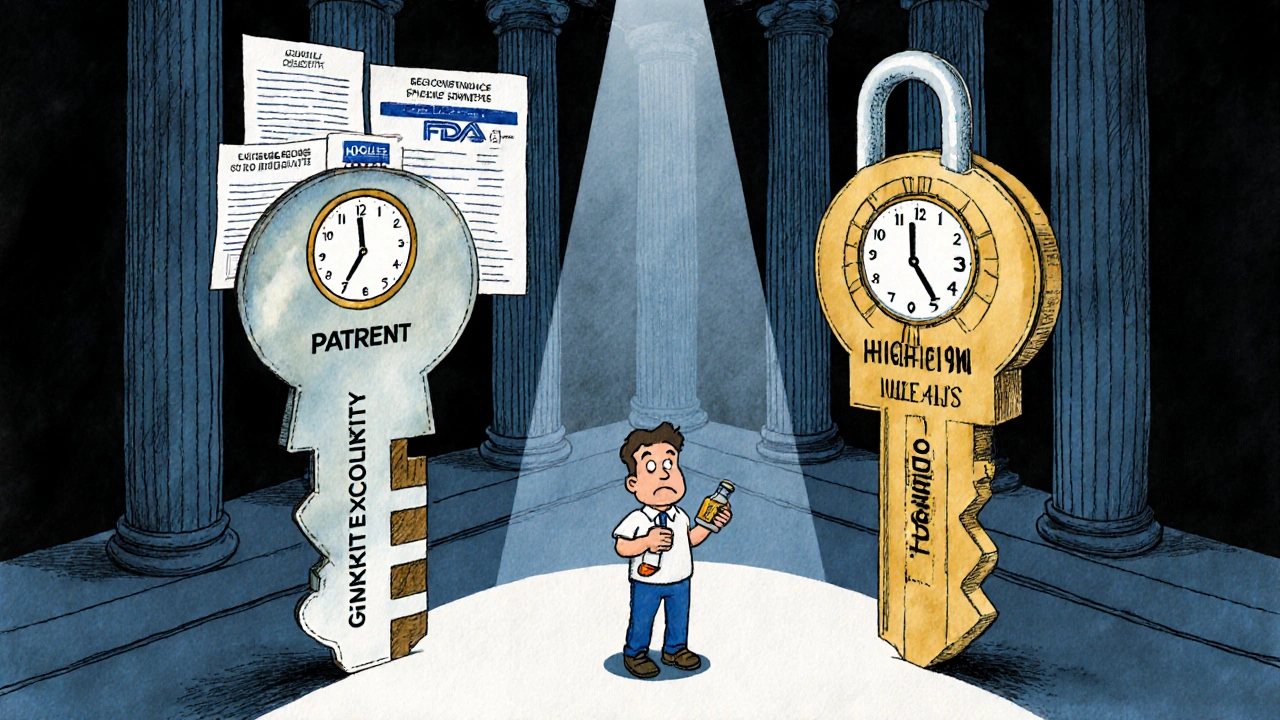
Patent Exclusivity vs Market Exclusivity: What’s the Real Difference for Drug Prices?
Patent exclusivity and market exclusivity are two different legal tools that protect brand-name drugs. One comes from the patent office, the other from the FDA. Understanding the difference explains why some drugs stay expensive long after patents expire.
View more