
Iron Therapy for CKD: What You Need to Know About Treating Anemia in Kidney Disease
When your kidneys fail, they stop making enough erythropoietin, a hormone that tells your bone marrow to make red blood cells. This leads to chronic kidney disease anemia, a common and serious condition where low red blood cell counts cause fatigue, dizziness, and shortness of breath. Without treatment, this isn’t just about feeling tired—it strains your heart and speeds up kidney damage. iron therapy CKD, the targeted use of iron supplements to rebuild red blood cell production, is often the first and most critical step in fixing this.
Most people with advanced kidney disease can’t absorb enough iron from food, and dialysis removes some iron along with waste. Even if you’re taking erythropoietin-stimulating drugs, your body won’t respond unless you have enough iron. That’s why doctors test your ferritin and transferrin saturation levels—not just hemoglobin. Oral iron pills often don’t cut it for CKD patients; intravenous iron, given during dialysis or as an outpatient infusion, is what actually moves the needle. It’s not magic, but it’s science that works. You don’t need to wait until you’re pale and breathless—early iron treatment can keep you stronger, more active, and out of the hospital.
Some patients worry about side effects. IV iron can cause nausea, muscle cramps, or low blood pressure during infusion, but these are usually mild and manageable. The real risk? Not treating it. Studies show that people with CKD who get timely iron therapy live longer, need fewer blood transfusions, and report better quality of life. It’s not about chasing numbers—it’s about keeping your body working the way it should. And while some posts here cover drug interactions, pharmacy safety, or how to travel with meds, this page focuses on the core issue: getting the right iron into your system when your kidneys can’t help you anymore.
Below, you’ll find real-world advice from people who’ve been there—how to track your iron levels, what to ask your nephrologist, how to handle missed doses, and what alternatives exist if IV iron doesn’t work for you. No fluff. Just what you need to know to take control.
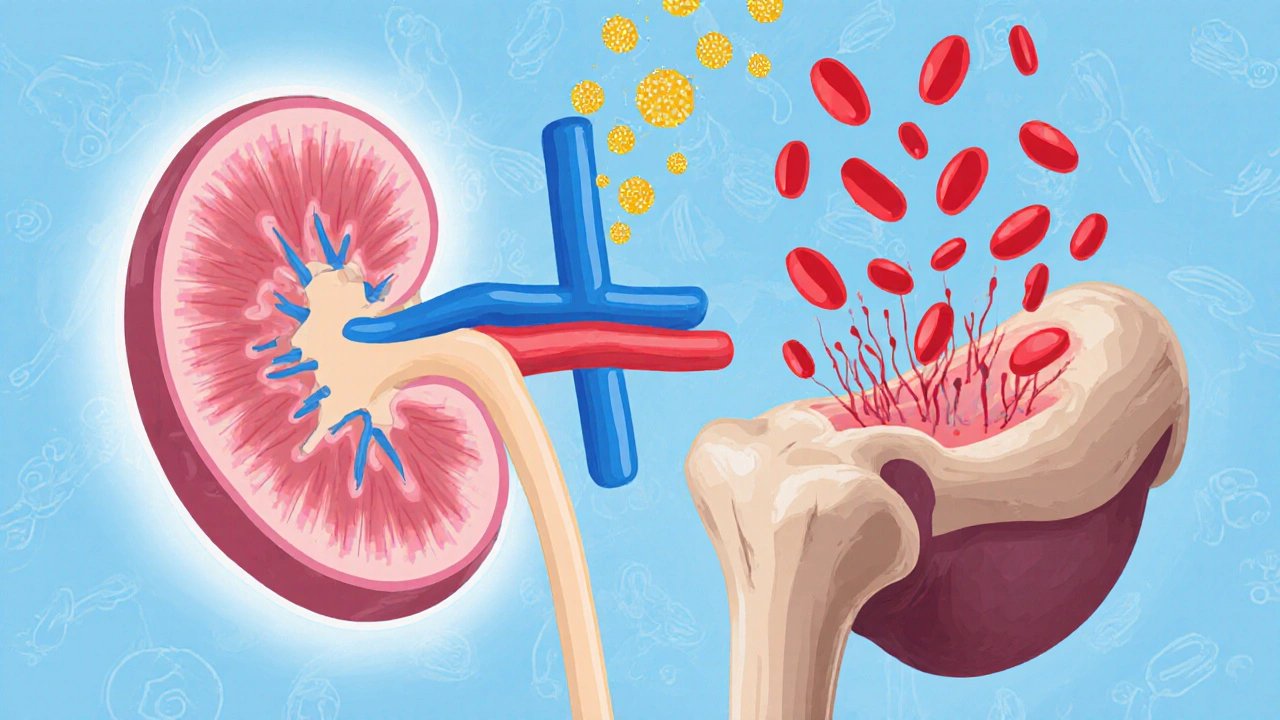
Anemia in Kidney Disease: How Erythropoietin and Iron Therapy Work Together
Anemia in kidney disease is caused by low erythropoietin and poor iron use. Learn how IV iron and ESA therapy work together to safely raise hemoglobin, improve energy, and reduce risks - with updated 2025 guidelines.
View more