
First Aid Kit: Essential Items and What to Keep for Emergencies
When something goes wrong—whether it’s a burn, a deep cut, or a sudden allergic reaction—a first aid kit, a portable collection of medical supplies used to treat minor injuries and stabilize emergencies before professional help arrives. Also known as a emergency medical kit, it’s not just a box of bandages—it’s your first line of defense when seconds count. Many people think a first aid kit is just for cuts and scrapes, but the truth is, it needs to handle far more. Think burns from cooking, allergic reactions from medications, seizures from drug interactions, or even sudden bleeding from a fall. The right kit doesn’t just contain supplies—it prevents small problems from becoming life-threatening ones.
What you keep in your kit depends on your life. If you take blood thinners, you need extra pressure dressings. If you have kids, you need child-safe dosing tools and fever reducers. If you travel, you need waterproof bandages and antiseptic wipes that won’t leak. The wound care, the process of cleaning, protecting, and monitoring injuries to prevent infection and promote healing section of your kit should include sterile gauze, adhesive tape, and non-stick pads—not just generic band-aids. For medication safety, the practice of using drugs correctly to avoid harm, especially when mixing them or using them during emergencies, include a list of your current prescriptions and allergies. That way, if you’re unconscious, someone else can act fast. And don’t forget the trauma response, the immediate actions taken after a serious injury to prevent shock, bleeding, or further damage. A tourniquet isn’t just for soldiers—it’s for anyone who might face a deep laceration on a hiking trail or a kitchen accident.
Most people buy a pre-made kit and never check it again. That’s dangerous. Bandages expire. Antiseptics lose potency. Epinephrine auto-injectors have expiration dates that matter. Your kit should be checked every six months. Replace anything old, broken, or used. Keep it in a dry, cool place—not the bathroom or the car. And if you’re someone who manages chronic conditions or takes multiple medications, your kit should include a printed copy of your drug list and any known interactions. That way, when you’re in an emergency room, you’re not guessing—you’re guiding.
The posts below cover real-world situations where a well-prepared first aid kit made the difference between panic and control. From how to handle a drug-induced rash to what to do when someone has a reaction to an over-the-counter painkiller, these guides show you how to respond—not just react. You’ll learn what to keep, what to skip, and how to use what’s in your kit without making things worse. This isn’t about being prepared for the unlikely. It’s about being ready for what’s actually likely to happen.
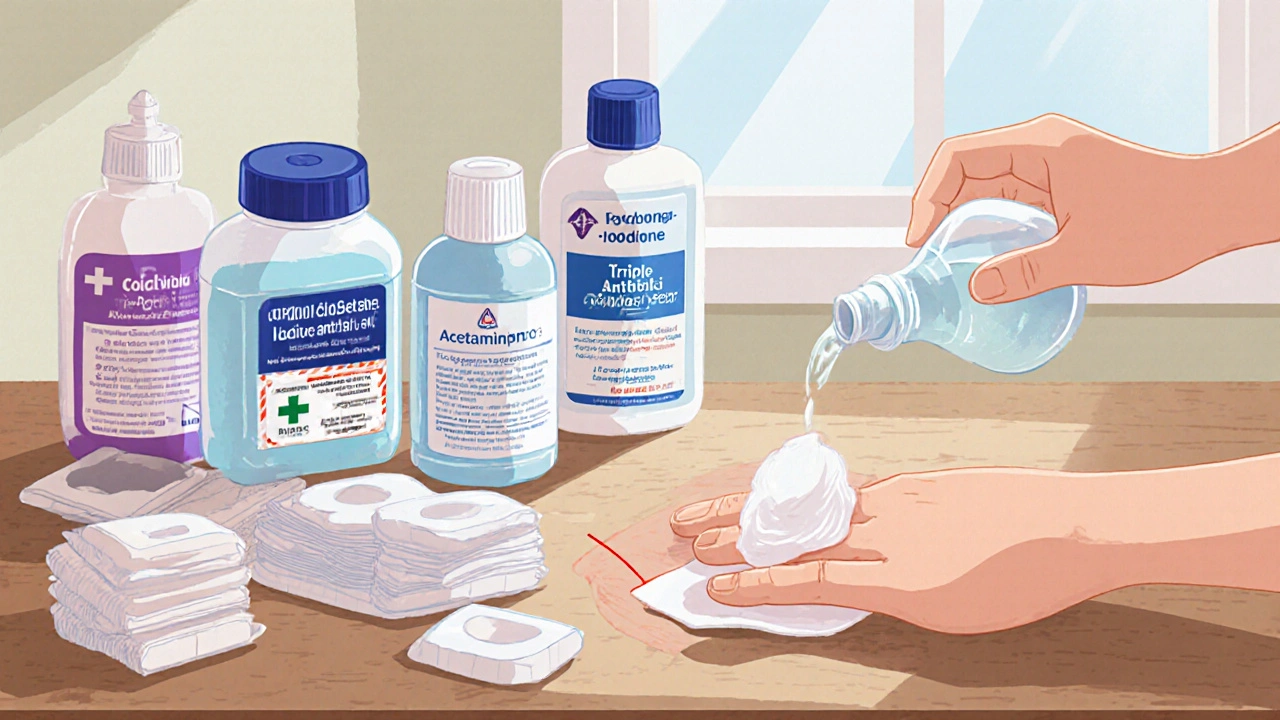
OTC First Aid Medications: Antiseptics, Antibiotic Ointments, and Pain Relief Explained
Learn which OTC first aid meds-antiseptics, antibiotic ointments, and pain relievers-you need in your home kit, how to use them safely, and when to skip them. Expert-backed, practical advice for minor injuries.
View more