
FDA Generic Drug Surveillance: What You Need to Know About Monitoring Generic Medications
When you pick up a generic drug, you expect it to work just like the brand-name version—and the FDA generic drug surveillance, the system the U.S. Food and Drug Administration uses to track safety and performance of generic medications after they hit the market. Also known as post-market pharmacovigilance, it’s the quiet but critical watchdog that makes sure generics don’t just meet lab standards—they perform safely in real life. This isn’t about checking pills in a factory. It’s about listening to what happens when millions of people take them every day.
Generic drugs are cheaper because they don’t repeat expensive clinical trials. But that doesn’t mean they’re risk-free. The FDA relies on real-world data from doctors, pharmacists, and patients to catch problems that didn’t show up in controlled studies. That’s where adverse event reporting, the process of documenting unexpected side effects, interactions, or treatment failures tied to specific medications comes in. Pharmacists are on the front lines—they see when a patient gets a rash after switching generics, or when a blood pressure med suddenly stops working. Their reports feed into the FAERS database, the FDA’s free, public system that collects and analyzes reports of drug side effects from healthcare providers and consumers. Without these reports, dangerous patterns could go unnoticed for years.
It’s not just about reactions. Sometimes a generic works fine for most people—but fails for a small group with certain genes, like those with the SLCO1B1 variant who get severe muscle pain from statins. That’s why the FDA also tracks how generics perform across different populations. And when a problem pops up, they don’t just issue a warning—they update labels, issue safety communications, or even pull a batch. The FDA safety communications, official alerts about new risks or changes in how a drug should be used are your best tool to stay ahead of trouble.
You don’t need to be a scientist to help. Checking your prescription label, knowing your meds’ side effects, and telling your pharmacist about any weird reaction—those are all part of the system. The same posts that explain how to read medication stickers, how to use OpenFDA to dig into side effect data, or why pharmacists must report adverse events? They’re all pieces of this puzzle. What you’ll find below isn’t just a list of articles—it’s a practical guide to staying safe with generics, from the moment you get the script to how you track what happens after you take it.
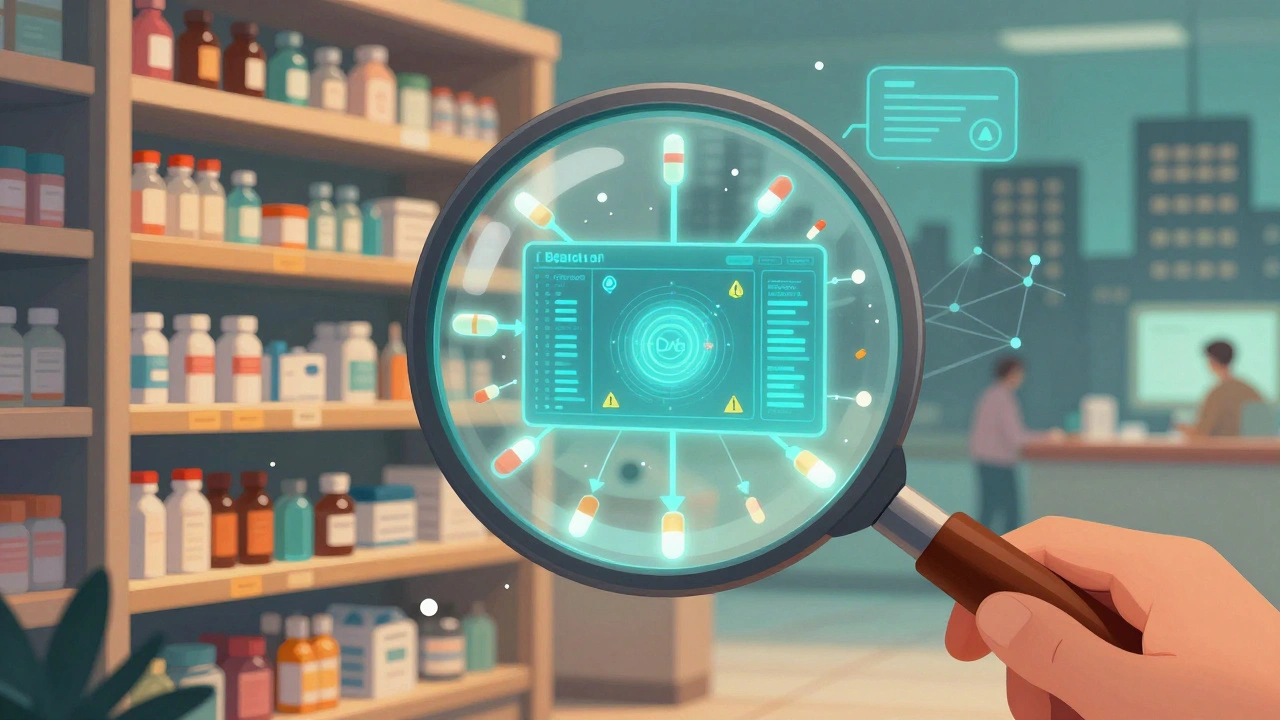
Post-Market Surveillance: How the FDA Monitors Generic Drugs After Approval
The FDA monitors generic drugs after approval using real-world data, adverse event reports, and AI tools to ensure ongoing safety. Learn how systems like FAERS and Sentinel catch problems that clinical trials miss.
View more