
CNS Depressants: What They Are, How They Work, and What You Need to Know
When your brain is stuck in overdrive—racing thoughts, panic, or insomnia—it’s not always about willpower. Sometimes, it’s chemistry. CNS depressants, a class of drugs that slow down brain and nervous system activity. Also known as central nervous system depressants, they’re used to calm overactive brain signals, helping with anxiety, seizures, and sleep problems. These aren’t party drugs or lazy fixes. They’re precise tools, prescribed carefully because the line between relief and danger is thin.
There are different types, each with their own role. Benzodiazepines, like diazepam and alprazolam, are the most common. They work fast, often for short-term anxiety or panic attacks. Then there are barbiturates, older drugs like phenobarbital, used less now because they’re riskier. And sedatives, including sleep aids like zolpidem, help you fall asleep but can leave you groggy the next day. These all act on the same system—GABA receptors—but their effects, duration, and safety profiles vary. That’s why switching one for another isn’t like swapping coffee for tea. One wrong move can lead to dependence, memory issues, or worse.
You’ll find posts here that dig into real-world trade-offs. Like how clonidine, often used for blood pressure, can also act as a mild CNS depressant—making you drowsy but helping with withdrawal or PTSD-related insomnia. Or how buspirone, a non-addictive anxiety treatment, is sometimes compared to these drugs because it targets the same symptoms without the same risks. Some posts even explore how genetic differences affect how your body handles these medications, turning a standard dose into either a miracle or a nightmare. There’s no one-size-fits-all here. What helps one person’s sleep might make another feel like a zombie. What eases one person’s panic could be dangerous for someone with a history of substance use.
These aren’t just pills. They’re part of a bigger picture—how your brain reacts to stress, how your body metabolizes chemicals, and how long-term use changes your nervous system. That’s why understanding them matters. Not to scare you, but to help you ask the right questions. If you’re on one, wondering if it’s still necessary. If you’re considering one, asking what the alternatives are. If you’re worried about a loved one, knowing what signs to watch for. The posts below give you the facts without the fluff: real comparisons, side effect breakdowns, and practical advice from people who’ve been there.
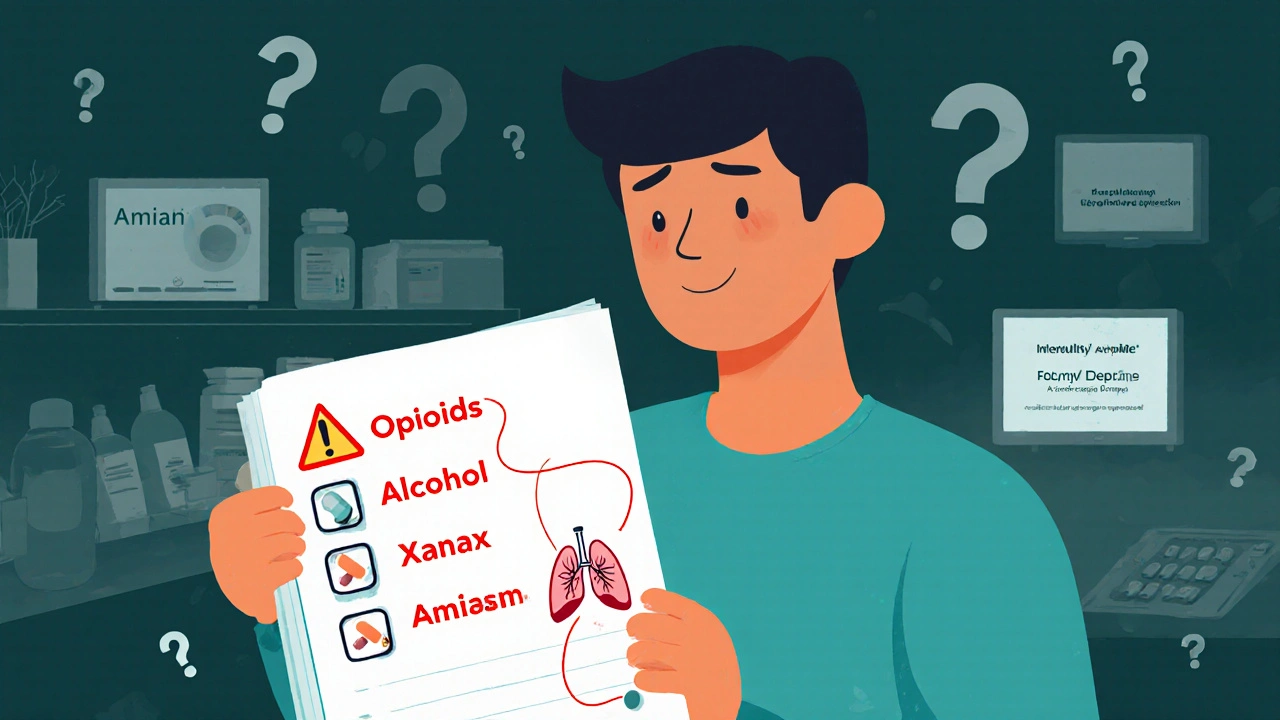
How to Check for Drug Interactions That Increase Overdose Risk
Learn how to identify dangerous drug combinations that raise overdose risk, including opioids mixed with alcohol, benzodiazepines, or street drugs. Get practical steps to check interactions yourself and access free tools that save lives.
View more