
Beta Blockers: How They Work, Side Effects, and What You Need to Know
When your heart beats too fast or too hard, beta blockers, a class of medications that slow heart rate and reduce blood pressure by blocking adrenaline. Also known as beta-adrenergic blocking agents, they’re among the most prescribed drugs for heart-related issues and anxiety. You might’ve heard of them from a doctor after a heart attack, or maybe you’re taking one for tremors or migraines. Either way, they’re not just for older adults — younger people use them too, especially for performance anxiety or fast heart rhythms.
Not all beta blockers are the same. propranolol, a non-selective beta blocker often used for anxiety and migraines works on both the heart and lungs, while metoprolol, a selective version that mainly targets the heart is preferred for high blood pressure and heart failure. Then there’s atenolol, carvedilol, and bisoprolol — each with slightly different effects. Some reduce heart rate without much impact on breathing, others help with fluid buildup. The choice depends on your condition, other meds you take, and how your body reacts.
Side effects are common but often mild: fatigue, cold hands, dizziness, or a slow pulse. Some people feel depressed or have trouble sleeping. A few report sexual side effects or weight gain. If you have asthma, diabetes, or low blood pressure, your doctor needs to be extra careful — beta blockers can hide low blood sugar symptoms or tighten airways. They’re not for everyone, but for millions, they’re life-changing. People who’ve had heart attacks often take them long-term to prevent another one. Athletes use them to steady their nerves before big events. And yes, they’re sometimes prescribed off-label for social anxiety or tremors.
What you won’t find in every doctor’s office is how these drugs interact with other meds — like antidepressants, NSAIDs, or even over-the-counter cold remedies. Some combinations can drop your blood pressure too low or make your heart beat irregularly. That’s why checking labels, talking to your pharmacist, and tracking how you feel matters. The posts below cover real cases: how people manage side effects, why some switch from one beta blocker to another, what happens when you stop suddenly, and how genetics can influence how well they work for you. You’ll also see how these drugs fit into bigger conversations about heart health, aging, and long-term medication safety. No fluff. Just what works, what doesn’t, and what to watch out for.
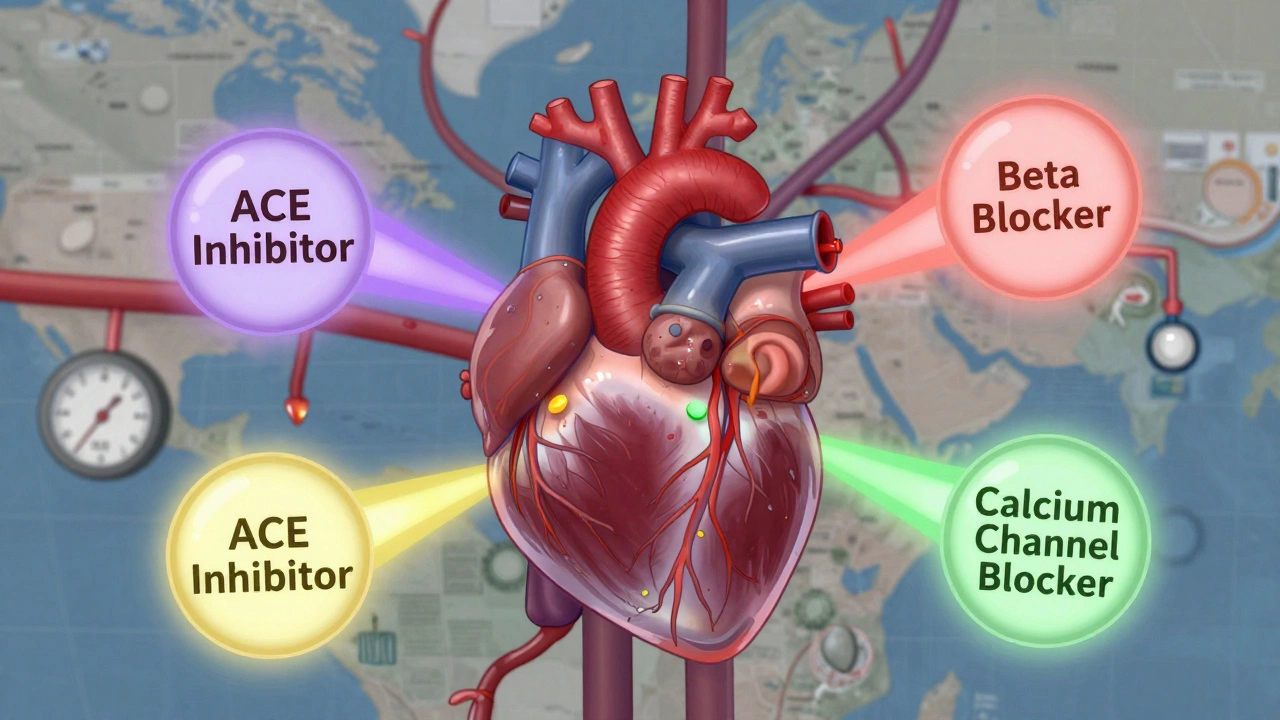
Blood Pressure Medications: ACE Inhibitors, Beta Blockers, and More Explained
Learn how ACE inhibitors, beta blockers, calcium channel blockers, and other blood pressure medications work, their side effects, costs, and which ones are best for different patients. Get practical advice for choosing and sticking with your treatment.
View more