
Antiseptics: What They Are, How They Work, and What You Need to Know
When you grab a bottle of rubbing alcohol or reach for a hydrogen peroxide wipe before a cut, you’re using an antiseptic, a substance applied to living tissue to reduce the risk of infection by killing or slowing the growth of microorganisms. Also known as topical antimicrobials, antiseptics are your first line of defense against germs entering through broken skin. They’re not the same as disinfectants, which are meant for surfaces like countertops or floors. Using a disinfectant on your skin can cause burns or serious irritation. Antiseptics are designed to be gentle enough for skin but strong enough to stop bacteria, fungi, and some viruses before they take hold.
Common topical antiseptics, substances applied directly to the skin to prevent infection. Also known as skin antiseptics, they include iodine solutions like povidone-iodine, chlorhexidine gluconate, alcohol-based gels, and hydrogen peroxide are found in first aid kits, hospitals, and pharmacies. But not all antiseptics are created equal. Some, like iodine, work well for surgical prep. Others, like hydrogen peroxide, are overused—studies show it can actually delay healing by damaging new tissue. Then there’s chlorhexidine, which sticks to skin longer and is often used before injections or IV insertions. Knowing which one to use matters. Using the wrong one doesn’t just waste time—it can make things worse.
wound care, the process of cleaning and protecting injuries to promote healing and prevent infection. Also known as injury management, it relies heavily on proper antiseptic use isn’t just about slapping on a bandage. It’s about stopping infection before it starts. That’s why pharmacists and nurses pay close attention to how antiseptics are applied—too little, and germs survive; too much, and you harm the healing process. People with diabetes or slow-healing wounds are especially at risk. That’s why you’ll see posts here about skin rashes from medications, how to read label warnings, and what to do when a minor cut turns into something serious. These aren’t just random tips—they’re connected to how you handle germs on your body.
You might wonder if antiseptics are even necessary anymore. After all, our hands are washed, surfaces are sanitized, and antibiotics are everywhere. But infections still happen—often because people skip the basics. A scraped knee, a pierced ear, a surgical incision—all need proper care. And when you’re traveling, dealing with a chronic condition, or caring for someone with limited mobility, knowing how to use antiseptics correctly becomes even more critical. The posts below cover real-world situations: how antiseptics relate to drug-induced skin reactions, what to do when a wound doesn’t heal, and how to avoid mistakes that turn small problems into big ones. This isn’t theory. It’s what happens when people skip the details—and what you can do to stay safe.
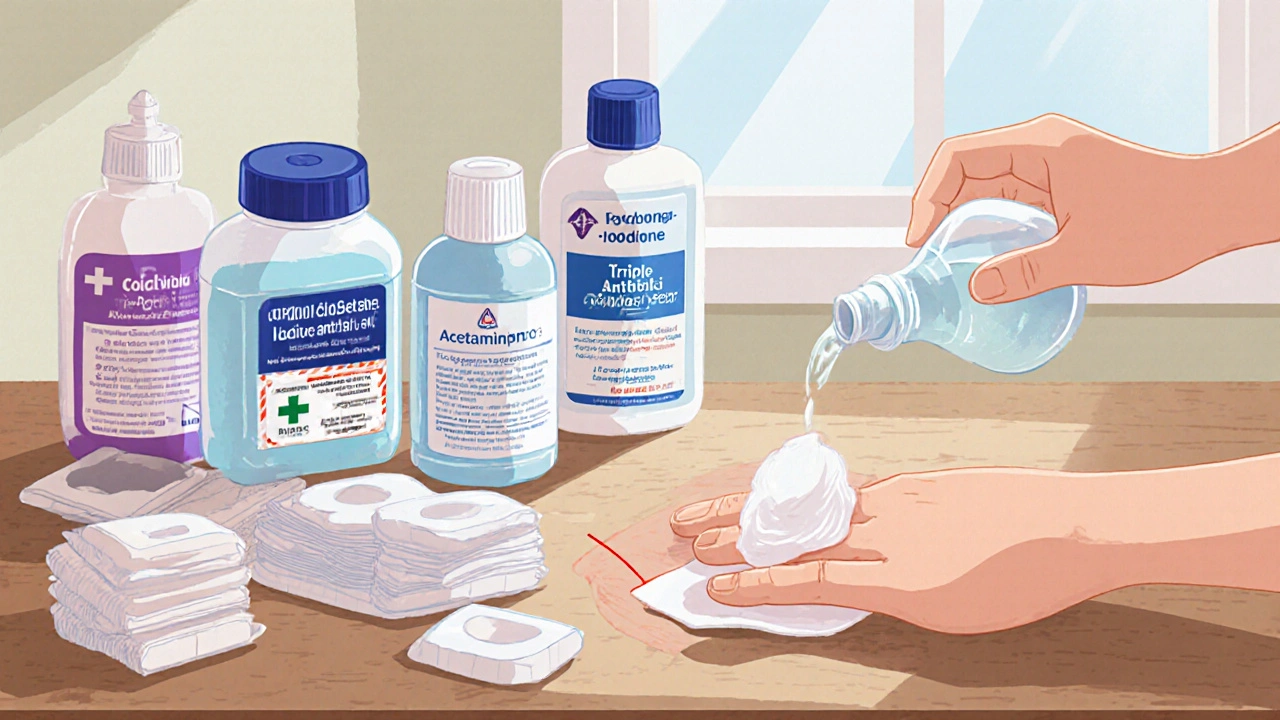
OTC First Aid Medications: Antiseptics, Antibiotic Ointments, and Pain Relief Explained
Learn which OTC first aid meds-antiseptics, antibiotic ointments, and pain relievers-you need in your home kit, how to use them safely, and when to skip them. Expert-backed, practical advice for minor injuries.
View more