
Antidepressant Alternatives: Non-Drug Options That Actually Work
When antidepressant alternatives are needed, it’s not because people want to avoid medication—it’s because medication doesn’t always fit. Maybe the side effects are too much, maybe it didn’t help, or maybe you’re looking for something that works with your life, not against it. Cognitive Behavioral Therapy, a structured, evidence-based talk therapy that changes how you respond to negative thoughts, is one of the most effective non-drug options for depression, with studies showing results equal to SSRIs for mild to moderate cases. It doesn’t require a prescription, but it does require effort—and that’s where many people get stuck.
Then there’s buspirone, a non-addictive prescription anxiety medication that also helps with low mood, often used off-label as a gentler alternative to SSRIs. Unlike antidepressants that can take weeks to kick in, some people notice a shift in anxiety within days. It doesn’t cause weight gain or sexual side effects, but it’s not a magic fix either. It works best when paired with habits that reduce stress—sleep, movement, sunlight.
And let’s not forget the real-world tools people use every day: natural anxiety remedies, like magnesium, L-theanine, and omega-3s, which don’t cure depression but can lower the baseline of stress that makes it worse. These aren’t fluff. A 2023 review of 21 clinical trials found that omega-3 supplementation improved mood scores in people with depression, especially when combined with lifestyle changes. But here’s the catch: supplements work best when they’re part of a routine, not a one-time fix. Taking a pill and hoping for change won’t cut it. You need to move, sleep, connect, and breathe.
What’s missing from most discussions is how these alternatives stack up in real life. One person finds relief with daily walks and sunlight. Another needs weekly therapy sessions and a consistent sleep schedule. Someone else finds that reducing caffeine and adding daily breathing exercises makes their depression feel more manageable. None of these are replacements for clinical care if you’re severely depressed—but for many, they’re the missing pieces that make medication tolerable—or even unnecessary.
You’ll find posts here that break down exactly how CBT changes your brain’s response to stress, why buspirone is quietly becoming a go-to for people tired of antidepressant side effects, and which natural supplements actually have data behind them—not just hype. We also cover how to tell if your low mood is depression or something else entirely, and what to do when your doctor says, "Just try therapy first," but you don’t know where to start.
This isn’t about choosing between pills and potions. It’s about building a toolkit. Some tools are prescription. Some are over-the-counter. Some are free—like walking outside for 20 minutes every morning. The goal isn’t to replace antidepressants with something "better." It’s to give you real options that match your body, your life, and your goals.
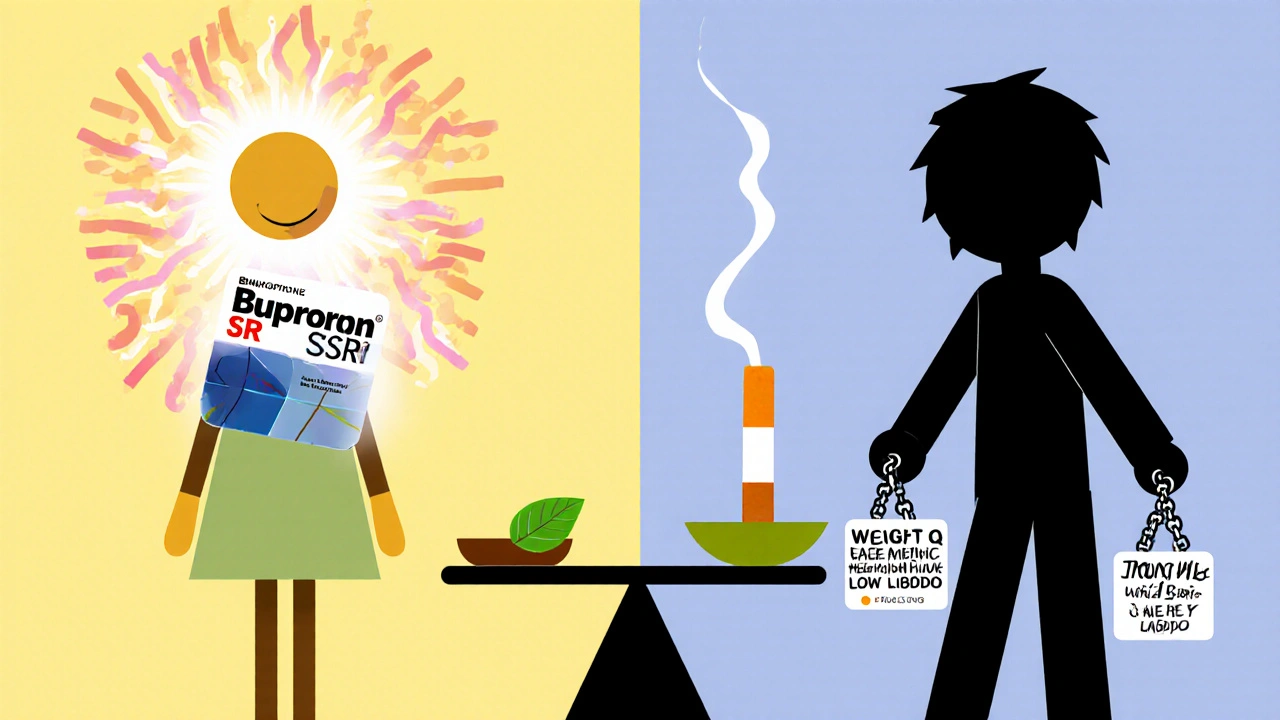
Compare Bupron SR (Bupropion) with Alternatives for Depression and Smoking Cessation
Compare Bupron SR (bupropion) with alternatives like SSRIs, SNRIs, and varenicline for depression and smoking cessation. Learn which works best for energy, weight, and quitting smoking in Australia.
View more