
Anticoagulation: Understanding Blood Thinners, Risks, and Safe Use
When your blood clots too easily, it can lead to strokes, heart attacks, or dangerous blockages. That’s where anticoagulation, the medical process of preventing harmful blood clots using medications. Also known as blood thinning, it’s not about making your blood watery—it’s about carefully balancing your body’s natural clotting system. People with atrial fibrillation, deep vein thrombosis, or artificial heart valves often need anticoagulation to stay alive. But it’s not simple. Take the wrong dose, miss a pill, or mix it with the wrong food or drug, and you could bleed internally—or still get a clot.
Common anticoagulant drugs, medications designed to slow blood clotting. Also known as blood thinners, it include warfarin, apixaban, rivaroxaban, and heparin. Each works differently. Warfarin needs regular blood tests and strict diet control. Newer ones like apixaban don’t need testing but still carry risks if you’re not careful. They’re used for long-term conditions, not just emergencies. That means you’re likely taking them for months or years—and that’s where safety becomes daily work. You need to know how to handle missed doses, what foods to avoid, and when to call your doctor if you bruise easily or spot blood in your urine. Pharmacists play a big role here, too. Their reports on side effects help catch problems early, and prescription labels often carry life-saving warnings you can’t afford to ignore.
Anticoagulation doesn’t happen in a vacuum. It connects to other areas of health you might not think about. If you’re on blood thinners and need surgery, your doctor has to plan ahead. If you’re traveling, you need to pack meds safely and know airport rules for liquids. If you’re elderly or have kidney disease, your body processes these drugs differently. Even something as simple as an OTC painkiller like ibuprofen can increase bleeding risk when mixed with anticoagulants. That’s why understanding your full medication list matters. The posts below cover real-world situations: how to verify your prescription, what label warnings mean, how to avoid dangerous drug interactions, and why pharmacists are key to catching errors before they hurt you. You’ll find advice on managing anticoagulation alongside other chronic conditions like high blood pressure or diabetes—because most people on blood thinners are managing more than one health issue. This isn’t theory. It’s about living safely with a treatment that can save your life—if you know how to use it right.
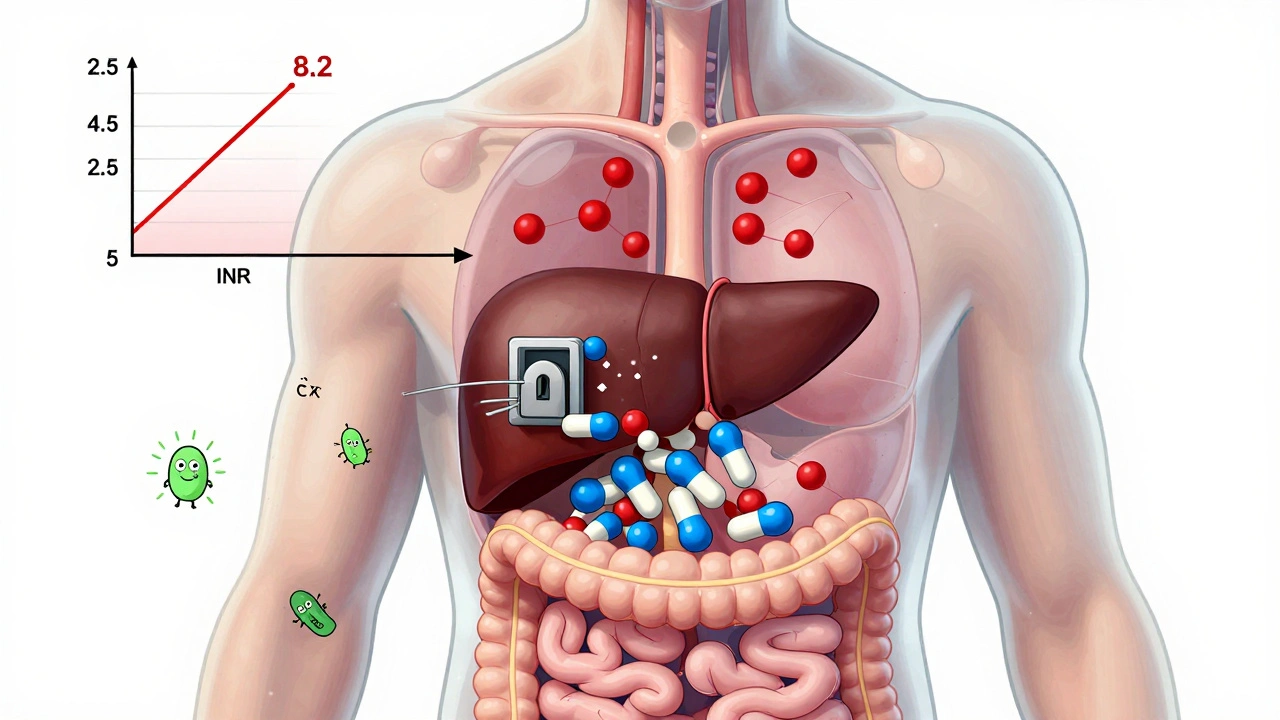
Warfarin and Antibiotics: How Common Drugs Can Spike Your INR Risk
Warfarin and certain antibiotics can dangerously raise your INR, increasing bleeding risk. Learn which antibiotics are risky, why the delay matters, and how to protect yourself with timely testing.
View more